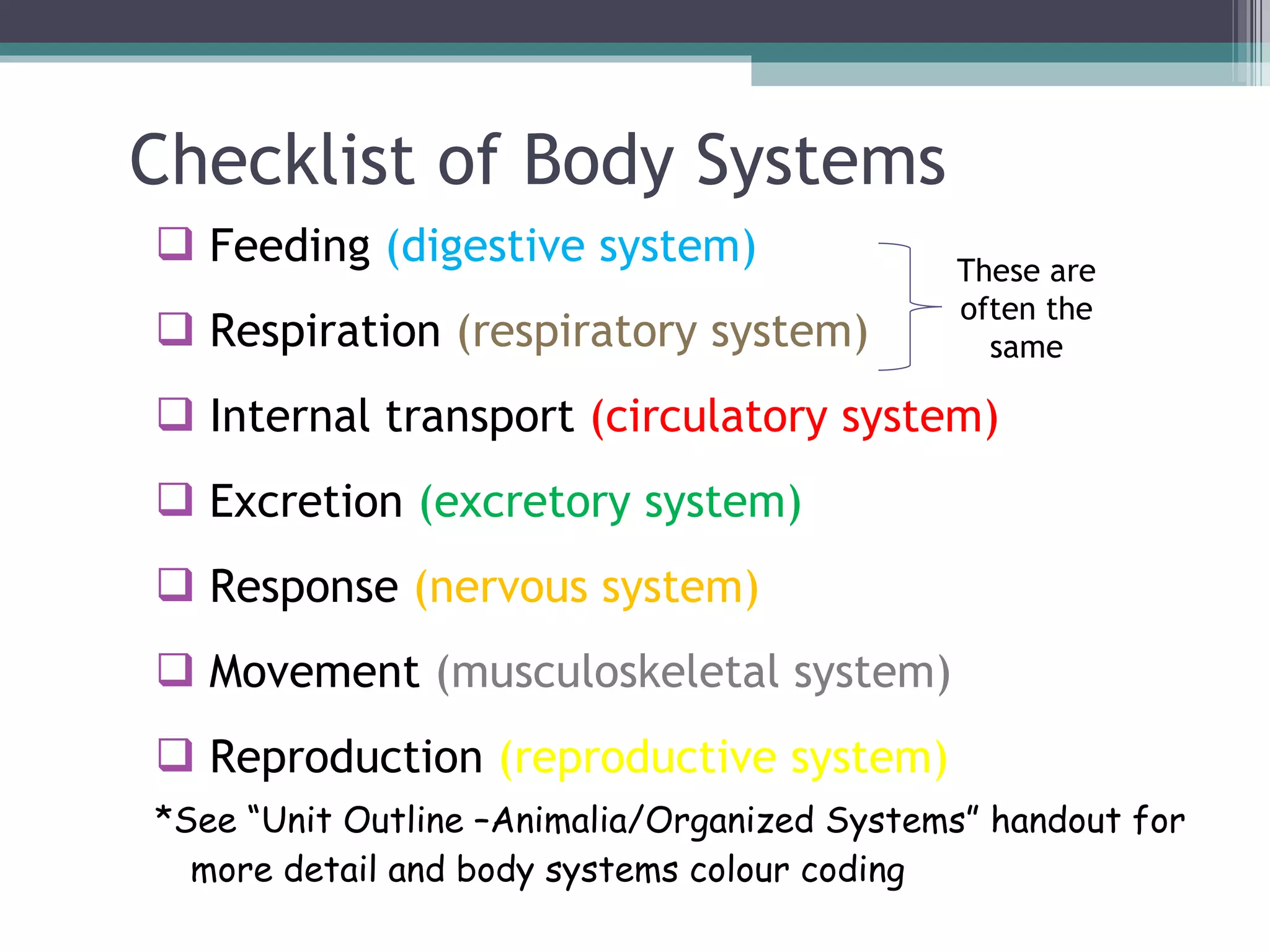
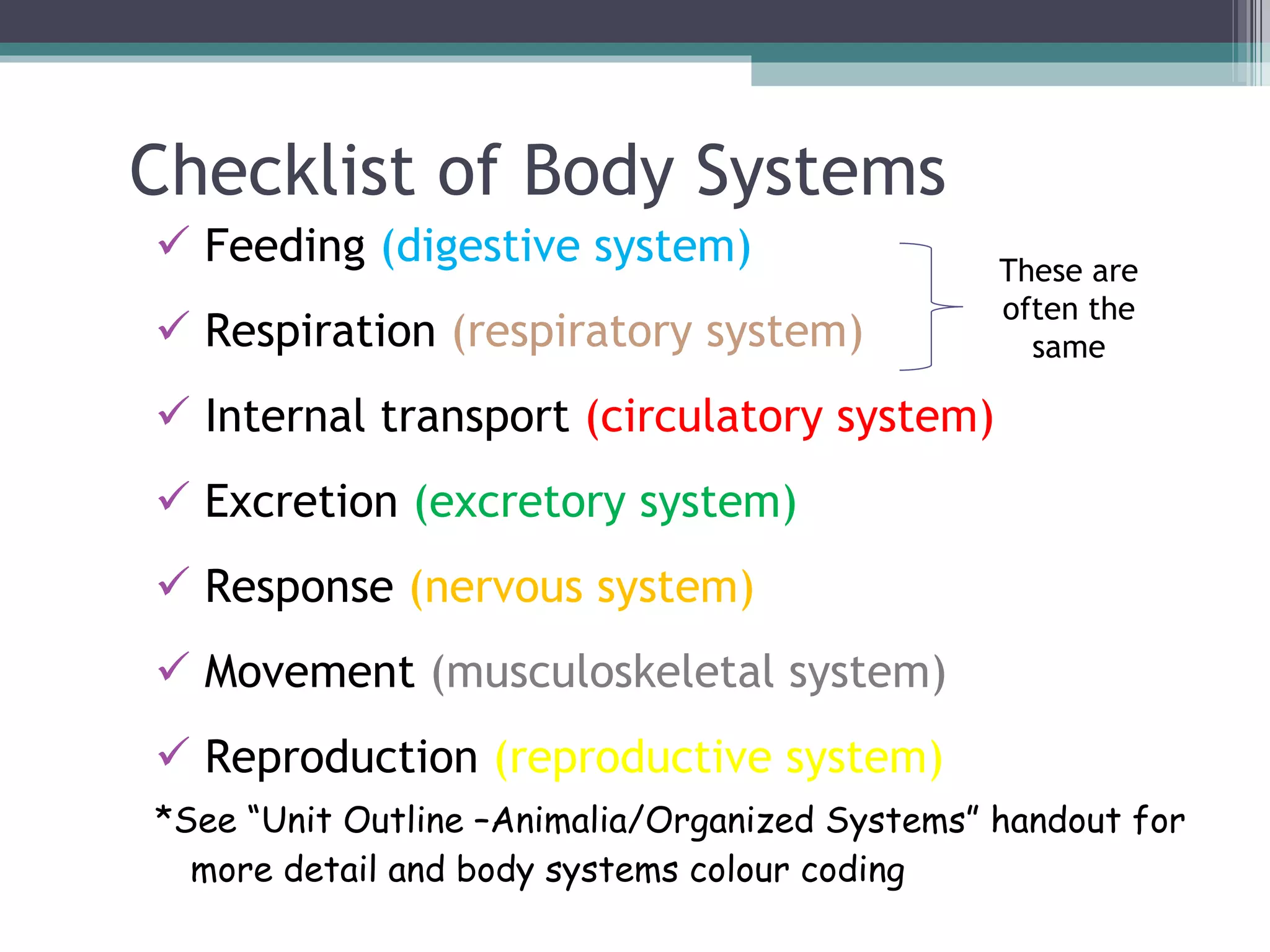
Checklist of Body Systems Feeding  (digestive system) Respiration  (respiratory system) Internal transport  (circulatory system) Excretion  (excretory system) Response  (nervous system) Movement  (musculoskeletal system) Reproduction  (reproductive system) *See “Unit Outline –Animalia/Organized Systems” handout for more detail and body systems colour coding These are often the same
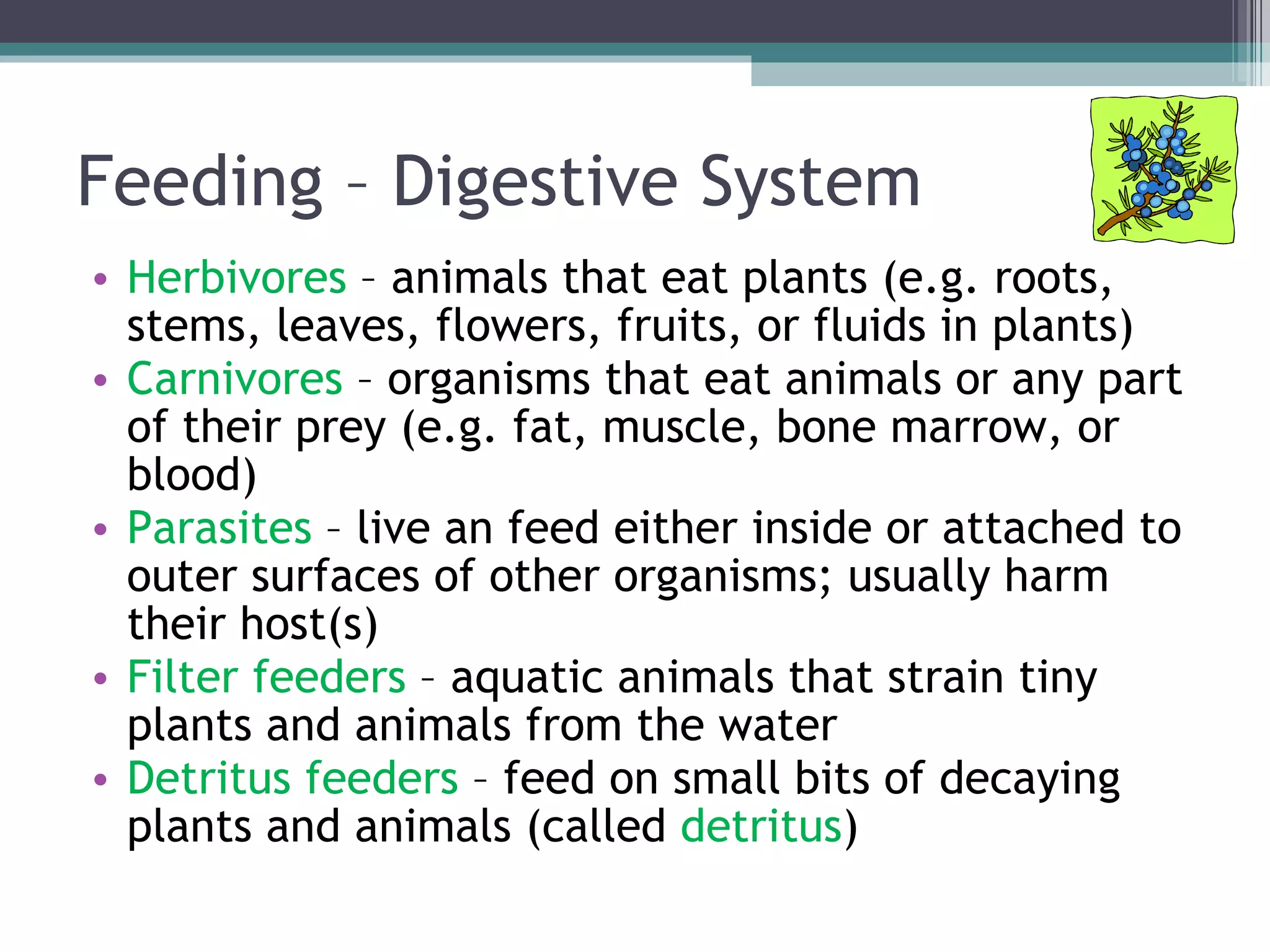
Feeding – Digestive System Herbivores  – animals that eat plants (e.g. roots, stems, leaves, flowers, fruits, or fluids in plants) Carnivores  – organisms that eat animals or any part of their prey (e.g. fat, muscle, bone marrow, or blood) Parasites  – live an feed either inside or attached to outer surfaces of other organisms; usually harm their host(s) Filter feeders  – aquatic animals that strain tiny plants and animals from the water Detritus feeders  – feed on small bits of decaying plants and animals (called  detritus )
Respiration – Respiratory System Living cells consume oxygen and release carbon dioxide in the process of  cellular respiration Animals must respire, or breathe, to take in and release these gases Small animals living in water or moist soil    respire through skin Large active animals     respiratory systems  have evolved to take many different forms in adaptations depending on the animal’s habitat Respiration through the skin is not efficient enough for large animals
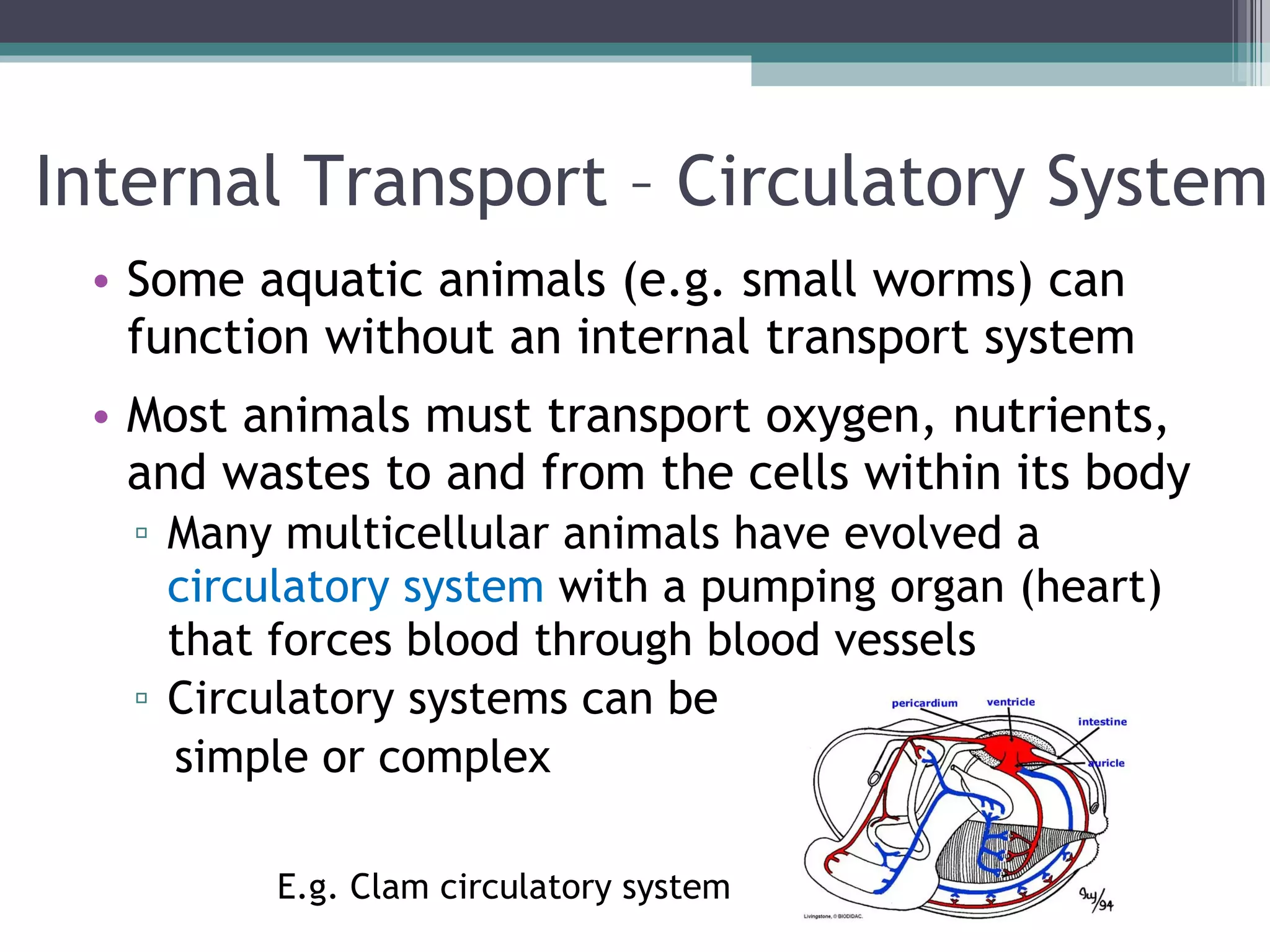
Internal Transport – Circulatory System Some aquatic animals (e.g. small worms) can function without an internal transport system Most animals must transport oxygen, nutrients, and wastes to and from the cells within its body Many multicellular animals have evolved a  circulatory system  with a pumping organ (heart) that forces blood through blood vessels Circulatory systems can be  simple or complex E.g. Clam circulatory system
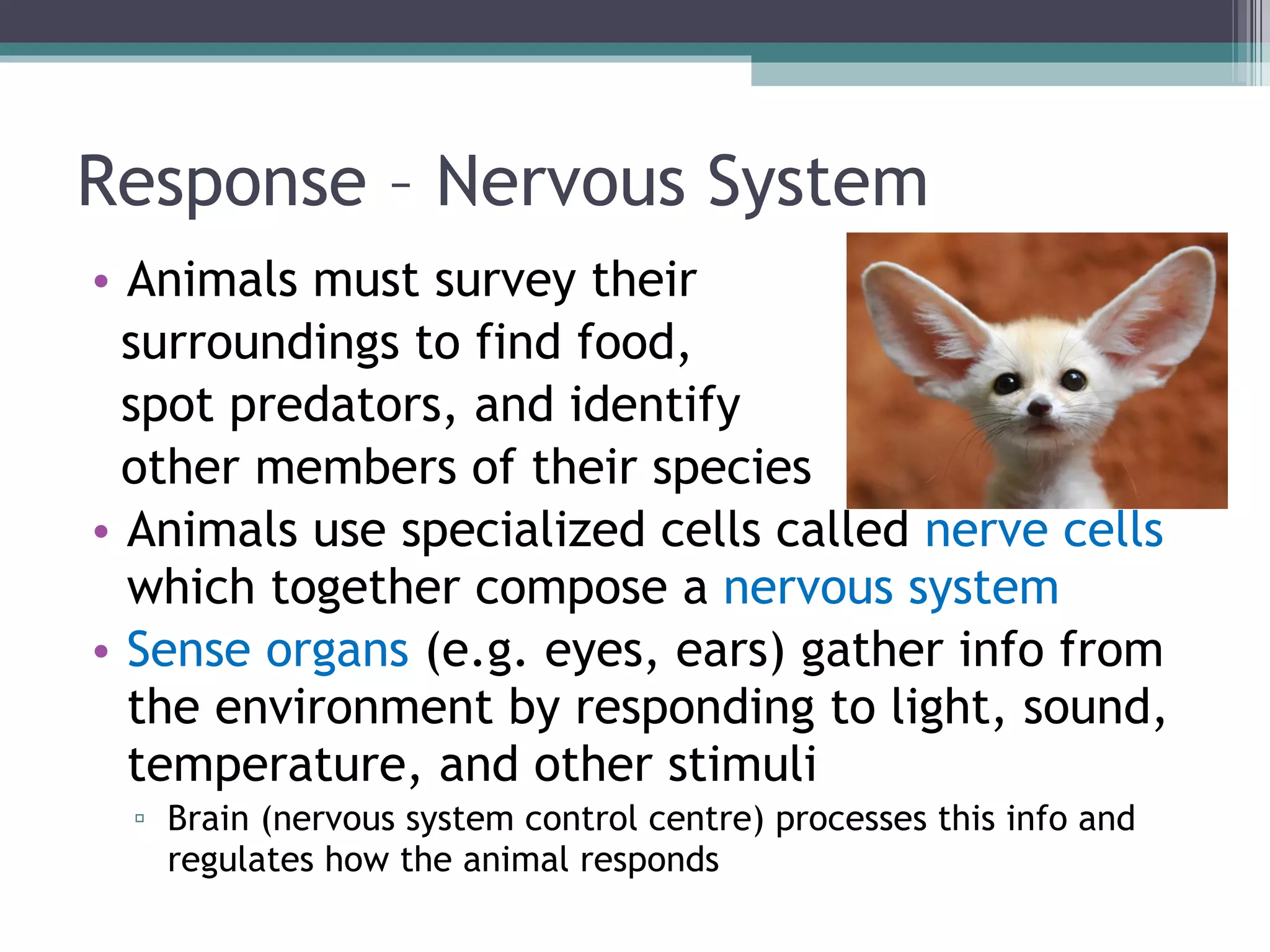
Response – Nervous System Animals must survey their  surroundings to find food,  spot predators, and identify  other members of their species Animals use specialized cells called  nerve cells  which together compose a  nervous system Sense organs  (e.g. eyes, ears) gather info from the environment by responding to light, sound, temperature, and other stimuli Brain (nervous system control centre) processes this info and regulates how the animal responds
Movement – Musculoskeletal System Some animals are  sessile     live their adult lives attached to one spot Most animals are  motile     they move around In order to move, most animals use tissues called muscles that generate force by contracting Muscles often work together with a skeleton (system of solid support in the body) Exoskeleton  - skeleton on the outside of the body (e.g. insects) Endoskeleton  – skeleton on the inside of the body (e.g. reptiles, birds, and mammals) muscles + skeleton =  musculoskeletal system
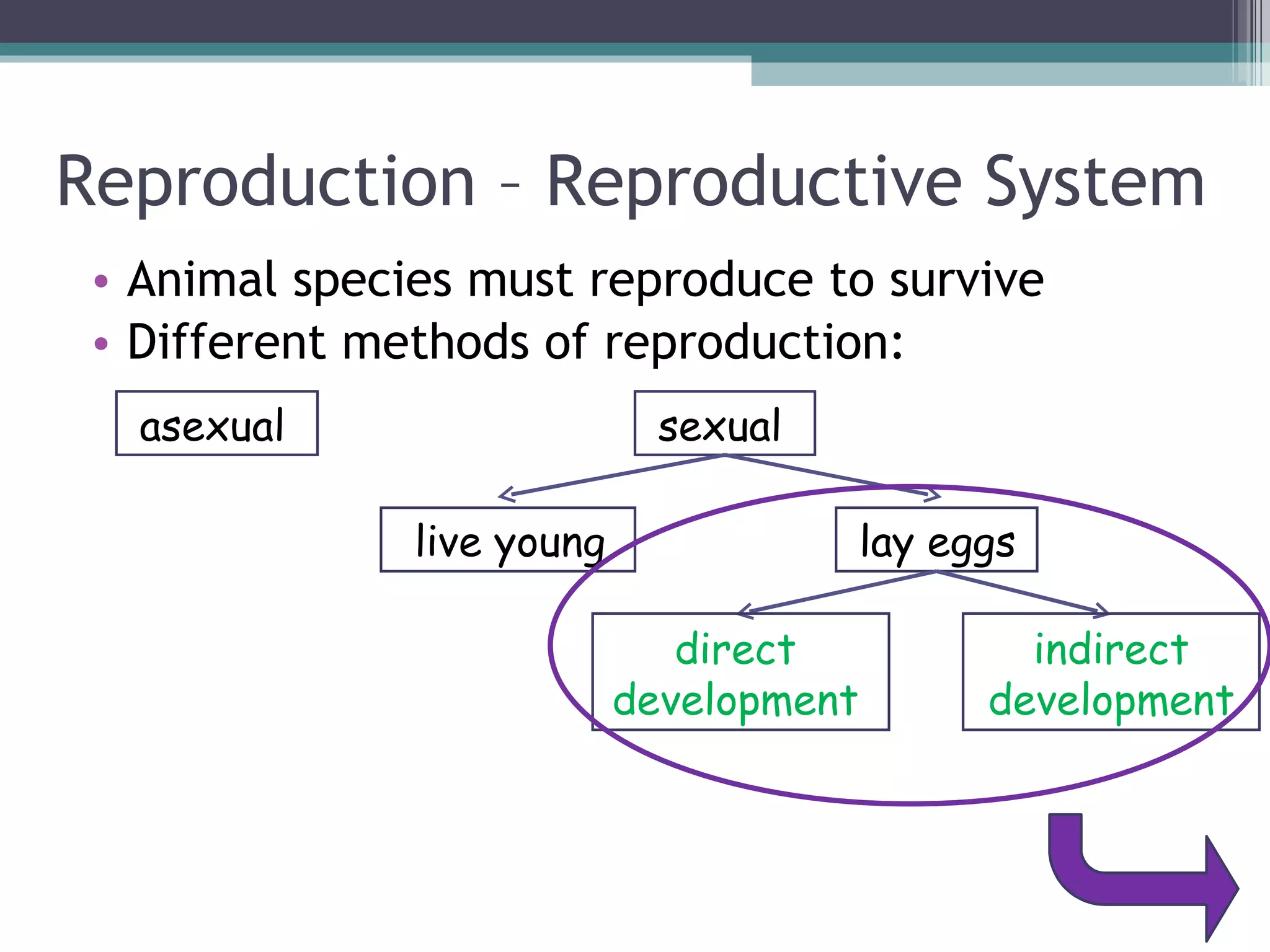
Reproduction – Reproductive System Animal species must reproduce to survive Different methods of reproduction: asexual sexual live young lay eggs direct development indirect development
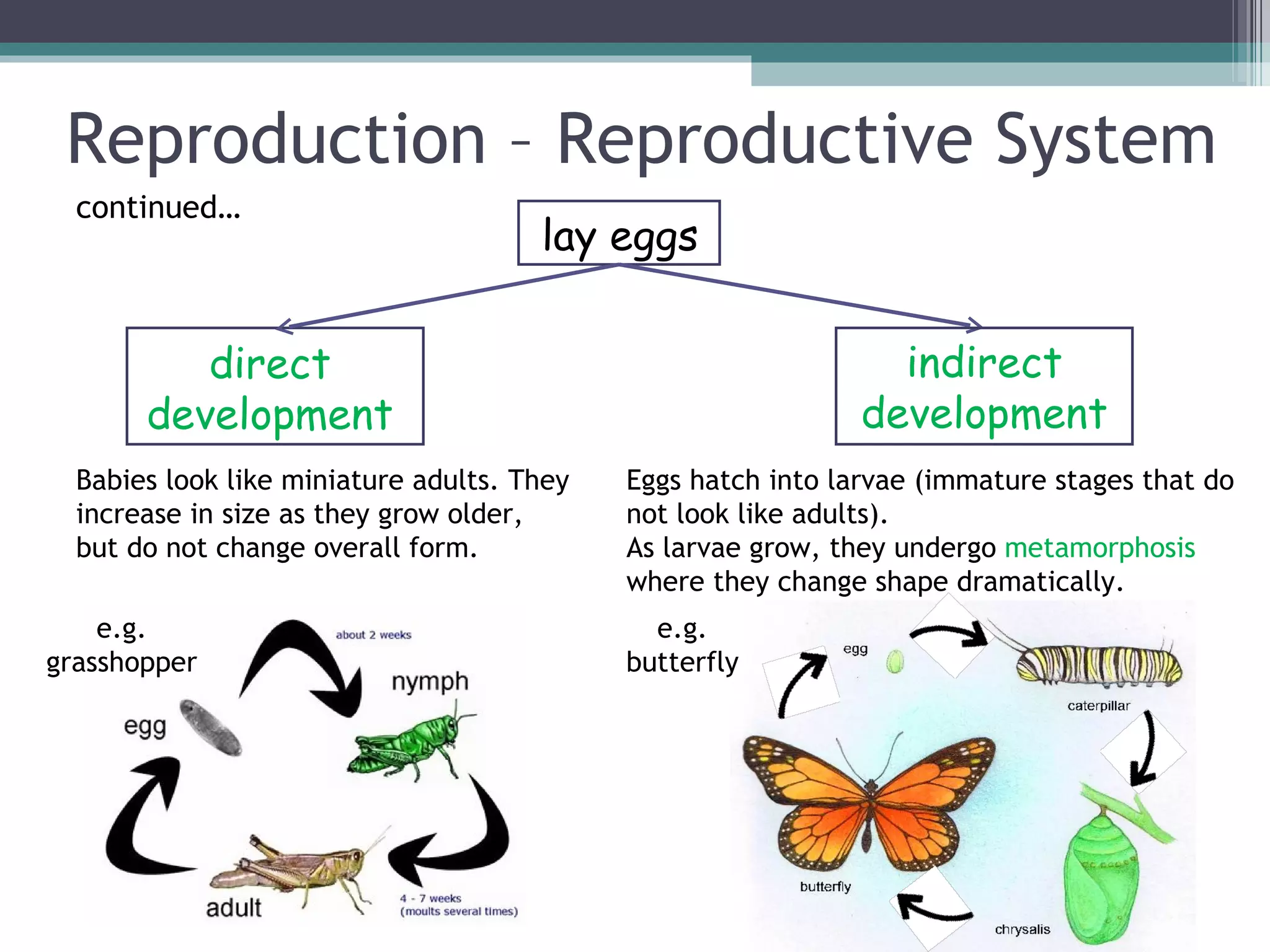
Reproduction – Reproductive System lay eggs direct development indirect development Babies look like miniature adults. They increase in size as they grow older, but do not change overall form. Eggs hatch into larvae (immature stages that do not look like adults). As larvae grow, they undergo  metamorphosis  where they change shape dramatically. e.g. grasshopper e.g. butterfly continued…
Checklist of Body Systems Feeding  (digestive system) Respiration  (respiratory system) Internal transport  (circulatory system) Excretion  (excretory system) Response  (nervous system) Movement  (musculoskeletal system) Reproduction  (reproductive system) *See “Unit Outline –Animalia/Organized Systems” handout for more detail and body systems colour coding These are often the same

Biol 11 Lesson 1 Feb 1 - Ch. 26 Checklist of Body Systems - 7 systems

  • 1.
    Checklist of BodySystems Feeding (digestive system) Respiration (respiratory system) Internal transport (circulatory system) Excretion (excretory system) Response (nervous system) Movement (musculoskeletal system) Reproduction (reproductive system) *See “Unit Outline –Animalia/Organized Systems” handout for more detail and body systems colour coding These are often the same
  • 2.
    Feeding – DigestiveSystem Herbivores – animals that eat plants (e.g. roots, stems, leaves, flowers, fruits, or fluids in plants) Carnivores – organisms that eat animals or any part of their prey (e.g. fat, muscle, bone marrow, or blood) Parasites – live an feed either inside or attached to outer surfaces of other organisms; usually harm their host(s) Filter feeders – aquatic animals that strain tiny plants and animals from the water Detritus feeders – feed on small bits of decaying plants and animals (called detritus )
  • 3.
    Respiration – RespiratorySystem Living cells consume oxygen and release carbon dioxide in the process of cellular respiration Animals must respire, or breathe, to take in and release these gases Small animals living in water or moist soil  respire through skin Large active animals  respiratory systems have evolved to take many different forms in adaptations depending on the animal’s habitat Respiration through the skin is not efficient enough for large animals
  • 4.
    Internal Transport –Circulatory System Some aquatic animals (e.g. small worms) can function without an internal transport system Most animals must transport oxygen, nutrients, and wastes to and from the cells within its body Many multicellular animals have evolved a circulatory system with a pumping organ (heart) that forces blood through blood vessels Circulatory systems can be simple or complex E.g. Clam circulatory system
  • 5.
    Response – NervousSystem Animals must survey their surroundings to find food, spot predators, and identify other members of their species Animals use specialized cells called nerve cells which together compose a nervous system Sense organs (e.g. eyes, ears) gather info from the environment by responding to light, sound, temperature, and other stimuli Brain (nervous system control centre) processes this info and regulates how the animal responds
  • 6.
    Movement – MusculoskeletalSystem Some animals are sessile  live their adult lives attached to one spot Most animals are motile  they move around In order to move, most animals use tissues called muscles that generate force by contracting Muscles often work together with a skeleton (system of solid support in the body) Exoskeleton - skeleton on the outside of the body (e.g. insects) Endoskeleton – skeleton on the inside of the body (e.g. reptiles, birds, and mammals) muscles + skeleton = musculoskeletal system
  • 7.
    Reproduction – ReproductiveSystem Animal species must reproduce to survive Different methods of reproduction: asexual sexual live young lay eggs direct development indirect development
  • 8.
    Reproduction – ReproductiveSystem lay eggs direct development indirect development Babies look like miniature adults. They increase in size as they grow older, but do not change overall form. Eggs hatch into larvae (immature stages that do not look like adults). As larvae grow, they undergo metamorphosis where they change shape dramatically. e.g. grasshopper e.g. butterfly continued…
  • 9.
    Checklist of BodySystems Feeding (digestive system) Respiration (respiratory system) Internal transport (circulatory system) Excretion (excretory system) Response (nervous system) Movement (musculoskeletal system) Reproduction (reproductive system) *See “Unit Outline –Animalia/Organized Systems” handout for more detail and body systems colour coding These are often the same