The Organization of
Living Things
Chapter 4
Section 3
Key Concept  As multicellular
organisms develop,
their cells differentiate
(change & separate)
and form levels of
organization
 Why it Matters: so
Humans (we are
multicellular) can have
different kinds of cells,
tissues, organs, and
organ systems
Unicellular Organisms
 “uni-” = one
 Prokaryotes are unicellular organisms
 Some algae, some protists, and some
eukaryotes (yeasts), are unicellular
 Can still do everything they need to stay alive
 Benefits over multicellular organisms:
 Need fewer resources
 Can live in harsher conditions
Multicellular Organisms
 “multi-” = more than one
 Plants, animals, some protists, and most fungi
are multicellular
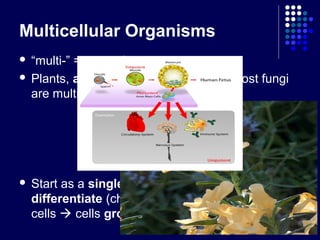
 Start as a single cell  many cells  cells
differentiate (change) into different types of
cells  cells group together
Multicellular Characteristics
 Larger size = have less predators and have more
options of things to eat
 Longer life – organism will continue to live even if
a single cell dies
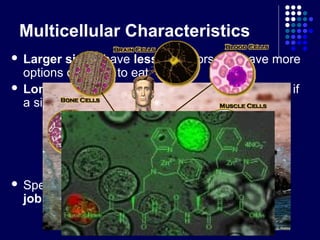
 Specialization – each type of cell has a specific
job, making the organism more efficient
Levels of Organization
 1st
Level: Cells
 2nd
Level: Tissues
 3rd
Level: Organs
 4th
Level: Organ Systems
 Cells  Tissues  Organs  Organ Systems
Level 1 : Cells
 Cells can be specialized (have
a certain function)
 Function = job
 Function is related to the cell
structure
 Structure = how parts of the
cell are put together
 Shape
 Material it’s made from
 Structure of a brain cell is
different from muscle cell
Level 2: Tissues
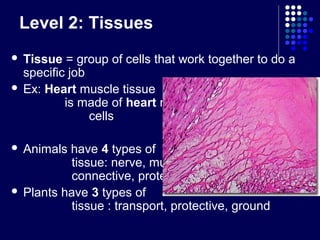
 Tissue = group of cells that work together to do a
specific job
 Ex: Heart muscle tissue
is made of heart muscle
cells
 Animals have 4 types of
tissue: nerve, muscle,
connective, protective
 Plants have 3 types of
tissue : transport, protective, ground
Level 3: Organs
 Organ = structure that is made up of 2 or more
tissues working together to get a specific job done
 Ex: Stomach – muscle tissue moves food, special
tissues make chemicals to digest food, connective
tissue holds stomach together, nervous tissue
sends messages back and forth between the
stomach and brain
Level 4: Organ Systems
 Organ system = group of organs working
together to perform a specific function
 Each organ system has a specific job
 Ex: Digestive system is made of several
organs including the stomach and intestines
Structure of Animals
Cells
-basic unit of an animal’s structure
-become specialized
_______________________________
Tissues
-made of cells that work together to perform a specific function
__________________________________________
Organs
-made of different types of tissues that work together to perform a specific function
____________________________________________________
Organ Systems
-made of organs that work together to perform a specific function
_____________________________________________________________
Organisms

Cells to tissues

  • 1.
    The Organization of LivingThings Chapter 4 Section 3
  • 2.
    Key Concept As multicellular organisms develop, their cells differentiate (change & separate) and form levels of organization  Why it Matters: so Humans (we are multicellular) can have different kinds of cells, tissues, organs, and organ systems
  • 3.
    Unicellular Organisms  “uni-”= one  Prokaryotes are unicellular organisms  Some algae, some protists, and some eukaryotes (yeasts), are unicellular  Can still do everything they need to stay alive  Benefits over multicellular organisms:  Need fewer resources  Can live in harsher conditions
  • 4.
    Multicellular Organisms  “multi-”= more than one  Plants, animals, some protists, and most fungi are multicellular  Start as a single cell  many cells  cells differentiate (change) into different types of cells  cells group together
  • 5.
    Multicellular Characteristics  Largersize = have less predators and have more options of things to eat  Longer life – organism will continue to live even if a single cell dies  Specialization – each type of cell has a specific job, making the organism more efficient
  • 6.
    Levels of Organization 1st Level: Cells  2nd Level: Tissues  3rd Level: Organs  4th Level: Organ Systems  Cells  Tissues  Organs  Organ Systems
  • 7.
    Level 1 :Cells  Cells can be specialized (have a certain function)  Function = job  Function is related to the cell structure  Structure = how parts of the cell are put together  Shape  Material it’s made from  Structure of a brain cell is different from muscle cell
  • 8.
    Level 2: Tissues Tissue = group of cells that work together to do a specific job  Ex: Heart muscle tissue is made of heart muscle cells  Animals have 4 types of tissue: nerve, muscle, connective, protective  Plants have 3 types of tissue : transport, protective, ground
  • 9.
    Level 3: Organs Organ = structure that is made up of 2 or more tissues working together to get a specific job done  Ex: Stomach – muscle tissue moves food, special tissues make chemicals to digest food, connective tissue holds stomach together, nervous tissue sends messages back and forth between the stomach and brain
  • 10.
    Level 4: OrganSystems  Organ system = group of organs working together to perform a specific function  Each organ system has a specific job  Ex: Digestive system is made of several organs including the stomach and intestines
  • 11.
    Structure of Animals Cells -basicunit of an animal’s structure -become specialized _______________________________ Tissues -made of cells that work together to perform a specific function __________________________________________ Organs -made of different types of tissues that work together to perform a specific function ____________________________________________________ Organ Systems -made of organs that work together to perform a specific function _____________________________________________________________ Organisms