BIOEQUIVALENCE STUDY DESIGN
Seminar submitted to
Department of Pharmaceutics
Submitted by
Juhi Priya (160617015)
First Year MPharm (I.P)
Under the guidance of
Dr Vamshi Krishna T
MANIPAL COLLEGE OF PHARMACEUTICAL SCIENCES
Content
 Introduction
 Study considerations
 Study designs
Non replicate parallel study design
Multiple dose (steady state) study design
Clinical endpoint BE study
Special concerns in Bioavailability and Bioequivalence studies
Conclusion
References
Introduction
 Bioequivalence (BE) is the absence of a significant difference in the rate and extent to
which the active moiety in pharmaceutical equivalents or alternatives becomes available
at the site of drug action when administered at the same molar dose under similar
condition.
 It is determined by comparison of measured parameters like :
1. Conc. of active drug ingredient in blood
2. Urinary excretion rate
3. Or pharmacodynamic effect
Objective
The basic design for bioequivalence study is determined by:
1. Scientific question and objectives to be answered
2. Nature of reference material and dosage form, to be tested
3. The availability of analytical methods
4. Pk and Pd of drug substance
5. Route of admn.
6. Benefit risk and ethical consideration(testing in humans)
Study considerations
The drug bioavailability from test and reference product are not statistically different
when administered to patients at same molar dose.
Study designs
The FDA provides the guidance for the performance of: In vitro dissolution and In
vivo bioequivalence studies which include(solid oral dosage form):
1. Fasting study
2. Food intervention study
3. Sprinkle BE study (extended release capsules having beads)
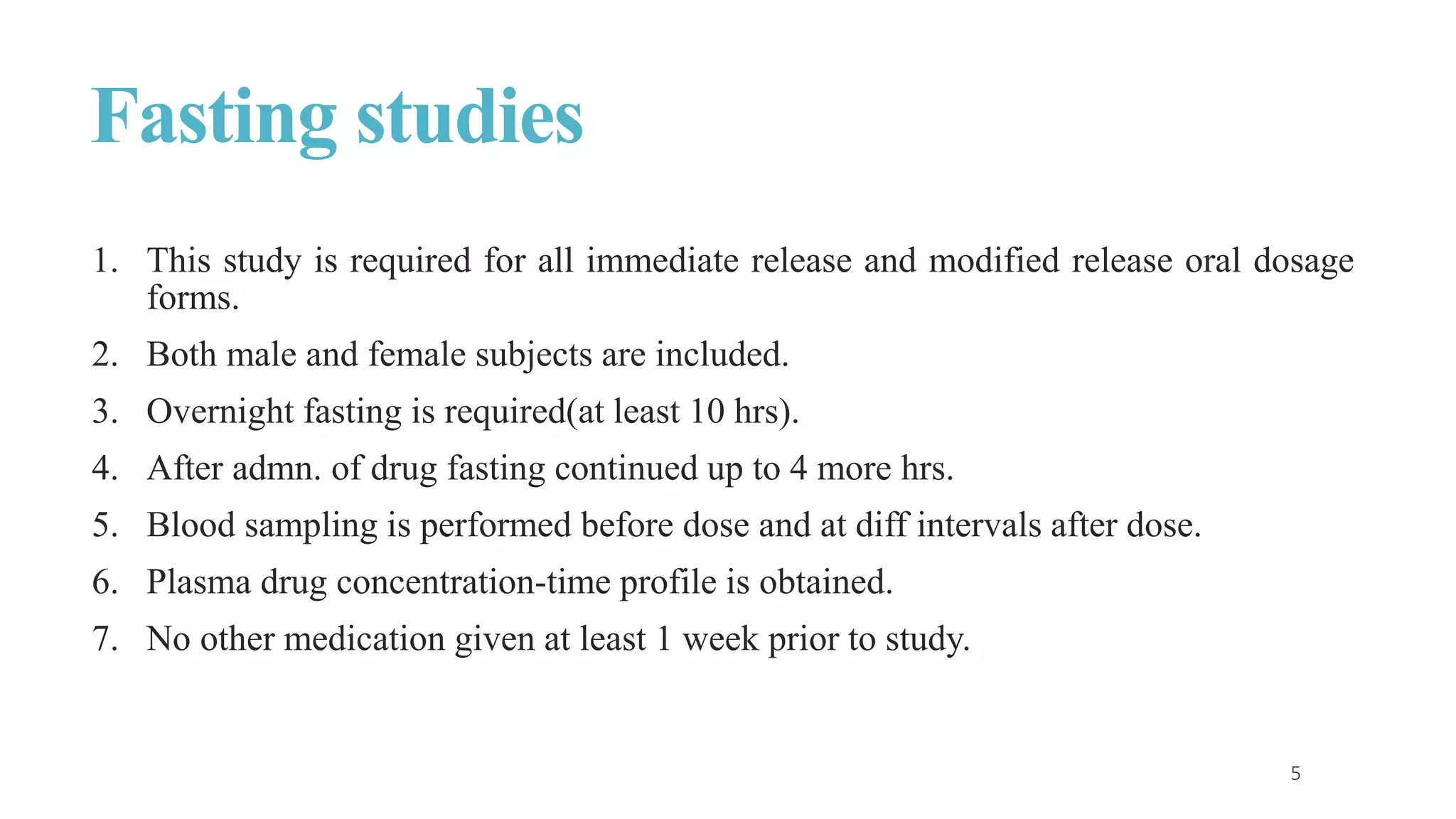
Fasting studies
1. This study is required for all immediate release and modified release oral dosage
forms.
2. Both male and female subjects are included.
3. Overnight fasting is required(at least 10 hrs).
4. After admn. of drug fasting continued up to 4 more hrs.
5. Blood sampling is performed before dose and at diff intervals after dose.
6. Plasma drug concentration-time profile is obtained.
7. No other medication given at least 1 week prior to study.
Food intervention study
1. It uses single dose, randomized, 2 treatment, 2 period crossover study.
2. Conducted using meal conditions that have greatest effect on GI physiology.
3. Meal containing high calories(50% of total caloric content) and fat (800-1000 cal)
is taken.
4. After a overnight fast of 10 hrs, meal is given 30min prior to dosing.
5. The meal is consumed over 30min with admn. of drug(with 240ml of water)
immediately after meal.
6. No food is allowed 4hrs after dosing.
7. Study on drugs like ibuprofen and naproxen which is affected by food.
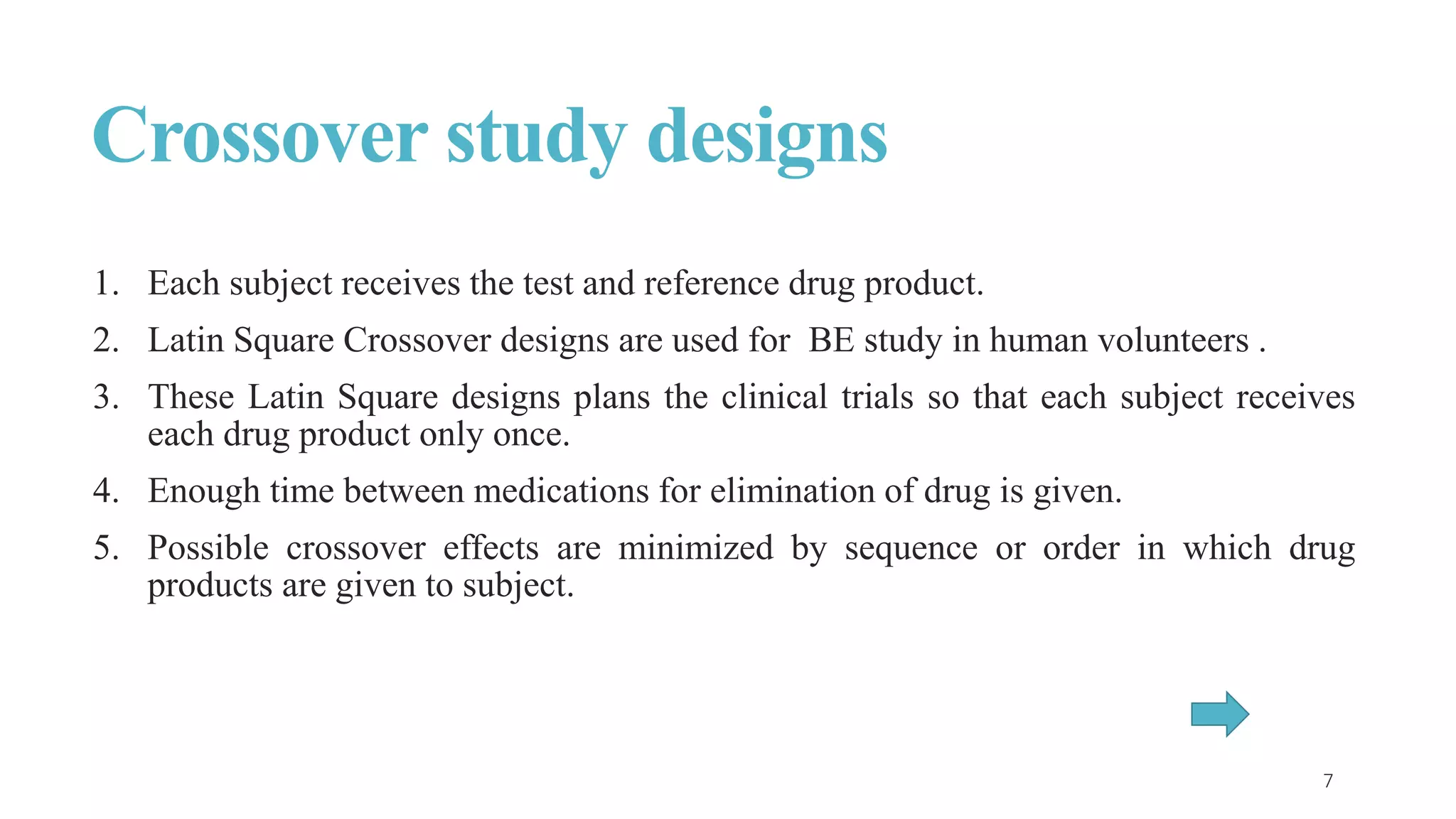
Crossover study designs
1. Each subject receives the test and reference drug product.
2. Latin Square Crossover designs are used for BE study in human volunteers .
3. These Latin Square designs plans the clinical trials so that each subject receives
each drug product only once.
4. Enough time between medications for elimination of drug is given.
5. Possible crossover effects are minimized by sequence or order in which drug
products are given to subject.
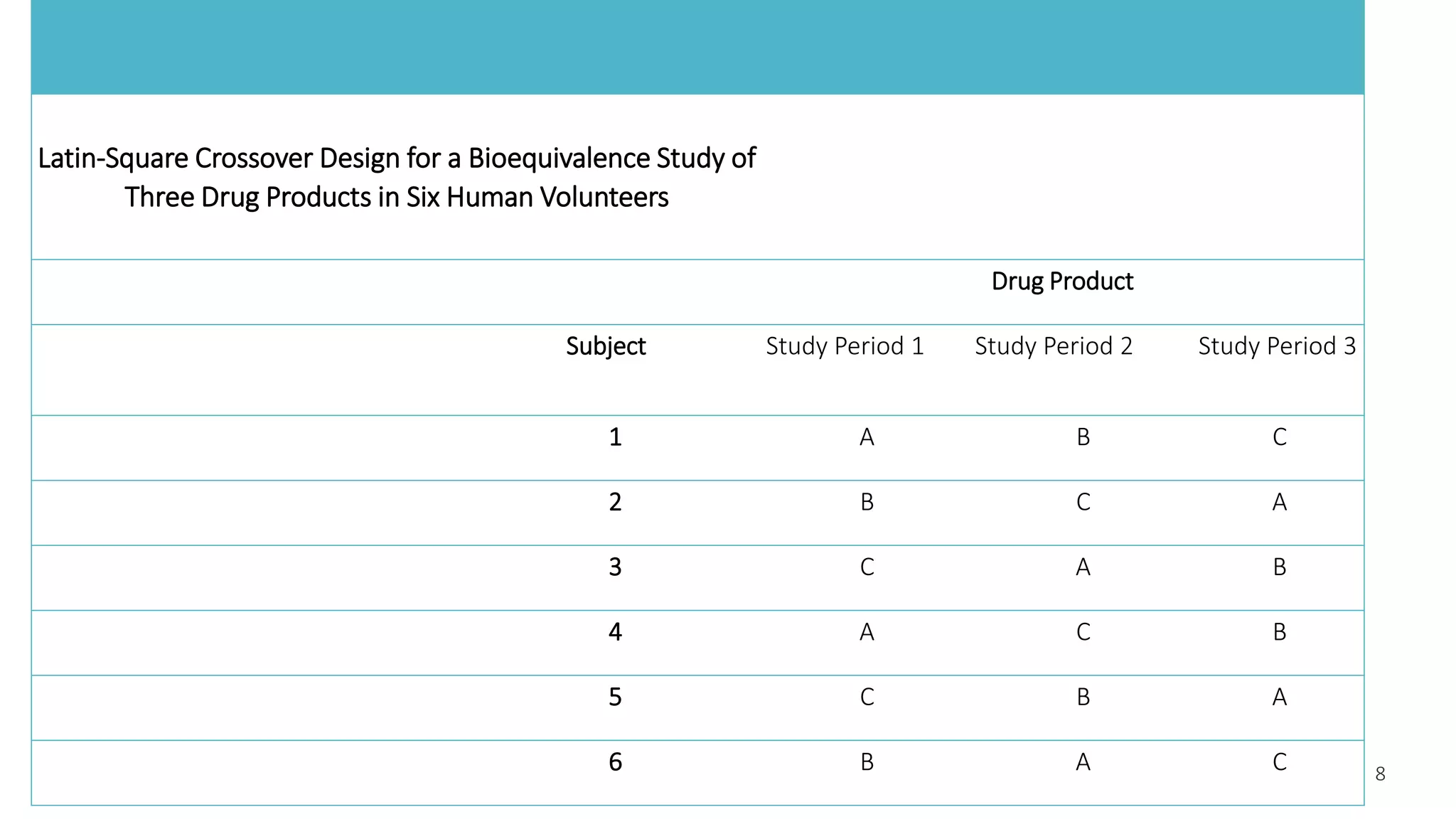
Latin-Square Crossover Design for a Bioequivalence Study of
Three Drug Products in Six Human Volunteers
Drug Product
Subject Study Period 1 Study Period 2 Study Period 3
1 A B C
2 B C A
3 C A B
4 A C B
5 C B A
6 B A C
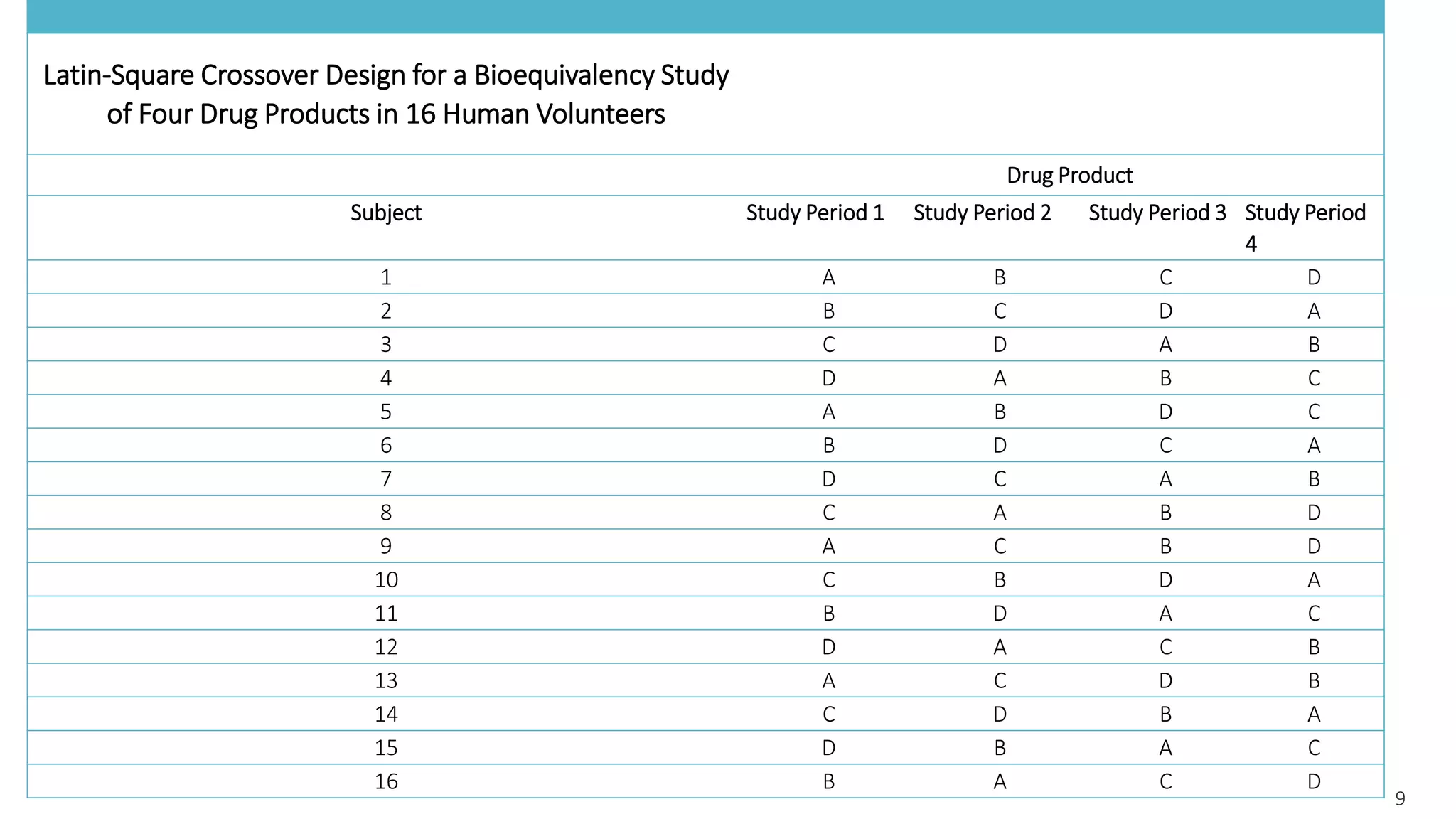
Latin-Square Crossover Design for a Bioequivalency Study
of Four Drug Products in 16 Human Volunteers
Drug Product
Subject Study Period 1 Study Period 2 Study Period 3 Study Period
4
1 A B C D
2 B C D A
3 C D A B
4 D A B C
5 A B D C
6 B D C A
7 D C A B
8 C A B D
9 A C B D
10 C B D A
11 B D A C
12 D A C B
13 A C D B
14 C D B A
15 D B A C
16 B A C D
Period 1 Period 2
Sequence 1 T R
Sequence 2 R T
Period refers to the time period in which a study is performed
A two-period study is a study that is performed on two different days (time periods) separated by a washout period
during which most of the drug is eliminated from the body—generally about 10 elimination half-lives.
A sequence refers to the number of different orders in the treatment groups in a study.
For example, a two-sequence, two-period study would be designed as above:
where R = reference and T = treatment.
The same reference and the same test are each given twice to the same subject. Other sequences are possible. In this
design, Reference-to-Reference and Test-to-Test comparisons may also be made.
Replicated crossover study designs
1. When the no. of study subjects <80, it is difficult to achieve with highly variable
drugs and drug product (%CV > 30).
2. These drugs have wide therapeutic window and despite high variability, have been
demonstrated to be safe and effective.
3. Replicate designs for these drugs require smaller no. of subject and avoid exposure
of large no. of healthy subjects.
4. Used for determining individual BE, to estimate within subject variance for both
test and reference.
5. Provide an estimate of the subject- by- formulation interaction variance.
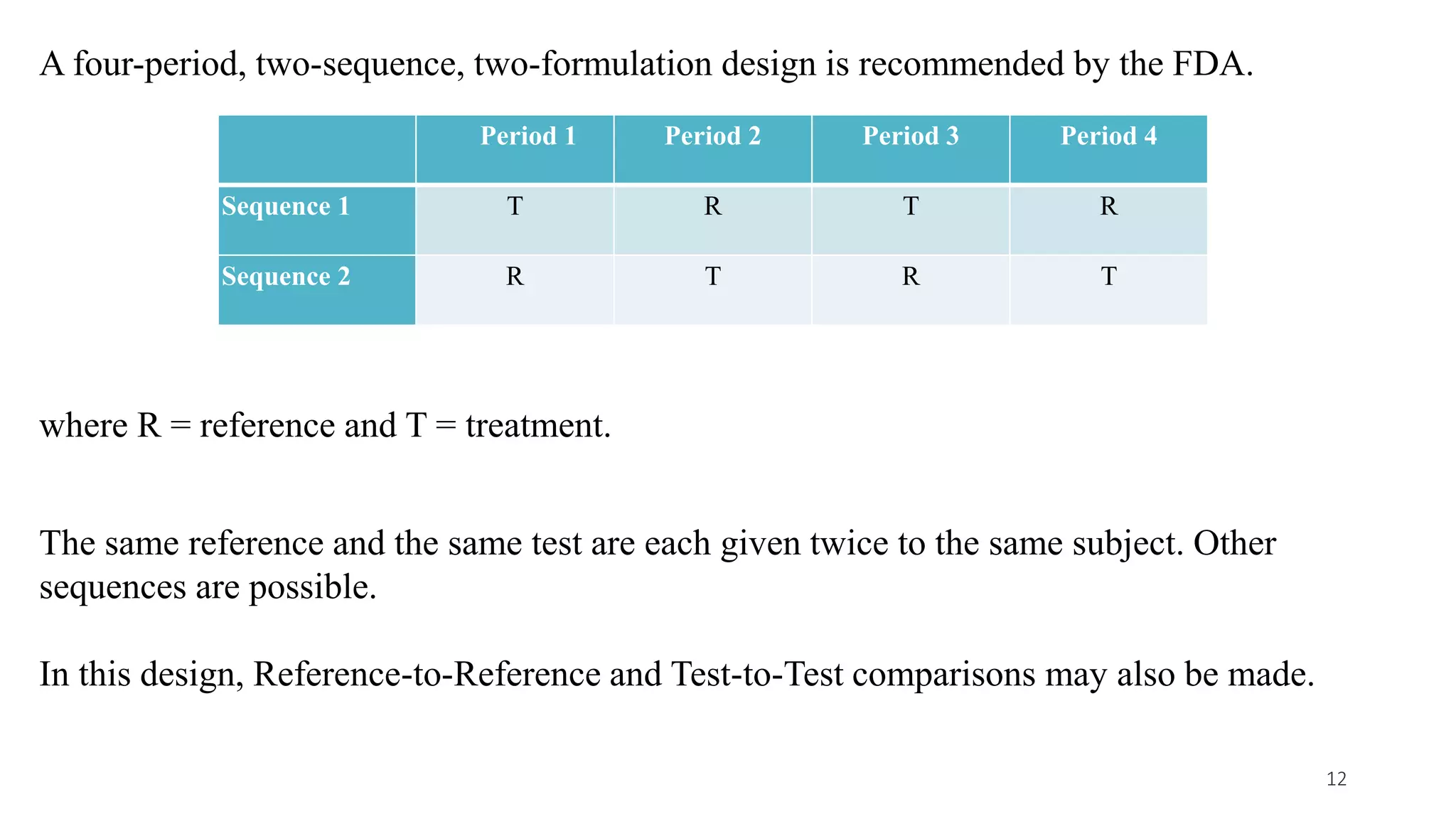
A four-period, two-sequence, two-formulation design is recommended by the FDA.
Period 1 Period 2 Period 3 Period 4
Sequence 1 T R T R
Sequence 2 R T R T
where R = reference and T = treatment.
The same reference and the same test are each given twice to the same subject. Other
sequences are possible.
In this design, Reference-to-Reference and Test-to-Test comparisons may also be made.
Scaled average bioequivalence
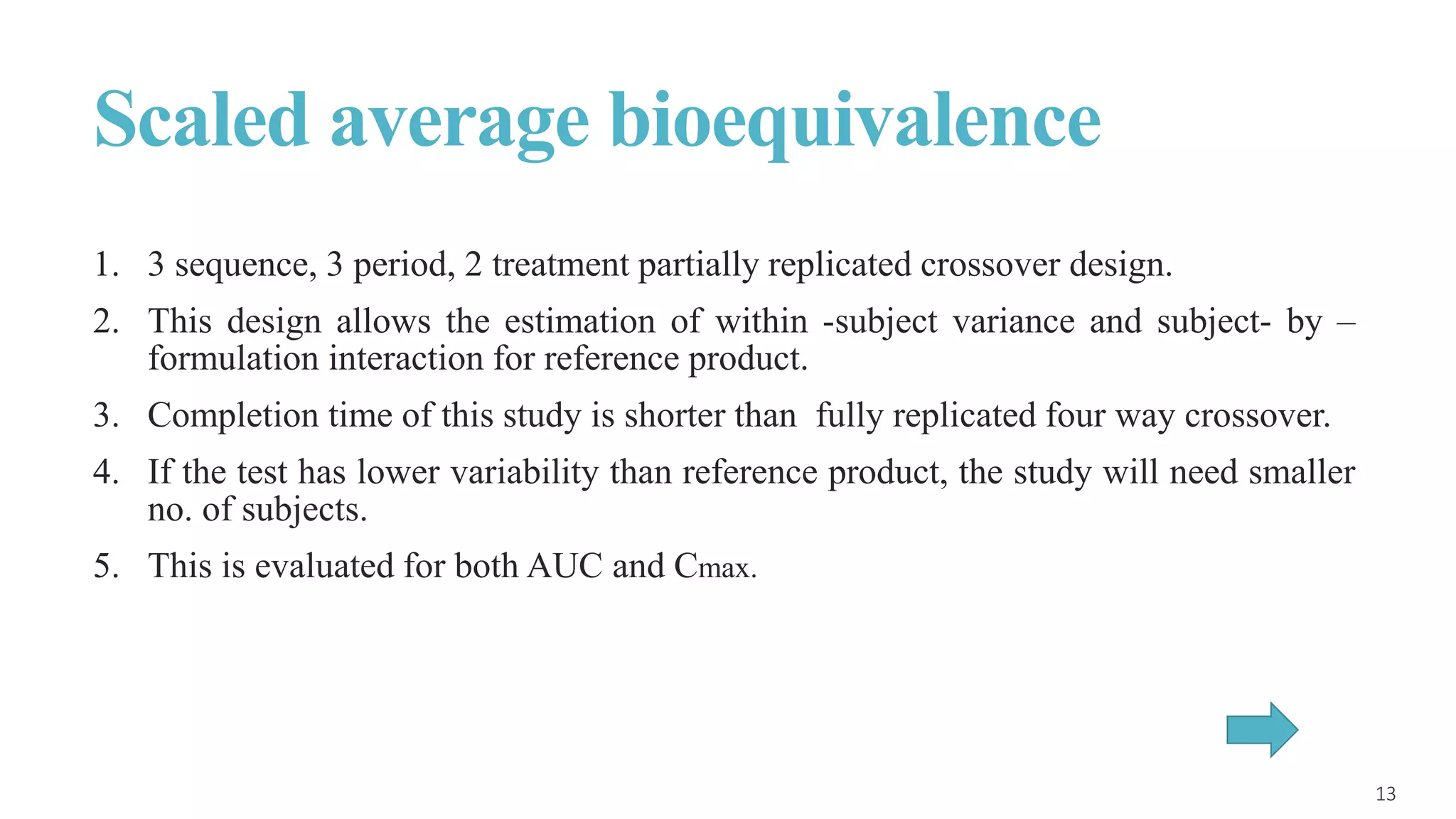
1. 3 sequence, 3 period, 2 treatment partially replicated crossover design.
2. This design allows the estimation of within -subject variance and subject- by –
formulation interaction for reference product.
3. Completion time of this study is shorter than fully replicated four way crossover.
4. If the test has lower variability than reference product, the study will need smaller
no. of subjects.
5. This is evaluated for both AUC and Cmax.
period 1 period 2 period 3
Sequence 1 T R R
Sequence 2 R T R
Sequence 3 R R T
Scaled average bioequivalence
Non replicate parallel study design
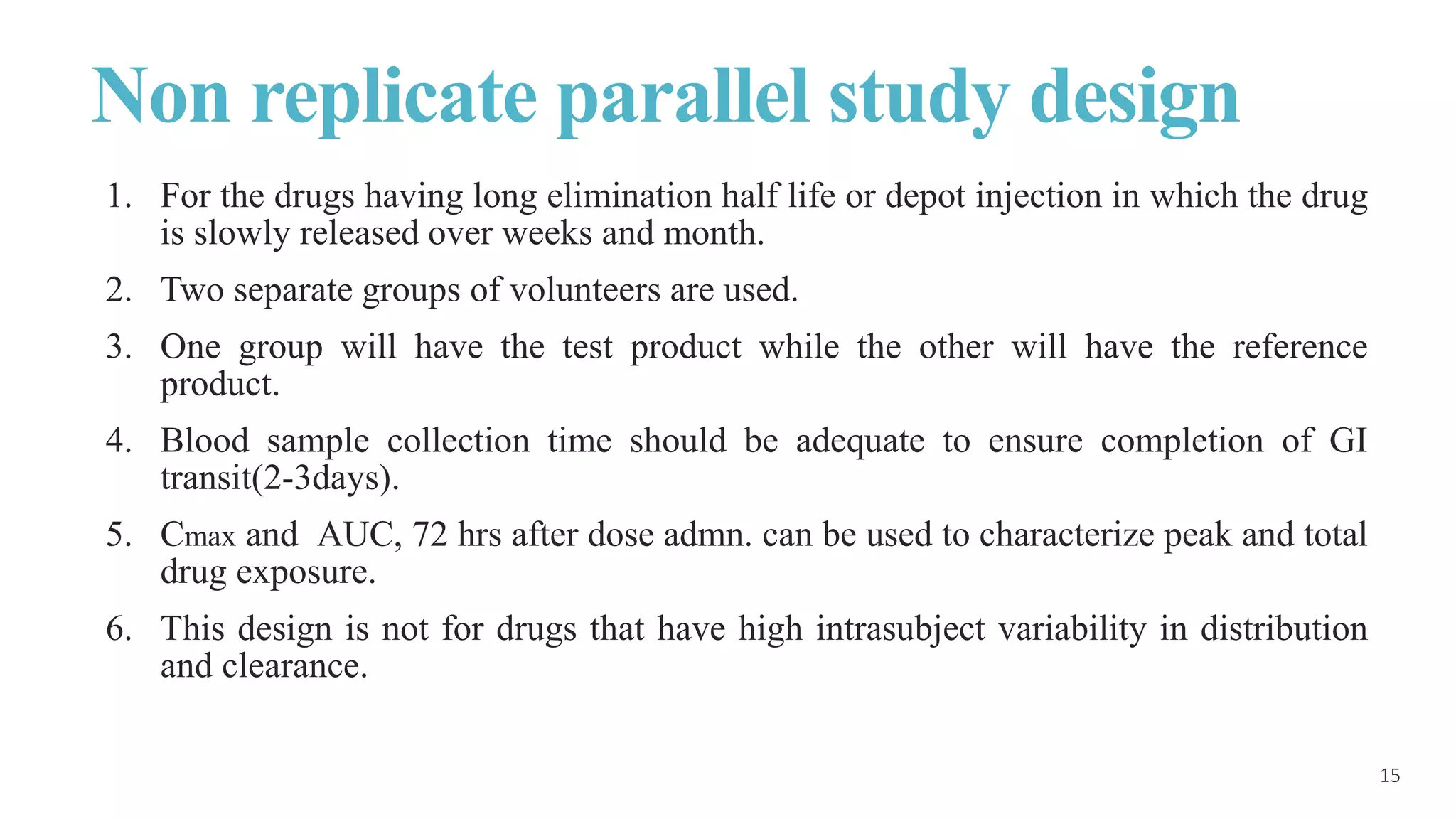
1. For the drugs having long elimination half life or depot injection in which the drug
is slowly released over weeks and month.
2. Two separate groups of volunteers are used.
3. One group will have the test product while the other will have the reference
product.
4. Blood sample collection time should be adequate to ensure completion of GI
transit(2-3days).
5. Cmax and AUC, 72 hrs after dose admn. can be used to characterize peak and total
drug exposure.
6. This design is not for drugs that have high intrasubject variability in distribution
and clearance.
Multiple dose (steady state) study design
1. Multiple doses of same drug are given consecutively to reach steady state plasma drug levels.
2. The multiple dose study is designed as steady state, randomized, 2 treatment, 2 way,
crossover study comparing equal dose of test and reference.
3. To ascertain that the subjects are at steady state, three consecutive trough concentrations
(Cmin) are determined.
Pharmacokinetic analyses include calculation of following parameters for each subject:
AUC0-t
tmax
Cmax
Cmin
Cavg
Degree of fluctuation = (Cmax-Cmin)/Cmax ; Swing = (Cmax-Cmin)/Cmin
Area under the curve during a dosing intervals
Time to Cmax during a dosing interval
Maximum drug concentration during dosing interval
Drug concentration at end of a dosing interval
The average drug concentration during a dosing interval
Clinical endpoint BE study
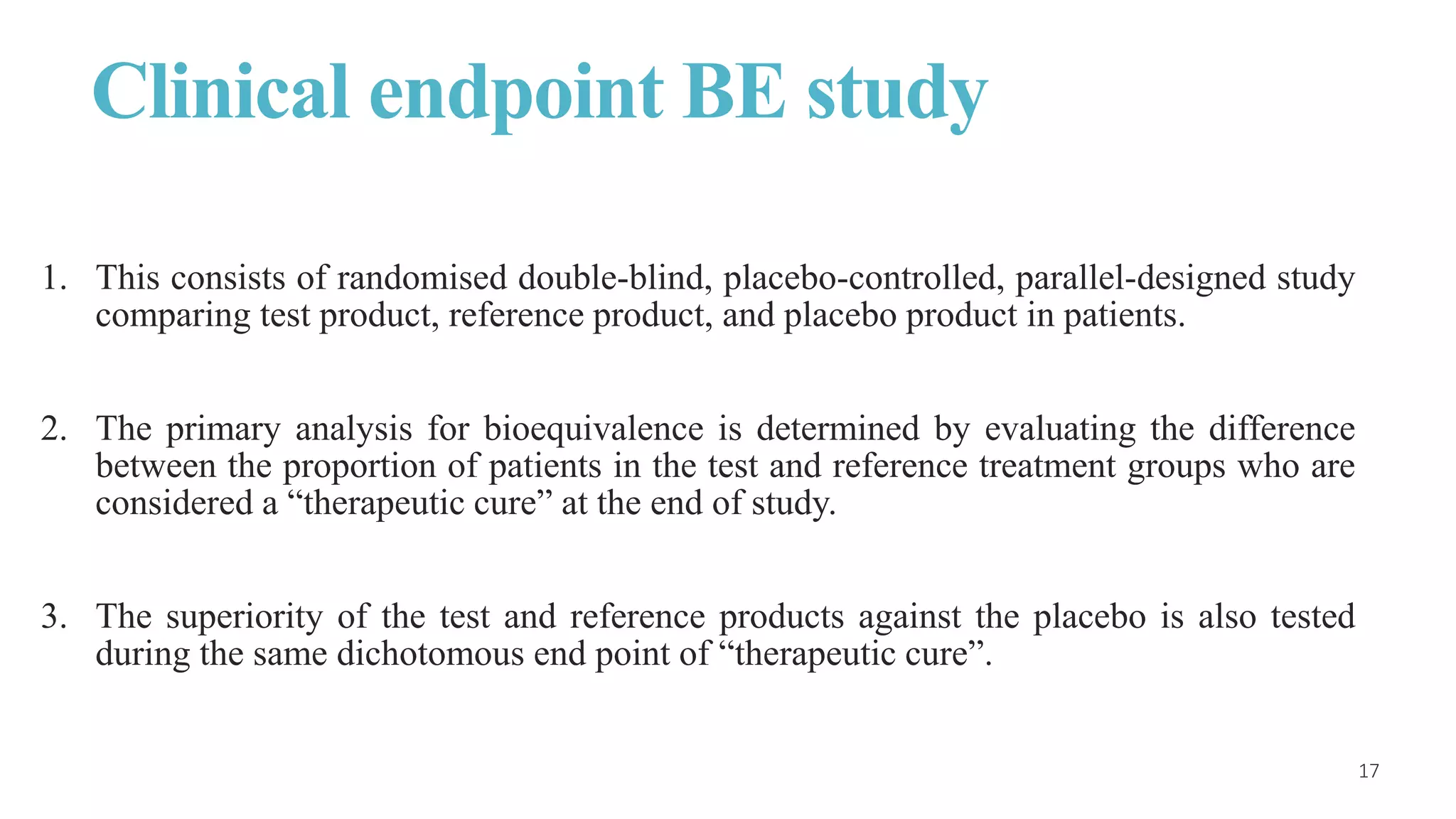
1. This consists of randomised double-blind, placebo-controlled, parallel-designed study
comparing test product, reference product, and placebo product in patients.
2. The primary analysis for bioequivalence is determined by evaluating the difference
between the proportion of patients in the test and reference treatment groups who are
considered a “therapeutic cure” at the end of study.
3. The superiority of the test and reference products against the placebo is also tested
during the same dichotomous end point of “therapeutic cure”.
Special Concerns in Bioavailability
and Bioequivalence Studies
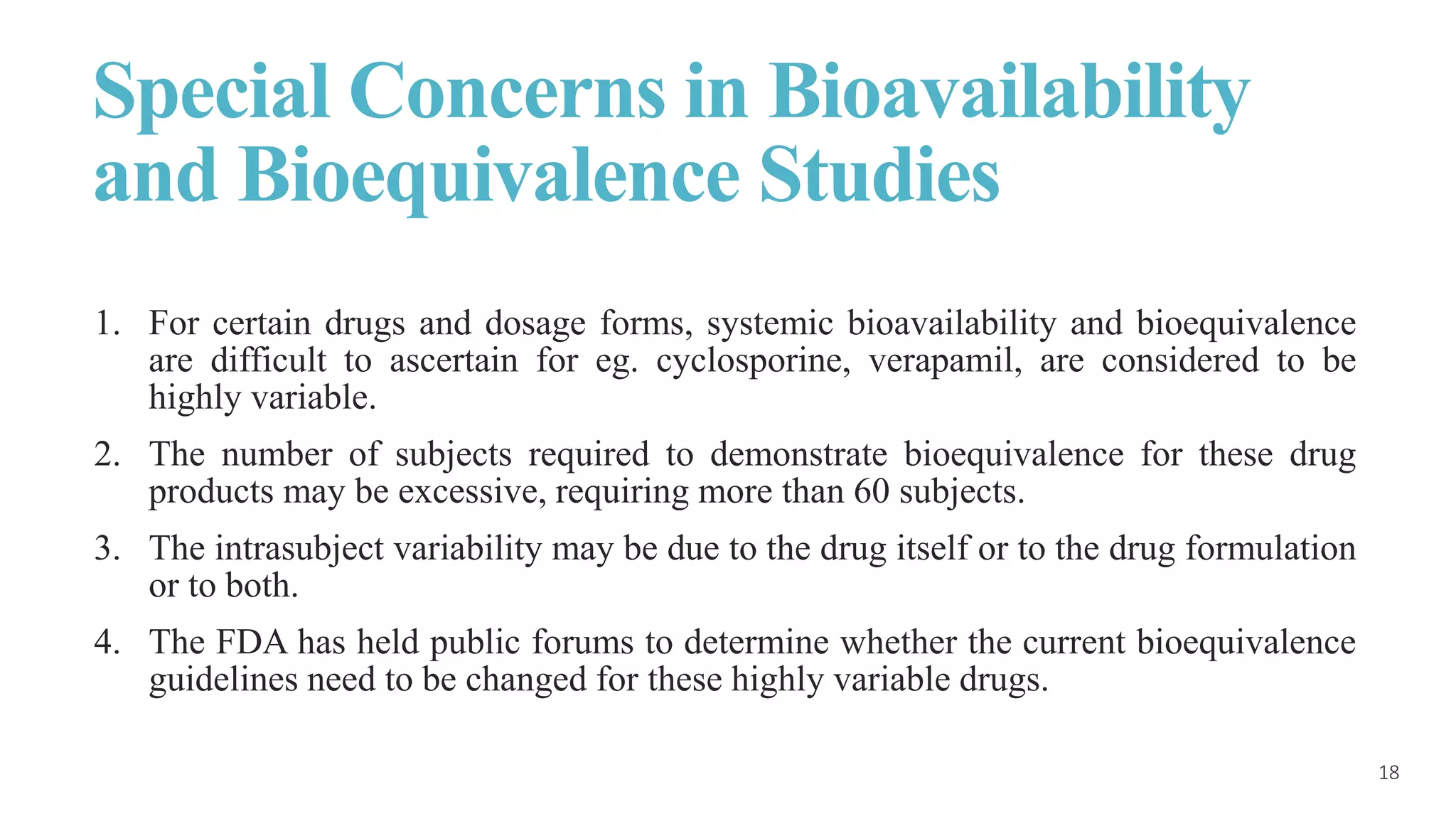
1. For certain drugs and dosage forms, systemic bioavailability and bioequivalence
are difficult to ascertain for eg. cyclosporine, verapamil, are considered to be
highly variable.
2. The number of subjects required to demonstrate bioequivalence for these drug
products may be excessive, requiring more than 60 subjects.
3. The intrasubject variability may be due to the drug itself or to the drug formulation
or to both.
4. The FDA has held public forums to determine whether the current bioequivalence
guidelines need to be changed for these highly variable drugs.
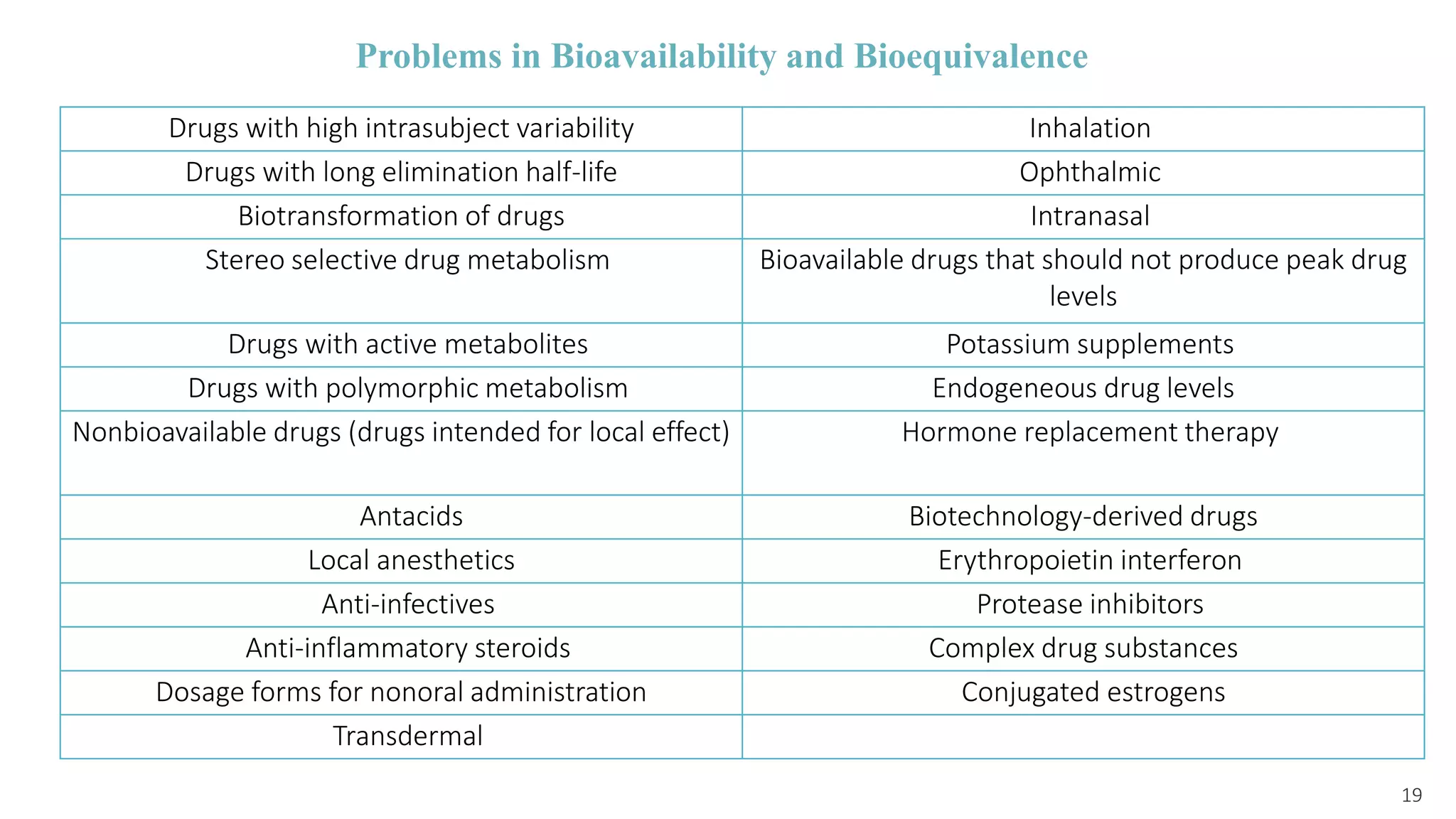
Drugs with high intrasubject variability Inhalation
Drugs with long elimination half-life Ophthalmic
Biotransformation of drugs Intranasal
Stereo selective drug metabolism Bioavailable drugs that should not produce peak drug
levels
Drugs with active metabolites Potassium supplements
Drugs with polymorphic metabolism Endogeneous drug levels
Nonbioavailable drugs (drugs intended for local effect) Hormone replacement therapy
Antacids Biotechnology-derived drugs
Local anesthetics Erythropoietin interferon
Anti-infectives Protease inhibitors
Anti-inflammatory steroids Complex drug substances
Dosage forms for nonoral administration Conjugated estrogens
Transdermal
Problems in Bioavailability and Bioequivalence
Conclusion
Bioequivalence studies are performed to compare the bioavailability of the generic drug
product to the brand-name product.
Bioequivalence can also be considered as performance measures of the drug product in-
vivo. If the drug products are bioequivalent and therapeutically equivalent, then the
clinical efficacy and the safety profile of these drug products are assumed to be similar
and may be substituted for each other.
References
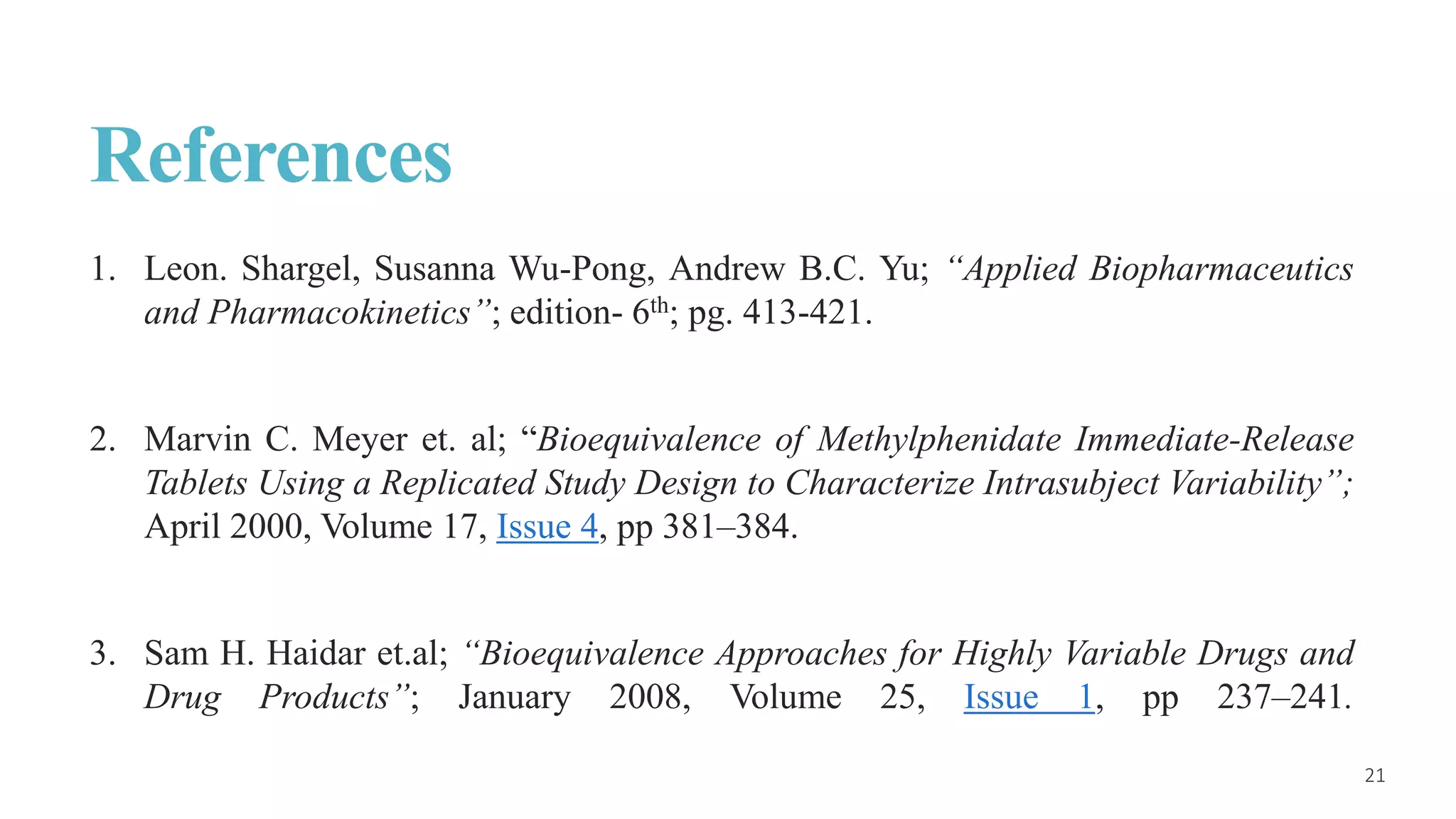
1. Leon. Shargel, Susanna Wu-Pong, Andrew B.C. Yu; “Applied Biopharmaceutics
and Pharmacokinetics”; edition- 6th; pg. 413-421.
2. Marvin C. Meyer et. al; “Bioequivalence of Methylphenidate Immediate-Release
Tablets Using a Replicated Study Design to Characterize Intrasubject Variability”;
April 2000, Volume 17, Issue 4, pp 381–384.
3. Sam H. Haidar et.al; “Bioequivalence Approaches for Highly Variable Drugs and
Drug Products”; January 2008, Volume 25, Issue 1, pp 237–241.
bioequivalence study design

bioequivalence study design

  • 1.
    BIOEQUIVALENCE STUDY DESIGN Seminarsubmitted to Department of Pharmaceutics Submitted by Juhi Priya (160617015) First Year MPharm (I.P) Under the guidance of Dr Vamshi Krishna T MANIPAL COLLEGE OF PHARMACEUTICAL SCIENCES
  • 2.
    Content  Introduction  Studyconsiderations  Study designs Non replicate parallel study design Multiple dose (steady state) study design Clinical endpoint BE study Special concerns in Bioavailability and Bioequivalence studies Conclusion References
  • 3.
    Introduction  Bioequivalence (BE)is the absence of a significant difference in the rate and extent to which the active moiety in pharmaceutical equivalents or alternatives becomes available at the site of drug action when administered at the same molar dose under similar condition.  It is determined by comparison of measured parameters like : 1. Conc. of active drug ingredient in blood 2. Urinary excretion rate 3. Or pharmacodynamic effect
  • 4.
    Objective The basic designfor bioequivalence study is determined by: 1. Scientific question and objectives to be answered 2. Nature of reference material and dosage form, to be tested 3. The availability of analytical methods 4. Pk and Pd of drug substance 5. Route of admn. 6. Benefit risk and ethical consideration(testing in humans) Study considerations The drug bioavailability from test and reference product are not statistically different when administered to patients at same molar dose.
  • 5.
    Study designs The FDAprovides the guidance for the performance of: In vitro dissolution and In vivo bioequivalence studies which include(solid oral dosage form): 1. Fasting study 2. Food intervention study 3. Sprinkle BE study (extended release capsules having beads)
  • 6.
    Fasting studies 1. Thisstudy is required for all immediate release and modified release oral dosage forms. 2. Both male and female subjects are included. 3. Overnight fasting is required(at least 10 hrs). 4. After admn. of drug fasting continued up to 4 more hrs. 5. Blood sampling is performed before dose and at diff intervals after dose. 6. Plasma drug concentration-time profile is obtained. 7. No other medication given at least 1 week prior to study.
  • 7.
    Food intervention study 1.It uses single dose, randomized, 2 treatment, 2 period crossover study. 2. Conducted using meal conditions that have greatest effect on GI physiology. 3. Meal containing high calories(50% of total caloric content) and fat (800-1000 cal) is taken. 4. After a overnight fast of 10 hrs, meal is given 30min prior to dosing. 5. The meal is consumed over 30min with admn. of drug(with 240ml of water) immediately after meal. 6. No food is allowed 4hrs after dosing. 7. Study on drugs like ibuprofen and naproxen which is affected by food.
  • 8.
    Crossover study designs 1.Each subject receives the test and reference drug product. 2. Latin Square Crossover designs are used for BE study in human volunteers . 3. These Latin Square designs plans the clinical trials so that each subject receives each drug product only once. 4. Enough time between medications for elimination of drug is given. 5. Possible crossover effects are minimized by sequence or order in which drug products are given to subject.
  • 9.
    Latin-Square Crossover Designfor a Bioequivalence Study of Three Drug Products in Six Human Volunteers Drug Product Subject Study Period 1 Study Period 2 Study Period 3 1 A B C 2 B C A 3 C A B 4 A C B 5 C B A 6 B A C
  • 10.
    Latin-Square Crossover Designfor a Bioequivalency Study of Four Drug Products in 16 Human Volunteers Drug Product Subject Study Period 1 Study Period 2 Study Period 3 Study Period 4 1 A B C D 2 B C D A 3 C D A B 4 D A B C 5 A B D C 6 B D C A 7 D C A B 8 C A B D 9 A C B D 10 C B D A 11 B D A C 12 D A C B 13 A C D B 14 C D B A 15 D B A C 16 B A C D
  • 11.
    Period 1 Period2 Sequence 1 T R Sequence 2 R T Period refers to the time period in which a study is performed A two-period study is a study that is performed on two different days (time periods) separated by a washout period during which most of the drug is eliminated from the body—generally about 10 elimination half-lives. A sequence refers to the number of different orders in the treatment groups in a study. For example, a two-sequence, two-period study would be designed as above: where R = reference and T = treatment. The same reference and the same test are each given twice to the same subject. Other sequences are possible. In this design, Reference-to-Reference and Test-to-Test comparisons may also be made.
  • 12.
    Replicated crossover studydesigns 1. When the no. of study subjects <80, it is difficult to achieve with highly variable drugs and drug product (%CV > 30). 2. These drugs have wide therapeutic window and despite high variability, have been demonstrated to be safe and effective. 3. Replicate designs for these drugs require smaller no. of subject and avoid exposure of large no. of healthy subjects. 4. Used for determining individual BE, to estimate within subject variance for both test and reference. 5. Provide an estimate of the subject- by- formulation interaction variance.
  • 13.
    A four-period, two-sequence,two-formulation design is recommended by the FDA. Period 1 Period 2 Period 3 Period 4 Sequence 1 T R T R Sequence 2 R T R T where R = reference and T = treatment. The same reference and the same test are each given twice to the same subject. Other sequences are possible. In this design, Reference-to-Reference and Test-to-Test comparisons may also be made.
  • 14.
    Scaled average bioequivalence 1.3 sequence, 3 period, 2 treatment partially replicated crossover design. 2. This design allows the estimation of within -subject variance and subject- by – formulation interaction for reference product. 3. Completion time of this study is shorter than fully replicated four way crossover. 4. If the test has lower variability than reference product, the study will need smaller no. of subjects. 5. This is evaluated for both AUC and Cmax.
  • 15.
    period 1 period2 period 3 Sequence 1 T R R Sequence 2 R T R Sequence 3 R R T Scaled average bioequivalence
  • 16.
    Non replicate parallelstudy design 1. For the drugs having long elimination half life or depot injection in which the drug is slowly released over weeks and month. 2. Two separate groups of volunteers are used. 3. One group will have the test product while the other will have the reference product. 4. Blood sample collection time should be adequate to ensure completion of GI transit(2-3days). 5. Cmax and AUC, 72 hrs after dose admn. can be used to characterize peak and total drug exposure. 6. This design is not for drugs that have high intrasubject variability in distribution and clearance.
  • 17.
    Multiple dose (steadystate) study design 1. Multiple doses of same drug are given consecutively to reach steady state plasma drug levels. 2. The multiple dose study is designed as steady state, randomized, 2 treatment, 2 way, crossover study comparing equal dose of test and reference. 3. To ascertain that the subjects are at steady state, three consecutive trough concentrations (Cmin) are determined. Pharmacokinetic analyses include calculation of following parameters for each subject: AUC0-t tmax Cmax Cmin Cavg Degree of fluctuation = (Cmax-Cmin)/Cmax ; Swing = (Cmax-Cmin)/Cmin Area under the curve during a dosing intervals Time to Cmax during a dosing interval Maximum drug concentration during dosing interval Drug concentration at end of a dosing interval The average drug concentration during a dosing interval
  • 18.
    Clinical endpoint BEstudy 1. This consists of randomised double-blind, placebo-controlled, parallel-designed study comparing test product, reference product, and placebo product in patients. 2. The primary analysis for bioequivalence is determined by evaluating the difference between the proportion of patients in the test and reference treatment groups who are considered a “therapeutic cure” at the end of study. 3. The superiority of the test and reference products against the placebo is also tested during the same dichotomous end point of “therapeutic cure”.
  • 19.
    Special Concerns inBioavailability and Bioequivalence Studies 1. For certain drugs and dosage forms, systemic bioavailability and bioequivalence are difficult to ascertain for eg. cyclosporine, verapamil, are considered to be highly variable. 2. The number of subjects required to demonstrate bioequivalence for these drug products may be excessive, requiring more than 60 subjects. 3. The intrasubject variability may be due to the drug itself or to the drug formulation or to both. 4. The FDA has held public forums to determine whether the current bioequivalence guidelines need to be changed for these highly variable drugs.
  • 20.
    Drugs with highintrasubject variability Inhalation Drugs with long elimination half-life Ophthalmic Biotransformation of drugs Intranasal Stereo selective drug metabolism Bioavailable drugs that should not produce peak drug levels Drugs with active metabolites Potassium supplements Drugs with polymorphic metabolism Endogeneous drug levels Nonbioavailable drugs (drugs intended for local effect) Hormone replacement therapy Antacids Biotechnology-derived drugs Local anesthetics Erythropoietin interferon Anti-infectives Protease inhibitors Anti-inflammatory steroids Complex drug substances Dosage forms for nonoral administration Conjugated estrogens Transdermal Problems in Bioavailability and Bioequivalence
  • 21.
    Conclusion Bioequivalence studies areperformed to compare the bioavailability of the generic drug product to the brand-name product. Bioequivalence can also be considered as performance measures of the drug product in- vivo. If the drug products are bioequivalent and therapeutically equivalent, then the clinical efficacy and the safety profile of these drug products are assumed to be similar and may be substituted for each other.
  • 22.
    References 1. Leon. Shargel,Susanna Wu-Pong, Andrew B.C. Yu; “Applied Biopharmaceutics and Pharmacokinetics”; edition- 6th; pg. 413-421. 2. Marvin C. Meyer et. al; “Bioequivalence of Methylphenidate Immediate-Release Tablets Using a Replicated Study Design to Characterize Intrasubject Variability”; April 2000, Volume 17, Issue 4, pp 381–384. 3. Sam H. Haidar et.al; “Bioequivalence Approaches for Highly Variable Drugs and Drug Products”; January 2008, Volume 25, Issue 1, pp 237–241.