

Biodiesel
PRESENTED BY
AGLAIA
Introduction
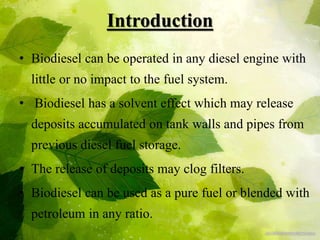
• Biodiesel can be operated in any diesel engine with
little or no impact to the fuel system.
• Biodiesel has a solvent effect which may release
deposits accumulated on tank walls and pipes from
previous diesel fuel storage.
• The release of deposits may clog filters.
• Biodiesel can be used as a pure fuel or blended with
petroleum in any ratio.
What is Biodiesel?
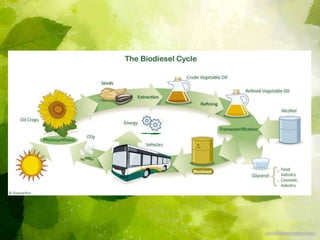
• Alternative fuel for diesel engines
• Made from vegetable oil or animal fat
• Meets health effect testing (CAA)
• Lower emissions, High flash point (>300F), Safer
• Biodegradable, Essentially non-toxic.
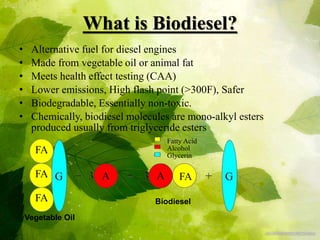
• Chemically, biodiesel molecules are mono-alkyl esters
produced usually from triglyceride esters
Fatty Acid
Alcohol
Glycerin
Vegetable Oil
BiodieselFA
FAFA
FA
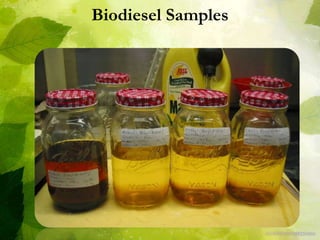
Biodiesel Samples
Biodiesel can be used in existing
Diesel Engines
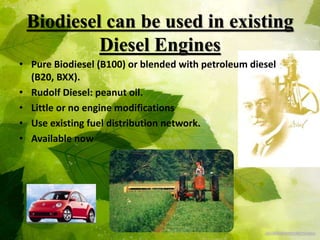
• Pure Biodiesel (B100) or blended with petroleum diesel
(B20, BXX).
• Rudolf Diesel: peanut oil.
• Little or no engine modifications
• Use existing fuel distribution network.
• Available now
Benefits of Biodiesel
 - High cetane number (average 45,8-56,9 units)
 - High flash point (above +100)
 - Good lubricating property
 - Absence of sulfur and aromatic hydrocarbons
 - Low toxicity of emissions
 - Virtually complete biodegradability (99%
 biodiesel are destroyed in water or soil for 28 days)
 - Zero balance of greenhouse gases
6
Environmental Issues
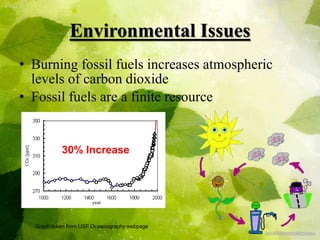
• Burning fossil fuels increases atmospheric
levels of carbon dioxide
• Fossil fuels are a finite resource
30% Increase
Graph taken from USF Oceanography webpage
Problems brought by Biodiesel
• Certain biodiesel gels easily under cold
temperature
• Deforestation for plantation
• Degrades rubber in old cars
• Synthetic rubbers that are resistant
Biodiesel Challenges
• Cold Weather Operation (Chemistry)
• Producing enough feedstock oil to replace a
large portion of petroleum (biology, chemistry,
physics, economics)
• Engine and emissions optimization (chemistry,
physics)
The Future of Biodiesel
• Should be considered for use as an alternative and not a
primary fuel.
• Short and long term environmental benefits will be
worthwhile.
• Storage Issues with Stability and Transportation issues
with high cost of delivered fuel compared to fossil fuels.
• Fuel-supply reliability
• Lack of understanding of environmental impact - NOx
emissions
• Complexity of biomass-power infrastructure compared to
known well established coal and natural gas markets
Conclusion
• Biodiesel is eco-friendly.
• Biodiesel is clean burning alternative fuel.
• Biodiesel contain no petroleum, but can be
blended with conventional diesel fuel.
• These fuel can be used in any diesel engine
without any modification.
• Biodiesel is degradable , non toxic and free
from sulphur and lead.
Thank you
For more…. Mail to aglaiaconnect2018@gmail.com

Biodiesel

  • 1.
  • 2.
    Introduction • Biodiesel canbe operated in any diesel engine with little or no impact to the fuel system. • Biodiesel has a solvent effect which may release deposits accumulated on tank walls and pipes from previous diesel fuel storage. • The release of deposits may clog filters. • Biodiesel can be used as a pure fuel or blended with petroleum in any ratio.
  • 3.
    What is Biodiesel? •Alternative fuel for diesel engines • Made from vegetable oil or animal fat • Meets health effect testing (CAA) • Lower emissions, High flash point (>300F), Safer • Biodegradable, Essentially non-toxic. • Chemically, biodiesel molecules are mono-alkyl esters produced usually from triglyceride esters Fatty Acid Alcohol Glycerin Vegetable Oil BiodieselFA FAFA FA
  • 4.
  • 5.
    Biodiesel can beused in existing Diesel Engines • Pure Biodiesel (B100) or blended with petroleum diesel (B20, BXX). • Rudolf Diesel: peanut oil. • Little or no engine modifications • Use existing fuel distribution network. • Available now
  • 6.
    Benefits of Biodiesel - High cetane number (average 45,8-56,9 units)  - High flash point (above +100)  - Good lubricating property  - Absence of sulfur and aromatic hydrocarbons  - Low toxicity of emissions  - Virtually complete biodegradability (99%  biodiesel are destroyed in water or soil for 28 days)  - Zero balance of greenhouse gases 6
  • 7.
    Environmental Issues • Burningfossil fuels increases atmospheric levels of carbon dioxide • Fossil fuels are a finite resource 30% Increase Graph taken from USF Oceanography webpage
  • 8.
    Problems brought byBiodiesel • Certain biodiesel gels easily under cold temperature • Deforestation for plantation • Degrades rubber in old cars • Synthetic rubbers that are resistant
  • 9.
    Biodiesel Challenges • ColdWeather Operation (Chemistry) • Producing enough feedstock oil to replace a large portion of petroleum (biology, chemistry, physics, economics) • Engine and emissions optimization (chemistry, physics)
  • 10.
    The Future ofBiodiesel • Should be considered for use as an alternative and not a primary fuel. • Short and long term environmental benefits will be worthwhile. • Storage Issues with Stability and Transportation issues with high cost of delivered fuel compared to fossil fuels. • Fuel-supply reliability • Lack of understanding of environmental impact - NOx emissions • Complexity of biomass-power infrastructure compared to known well established coal and natural gas markets
  • 12.
    Conclusion • Biodiesel iseco-friendly. • Biodiesel is clean burning alternative fuel. • Biodiesel contain no petroleum, but can be blended with conventional diesel fuel. • These fuel can be used in any diesel engine without any modification. • Biodiesel is degradable , non toxic and free from sulphur and lead.
  • 13.
    Thank you For more….Mail to aglaiaconnect2018@gmail.com