BIODIESEL TOMORROW’S FUEL
R.C.E.R.T Sitapura Jaipur
Submitted by:
Avinash Kumar
Contents:
Introduction
Manufacturing process
Diagram
Advantages
Application
Availabilities & prices
Conclusion
Scope of biodiesel
References
Introduction:
Biodiesel is meant to be used
in standard diesel engines and
is thus distinct from the
vegetable and waste oils used
to fuel converted diesel
engines.
Biodiesel is the methyl or ethyl
ester of fatty acid.
The 1’st use of peanut oil was
made in 1895 by Dr. Rudolf
Diesel.
Following trees are used for
biodiesel:
Mahua,Nim,Jatropha,Karanji
etc.
Manufacturing process
triglycerides  diglycerides monoglycerides
glycerol
Yielding one methyl ester molecule from
glyceride at each step.
When methonol is used in the esterification,a
catalyst & excess alcohal are used to increased
rate of reaction & to the shift the equilibrium to
the product side respectively.
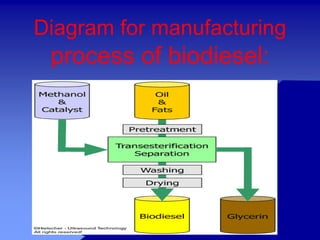
Diagram for manufacturing
process of biodiesel:
Advantages:
Used in compression ignition engine.
No modification of diesel engine for
biodiesel engine.
Biodiesel fuel is same to diesel fuel but is
very eco-friendly.
Biodiesel is safe and non-polluting source
of energy.
Availabilities and prices
Global biodiesel production reached 3.8 million tons in 2005.
Approximately 85% of biodiesel production came from the
European union.
Biodiesel is now being produced locally in India for use in
stationary engines and large or slow engines like those in trains,
trucks and tractors.
Efforts are also on to use ethanol as a substitute for petrol.
Biodiesel is rapidly replacing both kerosene (which was used
illegally and inefficiently) and diesel as a more efficient, cheap,
and clean alternative for large engines.
Applications:
Producing Hydrogen for Fuel-Cell Vehicles
Adding Lubricity to Diesel Fuel
Cleaning Up Tools and Grease
Cooking and Illumination
Heating Your Home
Generating Electricity
Cleaning Up Oil Spills
Removing Paint and Adhesives
Metal Working Lubricant
Hand Cleaner
Conclusion:
Biodiesel is safe to handle because it is
biodegradable and non-toxic.
Biodiesel reduces all the emission.
Biodiesel can be used alone or mixed in
any amount with petroleum diesel fuel.
Biodiesel runs in any conventional,
unmodified diesel engine.
Future scope of biodiesel
Biodiesel is a safe alternative fuel to replace
traditional petroleum diesel.
It has high-lubricity, is a clean-burning fuel and
can be a fuel component for use in existing,
unmodified diesel engines.
Biodiesel acts like petroleum diesel, but produces
less air pollution, comes from renewable sources,
is biodegradable and is safer for the environment.
In the United States today, biodiesel is typically
produced from soybean or rapeseed oil or can be
reprocessed from waste cooking oils
References
www.google.com
www.wikipedia.com
Cole, G. Mattney, 2003.Assessment and
remediation of petroleum contaminated sites
publishers 1982 test guidelines chemical fate-
aerobic aquatic bio degradation.
U.S.Department of energy 2003 biorefinery
ppt .Shaine Tyson nrel golden Colorado, USA
Queries
Biodiesel

Biodiesel

  • 1.
    BIODIESEL TOMORROW’S FUEL R.C.E.R.TSitapura Jaipur Submitted by: Avinash Kumar
  • 2.
  • 3.
    Introduction: Biodiesel is meantto be used in standard diesel engines and is thus distinct from the vegetable and waste oils used to fuel converted diesel engines. Biodiesel is the methyl or ethyl ester of fatty acid. The 1’st use of peanut oil was made in 1895 by Dr. Rudolf Diesel. Following trees are used for biodiesel: Mahua,Nim,Jatropha,Karanji etc.
  • 4.
    Manufacturing process triglycerides diglycerides monoglycerides glycerol Yielding one methyl ester molecule from glyceride at each step. When methonol is used in the esterification,a catalyst & excess alcohal are used to increased rate of reaction & to the shift the equilibrium to the product side respectively.
  • 5.
  • 6.
    Advantages: Used in compressionignition engine. No modification of diesel engine for biodiesel engine. Biodiesel fuel is same to diesel fuel but is very eco-friendly. Biodiesel is safe and non-polluting source of energy.
  • 7.
    Availabilities and prices Globalbiodiesel production reached 3.8 million tons in 2005. Approximately 85% of biodiesel production came from the European union. Biodiesel is now being produced locally in India for use in stationary engines and large or slow engines like those in trains, trucks and tractors. Efforts are also on to use ethanol as a substitute for petrol. Biodiesel is rapidly replacing both kerosene (which was used illegally and inefficiently) and diesel as a more efficient, cheap, and clean alternative for large engines.
  • 8.
    Applications: Producing Hydrogen forFuel-Cell Vehicles Adding Lubricity to Diesel Fuel Cleaning Up Tools and Grease Cooking and Illumination Heating Your Home Generating Electricity Cleaning Up Oil Spills Removing Paint and Adhesives Metal Working Lubricant Hand Cleaner
  • 9.
    Conclusion: Biodiesel is safeto handle because it is biodegradable and non-toxic. Biodiesel reduces all the emission. Biodiesel can be used alone or mixed in any amount with petroleum diesel fuel. Biodiesel runs in any conventional, unmodified diesel engine.
  • 10.
    Future scope ofbiodiesel Biodiesel is a safe alternative fuel to replace traditional petroleum diesel. It has high-lubricity, is a clean-burning fuel and can be a fuel component for use in existing, unmodified diesel engines. Biodiesel acts like petroleum diesel, but produces less air pollution, comes from renewable sources, is biodegradable and is safer for the environment. In the United States today, biodiesel is typically produced from soybean or rapeseed oil or can be reprocessed from waste cooking oils
  • 11.
    References www.google.com www.wikipedia.com Cole, G. Mattney,2003.Assessment and remediation of petroleum contaminated sites publishers 1982 test guidelines chemical fate- aerobic aquatic bio degradation. U.S.Department of energy 2003 biorefinery ppt .Shaine Tyson nrel golden Colorado, USA
  • 12.