BFS (Breadth First Search)
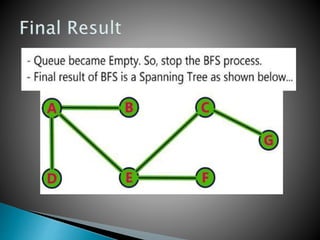
BFS traversal of a graph produces a spanning
tree as final result. Spanning Tree is a graph
without loops. We use Queue data
structure with maximum size of total number of
vertices in the graph to implement BFS
traversal.
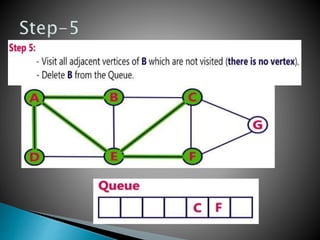
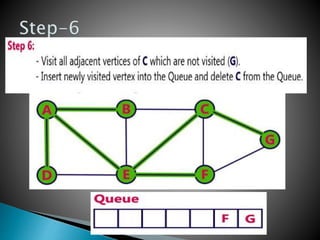
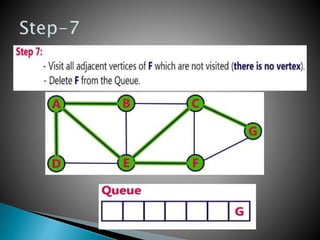
Step 1 - Define a Queue of size total number of vertices
in the graph.
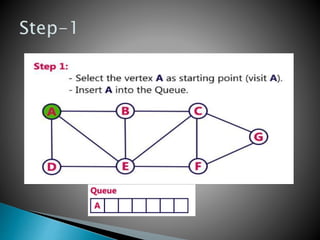
Step 2 - Select any vertex as starting point for traversal.
Visit that vertex and insert it into the Queue.
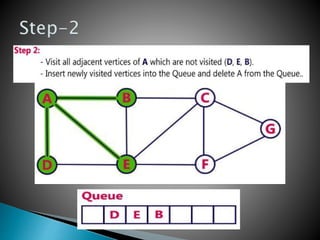
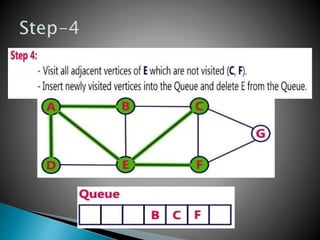
Step 3 - Visit all the non-visited adjacent vertices of the
vertex which is at front of the Queue and insert them into
the Queue.
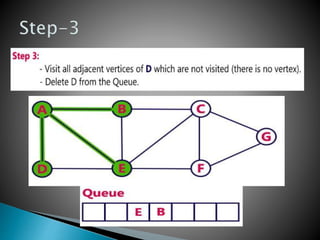
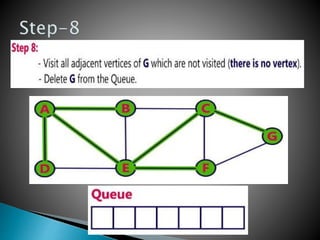
Step 4 - When there is no new vertex to be visited from
the vertex which is at front of the Queue then delete that
vertex.
Step 5 - Repeat steps 3 and 4 until queue becomes empty.
Step 6 -When queue becomes empty, then produce final
spanning tree by removing unused edges from the graph
Traversal Steps
Thank You

Bfs new

  • 1.
  • 2.
    BFS traversal ofa graph produces a spanning tree as final result. Spanning Tree is a graph without loops. We use Queue data structure with maximum size of total number of vertices in the graph to implement BFS traversal.
  • 3.
    Step 1 -Define a Queue of size total number of vertices in the graph. Step 2 - Select any vertex as starting point for traversal. Visit that vertex and insert it into the Queue. Step 3 - Visit all the non-visited adjacent vertices of the vertex which is at front of the Queue and insert them into the Queue. Step 4 - When there is no new vertex to be visited from the vertex which is at front of the Queue then delete that vertex. Step 5 - Repeat steps 3 and 4 until queue becomes empty. Step 6 -When queue becomes empty, then produce final spanning tree by removing unused edges from the graph Traversal Steps
  • 14.