Graham Attwell Web 2.0, social software and personal learning environments
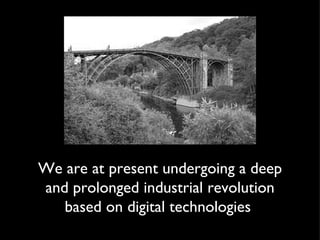
We are at present undergoing a deep and prolonged industrial revolution based on digital technologies
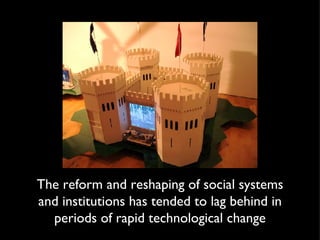
The reform and reshaping of social systems and institutions has tended to lag behind in periods of rapid technological change
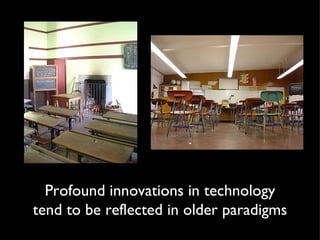
Profound innovations in technology tend to be reflected in older paradigms
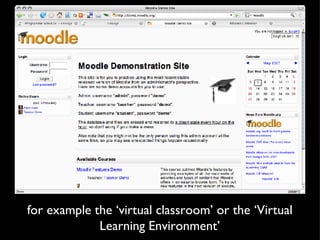
for example the ‘virtual classroom’ or the ‘Virtual Learning Environment’
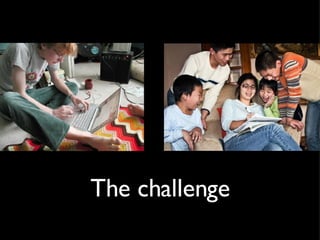
The challenge
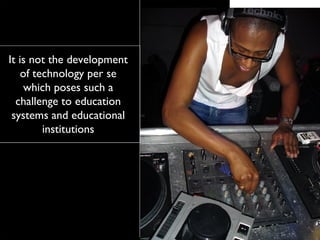
It is not the development of technology per se which poses such a challenge to education systems and educational institutions
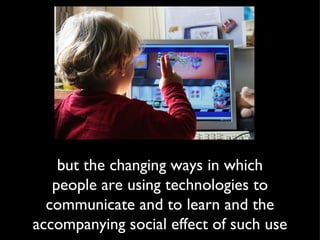
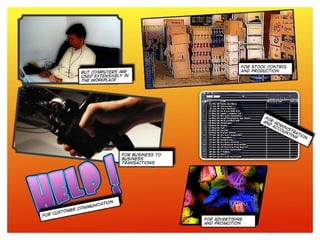
but the changing ways in which people are using technologies to communicate and to learn and the accompanying social effect of such use
 
The reaction of education systems and institutions to the rise of social networking has been at best bewilderment, at worst downright hostility
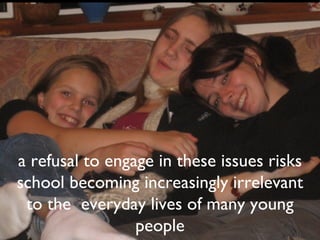
a refusal to engage in these issues risks school becoming increasingly irrelevant to the  everyday lives of many young people
and particularly irrelevant to the ways in which they communicate and share knowledge
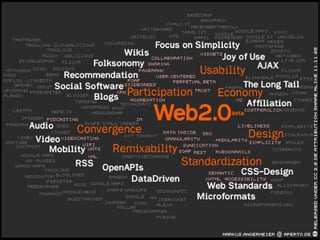
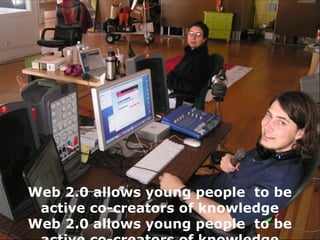
Web 2.0 allows young people  to be active co-creators of knowledge Web 2.0 allows young people  to be active co-creators of knowledge
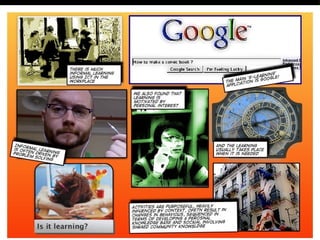
It is not just young people who use social software for learning


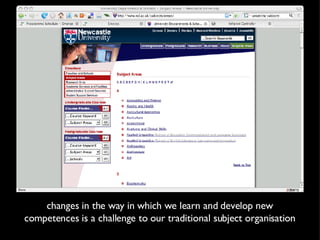
changes in the way in which we learn and develop new competences is a challenge to our traditional subject organisation
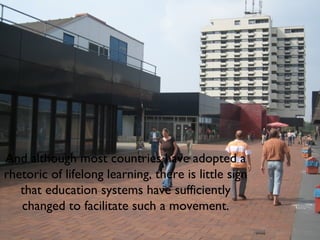
And although most countries have adopted a rhetoric of lifelong learning, there is little sign that education systems have sufficiently changed to facilitate such a movement.
We have to review the industrial schooling model including the organisation of institutions and pedagogy and curriculum
and, above all, systems of assessment which fail to support learning
How can we support lifelong competence development?
Personal Learning Environments have the potential to meet such a challenge
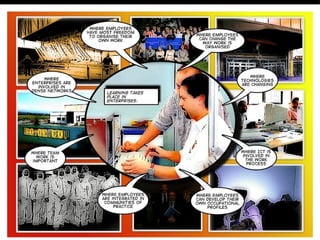
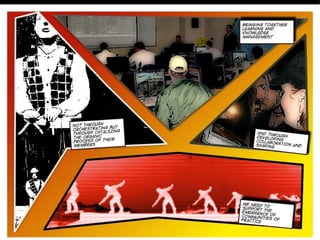
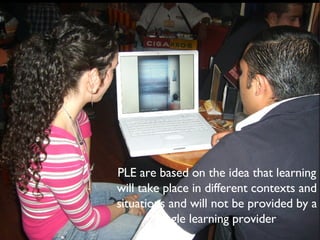
PLE are based on the idea that learning will take place in different contexts and situations and will not be provided by a single learning provider
the idea of a Personal Learning Environment recognises that learning is continuing and seeks to provide tools to support that learning
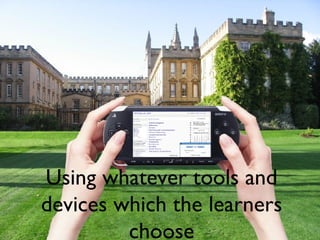
Using whatever tools and devices which the learners choose
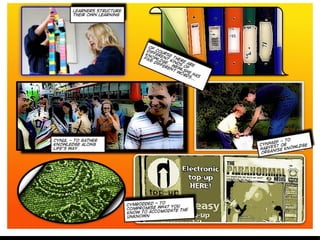
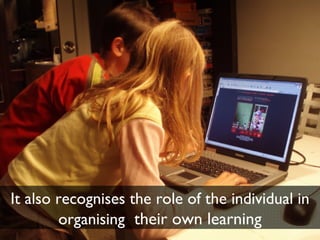
It also recognises the role of the individual in organising  their own learning
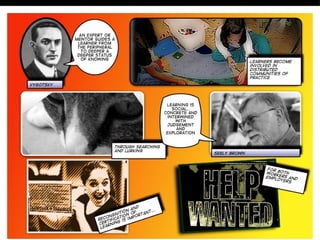
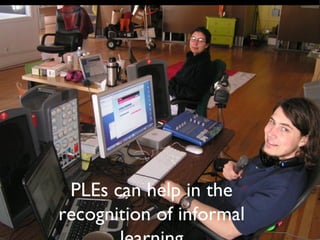
PLEs can help in the recognition of informal learning
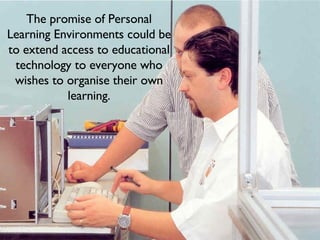
The promise of Personal Learning Environments could be to extend access to educational technology to everyone who wishes to organise their own learning.
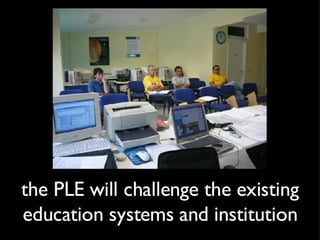
the PLE will challenge the existing education systems and institution
 
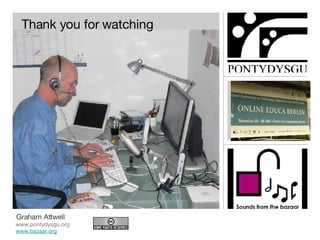
www,pontydysgu.org www.bazaar.org Graham Attwell Thank you for watching

Berlin07

  • 1.
    Graham Attwell Web2.0, social software and personal learning environments
  • 2.
    We are atpresent undergoing a deep and prolonged industrial revolution based on digital technologies
  • 3.
    The reform andreshaping of social systems and institutions has tended to lag behind in periods of rapid technological change
  • 4.
    Profound innovations intechnology tend to be reflected in older paradigms
  • 5.
    for example the‘virtual classroom’ or the ‘Virtual Learning Environment’
  • 6.
  • 7.
    It is notthe development of technology per se which poses such a challenge to education systems and educational institutions
  • 8.
    but the changingways in which people are using technologies to communicate and to learn and the accompanying social effect of such use
  • 9.
  • 10.
    The reaction ofeducation systems and institutions to the rise of social networking has been at best bewilderment, at worst downright hostility
  • 11.
    a refusal toengage in these issues risks school becoming increasingly irrelevant to the everyday lives of many young people
  • 12.
    and particularly irrelevantto the ways in which they communicate and share knowledge
  • 13.
    Web 2.0 allowsyoung people to be active co-creators of knowledge Web 2.0 allows young people to be active co-creators of knowledge
  • 14.
    It is notjust young people who use social software for learning
  • 15.
  • 16.
  • 17.
  • 18.
  • 19.
  • 20.
  • 21.
  • 22.
    changes in theway in which we learn and develop new competences is a challenge to our traditional subject organisation
  • 23.
    And although mostcountries have adopted a rhetoric of lifelong learning, there is little sign that education systems have sufficiently changed to facilitate such a movement.
  • 24.
    We have toreview the industrial schooling model including the organisation of institutions and pedagogy and curriculum
  • 25.
    and, above all,systems of assessment which fail to support learning
  • 26.
    How can wesupport lifelong competence development?
  • 27.
    Personal Learning Environmentshave the potential to meet such a challenge
  • 28.
    PLE are basedon the idea that learning will take place in different contexts and situations and will not be provided by a single learning provider
  • 29.
    the idea ofa Personal Learning Environment recognises that learning is continuing and seeks to provide tools to support that learning
  • 30.
    Using whatever toolsand devices which the learners choose
  • 31.
    It also recognisesthe role of the individual in organising their own learning
  • 32.
    PLEs can helpin the recognition of informal learning
  • 33.
    The promise ofPersonal Learning Environments could be to extend access to educational technology to everyone who wishes to organise their own learning.
  • 34.
    the PLE willchallenge the existing education systems and institution
  • 35.
  • 36.
    www,pontydysgu.org www.bazaar.org GrahamAttwell Thank you for watching