Personal 
Learning 
Environments 
Graham Attwell
Personal Learning 
Environments - a concept 
based on Web 2 .0 and social 
software
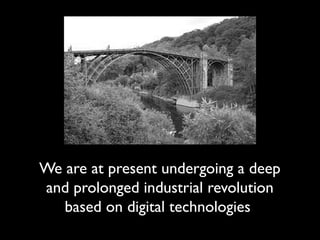
We are at present undergoing a deep 
and prolonged industrial revolution 
based on digital technologies
The reform and reshaping of 
social systems and 
institutions has tended to lag 
behind in periods of rapid 
technological change
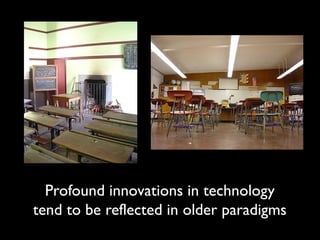
Profound innovations in technology 
tend to be reflected in older paradigms
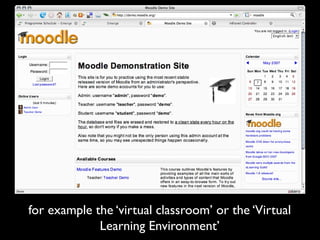
for example the ‘virtual classroom’ or the ‘Virtual 
Learning Environment’
The challenge
It is not the development 
of technology per se 
which poses such a 
challenge to education 
systems and educational 
institutions
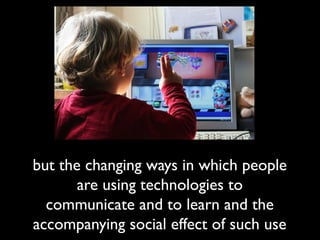
but the changing ways in which people 
are using technologies to 
communicate and to learn and the 
accompanying social effect of such use
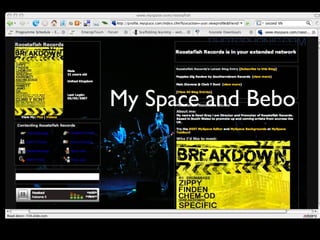
My Space and Bebo
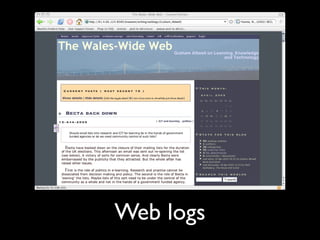
Web logs
Flickr, Second Life
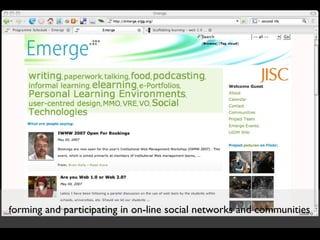
forming and participating in on-line social networks and communities
The reaction of education systems and institutions 
to the rise of social networking has been at best 
bewilderment, at worst downright hostility
a refusal to engage in these issues risks 
school becoming increasingly irrelevant to 
the everyday lives of many young people
and particularly 
irrelevant to the ways 
in which they 
communicate and 
share knowledge
Web 2.0 allows 
young people to 
be active co-creators 
of 
knowledge
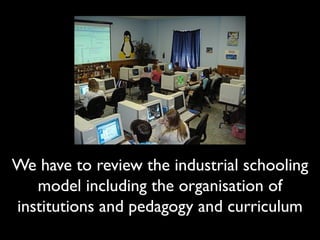
We have to review the industrial schooling 
model including the organisation of 
institutions and pedagogy and curriculum
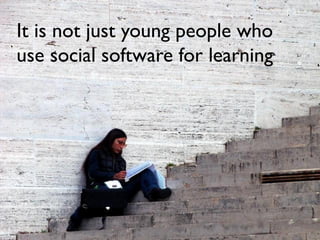
It is not just young people who 
use social software for learning
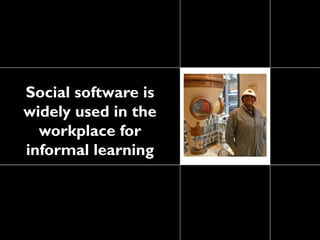
Social software is 
widely used in the 
workplace for 
informal learning
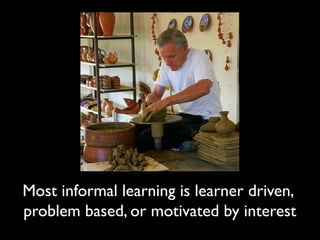
Most informal learning is learner driven, 
problem based, or motivated by interest
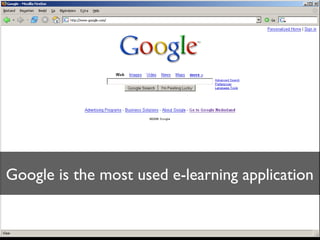
Google is the most used e-learning application
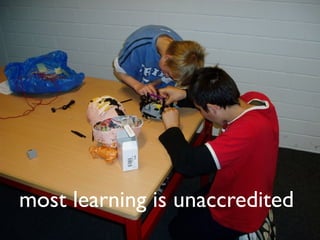
most learning is unaccredited
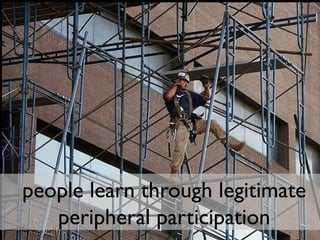
people learn through legitimate 
peripheral participation
Knowing is .... located in 
relations among practitioners, 
their practice, the artefacts of 
that practice, and the social 
organization…of communities 
of practice 
Lave and Wenger, 1991
Lurking is a means of becoming 
integrated in distributed 
communities of practice
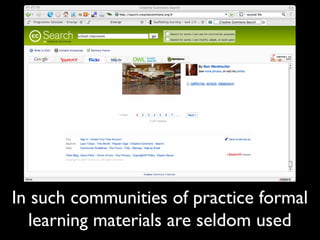
In such communities of practice formal 
learning materials are seldom used
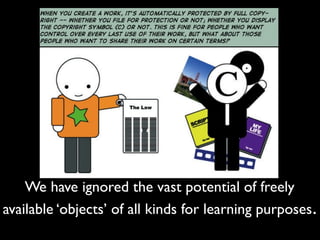
We have ignored the vast potential of freely 
available ‘objects’ of all kinds for learning purposes.
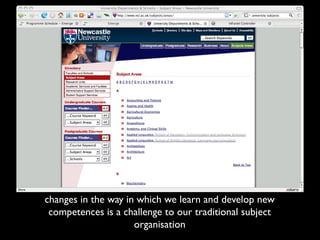
changes in the way in which we learn and develop new 
competences is a challenge to our traditional subject 
organisation
And although most countries have adopted a 
rhetoric of lifelong learning, there is little sign 
that education systems have sufficiently 
changed to facilitate such a movement.
The answers?
How can we support 
lifelong competence 
development?
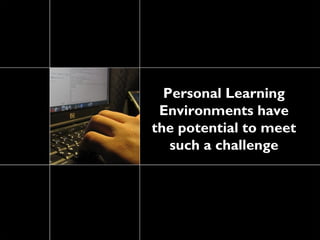
Personal Learning 
Environments have 
the potential to meet 
such a challenge
PLEs are not another 
substantiation of educational 
technology but a new 
approach to learning
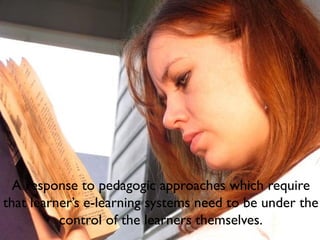
A response to pedagogic approaches which require 
that learner’s e-learning systems need to be under the 
control of the learners themselves.
and recognise the needs of life-long learners for a system 
that provides a standard interface to different institutions’ 
e-learning systems, and that allows portfolio information 
to be maintained across institutions.
Learning is now seen 
as multi episodic, 
with individuals 
spending occasional 
periods of formal 
education and 
training throughout 
their working life.
PLE are based on the idea that 
learning will take place in 
different contexts and situations 
and will not be provided by a 
single learning provider
the idea of a Personal Learning 
Environment recognises that 
learning is continuing and seeks to 
provide tools to support that 
learning
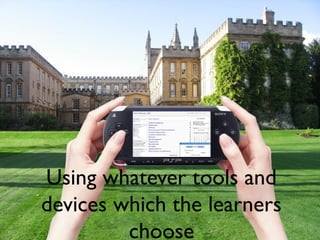
Using whatever tools and 
devices which the learners 
choose
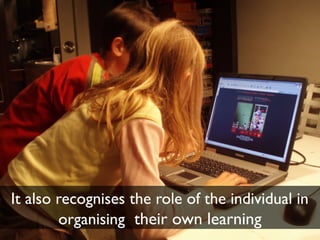
It also recognises the role of the individual in 
organising their own learning
PLEs can help in the 
recognition of informal 
learning
PLEs can develop on the 
potential of services oriented 
architectures for dispersed and 
networked forms of learning 
and knowledge development.
“the heart of the concept of the PLE 
is that it is a tool that allows a 
learner (or anyone) to engage in a 
distributed environment consisting of 
a network of people, services and 
resources. It is not just Web 2.0, but 
it is certainly Web 2.0 in the sense 
that it is (in the broadest sense 
possible) a read-write application.” 
Stephen Downes, 2006
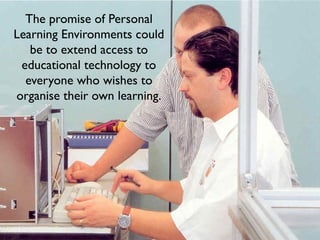
The promise of Personal 
Learning Environments could 
be to extend access to 
educational technology to 
everyone who wishes to 
organise their own learning.
The ‘pedagogy’ behind the PLE – if 
it could be still called that – is that 
it offers a portal to the world, 
through which learners can 
explore and create, according to 
their own interests and directions, 
interacting at all times with their 
friends and community
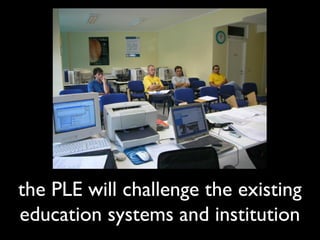
the PLE will challenge the existing 
education systems and institution
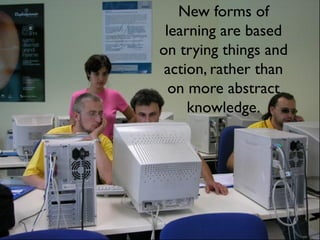
New forms of 
learning are based 
on trying things and 
action, rather than 
on more abstract 
knowledge.
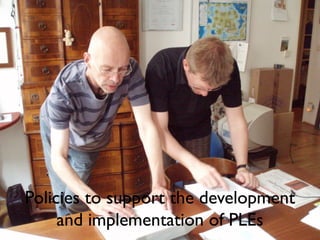
Policies to support the development 
and implementation of PLEs
encouraging and supporting 
the development of 
communities of practice and 
engagement in those 
communities
decisions over funding and 
support need to be taken as 
close to practice as possible
a broader 
understanding of digital 
literacy and its 
integration within the 
curriculum s
recognise different 
forms and contexts of 
learning
the development and 
adoption of new 
pedagogies
the co-shaping of 
technologies bringing 
together techies and 
teachers, enterprises and 
institutions
Thanks for 
Listening 
Wales Wide Web -www.knownet.com/writing/weblogs/Graham_Attwell

Personal learning-environments

  • 1.
  • 2.
    Personal Learning Environments- a concept based on Web 2 .0 and social software
  • 3.
    We are atpresent undergoing a deep and prolonged industrial revolution based on digital technologies
  • 4.
    The reform andreshaping of social systems and institutions has tended to lag behind in periods of rapid technological change
  • 5.
    Profound innovations intechnology tend to be reflected in older paradigms
  • 6.
    for example the‘virtual classroom’ or the ‘Virtual Learning Environment’
  • 7.
  • 8.
    It is notthe development of technology per se which poses such a challenge to education systems and educational institutions
  • 9.
    but the changingways in which people are using technologies to communicate and to learn and the accompanying social effect of such use
  • 10.
  • 11.
  • 12.
  • 13.
    forming and participatingin on-line social networks and communities
  • 14.
    The reaction ofeducation systems and institutions to the rise of social networking has been at best bewilderment, at worst downright hostility
  • 15.
    a refusal toengage in these issues risks school becoming increasingly irrelevant to the everyday lives of many young people
  • 16.
    and particularly irrelevantto the ways in which they communicate and share knowledge
  • 17.
    Web 2.0 allows young people to be active co-creators of knowledge
  • 18.
    We have toreview the industrial schooling model including the organisation of institutions and pedagogy and curriculum
  • 19.
    It is notjust young people who use social software for learning
  • 20.
    Social software is widely used in the workplace for informal learning
  • 21.
    Most informal learningis learner driven, problem based, or motivated by interest
  • 22.
    Google is themost used e-learning application
  • 23.
    most learning isunaccredited
  • 24.
    people learn throughlegitimate peripheral participation
  • 25.
    Knowing is ....located in relations among practitioners, their practice, the artefacts of that practice, and the social organization…of communities of practice Lave and Wenger, 1991
  • 26.
    Lurking is ameans of becoming integrated in distributed communities of practice
  • 27.
    In such communitiesof practice formal learning materials are seldom used
  • 28.
    We have ignoredthe vast potential of freely available ‘objects’ of all kinds for learning purposes.
  • 29.
    changes in theway in which we learn and develop new competences is a challenge to our traditional subject organisation
  • 30.
    And although mostcountries have adopted a rhetoric of lifelong learning, there is little sign that education systems have sufficiently changed to facilitate such a movement.
  • 31.
  • 32.
    How can wesupport lifelong competence development?
  • 33.
    Personal Learning Environmentshave the potential to meet such a challenge
  • 34.
    PLEs are notanother substantiation of educational technology but a new approach to learning
  • 35.
    A response topedagogic approaches which require that learner’s e-learning systems need to be under the control of the learners themselves.
  • 36.
    and recognise theneeds of life-long learners for a system that provides a standard interface to different institutions’ e-learning systems, and that allows portfolio information to be maintained across institutions.
  • 37.
    Learning is nowseen as multi episodic, with individuals spending occasional periods of formal education and training throughout their working life.
  • 38.
    PLE are basedon the idea that learning will take place in different contexts and situations and will not be provided by a single learning provider
  • 39.
    the idea ofa Personal Learning Environment recognises that learning is continuing and seeks to provide tools to support that learning
  • 40.
    Using whatever toolsand devices which the learners choose
  • 41.
    It also recognisesthe role of the individual in organising their own learning
  • 42.
    PLEs can helpin the recognition of informal learning
  • 43.
    PLEs can developon the potential of services oriented architectures for dispersed and networked forms of learning and knowledge development.
  • 44.
    “the heart ofthe concept of the PLE is that it is a tool that allows a learner (or anyone) to engage in a distributed environment consisting of a network of people, services and resources. It is not just Web 2.0, but it is certainly Web 2.0 in the sense that it is (in the broadest sense possible) a read-write application.” Stephen Downes, 2006
  • 45.
    The promise ofPersonal Learning Environments could be to extend access to educational technology to everyone who wishes to organise their own learning.
  • 46.
    The ‘pedagogy’ behindthe PLE – if it could be still called that – is that it offers a portal to the world, through which learners can explore and create, according to their own interests and directions, interacting at all times with their friends and community
  • 47.
    the PLE willchallenge the existing education systems and institution
  • 48.
    New forms of learning are based on trying things and action, rather than on more abstract knowledge.
  • 49.
    Policies to supportthe development and implementation of PLEs
  • 50.
    encouraging and supporting the development of communities of practice and engagement in those communities
  • 51.
    decisions over fundingand support need to be taken as close to practice as possible
  • 52.
    a broader understandingof digital literacy and its integration within the curriculum s
  • 53.
    recognise different formsand contexts of learning
  • 54.
    the development and adoption of new pedagogies
  • 55.
    the co-shaping of technologies bringing together techies and teachers, enterprises and institutions
  • 56.
    Thanks for Listening Wales Wide Web -www.knownet.com/writing/weblogs/Graham_Attwell