Download to read offline












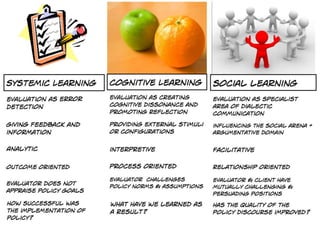
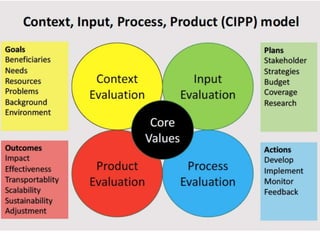


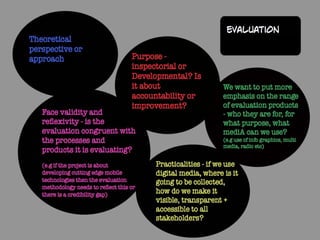
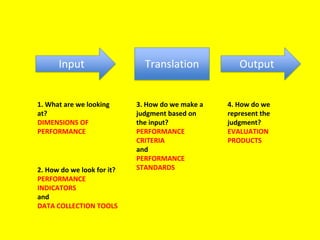










This document discusses evaluating e-learning programs. It defines evaluation as a joint learning process that generates useful knowledge by systematically assessing the relevance, efficiency, and effectiveness of policies, projects, and programs. Evaluation involves defining why it's being done and can take different theoretical perspectives like rationalist-positivist or constructivist. Key dimensions of evaluation include indicators, data collection tools, performance criteria, standards, and products. Evaluating e-learning may differ in aspects like reflexivity, authenticity, tools used, stakeholders involved, and range of data and products. Evaluation outputs can be localized and content repurposed in digital form.


