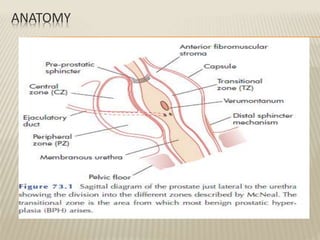
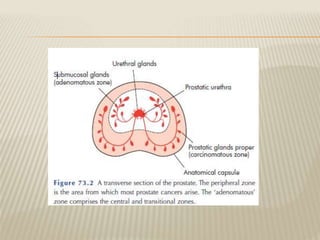
ANATOMY
BENIGN PROSTATIC HYPERPLASIA
INCIDENCE
 Most prevalent Benign Tumor
 > 50 yr old
 50% at 50 yr have histological evidence
 >90 % after 80 yrs
ETIOLOGY
 ENDOCRINE
 Low Testosterone
 High Estrogens
 Sensitization of Androgen Receptors
PATHOPHYSIOLOGY
 HYPERPLASIA
 Epithelium
 Stroma (Smooth muscle)
 Urethra
 Mechanical (Prostate Enlargement)
 Dynamic (Smooth Muscle in Stroma)
 Irritable (Bladder Response to outlet reistance )
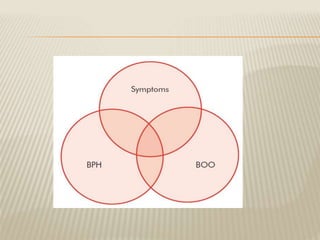
Consequences of BPH
■ No symptoms, no BOO
■ No symptoms, but urodynamic evidence of BOO
■ LUTS, no evidence of BOO
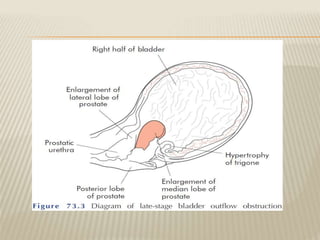
■ LUTS and BOO
■ Others (acute/chronic retention, haematuria,
urinary infection and stone formation)
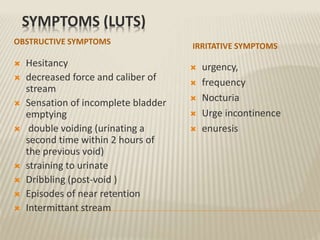
SYMPTOMS (LUTS)
OBSTRUCTIVE SYMPTOMS
IRRITATIVE SYMPTOMS
 Hesitancy
 decreased force and caliber of
stream
 Sensation of incomplete bladder
emptying
 double voiding (urinating a
second time within 2 hours of
the previous void)
 straining to urinate
 Dribbling (post-void )
 Episodes of near retention
 Intermittant stream
 urgency,
 frequency
 Nocturia
 Urge incontinence
 enuresis
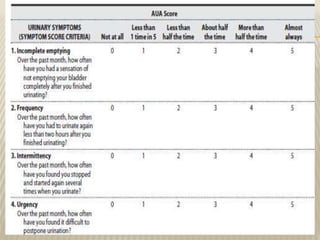
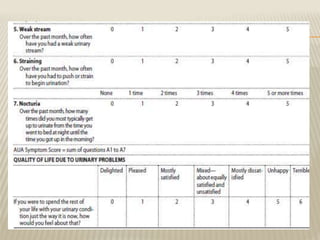
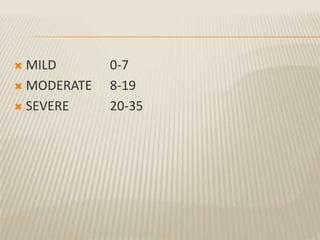
 MILD 0-7
 MODERATE 8-19
 SEVERE 20-35
SYMPTOMS (BOO)
 Ac. Retention
 Ch. Retention
 Hematuria
 Impaired bladder emptying
SIGNS
 Digital Rectal Examination (DRE)
 DRE typically takes less than a minute to perform. In
this procedure, the physician inserts a lubricated,
gloved finger into the patient's rectum to feel the
surface of the prostate gland through the rectal wall
to assess the size, shape, and consistency of the
gland. Healthy prostate tissue is soft, like the fleshy
tissue of the hand where the thumb joins the palm.
Malignant tissue is firm, hard, and often
asymmetrical or stony, like the bridge of the nose.
INVESTIGATION
 CUE
 PSA
 USG
 IVU
 CYSTOSCOPY
 URODYNAMIC STUDIES
 < 10 ml s–1
 > 80 cmH2O
DIFFERENTIAL DIAGNOSIS
 UTI
 Ca Prostate
 Urethral stricture
 Bladder neck contracture
 Vesical stone
TREATMENT
 WATCHFUL WAITING
 MEDICAL
 SURGICAL
Medical
 Alpha Blockers
 5α-Reductase Inhibitors(finasteride)
 Combination Therapy
 Phytotherapy
Alpha Blockers
 Non Selective-Prazocin
 Selective(alpha 1a)-Tamsolin
5α-reductase Inhibitors
 Finasteride
 Epithelial component
 Minimum-6 months(20% reduction in size)
 Large prostate(40cm3)
Combination Therapy
 Risk of progression
 Large gland
 High PSA
Phytotherapy
 saw palmetto berry (Serenoa repens)
 the bark of Pygeum africanum,
 the roots of Echinacea purpurea and Hypoxis rooperi,
 pollen extract,
 leaves of the trembling poplar
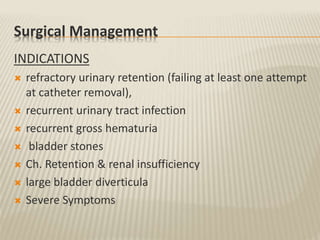
Surgical Management
INDICATIONS
 refractory urinary retention (failing at least one attempt
at catheter removal),
 recurrent urinary tract infection
 recurrent gross hematuria
 bladder stones
 Ch. Retention & renal insufficiency
 large bladder diverticula
 Severe Symptoms
Surgical
CONVENTIONAL
 TURP
 TUIP
 Open Prostatectomy
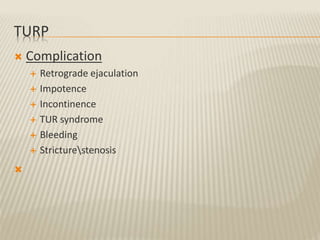
TURP
 Complication
 Retrograde ejaculation
 Impotence
 Incontinence
 TUR syndrome
 Bleeding
 Stricturestenosis

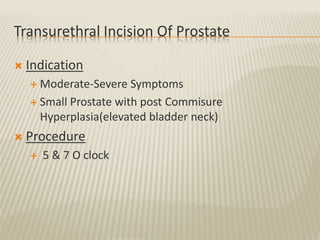
Transurethral Incision Of Prostate
 Indication
 Moderate-Severe Symptoms
 Small Prostate with post Commisure
Hyperplasia(elevated bladder neck)
 Procedure
 5 & 7 O clock
Open Prostatectomy
 Indication
 Glands >100 g
 concomitant bladder diverticulum
 Bladder stone
 dorsal lithotomy positioning is not possible.
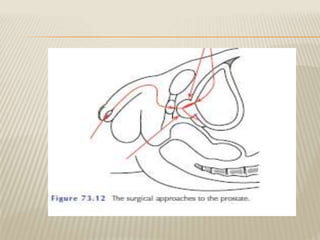
 Approaches
 Suprapubic
 Retropubic (Millon)
 Perineal(young)
Surgical
MINIMALLY INVASIVE
 Laser
 TULIP
 Visual contact ablative laser therapy
 Interstitial laser therapy
 Transurethral electrovaporization of the prostate
 Hyperthermia
 Transurethral needle ablation of the prostate
 High-intensity focused ultrasound
 Intraurethral stents

Benign prostatic hyperplasia

  • 1.
  • 3.
  • 4.
    INCIDENCE  Most prevalentBenign Tumor  > 50 yr old  50% at 50 yr have histological evidence  >90 % after 80 yrs
  • 5.
    ETIOLOGY  ENDOCRINE  LowTestosterone  High Estrogens  Sensitization of Androgen Receptors
  • 6.
    PATHOPHYSIOLOGY  HYPERPLASIA  Epithelium Stroma (Smooth muscle)  Urethra  Mechanical (Prostate Enlargement)  Dynamic (Smooth Muscle in Stroma)  Irritable (Bladder Response to outlet reistance )
  • 9.
    Consequences of BPH ■No symptoms, no BOO ■ No symptoms, but urodynamic evidence of BOO ■ LUTS, no evidence of BOO ■ LUTS and BOO ■ Others (acute/chronic retention, haematuria, urinary infection and stone formation)
  • 10.
    SYMPTOMS (LUTS) OBSTRUCTIVE SYMPTOMS IRRITATIVESYMPTOMS  Hesitancy  decreased force and caliber of stream  Sensation of incomplete bladder emptying  double voiding (urinating a second time within 2 hours of the previous void)  straining to urinate  Dribbling (post-void )  Episodes of near retention  Intermittant stream  urgency,  frequency  Nocturia  Urge incontinence  enuresis
  • 13.
     MILD 0-7 MODERATE 8-19  SEVERE 20-35
  • 14.
    SYMPTOMS (BOO)  Ac.Retention  Ch. Retention  Hematuria  Impaired bladder emptying
  • 15.
    SIGNS  Digital RectalExamination (DRE)  DRE typically takes less than a minute to perform. In this procedure, the physician inserts a lubricated, gloved finger into the patient's rectum to feel the surface of the prostate gland through the rectal wall to assess the size, shape, and consistency of the gland. Healthy prostate tissue is soft, like the fleshy tissue of the hand where the thumb joins the palm. Malignant tissue is firm, hard, and often asymmetrical or stony, like the bridge of the nose.
  • 16.
    INVESTIGATION  CUE  PSA USG  IVU  CYSTOSCOPY
  • 17.
     URODYNAMIC STUDIES < 10 ml s–1  > 80 cmH2O
  • 18.
    DIFFERENTIAL DIAGNOSIS  UTI Ca Prostate  Urethral stricture  Bladder neck contracture  Vesical stone
  • 19.
  • 20.
    Medical  Alpha Blockers 5α-Reductase Inhibitors(finasteride)  Combination Therapy  Phytotherapy
  • 21.
    Alpha Blockers  NonSelective-Prazocin  Selective(alpha 1a)-Tamsolin
  • 22.
    5α-reductase Inhibitors  Finasteride Epithelial component  Minimum-6 months(20% reduction in size)  Large prostate(40cm3)
  • 23.
    Combination Therapy  Riskof progression  Large gland  High PSA
  • 24.
    Phytotherapy  saw palmettoberry (Serenoa repens)  the bark of Pygeum africanum,  the roots of Echinacea purpurea and Hypoxis rooperi,  pollen extract,  leaves of the trembling poplar
  • 25.
    Surgical Management INDICATIONS  refractoryurinary retention (failing at least one attempt at catheter removal),  recurrent urinary tract infection  recurrent gross hematuria  bladder stones  Ch. Retention & renal insufficiency  large bladder diverticula  Severe Symptoms
  • 26.
  • 27.
    TURP  Complication  Retrogradeejaculation  Impotence  Incontinence  TUR syndrome  Bleeding  Stricturestenosis 
  • 28.
    Transurethral Incision OfProstate  Indication  Moderate-Severe Symptoms  Small Prostate with post Commisure Hyperplasia(elevated bladder neck)  Procedure  5 & 7 O clock
  • 29.
    Open Prostatectomy  Indication Glands >100 g  concomitant bladder diverticulum  Bladder stone  dorsal lithotomy positioning is not possible.  Approaches  Suprapubic  Retropubic (Millon)  Perineal(young)
  • 31.
    Surgical MINIMALLY INVASIVE  Laser TULIP  Visual contact ablative laser therapy  Interstitial laser therapy  Transurethral electrovaporization of the prostate  Hyperthermia  Transurethral needle ablation of the prostate  High-intensity focused ultrasound  Intraurethral stents