



Benign prostatic hyperplasia
Dr Doha Rasheedy
Assistant professor
Geriatrics and Gerontology Department
ASU
• BPH is a common disorder that increases in
frequency progressively with age in men older
than 50 years and is hormonally dependent on
testosterone and dihydrotestosterone (DHT)
production.
• Microscopic appearance of BPH is present in 50%
of men by age 60
• Microscopic appearance of BPH is present in 90%
of men by age 85
• It is a noncancerous enlargement of the
epithelial and fibromuscular components of the
prostate gland.2/25/2018 2
• The voiding dysfunction that results from prostate
gland enlargement and bladder outlet obstruction
(BOO) is termed lower urinary tract symptoms
(LUTS).
• It has also been commonly referred to as
prostatism, although this term has decreased in
popularity.
• These entities overlap; not all men with BPH have
LUTS, and likewise, not all men with LUTS have
BPH.
• Approximately half of men diagnosed with
histopathologic BPH demonstrate moderate-to-
severe LUTS.
2/25/2018 3
PATHOPHYSIOLOGY
2/25/2018 4
LUTS and signs of BPH are due to
Static
Dynamic
Detrusor factors
2/25/2018 5
The static factor refers to:
• anatomic obstruction of the bladder neck
caused by an enlarged prostate gland.
• As the gland grows around the urethra, the
prostate occludes the urethral lumen.
2/25/2018 6
The dynamic factor refers to:
• excessive stimulation of α1A-adrenergic
receptors in the smooth muscle of the prostate,
urethra, and bladder neck, which results in
smooth muscle contraction.
• This reduces the caliber of the urethral lumen
2/25/2018 7
The detrusor factor refers to:
• bladder detrusor muscle hypertrophy in response to
prolonged bladder outlet obstruction.
• hypertrophy help the bladder to generate higher
pressure to overcome bladder outlet obstruction
and empty urine from the bladder.
• The hypertrophic detrusor muscle becomes irritable,
contracting abnormally in response to small
amounts of urine in the bladder.
• If obstruction is not treated, the bladder muscle will
decompensate and be unable to empty completely;
the postvoid residual urine volume (PVR) will
increase.2/25/2018 8
• Prostatic enlargement is influenced by a
combination of androgens, growth factors,
estrogens, and epithelial-stromal interactions
Dihydrotestosterone (DHT):
• In the prostate gland, type II 5-alpha-reductase
metabolizes circulating testosterone into DHT, which
works locally, not systemically. DHT binds to androgen
receptors in the cell nuclei, potentially resulting in
BPH.
• Androgens stimulate epithelial, but not stromal tissue
hyperplasia.
2/25/2018 9
• In an enlarged gland, the epithelial/stromal tissue
ratio is 1:5.
• Hence, androgen antagonism does not induce a
complete reduction in prostate size to normal. This
explains one of the limitations of the clinical effect of
5α-reductase inhibitors.
• Stromal tissue is the primary locus of α1-adrenergic
receptors in the prostate. An estimated 98% of the α-
adrenergic receptors in the prostate are found in
prostatic stromal tissue.
• Of the α1-receptors found in the prostate, 70% of
them are of the α1A- subtype and the remainder are
of the α1B and α1D subtypes.
• This explains why α-adrenergic antagonists are
effective for managing symptoms of BPH.
2/25/2018 10
CLINICAL PICTURE
2/25/2018 11
• The clinical manifestations of BPH are lower
urinary tract symptoms (LUTS)
• These symptoms typically appear slowly and
progress gradually over a period of years.
• LUTS are not specific for BPH.
• the correlation between symptoms and the
presence of prostatic enlargement on rectal
examination or by transrectal ultrasonographic
assessment of prostate size is poor.
2/25/2018 12
Causes of Male Lower Urinary Tract
Symptoms
• Benign prostatic enlargement (secondary to benign prostatic hyperplasia)
• Urinary tract infection
• Prostatitis
• Overactive bladder
• Neurogenic bladder dysfunction
• Urethral stricture
• Bladder neck contracture
• Phimosis
• Urinary tract stones
• Bladder tumor
• Advanced prostate cancer
• Foreign body in the bladder
• Medications, illicit drugs, and dietary factors (including caffeine, alcohol, ketamine,
and decongestants)
• Diabetes mellitus
2/25/2018 13
CATEGORIZATION OF LUTS
LUTS can be categorized as symptoms related to
storage,
voiding,
or post micturition
2/25/2018 14
Storage symptoms
Storage symptoms, experienced during the bladder
filling and storage phase of micturition, include:
• Urgency — A sudden compelling desire to pass
urine that is difficult to defer.
• Daytime frequency — A patient's perception that
he voids too often by day.
• Nocturia — The need to wake at night one or
more times to void.
• Urge incontinence — Involuntary leakage,
accompanied by, or immediately preceded by,
urgency.
2/25/2018 15
Voiding symptoms — Voiding symptoms are those experienced
at the time of urine flow and include:
Slow stream — The individual's perception of reduced urine
flow, usually compared to previous performance and
sometimes compared to observations of other men. Splitting or
spraying of the urine stream may be reported.
Intermittent stream or intermittency — Urine flow that stops
and starts, on one or more occasions, during micturition.
Hesitancy — Difficulty in initiating micturition, resulting in a
delay in the onset of voiding after the individual is ready to
pass urine.
Straining to void — An abdominal muscular effort used to
initiate, maintain, or improve the urinary stream.
Terminal dribble — Prolongation of the final part of
micturition, when the flow has slowed to a trickle/dribble .
Dysuria — Pain, burning sensation, or general discomfort at the
time of passing urine.2/25/2018 16
Post-micturition symptoms — Post-micturition
symptoms include:
• A sensation of incomplete emptying after
passing urine.
• Post-micturition dribble — The involuntary
loss of urine shortly following urination,
usually after leaving the toilet .
2/25/2018 17
• The term "lower urinary tract symptoms," or LUTS,
is nonspecific
• LUTS is also associated with severe sleep
disturbance , increased depressive symptoms and
decreased ability to perform activities of daily living
2/25/2018 18
DIAGNOSIS
2/25/2018 19
History
• Onset and duration of symptoms
• Severity of symptoms and how they are affecting
quality of life (the AUA symptom score- the
International Prostate Symptom Score (IPSS))
• General health issues (including sexual history)
• History of urethral trauma, urethritis, or urethral
instrumentation that could lead to urethral stricture
• Fitness for any possible surgical interventions
• Medications
• Previously attempted treatments
• Family history of BPH, Cancer prostate
2/25/2018 20
2/25/2018 21
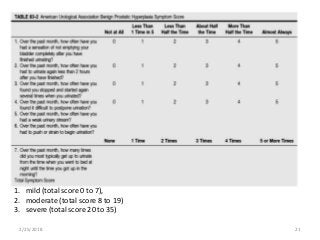
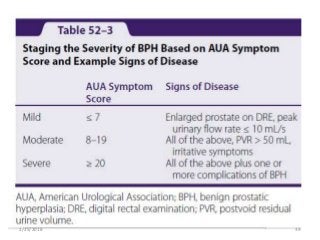
1. mild (total score 0 to 7),
2. moderate (total score 8 to 19)
3. severe (total score 20 to 35)
IPSS/AUA-SI
• The severity of BPH can be determined with the International Prostate
Symptom Score (IPSS)/American Urological Association Symptom Index
(AUA-SI) plus a disease-specific quality of life (QOL) question. Questions
on the AUA-SI for BPH concern the following:
• Incomplete emptying
• Frequency
• Intermittency
• Urgency
• Weak stream
• Straining
• Nocturia
• 0 to 7: Mild symptoms
• 8 to 19: Moderate symptoms
• 20 to 35: Severe symptoms
2/25/2018 22
Physical examination
1. Suprapubic area for signs of bladder distention
(dullness, tenderness)
2. The digital rectal examination
3. neurological examination for sensory and motor
deficits.(Decreased anal sphincter tone or the
lack of a bulbocavernosus muscle reflex may
indicate an underlying neurological disorder)
2/25/2018 23
Digital rectal examination
• prostate size, symmetry and contour can be
assessed, nodules can be evaluated
(nodularity more with benign BPH) , and areas
suggestive of malignancy can be detected.
• The normal prostate volume in a young man
is approximately 20 g.
2/25/2018 24
Laboratory studies
• Urinalysis - Examine the urine using dipstick methods and/or via
centrifuged sediment evaluation to assess for the presence of blood,
leukocytes, bacteria, protein, or glucose (DM- infection- heamaturia)
• Urine culture - This may be useful to exclude infectious causes of
irritative voiding and is usually performed if the initial urinalysis findings
indicate an abnormality
• Prostate-specific antigen - Although BPH does not cause prostate
cancer, men at risk for BPH are also at risk for this disease and should be
screened accordingly (although screening for prostate cancer remains
controversial)
• Electrolytes, blood urea nitrogen (BUN), and creatinine - These
evaluations are useful screening tools for chronic renal insufficiency in
patients who have high postvoid residual (PVR) urine volumes; however,
a routine serum creatinine measurement is not indicated in the initial
evaluation of men with lower urinary tract symptoms (LUTS) secondary
to BPH
2/25/2018 25
Ultrasonography
• Determine bladder and prostate size and the degree of
hydronephrosis (if any) in patients with urinary
retention or signs of renal insufficiency.
• Generally, they are not indicated for the initial
evaluation of uncomplicated LUTS.
• Abdominal, transrectal
• Transrectal ultrasonography (TRUS) of the prostate is
recommended in selected patients, to determine the
dimensions and volume of the prostate gland.
• In patients with elevated PSA levels, TRUS-guided
biopsy may be indicated.
2/25/2018 26
Flow rate:
1. (routine non invasive uroflowmetry)
2. For the results of uroflowmetry to be valid, the patient
needs to void more than 150 mL of urine.
3. Useful in the initial assessment and to help determine the
patient’s response to treatment
4. a low urine flow rate may indicate detrusor impairment or
BOO
5. A Qmax of less than 10 mL/sec is highly suggestive of BOO
PVR urine volume:
Used to gauge the severity of bladder decompensation; it can
be obtained invasively with by in-out catheterization or
noninvasively with a transabdominal ultrasonic scanner
2/25/2018 27
Urodynamic studies
1. to differentiate men with a low urine flow
rate caused by obstruction or impaired
bladder muscle contraction.
2. Pressure-flow studies also assess for
involuntary bladder muscle contractions
(detrusor overactivity) during the bladder
filling phase before voiding.
3. when considering surgery.
2/25/2018 28
Cystoscopy
• Indications:
– patients scheduled for invasive treatment
– suspected foreign body
– suspected malignancy.
– patients with a history of sexually transmitted
disease (eg, gonococcal urethritis)
– prolonged catheterization
– trauma.
2/25/2018 29
Cytologic examination of the urine
• May be considered in patients with predominantly
irritative voiding symptoms
2/25/2018 30
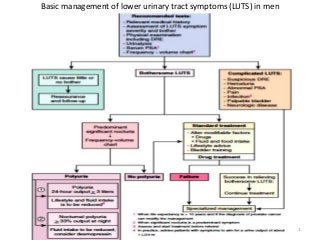
Basic management of lower urinary tract symptoms (LUTS) in men
2/25/2018 31
After initial evaluation
a man with LUTS suspected to have:
prostate cancer
hematuria
recurrent urinary tract infection
a palpable bladder
urethral stricture
a neurologic bladder disorder
should be referred to a urology clinic for
appropriate investigation and treatment.
2/25/2018 32
DIFFERENTIAL DIAGNOSIS
2/25/2018 33
Symptoms often attributed to benign prostatic hyperplasia
(BPH) can be caused by any of the following conditions:
1. Cystitis
2. Prostatitis
3. Prostatodynia
4. Prostatic abscess
5. Overactive bladder (OAB)
6. Carcinoma of the bladder
7. Foreign bodies in the bladder (stones or retained stents)
8. Urethral stricture due to trauma or a sexually transmitted
disease
9. Prostate cancer
10. Neurogenic bladder
11. Pelvic floor dysfunction
2/25/2018 34
COMPLICATIONS
2/25/2018 35
Complications of Untreated BPH
Very uncommon, So watchful waiting is allowed
1. Urinary retention (the incidence rate of acute
urinary retention was 14/1000 patient-years, The
risk factors for acute urinary retention include
advanced age, symptom severity, increased PSA
value, and prostate volume).
2. Urinary incontinence
3. Renal insufficiency
4. Recurrent urinary tract infections, urosepsis
5. Gross hematuria
6. Bladder calculi, bladder diverticula.
2/25/2018 36
MANAGEMENT
2/25/2018 37
Decision depend on
1. Severity
2. Comorbid conditions, frailty
3. Drug efficacy, side effects, duration of treatment
response.
• BPH therapy is patient-dependent and driven by the impact of
symptoms on the patient’s quality of life e.g. In men who are not
too bothered by their LUTS, simple reassurance and lifestyle
advice (in particular altering fluid intake) is often all that is
required
2/25/2018 38
2/25/2018 39
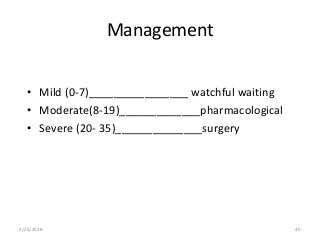
Management
• Mild (0-7)________________ watchful waiting
• Moderate(8-19)_____________pharmacological
• Severe (20- 35)______________surgery
2/25/2018 40
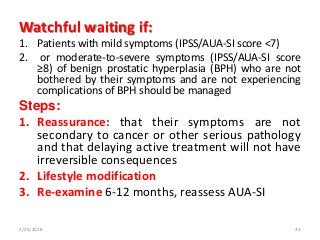
Watchful waiting if:
1. Patients with mild symptoms (IPSS/AUA-SI score <7)
2. or moderate-to-severe symptoms (IPSS/AUA-SI score
≥8) of benign prostatic hyperplasia (BPH) who are not
bothered by their symptoms and are not experiencing
complications of BPH should be managed
Steps:
1. Reassurance: that their symptoms are not
secondary to cancer or other serious pathology
and that delaying active treatment will not have
irreversible consequences
2. Lifestyle modification
3. Re-examine 6-12 months, reassess AUA-SI
2/25/2018 41
Slide 42
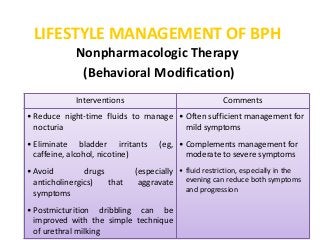
LIFESTYLE MANAGEMENT OF BPH
Nonpharmacologic Therapy
(Behavioral Modification)
Interventions Comments
• Reduce night-time fluids to manage
nocturia
• Eliminate bladder irritants (eg,
caffeine, alcohol, nicotine)
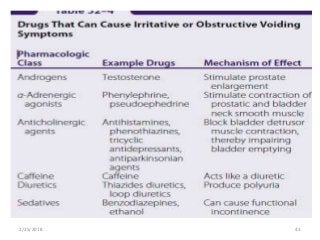
• Avoid drugs (especially
anticholinergics) that aggravate
symptoms
• Postmicturition dribbling can be
improved with the simple technique
of urethral milking
• Often sufficient management for
mild symptoms
• Complements management for
moderate to severe symptoms
• fluid restriction, especially in the
evening can reduce both symptoms
and progression
2/25/2018 43
Pharmacologic treatment
2/25/2018 44
Agents used in the treatment of BPH include
the following:
1. Alpha-adrenergic receptor blockers
2. 5-alpha reductase inhibitors
3. Anticholinergic agents
4. Phosphodiesterase-5 enzyme inhibitors
Drug treatment must be continued as long as
the patient responds
2/25/2018 45
Alpha-adrenergic receptor blockers
• α1-Blockers are first-line medical therapy for LUTS
secondary to BPH.
• α-Adrenergic antagonists are preferred over 5α-reductase
inhibitors because the former have a faster onset of action
(days to a few weeks) and improve symptoms
independent of prostate size
• α-Adrenergic antagonists are preferred for patients with
lower urinary tract voiding symptoms, who also have
small prostates (less than 30 g)
• Assess response after 2 weeks
• α1-blockers do not prevent BPH progression with the
associated risk of acute urinary retention and the need
for surgical intervention.
2/25/2018 46
Mechanism of action
• α-Adrenergic antagonists reduce the dynamic
factor causing BPH symptoms.
– These drugs competitively antagonize α-adrenergic
receptors, thereby causing relaxation of the bladder
neck, prostatic urethra, and prostate smooth muscle.
• A secondary mechanism of action may be that α-
adrenergic antagonists induce prostatic
apoptosis, which suggests that these agents may
cause some shrinkage of an enlarged prostate.
2/25/2018 47
Types:
• The alpha-blocking agents administered in BPH studies can
be subgrouped according to receptor subtype selectivity
and the duration of serum elimination half-lives, as
follows:
1. Nonselective alpha-blockers: phenoxybenzamine causing
irreversible blockade of long duration (14–48 hours or
longer)
2. Selective alpha-1 blockers:
1. short-acting: prazosin (minipress), alfuzosin, indoramin
2. long-acting: terazosin(hytrin), doxazosin (cardura), slow-
release (SR) alfuzosin.
3. uroselective subtype (α1A>>α1D >>> α1 B affinity in the
peripheral vasculature so less hypotension): tamsulosin,
silodosin:
2/25/2018 48
Pharmacodynamics
• α-Adrenergic antagonists are hepatically
metabolized. Therefore, in patients with
significant hepatic dysfunction, these drugs
should be used in the lowest possible dose.
• With the exception of silodosin, these drugs do
not require dosage modification in patients with
renal dysfunction.
• Despite the blood-pressure lowering property of
α-adrenergic antagonists, they are not
recommended to be used alone to treat patients
with both BPH and essential hypertension.
2/25/2018 49
Side Effects
1. Dizziness, syncope and orthostatic hypotension more common with terazosin
and doxazosin than with alfuzosin and tamsulosin (given at bed time for
terazocin, perazocin,alfuzacin) Or with meal to decrease absorption and
hypotensive side effect (tamusolin,solidosin)
• This adverse effect occurs in approximately 2% to 14% of treated patients and is most commonly associated with immediate-release
terazosin and doxazosin; is less commonly associated with extended release alfuzosin and extended-release doxazosin; and least
commonly associated with tamsulosin and silodosin.
2. Ejaculation disorders, including delayed, absent and retrograde ejaculation,
occur with all adrenergic antagonists. This is largely thought to be due to
pharmacologic blockade of peripheral α-adrenergic receptors at the bladder
neck or a decrease in seminal fluid production.
3. α1-Blockers, particularly tamsulosin, have been shown to increase the risk of
intraoperative floppy iris syndrome in cataract surgerya patient who needs
cataract surgery should have this ophthalmologic procedure performed first, if
possible. Although the drug will not need to be held or
discontinued, the ophthalmologist can plan to use certain surgical
techniques
4. Rhinitis and malaise: due to blockade of α-adrenergic receptors in the
vasculature of the nasal mucosa and in the central nervous system, self limiting,
Avoid use of topical or oral decongestants, as these may exacerbate obstructive
voiding symptoms.
2/25/2018 50
Drug interaction:
• Hypotensive adverse effects of terazosin and
doxazosin can be additive with those of
diuretics, antihypertensives, and
phosphodiesterase type 5 inhibitors (eg,
sildenafil).
2/25/2018 51
5α-Reductase Inhibitor
Monotherapy
• 5α-Reductase inhibitors reduce the static factor, which
results in shrinkage of an enlarged prostate by approximately
20% to 25% after 6 months.
• Two subtypes of 5α-reductase, Type I and II, are present in
the prostate; the majority is the Type II isoenzyme.
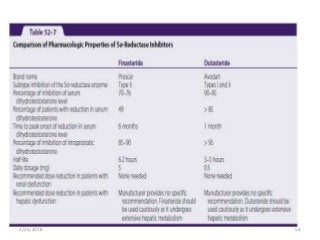
• Finasteride is a selective Type II isoenzyme inhibitor,
whereas dutasteride is a nonselective inhibitor of both
Type I and Type II isoenzymes.
• When compared with finasteride, dutasteride produces a
faster and more complete inhibition of 5α-reductase in
prostate cells. However, no difference in clinical efficacy or
adverse effects has been demonstrated between these two
agents.
2/25/2018 52
• 5α-Reductase inhibitors have a delayed onset of
action (ie, peak effect may be delayed for up to 6
months) and are most effective in patients with
moderate LUTS and larger size prostate glands
(greater than 30 g).
• 5α-Reductase inhibitors reduce clinical
progression of BPH, specifically the risk of
developing acute urinary retention and the need
for surgical intervention.
• 5α-Reductase inhibitors work by causing
apoptosis of prostatic epithelial cells, leading to
a reduction in prostate volume by 18% to 28%
and serum PSA level by 50% after 6 to 12
months.
2/25/2018 53
2/25/2018 54
• A minimum of 6 months is required to evaluate
the effectiveness of treatment.
• This is a disadvantage in patients with moderate
to severe symptoms, as it will take that long to
determine whether the drug is or is not effective.
• Unlike α-adrenergic antagonists, 5α-reductase
inhibitors are used to prevent BPH related
complications and disease progression.
Finasteride has been shown to reduce both the
incidence of acute urinary retention by 57% and
the need for prostate surgery by 55% in patients
with significantly enlarged prostate glands
(greater than 40 g)]
2/25/2018 55
Side Effects
Adverse effects include:
1. decreased libido
2. erectile dysfunction
3. ejaculation disorders (These side effects are
reversible).
4. gynecomastia and breast tenderness.
5. When used to prevent prostate cancer, these agents
reduce the incidence of prostate cancer by 25%, but are
suspected to increase the risk of developing moderate to
high grade cancer, if prostate cancer does develop.
6. Serum testosterone levels increase by 10% to 20% in
treated patients; however, the clinical significance of this
is not clear at this time.
2/25/2018 56
1. Drug interactions are uncommon.
2. These drugs decrease serum levels of PSA by
approximately 50%. Therefore, to preserve the
usefulness of this laboratory test as a diagnostic
and monitoring tool, it is recommended that
prescribers obtain a baseline PSA prior to the
start of treatment and repeat it at least annually
during treatment.
2/25/2018 57
Combination Therapy
• combination of an α-adrenergic antagonist and
5α-reductase inhibitor may be considered in
symptomatic patients who do not respond to an
adequate trial of monotherapy or in those at high
risk of BPH complications, that is, those with an
enlarged prostate of at least 30g.
• more expensive and can cause more adverse
effects than single drug treatment.
2/25/2018 58
5- phosphodiesterase inhibitor
• FDA approved only Tadalafil for LUTS
• Once daily dosing of tadalafil is approved for treatment of LUTS. It may be
prescribed alone or along with an α-adrenergic antagonist or 5α-
reductase inhibitor.
• This inhibits the proliferation and contraction of prostatic smooth
muscle, or enhances the action of nitric oxide.
• For those with BPH and erectile dysfunction, or those patients with LUTS
that is not responsive to α-adrenergic agonists.
• It decrease AUA score but it does not increase urinary flow rate or reduce
PVR
• The usual recommended dose is 5 mg by mouth daily; the dose should be
reduced to 2.5 mg daily if the creatinine clearance is 30 to 50 mL/min
• Common adverse effects include headache, dizziness, dyspepsia, back
pain, and myalgia
• Tadalafil is contraindicated in patients on nitrates by any route of
administration; patients with unstable angina, uncontrolled or high-risk
arrhythmias, persistent hypotension, poorly controlled hypertension, or
New York Heart Association Classification IV congestive heart failure; or
patients who have had a myocardial infarction within the past 2 weeks
2/25/2018 59
Antimuscarinic Medications
• For patients experience storage symptoms (nocturia,
frequency, urgency, urge incontinence)
• the addition of an anticholinergic agent (eg,
tolterodine) to an α-adrenergic antagonist with or
without a 5α-reductase inhibitor to inhibit irritative
symptoms (eg, urinary urgency and
frequency)mediated by M2 and M3 muscarinic
receptors should be cautious in patients at the
highest risk of anticholinergic agent-induced acute
urinary retention (those with a high postvoid
residual urine volume (250 mL or more). If
prescribed, it is good practice to monitor the
IPSS and PVR urine and warn patients about
the risks and symptoms of urinary retention.
2/25/2018 60
COMPLEMENTARY AND
ALTERNATIVE MEDICINE
2/25/2018 61
• Many types are available:
1. saw palmetto
2. stinging nettle
3. South African star grass
4. pumpkin seeds
5. bark of the African plum tree.
• However, the AUA does not recommend
any dietary supplement or other
nonconventional therapy for the
management of LUTS secondary to BPH.
2/25/2018 62
Surgery
2/25/2018 63
Transurethral resection of the prostate (TURP)
1. The gold standard for relieving BOO secondary to
BPH.
2. The removal of inner part of the prostate gland via
an endoscopic approach through the urethra.
3. Complications: urinary incontinence, urinary tract infection, bladder
neck stenosis, urethral stricture, retrograde ejaculation, and erectile
dysfunction
• A rare complication unique to TURP is the TURP syndrome, which is dilutional
hyponatremia resulting from absorption of the irrigant fluid (glycine) used
during surgery.
• Recent technologic advances have allowed saline to be used as the irrigation
fluid during TURP, and this has reduced the incidence of TURP syndrome.
2/25/2018 64
Open prostatectomy
• via a suprapubic incision, or retropubically
• Reserved for patients:
– with very large prostates (>75 g)
– patients with concomitant bladder stones or
bladder diverticula
– and patients who cannot be positioned for
transurethral surgery
2/25/2018 65
Minimally invasive treatment
• Transurethral incision of the prostate (TUIP) for
smaller prostates (<30 mL)
• Laser treatment - Used to cut or destroy prostate tissue
• Transurethral microwave therapy (TUMT) - Generates
heat that causes cell death in the prostate, leading to
prostatic contraction and volume reduction
• Transurethral needle ablation of the prostate (TUNA)
• High-intensity ultrasonographic energy therapy -
Currently in the clinical trial stage
• Prostatic stents - Flexible devices that expand when put
in place to improve the flow of urine past the prostate
• Laparoscopic prostatectomy
2/25/2018 66
THANK YOU
2/25/2018 67

BENIGN PROSTATIC HYPERPLASIA

  • 1.
    Benign prostatic hyperplasia DrDoha Rasheedy Assistant professor Geriatrics and Gerontology Department ASU
  • 2.
    • BPH isa common disorder that increases in frequency progressively with age in men older than 50 years and is hormonally dependent on testosterone and dihydrotestosterone (DHT) production. • Microscopic appearance of BPH is present in 50% of men by age 60 • Microscopic appearance of BPH is present in 90% of men by age 85 • It is a noncancerous enlargement of the epithelial and fibromuscular components of the prostate gland.2/25/2018 2
  • 3.
    • The voidingdysfunction that results from prostate gland enlargement and bladder outlet obstruction (BOO) is termed lower urinary tract symptoms (LUTS). • It has also been commonly referred to as prostatism, although this term has decreased in popularity. • These entities overlap; not all men with BPH have LUTS, and likewise, not all men with LUTS have BPH. • Approximately half of men diagnosed with histopathologic BPH demonstrate moderate-to- severe LUTS. 2/25/2018 3
  • 4.
  • 5.
    LUTS and signsof BPH are due to Static Dynamic Detrusor factors 2/25/2018 5
  • 6.
    The static factorrefers to: • anatomic obstruction of the bladder neck caused by an enlarged prostate gland. • As the gland grows around the urethra, the prostate occludes the urethral lumen. 2/25/2018 6
  • 7.
    The dynamic factorrefers to: • excessive stimulation of α1A-adrenergic receptors in the smooth muscle of the prostate, urethra, and bladder neck, which results in smooth muscle contraction. • This reduces the caliber of the urethral lumen 2/25/2018 7
  • 8.
    The detrusor factorrefers to: • bladder detrusor muscle hypertrophy in response to prolonged bladder outlet obstruction. • hypertrophy help the bladder to generate higher pressure to overcome bladder outlet obstruction and empty urine from the bladder. • The hypertrophic detrusor muscle becomes irritable, contracting abnormally in response to small amounts of urine in the bladder. • If obstruction is not treated, the bladder muscle will decompensate and be unable to empty completely; the postvoid residual urine volume (PVR) will increase.2/25/2018 8
  • 9.
    • Prostatic enlargementis influenced by a combination of androgens, growth factors, estrogens, and epithelial-stromal interactions Dihydrotestosterone (DHT): • In the prostate gland, type II 5-alpha-reductase metabolizes circulating testosterone into DHT, which works locally, not systemically. DHT binds to androgen receptors in the cell nuclei, potentially resulting in BPH. • Androgens stimulate epithelial, but not stromal tissue hyperplasia. 2/25/2018 9
  • 10.
    • In anenlarged gland, the epithelial/stromal tissue ratio is 1:5. • Hence, androgen antagonism does not induce a complete reduction in prostate size to normal. This explains one of the limitations of the clinical effect of 5α-reductase inhibitors. • Stromal tissue is the primary locus of α1-adrenergic receptors in the prostate. An estimated 98% of the α- adrenergic receptors in the prostate are found in prostatic stromal tissue. • Of the α1-receptors found in the prostate, 70% of them are of the α1A- subtype and the remainder are of the α1B and α1D subtypes. • This explains why α-adrenergic antagonists are effective for managing symptoms of BPH. 2/25/2018 10
  • 11.
  • 12.
    • The clinicalmanifestations of BPH are lower urinary tract symptoms (LUTS) • These symptoms typically appear slowly and progress gradually over a period of years. • LUTS are not specific for BPH. • the correlation between symptoms and the presence of prostatic enlargement on rectal examination or by transrectal ultrasonographic assessment of prostate size is poor. 2/25/2018 12
  • 13.
    Causes of MaleLower Urinary Tract Symptoms • Benign prostatic enlargement (secondary to benign prostatic hyperplasia) • Urinary tract infection • Prostatitis • Overactive bladder • Neurogenic bladder dysfunction • Urethral stricture • Bladder neck contracture • Phimosis • Urinary tract stones • Bladder tumor • Advanced prostate cancer • Foreign body in the bladder • Medications, illicit drugs, and dietary factors (including caffeine, alcohol, ketamine, and decongestants) • Diabetes mellitus 2/25/2018 13
  • 14.
    CATEGORIZATION OF LUTS LUTScan be categorized as symptoms related to storage, voiding, or post micturition 2/25/2018 14
  • 15.
    Storage symptoms Storage symptoms,experienced during the bladder filling and storage phase of micturition, include: • Urgency — A sudden compelling desire to pass urine that is difficult to defer. • Daytime frequency — A patient's perception that he voids too often by day. • Nocturia — The need to wake at night one or more times to void. • Urge incontinence — Involuntary leakage, accompanied by, or immediately preceded by, urgency. 2/25/2018 15
  • 16.
    Voiding symptoms —Voiding symptoms are those experienced at the time of urine flow and include: Slow stream — The individual's perception of reduced urine flow, usually compared to previous performance and sometimes compared to observations of other men. Splitting or spraying of the urine stream may be reported. Intermittent stream or intermittency — Urine flow that stops and starts, on one or more occasions, during micturition. Hesitancy — Difficulty in initiating micturition, resulting in a delay in the onset of voiding after the individual is ready to pass urine. Straining to void — An abdominal muscular effort used to initiate, maintain, or improve the urinary stream. Terminal dribble — Prolongation of the final part of micturition, when the flow has slowed to a trickle/dribble . Dysuria — Pain, burning sensation, or general discomfort at the time of passing urine.2/25/2018 16
  • 17.
    Post-micturition symptoms —Post-micturition symptoms include: • A sensation of incomplete emptying after passing urine. • Post-micturition dribble — The involuntary loss of urine shortly following urination, usually after leaving the toilet . 2/25/2018 17
  • 18.
    • The term"lower urinary tract symptoms," or LUTS, is nonspecific • LUTS is also associated with severe sleep disturbance , increased depressive symptoms and decreased ability to perform activities of daily living 2/25/2018 18
  • 19.
  • 20.
    History • Onset andduration of symptoms • Severity of symptoms and how they are affecting quality of life (the AUA symptom score- the International Prostate Symptom Score (IPSS)) • General health issues (including sexual history) • History of urethral trauma, urethritis, or urethral instrumentation that could lead to urethral stricture • Fitness for any possible surgical interventions • Medications • Previously attempted treatments • Family history of BPH, Cancer prostate 2/25/2018 20
  • 21.
    2/25/2018 21 1. mild(total score 0 to 7), 2. moderate (total score 8 to 19) 3. severe (total score 20 to 35)
  • 22.
    IPSS/AUA-SI • The severityof BPH can be determined with the International Prostate Symptom Score (IPSS)/American Urological Association Symptom Index (AUA-SI) plus a disease-specific quality of life (QOL) question. Questions on the AUA-SI for BPH concern the following: • Incomplete emptying • Frequency • Intermittency • Urgency • Weak stream • Straining • Nocturia • 0 to 7: Mild symptoms • 8 to 19: Moderate symptoms • 20 to 35: Severe symptoms 2/25/2018 22
  • 23.
    Physical examination 1. Suprapubicarea for signs of bladder distention (dullness, tenderness) 2. The digital rectal examination 3. neurological examination for sensory and motor deficits.(Decreased anal sphincter tone or the lack of a bulbocavernosus muscle reflex may indicate an underlying neurological disorder) 2/25/2018 23
  • 24.
    Digital rectal examination •prostate size, symmetry and contour can be assessed, nodules can be evaluated (nodularity more with benign BPH) , and areas suggestive of malignancy can be detected. • The normal prostate volume in a young man is approximately 20 g. 2/25/2018 24
  • 25.
    Laboratory studies • Urinalysis- Examine the urine using dipstick methods and/or via centrifuged sediment evaluation to assess for the presence of blood, leukocytes, bacteria, protein, or glucose (DM- infection- heamaturia) • Urine culture - This may be useful to exclude infectious causes of irritative voiding and is usually performed if the initial urinalysis findings indicate an abnormality • Prostate-specific antigen - Although BPH does not cause prostate cancer, men at risk for BPH are also at risk for this disease and should be screened accordingly (although screening for prostate cancer remains controversial) • Electrolytes, blood urea nitrogen (BUN), and creatinine - These evaluations are useful screening tools for chronic renal insufficiency in patients who have high postvoid residual (PVR) urine volumes; however, a routine serum creatinine measurement is not indicated in the initial evaluation of men with lower urinary tract symptoms (LUTS) secondary to BPH 2/25/2018 25
  • 26.
    Ultrasonography • Determine bladderand prostate size and the degree of hydronephrosis (if any) in patients with urinary retention or signs of renal insufficiency. • Generally, they are not indicated for the initial evaluation of uncomplicated LUTS. • Abdominal, transrectal • Transrectal ultrasonography (TRUS) of the prostate is recommended in selected patients, to determine the dimensions and volume of the prostate gland. • In patients with elevated PSA levels, TRUS-guided biopsy may be indicated. 2/25/2018 26
  • 27.
    Flow rate: 1. (routinenon invasive uroflowmetry) 2. For the results of uroflowmetry to be valid, the patient needs to void more than 150 mL of urine. 3. Useful in the initial assessment and to help determine the patient’s response to treatment 4. a low urine flow rate may indicate detrusor impairment or BOO 5. A Qmax of less than 10 mL/sec is highly suggestive of BOO PVR urine volume: Used to gauge the severity of bladder decompensation; it can be obtained invasively with by in-out catheterization or noninvasively with a transabdominal ultrasonic scanner 2/25/2018 27
  • 28.
    Urodynamic studies 1. todifferentiate men with a low urine flow rate caused by obstruction or impaired bladder muscle contraction. 2. Pressure-flow studies also assess for involuntary bladder muscle contractions (detrusor overactivity) during the bladder filling phase before voiding. 3. when considering surgery. 2/25/2018 28
  • 29.
    Cystoscopy • Indications: – patientsscheduled for invasive treatment – suspected foreign body – suspected malignancy. – patients with a history of sexually transmitted disease (eg, gonococcal urethritis) – prolonged catheterization – trauma. 2/25/2018 29
  • 30.
    Cytologic examination ofthe urine • May be considered in patients with predominantly irritative voiding symptoms 2/25/2018 30
  • 31.
    Basic management oflower urinary tract symptoms (LUTS) in men 2/25/2018 31
  • 32.
    After initial evaluation aman with LUTS suspected to have: prostate cancer hematuria recurrent urinary tract infection a palpable bladder urethral stricture a neurologic bladder disorder should be referred to a urology clinic for appropriate investigation and treatment. 2/25/2018 32
  • 33.
  • 34.
    Symptoms often attributedto benign prostatic hyperplasia (BPH) can be caused by any of the following conditions: 1. Cystitis 2. Prostatitis 3. Prostatodynia 4. Prostatic abscess 5. Overactive bladder (OAB) 6. Carcinoma of the bladder 7. Foreign bodies in the bladder (stones or retained stents) 8. Urethral stricture due to trauma or a sexually transmitted disease 9. Prostate cancer 10. Neurogenic bladder 11. Pelvic floor dysfunction 2/25/2018 34
  • 35.
  • 36.
    Complications of UntreatedBPH Very uncommon, So watchful waiting is allowed 1. Urinary retention (the incidence rate of acute urinary retention was 14/1000 patient-years, The risk factors for acute urinary retention include advanced age, symptom severity, increased PSA value, and prostate volume). 2. Urinary incontinence 3. Renal insufficiency 4. Recurrent urinary tract infections, urosepsis 5. Gross hematuria 6. Bladder calculi, bladder diverticula. 2/25/2018 36
  • 37.
  • 38.
    Decision depend on 1.Severity 2. Comorbid conditions, frailty 3. Drug efficacy, side effects, duration of treatment response. • BPH therapy is patient-dependent and driven by the impact of symptoms on the patient’s quality of life e.g. In men who are not too bothered by their LUTS, simple reassurance and lifestyle advice (in particular altering fluid intake) is often all that is required 2/25/2018 38
  • 39.
  • 40.
    Management • Mild (0-7)________________watchful waiting • Moderate(8-19)_____________pharmacological • Severe (20- 35)______________surgery 2/25/2018 40
  • 41.
    Watchful waiting if: 1.Patients with mild symptoms (IPSS/AUA-SI score <7) 2. or moderate-to-severe symptoms (IPSS/AUA-SI score ≥8) of benign prostatic hyperplasia (BPH) who are not bothered by their symptoms and are not experiencing complications of BPH should be managed Steps: 1. Reassurance: that their symptoms are not secondary to cancer or other serious pathology and that delaying active treatment will not have irreversible consequences 2. Lifestyle modification 3. Re-examine 6-12 months, reassess AUA-SI 2/25/2018 41
  • 42.
    Slide 42 LIFESTYLE MANAGEMENTOF BPH Nonpharmacologic Therapy (Behavioral Modification) Interventions Comments • Reduce night-time fluids to manage nocturia • Eliminate bladder irritants (eg, caffeine, alcohol, nicotine) • Avoid drugs (especially anticholinergics) that aggravate symptoms • Postmicturition dribbling can be improved with the simple technique of urethral milking • Often sufficient management for mild symptoms • Complements management for moderate to severe symptoms • fluid restriction, especially in the evening can reduce both symptoms and progression
  • 43.
  • 44.
  • 45.
    Agents used inthe treatment of BPH include the following: 1. Alpha-adrenergic receptor blockers 2. 5-alpha reductase inhibitors 3. Anticholinergic agents 4. Phosphodiesterase-5 enzyme inhibitors Drug treatment must be continued as long as the patient responds 2/25/2018 45
  • 46.
    Alpha-adrenergic receptor blockers •α1-Blockers are first-line medical therapy for LUTS secondary to BPH. • α-Adrenergic antagonists are preferred over 5α-reductase inhibitors because the former have a faster onset of action (days to a few weeks) and improve symptoms independent of prostate size • α-Adrenergic antagonists are preferred for patients with lower urinary tract voiding symptoms, who also have small prostates (less than 30 g) • Assess response after 2 weeks • α1-blockers do not prevent BPH progression with the associated risk of acute urinary retention and the need for surgical intervention. 2/25/2018 46
  • 47.
    Mechanism of action •α-Adrenergic antagonists reduce the dynamic factor causing BPH symptoms. – These drugs competitively antagonize α-adrenergic receptors, thereby causing relaxation of the bladder neck, prostatic urethra, and prostate smooth muscle. • A secondary mechanism of action may be that α- adrenergic antagonists induce prostatic apoptosis, which suggests that these agents may cause some shrinkage of an enlarged prostate. 2/25/2018 47
  • 48.
    Types: • The alpha-blockingagents administered in BPH studies can be subgrouped according to receptor subtype selectivity and the duration of serum elimination half-lives, as follows: 1. Nonselective alpha-blockers: phenoxybenzamine causing irreversible blockade of long duration (14–48 hours or longer) 2. Selective alpha-1 blockers: 1. short-acting: prazosin (minipress), alfuzosin, indoramin 2. long-acting: terazosin(hytrin), doxazosin (cardura), slow- release (SR) alfuzosin. 3. uroselective subtype (α1A>>α1D >>> α1 B affinity in the peripheral vasculature so less hypotension): tamsulosin, silodosin: 2/25/2018 48
  • 49.
    Pharmacodynamics • α-Adrenergic antagonistsare hepatically metabolized. Therefore, in patients with significant hepatic dysfunction, these drugs should be used in the lowest possible dose. • With the exception of silodosin, these drugs do not require dosage modification in patients with renal dysfunction. • Despite the blood-pressure lowering property of α-adrenergic antagonists, they are not recommended to be used alone to treat patients with both BPH and essential hypertension. 2/25/2018 49
  • 50.
    Side Effects 1. Dizziness,syncope and orthostatic hypotension more common with terazosin and doxazosin than with alfuzosin and tamsulosin (given at bed time for terazocin, perazocin,alfuzacin) Or with meal to decrease absorption and hypotensive side effect (tamusolin,solidosin) • This adverse effect occurs in approximately 2% to 14% of treated patients and is most commonly associated with immediate-release terazosin and doxazosin; is less commonly associated with extended release alfuzosin and extended-release doxazosin; and least commonly associated with tamsulosin and silodosin. 2. Ejaculation disorders, including delayed, absent and retrograde ejaculation, occur with all adrenergic antagonists. This is largely thought to be due to pharmacologic blockade of peripheral α-adrenergic receptors at the bladder neck or a decrease in seminal fluid production. 3. α1-Blockers, particularly tamsulosin, have been shown to increase the risk of intraoperative floppy iris syndrome in cataract surgerya patient who needs cataract surgery should have this ophthalmologic procedure performed first, if possible. Although the drug will not need to be held or discontinued, the ophthalmologist can plan to use certain surgical techniques 4. Rhinitis and malaise: due to blockade of α-adrenergic receptors in the vasculature of the nasal mucosa and in the central nervous system, self limiting, Avoid use of topical or oral decongestants, as these may exacerbate obstructive voiding symptoms. 2/25/2018 50
  • 51.
    Drug interaction: • Hypotensiveadverse effects of terazosin and doxazosin can be additive with those of diuretics, antihypertensives, and phosphodiesterase type 5 inhibitors (eg, sildenafil). 2/25/2018 51
  • 52.
    5α-Reductase Inhibitor Monotherapy • 5α-Reductaseinhibitors reduce the static factor, which results in shrinkage of an enlarged prostate by approximately 20% to 25% after 6 months. • Two subtypes of 5α-reductase, Type I and II, are present in the prostate; the majority is the Type II isoenzyme. • Finasteride is a selective Type II isoenzyme inhibitor, whereas dutasteride is a nonselective inhibitor of both Type I and Type II isoenzymes. • When compared with finasteride, dutasteride produces a faster and more complete inhibition of 5α-reductase in prostate cells. However, no difference in clinical efficacy or adverse effects has been demonstrated between these two agents. 2/25/2018 52
  • 53.
    • 5α-Reductase inhibitorshave a delayed onset of action (ie, peak effect may be delayed for up to 6 months) and are most effective in patients with moderate LUTS and larger size prostate glands (greater than 30 g). • 5α-Reductase inhibitors reduce clinical progression of BPH, specifically the risk of developing acute urinary retention and the need for surgical intervention. • 5α-Reductase inhibitors work by causing apoptosis of prostatic epithelial cells, leading to a reduction in prostate volume by 18% to 28% and serum PSA level by 50% after 6 to 12 months. 2/25/2018 53
  • 54.
  • 55.
    • A minimumof 6 months is required to evaluate the effectiveness of treatment. • This is a disadvantage in patients with moderate to severe symptoms, as it will take that long to determine whether the drug is or is not effective. • Unlike α-adrenergic antagonists, 5α-reductase inhibitors are used to prevent BPH related complications and disease progression. Finasteride has been shown to reduce both the incidence of acute urinary retention by 57% and the need for prostate surgery by 55% in patients with significantly enlarged prostate glands (greater than 40 g)] 2/25/2018 55
  • 56.
    Side Effects Adverse effectsinclude: 1. decreased libido 2. erectile dysfunction 3. ejaculation disorders (These side effects are reversible). 4. gynecomastia and breast tenderness. 5. When used to prevent prostate cancer, these agents reduce the incidence of prostate cancer by 25%, but are suspected to increase the risk of developing moderate to high grade cancer, if prostate cancer does develop. 6. Serum testosterone levels increase by 10% to 20% in treated patients; however, the clinical significance of this is not clear at this time. 2/25/2018 56
  • 57.
    1. Drug interactionsare uncommon. 2. These drugs decrease serum levels of PSA by approximately 50%. Therefore, to preserve the usefulness of this laboratory test as a diagnostic and monitoring tool, it is recommended that prescribers obtain a baseline PSA prior to the start of treatment and repeat it at least annually during treatment. 2/25/2018 57
  • 58.
    Combination Therapy • combinationof an α-adrenergic antagonist and 5α-reductase inhibitor may be considered in symptomatic patients who do not respond to an adequate trial of monotherapy or in those at high risk of BPH complications, that is, those with an enlarged prostate of at least 30g. • more expensive and can cause more adverse effects than single drug treatment. 2/25/2018 58
  • 59.
    5- phosphodiesterase inhibitor •FDA approved only Tadalafil for LUTS • Once daily dosing of tadalafil is approved for treatment of LUTS. It may be prescribed alone or along with an α-adrenergic antagonist or 5α- reductase inhibitor. • This inhibits the proliferation and contraction of prostatic smooth muscle, or enhances the action of nitric oxide. • For those with BPH and erectile dysfunction, or those patients with LUTS that is not responsive to α-adrenergic agonists. • It decrease AUA score but it does not increase urinary flow rate or reduce PVR • The usual recommended dose is 5 mg by mouth daily; the dose should be reduced to 2.5 mg daily if the creatinine clearance is 30 to 50 mL/min • Common adverse effects include headache, dizziness, dyspepsia, back pain, and myalgia • Tadalafil is contraindicated in patients on nitrates by any route of administration; patients with unstable angina, uncontrolled or high-risk arrhythmias, persistent hypotension, poorly controlled hypertension, or New York Heart Association Classification IV congestive heart failure; or patients who have had a myocardial infarction within the past 2 weeks 2/25/2018 59
  • 60.
    Antimuscarinic Medications • Forpatients experience storage symptoms (nocturia, frequency, urgency, urge incontinence) • the addition of an anticholinergic agent (eg, tolterodine) to an α-adrenergic antagonist with or without a 5α-reductase inhibitor to inhibit irritative symptoms (eg, urinary urgency and frequency)mediated by M2 and M3 muscarinic receptors should be cautious in patients at the highest risk of anticholinergic agent-induced acute urinary retention (those with a high postvoid residual urine volume (250 mL or more). If prescribed, it is good practice to monitor the IPSS and PVR urine and warn patients about the risks and symptoms of urinary retention. 2/25/2018 60
  • 61.
  • 62.
    • Many typesare available: 1. saw palmetto 2. stinging nettle 3. South African star grass 4. pumpkin seeds 5. bark of the African plum tree. • However, the AUA does not recommend any dietary supplement or other nonconventional therapy for the management of LUTS secondary to BPH. 2/25/2018 62
  • 63.
  • 64.
    Transurethral resection ofthe prostate (TURP) 1. The gold standard for relieving BOO secondary to BPH. 2. The removal of inner part of the prostate gland via an endoscopic approach through the urethra. 3. Complications: urinary incontinence, urinary tract infection, bladder neck stenosis, urethral stricture, retrograde ejaculation, and erectile dysfunction • A rare complication unique to TURP is the TURP syndrome, which is dilutional hyponatremia resulting from absorption of the irrigant fluid (glycine) used during surgery. • Recent technologic advances have allowed saline to be used as the irrigation fluid during TURP, and this has reduced the incidence of TURP syndrome. 2/25/2018 64
  • 65.
    Open prostatectomy • viaa suprapubic incision, or retropubically • Reserved for patients: – with very large prostates (>75 g) – patients with concomitant bladder stones or bladder diverticula – and patients who cannot be positioned for transurethral surgery 2/25/2018 65
  • 66.
    Minimally invasive treatment •Transurethral incision of the prostate (TUIP) for smaller prostates (<30 mL) • Laser treatment - Used to cut or destroy prostate tissue • Transurethral microwave therapy (TUMT) - Generates heat that causes cell death in the prostate, leading to prostatic contraction and volume reduction • Transurethral needle ablation of the prostate (TUNA) • High-intensity ultrasonographic energy therapy - Currently in the clinical trial stage • Prostatic stents - Flexible devices that expand when put in place to improve the flow of urine past the prostate • Laparoscopic prostatectomy 2/25/2018 66
  • 67.

Editor's Notes