Beer production
by Ayan santra
malting
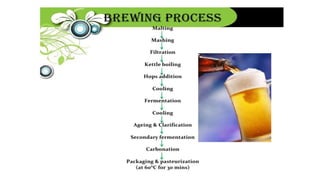
• Barley grains are first cleaned and then soaked in water for about 2 days. Then
excess water is drained away and the barley are incubated for 4-5 days to
allow germination
• it allow the formation of highly active α-amylase, β-amylase and proteases
enzymes as well as various flavor and color components
• Malt adjuncts:
• Barley contains considerable amount of protein.which make the final beer
dark and unstable. Therefore, protein t should be diluted by adding additional
starch or sugary materials.
• Such sugary or starchy materials are called malt adjuncts and includes
dextrose sugar syrup.
Kilning:
• The germinated seed are then killed by slow heating at 80° .
• Furthermore, if kilning temperature is higher, darker will be the beer
produced
milling
• The dried barley grains are then crushed between rollers to produced
coarse powder called grist
Mashing:
• Grist is mixed with warm water and maintained at 65°C for about 1
hour.
• starch is hydrolyzed by amylase enzyme to produce single sugar,
maltose, dextrose etc. similarly, protein is hydrolyzed by proteolytic
enzymes into small fragments and amino acids.
• The degree of enzymatic hydrolysis is strongly depends on pH and
temperature. β-amylase has optimum activity at temperature 57-65°C
whereas α-amylase has optimum activity at temperature 70-75°
• The liquid obtained by mashing is called wort..
Boiling of wort:
• wort is bolied with stirring for 2-3 hours and hop flowers are added
at various interval during boiling.
• Reasons for boiling of wort:
• For extraction of hop flavor from hop flower
• Boiling partially hydrolyze protein and help in removal of protein
• Boiling inactivates enzymes otherwise causes caramelization of sugar
• Boiling also sterilize and concentrate the wort
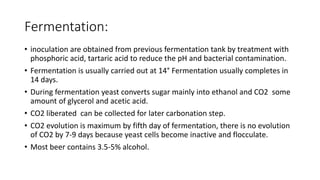
Fermentation:
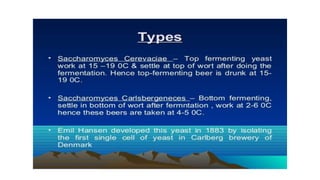
• inoculation are obtained from previous fermentation tank by treatment with
phosphoric acid, tartaric acid to reduce the pH and bacterial contamination.
• Fermentation is usually carried out at 14° Fermentation usually completes in
14 days.
• During fermentation yeast converts sugar mainly into ethanol and CO2 some
amount of glycerol and acetic acid.
• CO2 liberated can be collected for later carbonation step.
• CO2 evolution is maximum by fifth day of fermentation, there is no evolution
of CO2 by 7-9 days because yeast cells become inactive and flocculate.
• Most beer contains 3.5-5% alcohol.
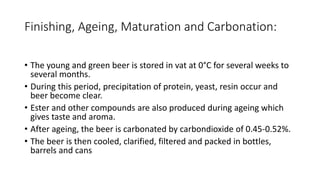
Finishing, Ageing, Maturation and Carbonation:
• The young and green beer is stored in vat at 0°C for several weeks to
several months.
• During this period, precipitation of protein, yeast, resin occur and
beer become clear.
• Ester and other compounds are also produced during ageing which
gives taste and aroma.
• After ageing, the beer is carbonated by carbondioxide of 0.45-0.52%.
• The beer is then cooled, clarified, filtered and packed in bottles,
barrels and cans
references
• www.google.com

Beer production

  • 1.
  • 11.
    malting • Barley grainsare first cleaned and then soaked in water for about 2 days. Then excess water is drained away and the barley are incubated for 4-5 days to allow germination • it allow the formation of highly active α-amylase, β-amylase and proteases enzymes as well as various flavor and color components • Malt adjuncts: • Barley contains considerable amount of protein.which make the final beer dark and unstable. Therefore, protein t should be diluted by adding additional starch or sugary materials. • Such sugary or starchy materials are called malt adjuncts and includes dextrose sugar syrup.
  • 12.
    Kilning: • The germinatedseed are then killed by slow heating at 80° . • Furthermore, if kilning temperature is higher, darker will be the beer produced
  • 13.
    milling • The driedbarley grains are then crushed between rollers to produced coarse powder called grist
  • 14.
    Mashing: • Grist ismixed with warm water and maintained at 65°C for about 1 hour. • starch is hydrolyzed by amylase enzyme to produce single sugar, maltose, dextrose etc. similarly, protein is hydrolyzed by proteolytic enzymes into small fragments and amino acids. • The degree of enzymatic hydrolysis is strongly depends on pH and temperature. β-amylase has optimum activity at temperature 57-65°C whereas α-amylase has optimum activity at temperature 70-75° • The liquid obtained by mashing is called wort..
  • 16.
    Boiling of wort: •wort is bolied with stirring for 2-3 hours and hop flowers are added at various interval during boiling. • Reasons for boiling of wort: • For extraction of hop flavor from hop flower • Boiling partially hydrolyze protein and help in removal of protein • Boiling inactivates enzymes otherwise causes caramelization of sugar • Boiling also sterilize and concentrate the wort
  • 18.
    Fermentation: • inoculation areobtained from previous fermentation tank by treatment with phosphoric acid, tartaric acid to reduce the pH and bacterial contamination. • Fermentation is usually carried out at 14° Fermentation usually completes in 14 days. • During fermentation yeast converts sugar mainly into ethanol and CO2 some amount of glycerol and acetic acid. • CO2 liberated can be collected for later carbonation step. • CO2 evolution is maximum by fifth day of fermentation, there is no evolution of CO2 by 7-9 days because yeast cells become inactive and flocculate. • Most beer contains 3.5-5% alcohol.
  • 19.
    Finishing, Ageing, Maturationand Carbonation: • The young and green beer is stored in vat at 0°C for several weeks to several months. • During this period, precipitation of protein, yeast, resin occur and beer become clear. • Ester and other compounds are also produced during ageing which gives taste and aroma. • After ageing, the beer is carbonated by carbondioxide of 0.45-0.52%. • The beer is then cooled, clarified, filtered and packed in bottles, barrels and cans
  • 20.