PRESENTATION BY,
K.PADHMASRI,
MSC BIOCHEMISTRY.
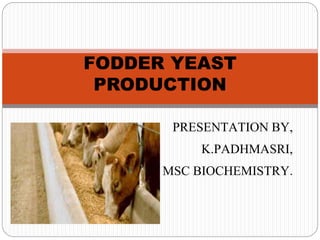
FODDER YEAST
PRODUCTION
FODDER YEAST PRODUCTION
 Fodder yeast : it means the yeast that is used as
animal feed it is a microbial proteins synthesized
by yeast in which digestibility amino acid content
higher than an animal routine does has a high
biological value as compared to other feed.
 Manufacturer of fodder yeast is designed to
convert waste , surplus or low cost carbohydrate
material into products of value for feeding
cattle,hogs and other farm animals.
Benefits of using yeast cell as
fodder
Inactive dry yeast fodder increases bioavailability of
protein as they contain essential amino acid.
Composition of fodder yeast contain 10 essential amino
acid. On the content of amino acids fodder yeast similar to
proteins of animal origin
Feed yeast contain Vitamin B (rgulate fat metabolism) rich
source of Vitamin D2 (5000-12000 IU/Kg Fd .yst)
Ash of fodder yeast also contain valuable animals and
birds macro and micro elements P, K,Ca,Fe,Mg,S,Na, Cu
and others
ORGANISMS USED IN
FODDER YEAST PRODUCTION
 Sulphur and its compound : composition biological
involved in formation of aminoacids
 Phosphorus and calcium : development of skeleton
 Overdose of fodder yeast does not causes side effects.
 ORGANISMS USED: Yeast commonly used
commercially strain of Candida utilis,(torula yeast) often
called as Torulopsis utilis
 Other yeast used commerically or studied extensively in
laboratory include C.tropicalis and
 Saccharomyces cerevisea
ADVANTAGES OF USING
Candida utilis
 C.utilis utilizes hexose,pentose and other
constituent found in the acid hydrolyse from
wood or other cellulose material.meat
flavour when dried
It is rich in protein content and its vitamin B
complex.
S.cerevisae utilises hexose,disaccahride but not
pentose.
RAW MATERIALS FOR
PRODUCTION
 COMMERCIAL: 1. Sulfite liquor
2.molasses
3.wood sugar
 Hydrolysed grains
 Citrous juice /fruit juice
 Olive residues properly prepared act as raw material
 OTHER SOURCES; Hydrocarbon oil,low
alcohol,hydrolysed of wood waste(saw dust ,chips)
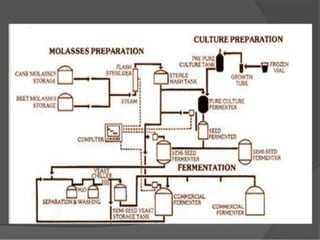
FODDER YEAST PRODUCTION
 Raw materials;-
*wood augers ,
*molasses,
*juice from raw can sugar .
 Production;-
continuous fermentation process.
 PRODUCTION PROCESS:
 1. The medium contain wood sugar stillage , reinforced by
addition of dipotassium Phosphate and urea in 0.05%
concentration
 2. The pH was maintained between 5-6.5 with ammonia.
 3. After the inoculation of liqour was aerated.the growth of
yeast and also of sugar concentration was affected to the large
extent by aeration
 4. The suitable sugar may be consumed in18 hrs or less .the
rate of the sugar consummation was increased as a temperature
was increased from 24-34°c.
 5. Yield : - yield of dry yeast varied from 43-63 on the sugar
consumed .
FOODER YEAST FROM
CITRUS WASTE PRESS JUICE
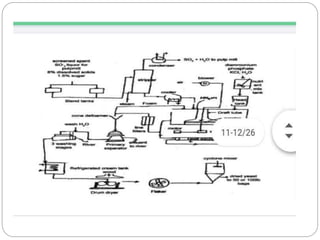
❖ The juice is obtained by pressing ground citrus waste .(
Peel, rag and seeds). It contain 4-8% of sugar .it is
deficient in Phosphate and nitrogen.
❖ The juice is prepared for use by screening it, heating it to
the boiling temperature and holding it for 5 minutes .
❖ Add filter aid and diluting it tap water to adjust the total
sugar content to 1% and cooling to 30°c .
❖ Then sodium phosphate and ammonium sulfate are added
to the juice .
❖ Sodium carbonate is added to maintain the pH between
4.4-6.5.
 ❖ The nutrient citrus waste press juice enoculated with
4% by volume of 2 days culture C.utilis in the malt wort.
 ❖ The medium is air was filtered it maintained the
temperature ,of 29- 30°c .
 ❖ The process is generally completed in 8 hours.
 ❖ The yeast is separate by centrifuging and washed.
 ❖ Yield;- The yield from citrus waste juice contains 1%
of total sugar are 46 of dry yeast based on the total
amount of sugar in the juice
PRODUCTION OF FODDER YEAST
ON A CONTINUOUS BASIS
o 1. The equipment used In the continuous production of fodder
yeast contain an open tank of 34 Lt.
 2. The fermentation liquor down to the draft type.
 3. And forcing it up the sides, a proportionating pump to
control continuous feeding and a standpipe. ( over flow for 5
hours
 4. The propagation was carried out follow -2 lt.of a solutions
that contained 100 millions yeast cells per ml.
 5. The spinner was put into operation and the wood suger
hydrolyzate, dilute the concentration of 25% of reducing suger
and nutrients, was added at rate of 2 LTRs/ hr
• 6. Air was intrigued at rate of 5 fm.
 7. The yeast was separated from the liquor by
centrifuging.and return to the fermenter until the
volume of wet yeast in fermentor was about 7%
 8. The undiluted wood hydrolyzate of 4.5-5%
concentration
 9. The temperature is controlled by cooling coil and
electric heater
 10. No antifoam agent was required because of the
type of aerator used.
 11. The initial pH of the fermentation medium was
4.7-6.6.
 12. The dry yeast yield based on the total suger is 36%
and protein content of is 52%.
Fodder yeast production

Fodder yeast production

  • 1.
  • 2.
    FODDER YEAST PRODUCTION Fodder yeast : it means the yeast that is used as animal feed it is a microbial proteins synthesized by yeast in which digestibility amino acid content higher than an animal routine does has a high biological value as compared to other feed.  Manufacturer of fodder yeast is designed to convert waste , surplus or low cost carbohydrate material into products of value for feeding cattle,hogs and other farm animals.
  • 3.
    Benefits of usingyeast cell as fodder Inactive dry yeast fodder increases bioavailability of protein as they contain essential amino acid. Composition of fodder yeast contain 10 essential amino acid. On the content of amino acids fodder yeast similar to proteins of animal origin Feed yeast contain Vitamin B (rgulate fat metabolism) rich source of Vitamin D2 (5000-12000 IU/Kg Fd .yst) Ash of fodder yeast also contain valuable animals and birds macro and micro elements P, K,Ca,Fe,Mg,S,Na, Cu and others
  • 4.
    ORGANISMS USED IN FODDERYEAST PRODUCTION  Sulphur and its compound : composition biological involved in formation of aminoacids  Phosphorus and calcium : development of skeleton  Overdose of fodder yeast does not causes side effects.  ORGANISMS USED: Yeast commonly used commercially strain of Candida utilis,(torula yeast) often called as Torulopsis utilis  Other yeast used commerically or studied extensively in laboratory include C.tropicalis and  Saccharomyces cerevisea
  • 5.
    ADVANTAGES OF USING Candidautilis  C.utilis utilizes hexose,pentose and other constituent found in the acid hydrolyse from wood or other cellulose material.meat flavour when dried It is rich in protein content and its vitamin B complex. S.cerevisae utilises hexose,disaccahride but not pentose.
  • 6.
    RAW MATERIALS FOR PRODUCTION COMMERCIAL: 1. Sulfite liquor 2.molasses 3.wood sugar  Hydrolysed grains  Citrous juice /fruit juice  Olive residues properly prepared act as raw material  OTHER SOURCES; Hydrocarbon oil,low alcohol,hydrolysed of wood waste(saw dust ,chips)
  • 7.
    FODDER YEAST PRODUCTION Raw materials;- *wood augers , *molasses, *juice from raw can sugar .  Production;- continuous fermentation process.
  • 8.
     PRODUCTION PROCESS: 1. The medium contain wood sugar stillage , reinforced by addition of dipotassium Phosphate and urea in 0.05% concentration  2. The pH was maintained between 5-6.5 with ammonia.  3. After the inoculation of liqour was aerated.the growth of yeast and also of sugar concentration was affected to the large extent by aeration  4. The suitable sugar may be consumed in18 hrs or less .the rate of the sugar consummation was increased as a temperature was increased from 24-34°c.  5. Yield : - yield of dry yeast varied from 43-63 on the sugar consumed .
  • 9.
    FOODER YEAST FROM CITRUSWASTE PRESS JUICE ❖ The juice is obtained by pressing ground citrus waste .( Peel, rag and seeds). It contain 4-8% of sugar .it is deficient in Phosphate and nitrogen. ❖ The juice is prepared for use by screening it, heating it to the boiling temperature and holding it for 5 minutes . ❖ Add filter aid and diluting it tap water to adjust the total sugar content to 1% and cooling to 30°c . ❖ Then sodium phosphate and ammonium sulfate are added to the juice . ❖ Sodium carbonate is added to maintain the pH between 4.4-6.5.
  • 10.
     ❖ Thenutrient citrus waste press juice enoculated with 4% by volume of 2 days culture C.utilis in the malt wort.  ❖ The medium is air was filtered it maintained the temperature ,of 29- 30°c .  ❖ The process is generally completed in 8 hours.  ❖ The yeast is separate by centrifuging and washed.  ❖ Yield;- The yield from citrus waste juice contains 1% of total sugar are 46 of dry yeast based on the total amount of sugar in the juice
  • 12.
    PRODUCTION OF FODDERYEAST ON A CONTINUOUS BASIS o 1. The equipment used In the continuous production of fodder yeast contain an open tank of 34 Lt.  2. The fermentation liquor down to the draft type.  3. And forcing it up the sides, a proportionating pump to control continuous feeding and a standpipe. ( over flow for 5 hours  4. The propagation was carried out follow -2 lt.of a solutions that contained 100 millions yeast cells per ml.  5. The spinner was put into operation and the wood suger hydrolyzate, dilute the concentration of 25% of reducing suger and nutrients, was added at rate of 2 LTRs/ hr
  • 13.
    • 6. Airwas intrigued at rate of 5 fm.  7. The yeast was separated from the liquor by centrifuging.and return to the fermenter until the volume of wet yeast in fermentor was about 7%  8. The undiluted wood hydrolyzate of 4.5-5% concentration  9. The temperature is controlled by cooling coil and electric heater  10. No antifoam agent was required because of the type of aerator used.  11. The initial pH of the fermentation medium was 4.7-6.6.  12. The dry yeast yield based on the total suger is 36% and protein content of is 52%.