Food Service General Safety


Working Safer and Easier
Workplace hazards can be costly as workers may suffer
injuries. You can make a difference by implementing these
tips:


                             1. A Safe and Healthful Workplace
                             2. Commitment to Safety and Health
                             3. Effective Communication
                             4. Training
                             5. Use of Personal Protective
                                Equipment
Decreased Injury Risk
Increased Productivity
Decreased Mistakes
Increased Efficiency
Decreased lost work days
Decreased Turnover
Improved Morale
SWEEPING
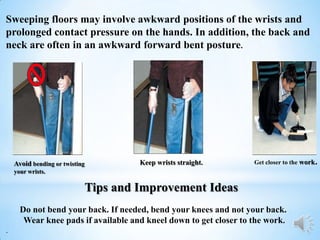
Sweeping floors may involve awkward positions of the wrists and
prolonged contact pressure on the hands. In addition, the back and
neck are often in an awkward forward bent posture.


    Avoid bending or twisting            Keep wrists straight.     Get closer to the work.
    your wrists.

                                Tips and Improvement Ideas
      Do not bend your back. If needed, bend your knees and not your back.
       Wear knee pads if available and kneel down to get closer to the work.
.
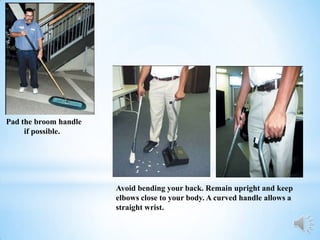
Pad the broom handle
     if possible.


                       Avoid bending your back. Remain upright and keep
                       elbows close to your body. A curved handle allows a
                       straight wrist.
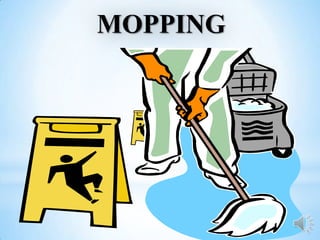
MOPPING
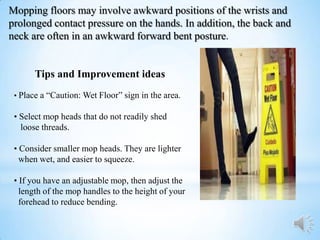
Mopping floors may involve awkward positions of the wrists and
prolonged contact pressure on the hands. In addition, the back and
neck are often in an awkward forward bent posture.


       Tips and Improvement ideas
 • Place a “Caution: Wet Floor” sign in the area.

 • Select mop heads that do not readily shed
   loose threads.

 • Consider smaller mop heads. They are lighter
   when wet, and easier to squeeze.

 • If you have an adjustable mop, then adjust the
   length of the mop handles to the height of your
   forehead to reduce bending.
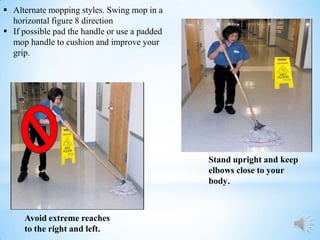
 Alternate mopping styles. Swing mop in a
  horizontal figure 8 direction
 If possible pad the handle or use a padded
  mop handle to cushion and improve your
  grip.


                                               Stand upright and keep
                                               elbows close to your
                                               body.


     Avoid extreme reaches
     to the right and left.
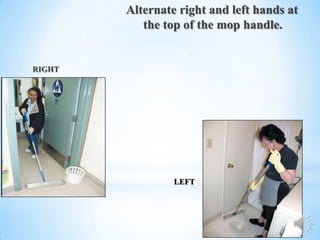
Alternate right and left hands at
           the top of the mop handle.


RIGHT


                 LEFT
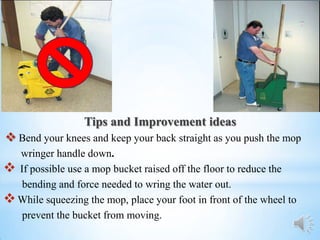
Tips and Improvement ideas
 Bend your knees and keep your back straight as you push the mop
  wringer handle down.
 If possible use a mop bucket raised off the floor to reduce the
   bending and force needed to wring the water out.
 While squeezing the mop, place your foot in front of the wheel to
   prevent the bucket from moving.
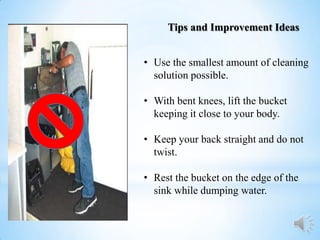
Tips and Improvement Ideas


• Use the smallest amount of cleaning
  solution possible.

• With bent knees, lift the bucket
  keeping it close to your body.

• Keep your back straight and do not
  twist.

• Rest the bucket on the edge of the
  sink while dumping water.
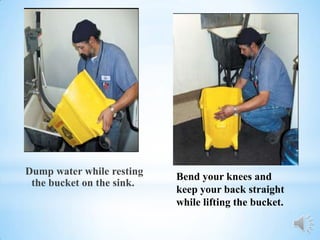
Dump water while resting   Bend your knees and
 the bucket on the sink.
                           keep your back straight
                           while lifting the bucket.
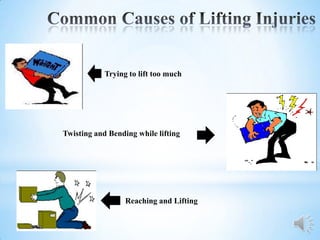
Trying to lift too much


Twisting and Bending while lifting


                  Reaching and Lifting
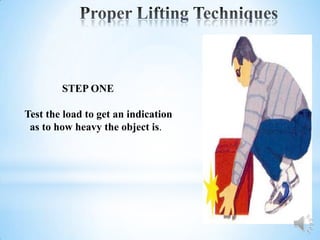
STEP ONE

Test the load to get an indication
 as to how heavy the object is.
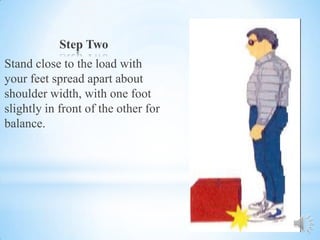
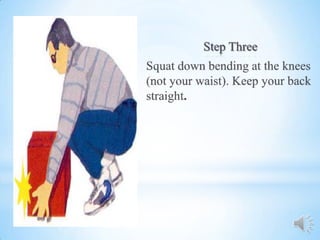
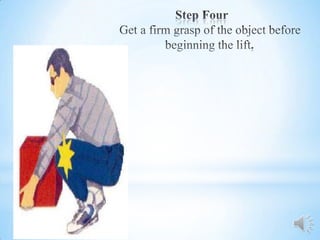
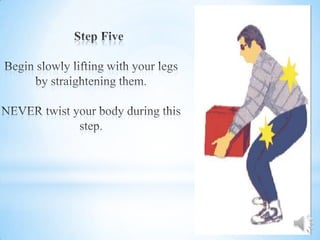
Step Two
Stand close to the load with
your feet spread apart about
shoulder width, with one foot
slightly in front of the other for
balance.
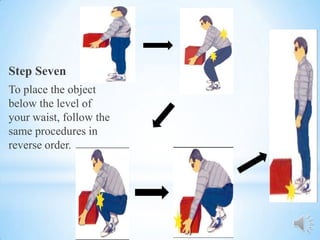
Step Seven
To place the object
below the level of
your waist, follow the
same procedures in
reverse order.
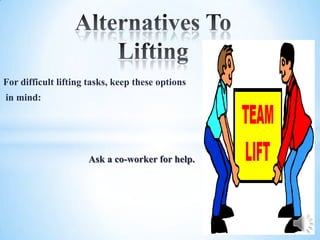
For difficult lifting tasks, keep these options
in mind:


                     Ask a co-worker for help.
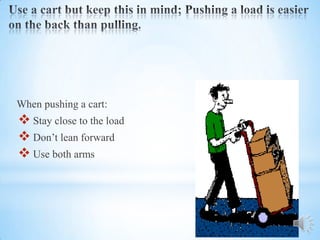
When pushing a cart:
 Stay close to the load
 Don’t lean forward
 Use both arms
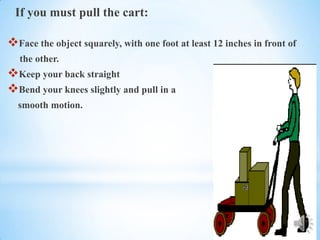
If you must pull the cart:

Face the object squarely, with one foot at least 12 inches in front of
  the other.
Keep your back straight
Bend your knees slightly and pull in a
  smooth motion.
Food service employees come in contact with chemicals daily, and there
are some chemicals in the kitchen which are potentially dangerous.
Each kitchen staff should take precaution when using chemicals.
                                   DO
                              Read Labels
                      Know what chemical to use
                   Know the dangers of the chemical
                    Know how to use the chemical
                  Know how to dispose of the chemical
              Know where MSDS sheets are (SAISD plant operations website)
                   Use PPE ( Personal Protective Equipment)

                                  DON’T
                              Mix Chemicals
                    Bring Outside chemicals in the school
                       Spray chemicals toward others
                     Use Chemicals without proper PPE
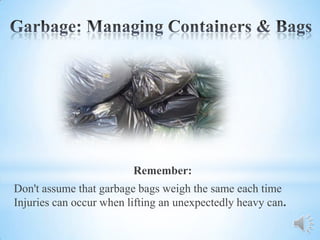
Remember:
Don't assume that garbage bags weigh the same each time
Injuries can occur when lifting an unexpectedly heavy can.
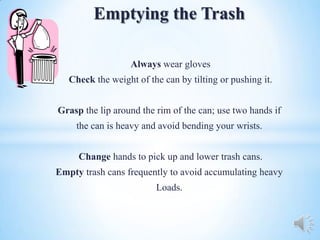
Emptying the Trash

                   Always wear gloves
   Check the weight of the can by tilting or pushing it.


Grasp the lip around the rim of the can; use two hands if
     the can is heavy and avoid bending your wrists.


     Change hands to pick up and lower trash cans.
Empty trash cans frequently to avoid accumulating heavy
                         Loads.
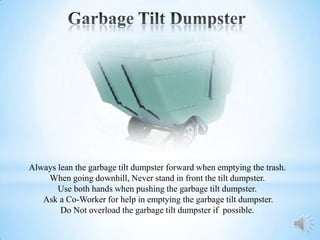
Always lean the garbage tilt dumpster forward when emptying the trash.
    When going downhill, Never stand in front the tilt dumpster.
       Use both hands when pushing the garbage tilt dumpster.
   Ask a Co-Worker for help in emptying the garbage tilt dumpster.
        Do Not overload the garbage tilt dumpster if possible.
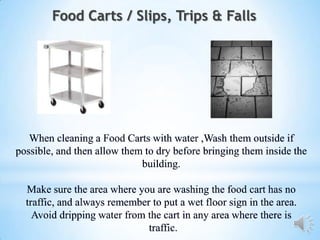
Food Carts / Slips, Trips & Falls


   When cleaning a Food Carts with water ,Wash them outside if
possible, and then allow them to dry before bringing them inside the
                             building.

  Make sure the area where you are washing the food cart has no
  traffic, and always remember to put a wet floor sign in the area.
    Avoid dripping water from the cart in any area where there is
                              traffic.
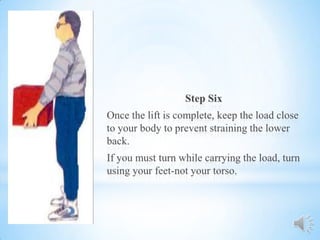
   Don’t lift objects over your head.
   Don’t twist your body when lifting or
    setting an object down.
   Don’t reach over an obstacle to lift a
    load. Move whatever is in the way or go
    around it.
   Slow down, Don’t Rush and Pay attention to what
    your doing to avoid mistakes.
   Use your PPE
   When wiping down tables always wring your towel out
    over the bucket to avoid water dripping on the floor.
Look at the risk factors you encounter at home and at
work –think ergonomics. Ask yourself:

 “What awkward postures do I encounter?”
 “Can I readjust sitting/standing positions to maintain
    neutral postures?”
 “Do I use excess force on my job? If so, how can I
    reduce or eliminate that force?”
 “When lifting is required, am I following the right
    steps to lift correctly?”
   “Do I have any other ideas to make my work space or
    tasks more ergonomically comfortable?”
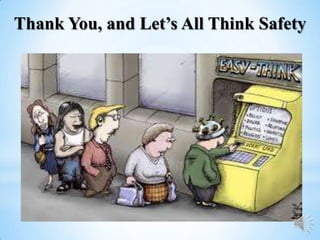
Thank You, and Let’s All Think Safety

Basic food service training 4

  • 1.
    Food Service GeneralSafety Working Safer and Easier
  • 2.
    Workplace hazards canbe costly as workers may suffer injuries. You can make a difference by implementing these tips: 1. A Safe and Healthful Workplace 2. Commitment to Safety and Health 3. Effective Communication 4. Training 5. Use of Personal Protective Equipment
  • 3.
    Decreased Injury Risk IncreasedProductivity Decreased Mistakes Increased Efficiency Decreased lost work days Decreased Turnover Improved Morale
  • 4.
  • 5.
    Sweeping floors mayinvolve awkward positions of the wrists and prolonged contact pressure on the hands. In addition, the back and neck are often in an awkward forward bent posture. Avoid bending or twisting Keep wrists straight. Get closer to the work. your wrists. Tips and Improvement Ideas Do not bend your back. If needed, bend your knees and not your back. Wear knee pads if available and kneel down to get closer to the work. .
  • 6.
    Pad the broomhandle if possible. Avoid bending your back. Remain upright and keep elbows close to your body. A curved handle allows a straight wrist.
  • 7.
  • 8.
    Mopping floors mayinvolve awkward positions of the wrists and prolonged contact pressure on the hands. In addition, the back and neck are often in an awkward forward bent posture. Tips and Improvement ideas • Place a “Caution: Wet Floor” sign in the area. • Select mop heads that do not readily shed loose threads. • Consider smaller mop heads. They are lighter when wet, and easier to squeeze. • If you have an adjustable mop, then adjust the length of the mop handles to the height of your forehead to reduce bending.
  • 9.
     Alternate moppingstyles. Swing mop in a horizontal figure 8 direction  If possible pad the handle or use a padded mop handle to cushion and improve your grip. Stand upright and keep elbows close to your body. Avoid extreme reaches to the right and left.
  • 10.
    Alternate right andleft hands at the top of the mop handle. RIGHT LEFT
  • 11.
    Tips and Improvementideas  Bend your knees and keep your back straight as you push the mop wringer handle down.  If possible use a mop bucket raised off the floor to reduce the bending and force needed to wring the water out.  While squeezing the mop, place your foot in front of the wheel to prevent the bucket from moving.
  • 12.
    Tips and ImprovementIdeas • Use the smallest amount of cleaning solution possible. • With bent knees, lift the bucket keeping it close to your body. • Keep your back straight and do not twist. • Rest the bucket on the edge of the sink while dumping water.
  • 13.
    Dump water whileresting Bend your knees and the bucket on the sink. keep your back straight while lifting the bucket.
  • 15.
    Trying to lifttoo much Twisting and Bending while lifting Reaching and Lifting
  • 16.
    STEP ONE Test theload to get an indication as to how heavy the object is.
  • 17.
    Step Two Stand closeto the load with your feet spread apart about shoulder width, with one foot slightly in front of the other for balance.
  • 22.
    Step Seven To placethe object below the level of your waist, follow the same procedures in reverse order.
  • 23.
    For difficult liftingtasks, keep these options in mind: Ask a co-worker for help.
  • 24.
    When pushing acart:  Stay close to the load  Don’t lean forward  Use both arms
  • 25.
    If you mustpull the cart: Face the object squarely, with one foot at least 12 inches in front of the other. Keep your back straight Bend your knees slightly and pull in a smooth motion.
  • 27.
    Food service employeescome in contact with chemicals daily, and there are some chemicals in the kitchen which are potentially dangerous. Each kitchen staff should take precaution when using chemicals. DO Read Labels Know what chemical to use Know the dangers of the chemical Know how to use the chemical Know how to dispose of the chemical Know where MSDS sheets are (SAISD plant operations website) Use PPE ( Personal Protective Equipment) DON’T Mix Chemicals Bring Outside chemicals in the school Spray chemicals toward others Use Chemicals without proper PPE
  • 28.
    Remember: Don't assume thatgarbage bags weigh the same each time Injuries can occur when lifting an unexpectedly heavy can.
  • 30.
    Emptying the Trash Always wear gloves Check the weight of the can by tilting or pushing it. Grasp the lip around the rim of the can; use two hands if the can is heavy and avoid bending your wrists. Change hands to pick up and lower trash cans. Empty trash cans frequently to avoid accumulating heavy Loads.
  • 31.
    Always lean thegarbage tilt dumpster forward when emptying the trash. When going downhill, Never stand in front the tilt dumpster. Use both hands when pushing the garbage tilt dumpster. Ask a Co-Worker for help in emptying the garbage tilt dumpster. Do Not overload the garbage tilt dumpster if possible.
  • 32.
    Food Carts /Slips, Trips & Falls When cleaning a Food Carts with water ,Wash them outside if possible, and then allow them to dry before bringing them inside the building. Make sure the area where you are washing the food cart has no traffic, and always remember to put a wet floor sign in the area. Avoid dripping water from the cart in any area where there is traffic.
  • 33.
    Don’t lift objects over your head.  Don’t twist your body when lifting or setting an object down.  Don’t reach over an obstacle to lift a load. Move whatever is in the way or go around it.  Slow down, Don’t Rush and Pay attention to what your doing to avoid mistakes.  Use your PPE  When wiping down tables always wring your towel out over the bucket to avoid water dripping on the floor.
  • 34.
    Look at therisk factors you encounter at home and at work –think ergonomics. Ask yourself:  “What awkward postures do I encounter?”  “Can I readjust sitting/standing positions to maintain neutral postures?”  “Do I use excess force on my job? If so, how can I reduce or eliminate that force?”  “When lifting is required, am I following the right steps to lift correctly?”  “Do I have any other ideas to make my work space or tasks more ergonomically comfortable?”
  • 35.
    Thank You, andLet’s All Think Safety

Editor's Notes

  • #6 Do not bend your wrist or your back.