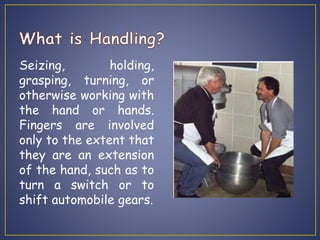
Seizing, holding, 
grasping, turning, or 
otherwise working with 
the hand or hands. 
Fingers are involved 
only to the extent that 
they are an extension 
of the hand, such as to 
turn a switch or to 
shift automobile gears.
Carrying 
Lifting 
Pushing 
Pulling 
Holding 
Striking Throwing
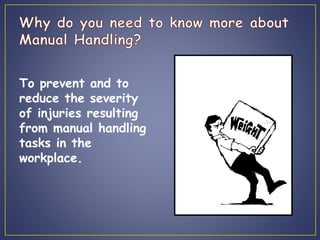
To prevent and to 
reduce the severity 
of injuries resulting 
from manual handling 
tasks in the 
workplace.
• 37% Manual Handling 
• 19% Slips, Trips & Falls 
• 12% Other causes 
• 20% Stuck by an Object 
• 7% Falling from Height 
• 5% Machinery
• Manual tasks can lead to injury through the 
development of Musculoskeletal Disorders (MSD). 
• An Musculoskeletal Disorders (MSD) is an injury 
affecting the bones or soft tissue structure (other 
than organs) of the body that is caused by manual 
handling at work. 
• Examples include sprains of ligaments; strains of 
muscles or tendons; injuries to the spine, joints, bones 
or nerves and abdominal hernias.
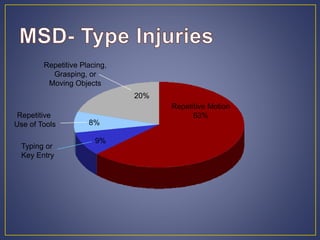
Repetitive Motion 
63% 
Repetitive Placing, 
Grasping, or 
Moving Objects 
20% 
Repetitive 
Use of Tools 8% 
Typing or 
Key Entry 
9%
• Back or neck pain 
• Pain in wrists shoulder or 
arms 
• Stabbing pains in arms 
or legs 
• Painful joints 
• Pain, tingling or 
numbness in hands or 
feet 
• Weakness or clumsiness 
• Heaviness 
• Burning sensations 
• Stiffness 
• Swelling
• Constraints on 
postures e.g lack of 
space 
• Shape of object 
• Poor floors 
• Variation in levels 
• Hot/cold/rain/ice/ 
humid conditions 
• Strong air 
movements 
• Poor lightning 
conditions 
• Finding shortcuts 
• Showing off 
• Pressure of work 
• Untrained worker
Engineering Improvements 
These includes rearranging, 
modifying, redesigning, 
providing or replacing tools, 
equipment, work stations, 
packaging, parts, 
processes, products or 
materials. 
Administrative 
Improvements 
These includes job 
rotation, adjusting work 
schedules, work pace, or 
work practices, provide 
variety of jobs to 
eliminate repetition.
• Plan the workflow to eliminate unnecessary carrying. 
• Slide, push, or roll instead of carrying, when appropriate. 
• Organize the work so that the physical demands and work 
pace increases gradually. 
• Reduce the distances that loads are moved to a minimum. 
• Use mechanical devices or equipment for transporting load. 
• Reduce the weight of the load 
• Repack the containers so contents will not shift and the 
weight is balanced. 
• Use team carrying as a temporary measure for heavy or 
bulky objects. 
• Reduce the frequency and amount of time workers carry 
materials.
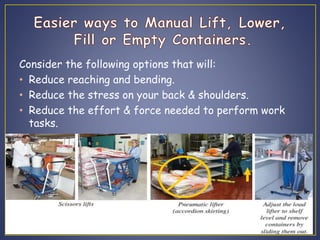
Consider the following options that will: 
• Reduce reaching and bending. 
• Reduce the stress on your back & shoulders. 
• Reduce the effort & force needed to perform work 
tasks.
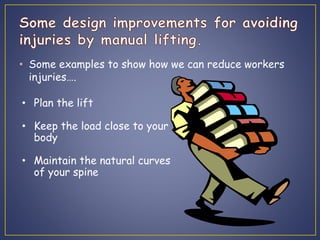
• Some examples to show how we can reduce workers 
injuries…. 
• Plan the lift 
• Keep the load close to your 
body 
• Maintain the natural curves 
of your spine
For the lifting of light and heavy loads
Consider the following options that will: 
• Improve your grip. 
• Reduce stress on your back & shoulders. 
• Reduce contact pressure on your shoulders & hands. 
• Reduce the effort & force needed to perform work 
tasks.
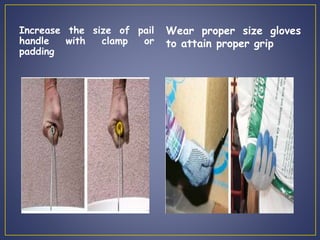
Increase the size of pail 
handle with clamp or 
padding 
Wear proper size gloves 
to attain proper grip
Pad the shoulder. Use a tool.
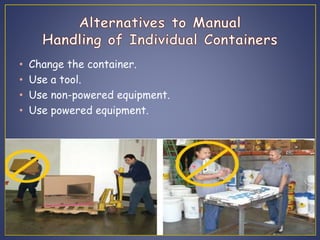
• Change the container. 
• Use a tool. 
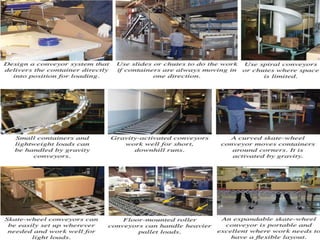
• Use non-powered equipment. 
• Use powered equipment.
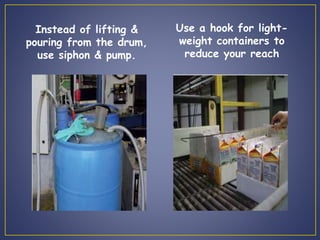
Instead of lifting & 
pouring from the drum, 
use siphon & pump. 
Use a hook for light-weight 
containers to 
reduce your reach
Use a drum dolly to 
transfer Drums. 
Use a cart or 
platform truck.
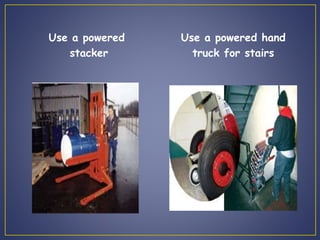
Use a powered 
stacker 
Use a powered hand 
truck for stairs
The three steps are: 
• Identifying manual task hazards 
• Assessing the risk of manual task hazards 
• Eliminating the risk, or if it is not possible then 
reduce the risk to the lowest practicable level
Identify all the plant, materials, 
equipment, systems of work, the 
work environment and individual 
tasks which have the potential 
to contribute to a 
musculoskeletal disorder
• Type of work - some tasks 
require fixed postures for long 
periods of time 
• Layout of the work space - a 
poorly designed workspace may 
force people to maintain awkward 
postures, such as bending or 
twisting repetitively 
• Weight of the object - heavy 
objects that have to be lifted 
awkwardly, such as from ground 
level are more likely to cause 
injury than objects lifted from 
waist level 
• Equipment - more effort may be 
required to manipulate badly 
designed or poorly maintained 
equipment
Some tasks require fixed postures for long periods of time.
A poorly designed workspace may force people to maintain 
awkward postures such as bending or twisting repetitively.
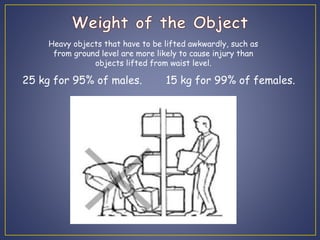
Heavy objects that have to be lifted awkwardly, such as 
from ground level are more likely to cause injury than 
objects lifted from waist level. 
25 kg for 95% of males. 15 kg for 99% of females.
More effort may be required to manipulate badly designed 
or poorly maintained equipment.
 Change the task you can 
change the task to prevent 
manual task hazards. 
 Change the object - for 
example, repack a heavy 
load into smaller, more 
manageable parcels 
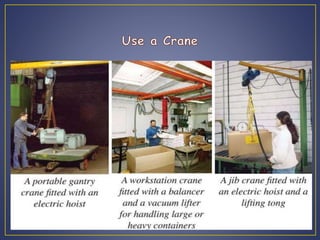
 Use mechanical aids - like 
wheelbarrows, trolleys, 
conveyor belts, cranes or 
forklifts 
Change the workspace - for 
example, use ergonomic 
furniture and make sure work 
benches are at optimum 
heights to limit bending or 
stretching 
Seek proper training - 
inexperienced workers are 
more likely to be injured
You can change the task to prevent manual task hazards.
Repack a heavy load into smaller, more manageable parcels.
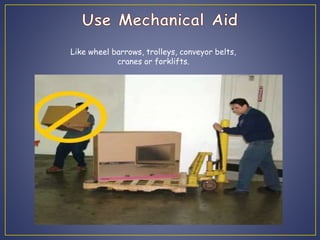
Like wheel barrows, trolleys, conveyor belts, 
cranes or forklifts.
Use ergonomics furniture and make sure work benches are 
at optimum heights to limit bending or stretching.
Inexperience workers are more likely to be injured.
My ppt.
My ppt.

My ppt.

  • 4.
    Seizing, holding, grasping,turning, or otherwise working with the hand or hands. Fingers are involved only to the extent that they are an extension of the hand, such as to turn a switch or to shift automobile gears.
  • 5.
    Carrying Lifting Pushing Pulling Holding Striking Throwing
  • 6.
    To prevent andto reduce the severity of injuries resulting from manual handling tasks in the workplace.
  • 7.
    • 37% ManualHandling • 19% Slips, Trips & Falls • 12% Other causes • 20% Stuck by an Object • 7% Falling from Height • 5% Machinery
  • 9.
    • Manual taskscan lead to injury through the development of Musculoskeletal Disorders (MSD). • An Musculoskeletal Disorders (MSD) is an injury affecting the bones or soft tissue structure (other than organs) of the body that is caused by manual handling at work. • Examples include sprains of ligaments; strains of muscles or tendons; injuries to the spine, joints, bones or nerves and abdominal hernias.
  • 10.
    Repetitive Motion 63% Repetitive Placing, Grasping, or Moving Objects 20% Repetitive Use of Tools 8% Typing or Key Entry 9%
  • 11.
    • Back orneck pain • Pain in wrists shoulder or arms • Stabbing pains in arms or legs • Painful joints • Pain, tingling or numbness in hands or feet • Weakness or clumsiness • Heaviness • Burning sensations • Stiffness • Swelling
  • 12.
    • Constraints on postures e.g lack of space • Shape of object • Poor floors • Variation in levels • Hot/cold/rain/ice/ humid conditions • Strong air movements • Poor lightning conditions • Finding shortcuts • Showing off • Pressure of work • Untrained worker
  • 16.
    Engineering Improvements Theseincludes rearranging, modifying, redesigning, providing or replacing tools, equipment, work stations, packaging, parts, processes, products or materials. Administrative Improvements These includes job rotation, adjusting work schedules, work pace, or work practices, provide variety of jobs to eliminate repetition.
  • 17.
    • Plan theworkflow to eliminate unnecessary carrying. • Slide, push, or roll instead of carrying, when appropriate. • Organize the work so that the physical demands and work pace increases gradually. • Reduce the distances that loads are moved to a minimum. • Use mechanical devices or equipment for transporting load. • Reduce the weight of the load • Repack the containers so contents will not shift and the weight is balanced. • Use team carrying as a temporary measure for heavy or bulky objects. • Reduce the frequency and amount of time workers carry materials.
  • 18.
    Consider the followingoptions that will: • Reduce reaching and bending. • Reduce the stress on your back & shoulders. • Reduce the effort & force needed to perform work tasks.
  • 19.
    • Some examplesto show how we can reduce workers injuries…. • Plan the lift • Keep the load close to your body • Maintain the natural curves of your spine
  • 20.
    For the liftingof light and heavy loads
  • 22.
    Consider the followingoptions that will: • Improve your grip. • Reduce stress on your back & shoulders. • Reduce contact pressure on your shoulders & hands. • Reduce the effort & force needed to perform work tasks.
  • 23.
    Increase the sizeof pail handle with clamp or padding Wear proper size gloves to attain proper grip
  • 24.
    Pad the shoulder.Use a tool.
  • 25.
    • Change thecontainer. • Use a tool. • Use non-powered equipment. • Use powered equipment.
  • 26.
    Instead of lifting& pouring from the drum, use siphon & pump. Use a hook for light-weight containers to reduce your reach
  • 27.
    Use a drumdolly to transfer Drums. Use a cart or platform truck.
  • 29.
    Use a powered stacker Use a powered hand truck for stairs
  • 31.
    The three stepsare: • Identifying manual task hazards • Assessing the risk of manual task hazards • Eliminating the risk, or if it is not possible then reduce the risk to the lowest practicable level
  • 32.
    Identify all theplant, materials, equipment, systems of work, the work environment and individual tasks which have the potential to contribute to a musculoskeletal disorder
  • 33.
    • Type ofwork - some tasks require fixed postures for long periods of time • Layout of the work space - a poorly designed workspace may force people to maintain awkward postures, such as bending or twisting repetitively • Weight of the object - heavy objects that have to be lifted awkwardly, such as from ground level are more likely to cause injury than objects lifted from waist level • Equipment - more effort may be required to manipulate badly designed or poorly maintained equipment
  • 34.
    Some tasks requirefixed postures for long periods of time.
  • 35.
    A poorly designedworkspace may force people to maintain awkward postures such as bending or twisting repetitively.
  • 36.
    Heavy objects thathave to be lifted awkwardly, such as from ground level are more likely to cause injury than objects lifted from waist level. 25 kg for 95% of males. 15 kg for 99% of females.
  • 37.
    More effort maybe required to manipulate badly designed or poorly maintained equipment.
  • 38.
     Change thetask you can change the task to prevent manual task hazards.  Change the object - for example, repack a heavy load into smaller, more manageable parcels  Use mechanical aids - like wheelbarrows, trolleys, conveyor belts, cranes or forklifts Change the workspace - for example, use ergonomic furniture and make sure work benches are at optimum heights to limit bending or stretching Seek proper training - inexperienced workers are more likely to be injured
  • 39.
    You can changethe task to prevent manual task hazards.
  • 40.
    Repack a heavyload into smaller, more manageable parcels.
  • 41.
    Like wheel barrows,trolleys, conveyor belts, cranes or forklifts.
  • 42.
    Use ergonomics furnitureand make sure work benches are at optimum heights to limit bending or stretching.
  • 43.
    Inexperience workers aremore likely to be injured.