
Personal
Hygiene
DR KIRTI BHATI
BHARATI VIDYAPEETH DEEMED UNIVERSITY
COLLEGE OF AYURVED,
PUNE
INTRODUCTION
What is hygiene.
What is health.
Why its necessary for food .
The art &branch of science that deals in
preserving good health is hygiene.
 It is derived from “hygieia” meaning
“goddess of health”
What is Health
Health is a state of complete physical,
mind & social well-being & not more
then absence of disease or infirmity.
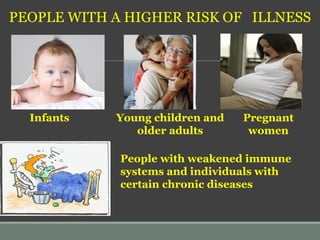
Pregnant
women
Infants Young children and
older adults
People with weakened immune
systems and individuals with
certain chronic diseases
PEOPLE WITH A HIGHER RISK OF ILLNESS
KEEP YOUR HANDS AND
SURFACE CLEAN
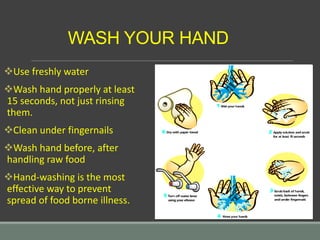
WASH YOUR HAND
Use freshly water
Wash hand properly at least
15 seconds, not just rinsing
them.
Clean under fingernails
Wash hand before, after
handling raw food
Hand-washing is the most
effective way to prevent
spread of food borne illness.
PERSONAL HYGIENE
Copyright 2010 by Lorraine Harley,
Family and Consumer Sciences Educator,
University of Maryland Extension
Personal hygiene is defined as the principle of
maintaining cleanliness and grooming of the external
body.
• Maintaining a high level of personal hygiene will help
to increase self esteem and confidence.
POOR PERSONAL HYGIENE
Copyright 2010 by Lorraine Harley,
Family and Consumer Sciences Educator,
University of Maryland Extension
Poor Personal Hygiene Failure to keep up a
standard of hygiene can have many
implications like;
• Increased risk of getting an infection or illness
• Social embarrassment
Aspects of Personal Hygiene
• Bath Regularly
•Hands and nails care
•Teeth Care
•Ear care
•Hair Care
•Feet Care
•Clothing
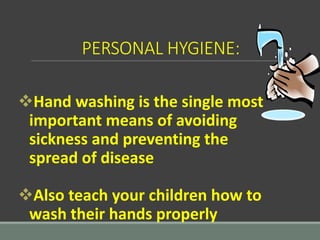
PERSONAL HYGIENE:
Hand washing is the single most
important means of avoiding
sickness and preventing the
spread of disease
Also teach your children how to
wash their hands properly
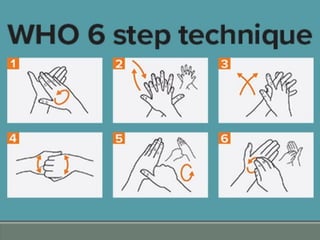
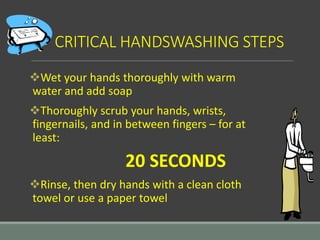
CRITICAL HANDSWASHING STEPS
Wet your hands thoroughly with warm
water and add soap
Thoroughly scrub your hands, wrists,
fingernails, and in between fingers – for at
least:
20 SECONDS
Rinse, then dry hands with a clean cloth
towel or use a paper towel
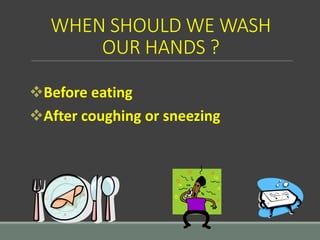
WHEN SHOULD WE WASH
OUR HANDS ?
Before eating
After coughing or sneezing
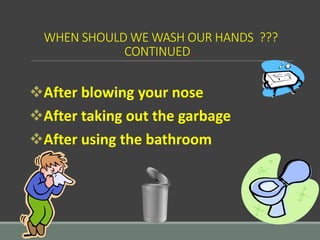
WHEN SHOULD WE WASH OUR HANDS ???
CONTINUED…
After blowing your nose
After taking out the garbage
After using the bathroom
PET ALERT!!!
Pets, such as dogs, cats, turtles, snakes, birds and lizards
Soil
ANIMALS
County fairs
Petting zoos
Barns
Home/daycare
CUTS AND ABRASIONS
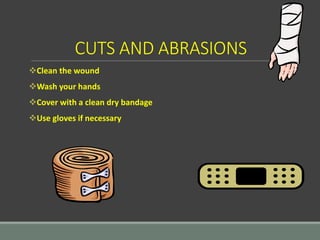
Clean the wound
Wash your hands
Cover with a clean dry bandage
Use gloves if necessary
Teeth
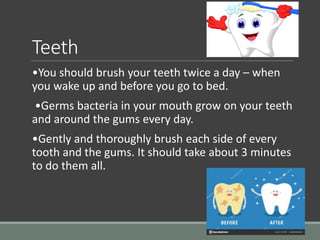
•You should brush your teeth twice a day – when
you wake up and before you go to bed.
•Germs bacteria in your mouth grow on your teeth
and around the gums every day.
•Gently and thoroughly brush each side of every
tooth and the gums. It should take about 3 minutes
to do them all.
EAR
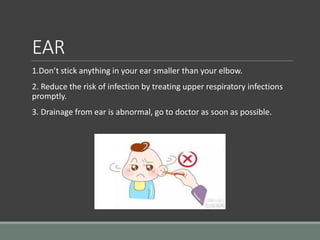
1.Don’t stick anything in your ear smaller than your elbow.
2. Reduce the risk of infection by treating upper respiratory infections
promptly.
3. Drainage from ear is abnormal, go to doctor as soon as possible.
Hair
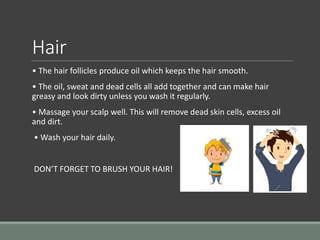
• The hair follicles produce oil which keeps the hair smooth.
• The oil, sweat and dead cells all add together and can make hair
greasy and look dirty unless you wash it regularly.
• Massage your scalp well. This will remove dead skin cells, excess oil
and dirt.
• Wash your hair daily.
DON’T FORGET TO BRUSH YOUR HAIR!
Feet & Shoes
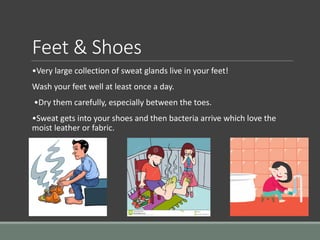
•Very large collection of sweat glands live in your feet!
Wash your feet well at least once a day.
•Dry them carefully, especially between the toes.
•Sweat gets into your shoes and then bacteria arrive which love the
moist leather or fabric.
Clothes
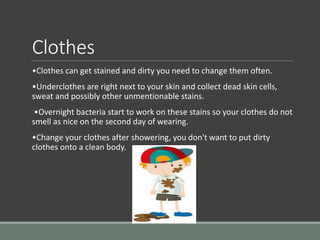
•Clothes can get stained and dirty you need to change them often.
•Underclothes are right next to your skin and collect dead skin cells,
sweat and possibly other unmentionable stains.
•Overnight bacteria start to work on these stains so your clothes do not
smell as nice on the second day of wearing.
•Change your clothes after showering, you don't want to put dirty
clothes onto a clean body.
WHEN SHOULD I CONSULT A DOCTOR?
“High fever (over 101.5 F)
Blood in stools
Prolonged vomiting
Diarrhea lasting more than 3 days
Dehydration
Decrease in urination
Dry mouth and throat
Dizzy upon standing
QUESTION ??????
WHAT ARE SOME EXAMPLES OF POOR
HYGIENE?
EXAMPLES OF POOR HYGIENE
Touching your Face or Hair
Wearing Soiled Uniforms
Not Wearing Hair Restraints
Chewing Gum
Eating in Food Preparation and Storage Areas – Drinks not
Covered or Stored Properly
Not Bathing
Smoking
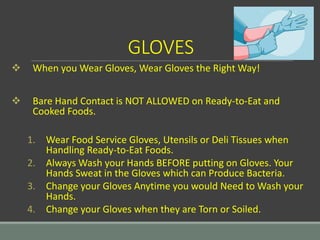
GLOVES
 When you Wear Gloves, Wear Gloves the Right Way!
 Bare Hand Contact is NOT ALLOWED on Ready-to-Eat and
Cooked Foods.
1. Wear Food Service Gloves, Utensils or Deli Tissues when
Handling Ready-to-Eat Foods.
2. Always Wash your Hands BEFORE putting on Gloves. Your
Hands Sweat in the Gloves which can Produce Bacteria.
3. Change your Gloves Anytime you would Need to Wash your
Hands.
4. Change your Gloves when they are Torn or Soiled.
Wearing Gloves is NO SUBSTITUTE for Clean Hands. Wash your Hands
and Change your Gloves Often.
WHEN WOULD YOU HAVE TO WASH
YOUR HANDS?
AFTER
Touching your Body, Face, Sneezing and Clothing
Using the Toilet
Eating, Drinking and Smoking
Handling Dirty Equipment or Utensils
Handling Raw Food
Handling Garbage
Any Other Activity that Contaminates your Gloves
WHERE DO WE WASH OUR HANDS?
Where – ONLY at a Hand sink
Sinks Must be Designated for a Specific
Task
A Hand sink is for Hand Washing ONLY and is NOT to be
used for Any Other Purpose.
HOW SHOULD YOU WASH YOUR
HANDS?
Wet your Hands with Warm Running Water.
Lather with Soap and Scrub between Fingers, on the Backs
of your Hands and Under Nails.
Wash for at Least 20 Seconds. Sing “Happy Birthday” to
yourself Twice.
Dry Hands. Use Single-Use Paper Towels.
Use a Paper Towel when you Turn Off the Tap.
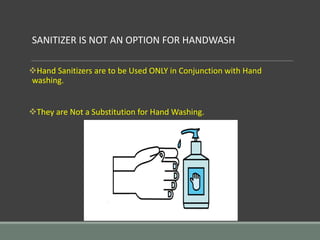
Hand Sanitizers are to be Used ONLY in Conjunction with Hand
washing.
They are Not a Substitution for Hand Washing.
SANITIZER IS NOT AN OPTION FOR HANDWASH
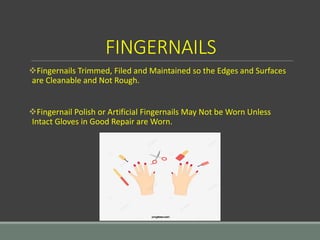
FINGERNAILS
Fingernails Trimmed, Filed and Maintained so the Edges and Surfaces
are Cleanable and Not Rough.
Fingernail Polish or Artificial Fingernails May Not be Worn Unless
Intact Gloves in Good Repair are Worn.
THANK YOU

Personal hygiene

  • 1.
    Personal Hygiene DR KIRTI BHATI BHARATIVIDYAPEETH DEEMED UNIVERSITY COLLEGE OF AYURVED, PUNE
  • 2.
    INTRODUCTION What is hygiene. Whatis health. Why its necessary for food .
  • 3.
    The art &branchof science that deals in preserving good health is hygiene.  It is derived from “hygieia” meaning “goddess of health”
  • 4.
    What is Health Healthis a state of complete physical, mind & social well-being & not more then absence of disease or infirmity.
  • 5.
    Pregnant women Infants Young childrenand older adults People with weakened immune systems and individuals with certain chronic diseases PEOPLE WITH A HIGHER RISK OF ILLNESS
  • 6.
    KEEP YOUR HANDSAND SURFACE CLEAN
  • 7.
    WASH YOUR HAND Usefreshly water Wash hand properly at least 15 seconds, not just rinsing them. Clean under fingernails Wash hand before, after handling raw food Hand-washing is the most effective way to prevent spread of food borne illness.
  • 9.
    PERSONAL HYGIENE Copyright 2010by Lorraine Harley, Family and Consumer Sciences Educator, University of Maryland Extension Personal hygiene is defined as the principle of maintaining cleanliness and grooming of the external body. • Maintaining a high level of personal hygiene will help to increase self esteem and confidence.
  • 10.
    POOR PERSONAL HYGIENE Copyright2010 by Lorraine Harley, Family and Consumer Sciences Educator, University of Maryland Extension Poor Personal Hygiene Failure to keep up a standard of hygiene can have many implications like; • Increased risk of getting an infection or illness • Social embarrassment
  • 11.
    Aspects of PersonalHygiene • Bath Regularly •Hands and nails care •Teeth Care •Ear care •Hair Care •Feet Care •Clothing
  • 12.
    PERSONAL HYGIENE: Hand washingis the single most important means of avoiding sickness and preventing the spread of disease Also teach your children how to wash their hands properly
  • 13.
    CRITICAL HANDSWASHING STEPS Wetyour hands thoroughly with warm water and add soap Thoroughly scrub your hands, wrists, fingernails, and in between fingers – for at least: 20 SECONDS Rinse, then dry hands with a clean cloth towel or use a paper towel
  • 14.
    WHEN SHOULD WEWASH OUR HANDS ? Before eating After coughing or sneezing
  • 15.
    WHEN SHOULD WEWASH OUR HANDS ??? CONTINUED… After blowing your nose After taking out the garbage After using the bathroom
  • 16.
    PET ALERT!!! Pets, suchas dogs, cats, turtles, snakes, birds and lizards Soil
  • 17.
  • 18.
    CUTS AND ABRASIONS Cleanthe wound Wash your hands Cover with a clean dry bandage Use gloves if necessary
  • 19.
    Teeth •You should brushyour teeth twice a day – when you wake up and before you go to bed. •Germs bacteria in your mouth grow on your teeth and around the gums every day. •Gently and thoroughly brush each side of every tooth and the gums. It should take about 3 minutes to do them all.
  • 20.
    EAR 1.Don’t stick anythingin your ear smaller than your elbow. 2. Reduce the risk of infection by treating upper respiratory infections promptly. 3. Drainage from ear is abnormal, go to doctor as soon as possible.
  • 21.
    Hair • The hairfollicles produce oil which keeps the hair smooth. • The oil, sweat and dead cells all add together and can make hair greasy and look dirty unless you wash it regularly. • Massage your scalp well. This will remove dead skin cells, excess oil and dirt. • Wash your hair daily. DON’T FORGET TO BRUSH YOUR HAIR!
  • 22.
    Feet & Shoes •Verylarge collection of sweat glands live in your feet! Wash your feet well at least once a day. •Dry them carefully, especially between the toes. •Sweat gets into your shoes and then bacteria arrive which love the moist leather or fabric.
  • 23.
    Clothes •Clothes can getstained and dirty you need to change them often. •Underclothes are right next to your skin and collect dead skin cells, sweat and possibly other unmentionable stains. •Overnight bacteria start to work on these stains so your clothes do not smell as nice on the second day of wearing. •Change your clothes after showering, you don't want to put dirty clothes onto a clean body.
  • 24.
    WHEN SHOULD ICONSULT A DOCTOR? “High fever (over 101.5 F) Blood in stools Prolonged vomiting Diarrhea lasting more than 3 days Dehydration Decrease in urination Dry mouth and throat Dizzy upon standing
  • 25.
    QUESTION ?????? WHAT ARESOME EXAMPLES OF POOR HYGIENE?
  • 26.
    EXAMPLES OF POORHYGIENE Touching your Face or Hair Wearing Soiled Uniforms Not Wearing Hair Restraints Chewing Gum Eating in Food Preparation and Storage Areas – Drinks not Covered or Stored Properly Not Bathing Smoking
  • 27.
    GLOVES  When youWear Gloves, Wear Gloves the Right Way!  Bare Hand Contact is NOT ALLOWED on Ready-to-Eat and Cooked Foods. 1. Wear Food Service Gloves, Utensils or Deli Tissues when Handling Ready-to-Eat Foods. 2. Always Wash your Hands BEFORE putting on Gloves. Your Hands Sweat in the Gloves which can Produce Bacteria. 3. Change your Gloves Anytime you would Need to Wash your Hands. 4. Change your Gloves when they are Torn or Soiled.
  • 28.
    Wearing Gloves isNO SUBSTITUTE for Clean Hands. Wash your Hands and Change your Gloves Often.
  • 29.
    WHEN WOULD YOUHAVE TO WASH YOUR HANDS? AFTER Touching your Body, Face, Sneezing and Clothing Using the Toilet Eating, Drinking and Smoking Handling Dirty Equipment or Utensils Handling Raw Food Handling Garbage Any Other Activity that Contaminates your Gloves
  • 30.
    WHERE DO WEWASH OUR HANDS? Where – ONLY at a Hand sink Sinks Must be Designated for a Specific Task A Hand sink is for Hand Washing ONLY and is NOT to be used for Any Other Purpose.
  • 31.
    HOW SHOULD YOUWASH YOUR HANDS? Wet your Hands with Warm Running Water. Lather with Soap and Scrub between Fingers, on the Backs of your Hands and Under Nails. Wash for at Least 20 Seconds. Sing “Happy Birthday” to yourself Twice. Dry Hands. Use Single-Use Paper Towels. Use a Paper Towel when you Turn Off the Tap.
  • 32.
    Hand Sanitizers areto be Used ONLY in Conjunction with Hand washing. They are Not a Substitution for Hand Washing. SANITIZER IS NOT AN OPTION FOR HANDWASH
  • 33.
    FINGERNAILS Fingernails Trimmed, Filedand Maintained so the Edges and Surfaces are Cleanable and Not Rough. Fingernail Polish or Artificial Fingernails May Not be Worn Unless Intact Gloves in Good Repair are Worn.
  • 34.