Importance Of Hygiene
ppt by
mrunali
Index
Hygiene
Hygiene at home
i. Kitchen
ii. Bathroom
iii. Laundry and toilet
iv. Bedroom
Hygiene at work place
Hygiene at industry
Hygiene at gym
Hygiene related to food
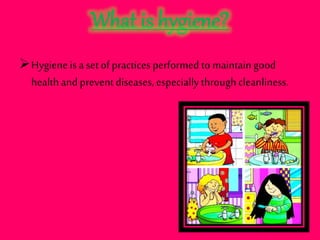
What is hygiene?
Hygieneis a set of practices performed to maintaingood
healthand prevent diseases, especially throughcleanliness.
Hygiene at home
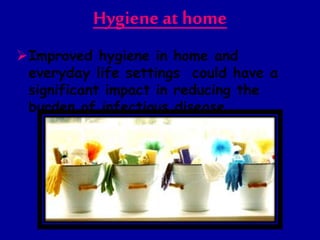
Improved hygiene in home and
everyday life settings could have a
significant impact in reducing the
burden of infectious disease.
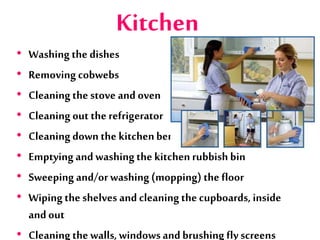
Kitchen
• Washing the dishes
• Removing cobwebs
• Cleaningthe stove and oven
• Cleaning out the refrigerator
• Cleaningdown the kitchenbench
• Emptyingand washingthe kitchenrubbish bin
• Sweeping and/orwashing(mopping) the floor
• Wipingthe shelves and cleaning thecupboards, inside
andout
• Cleaningthe walls,windowsandbrushing fly screens
Kitchen
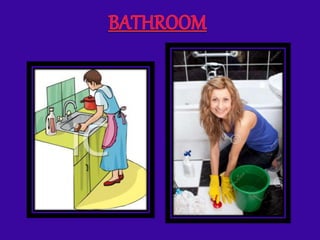
Bathroom
 Make sure each member of the family uses their own hand towel.
 Germs need a moist, dirty environment to thrive so make sure that your
bathroom is clean and aired.
 Make sure your toothbrushes are kept in a separate place from anythingelse.
Change them every 3 months and never share them
 Sweeping and washing(mopping) the floor
 Cleaning the mirror, cupboards and/or shelves
 Changing or washing the towels and the bath mat.
 Keeping bathroom surfaces as dry as possible will help to combat the growth
of micro organisms.
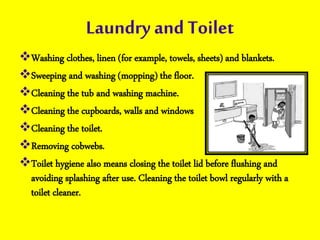
Laundry and Toilet
Washing clothes, linen (for example, towels, sheets) and blankets.
Sweeping and washing (mopping) the floor.
Cleaning the tub and washing machine.
Cleaning the cupboards, walls and windows
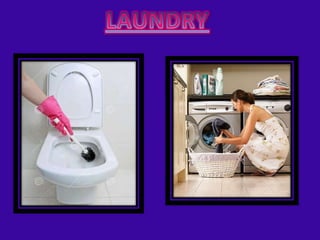
Cleaning the toilet.
Removing cobwebs.
Toilet hygiene also means closing the toilet lid before flushing and
avoiding splashing after use. Cleaning the toilet bowl regularly with a
toilet cleaner.
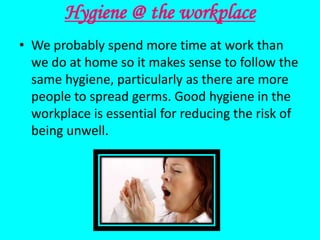
Hygiene @ the workplace
• We probably spend more time at work than
we do at home so it makes sense to follow the
same hygiene, particularly as there are more
people to spread germs. Good hygiene in the
workplace is essential for reducing the risk of
being unwell.
Washyour hands regularly withsoapand water, or use a hand
sanitizer.
Stay at home if you are ill, so you do not spreadit to other people
Cover your nose and mouthwith a tissue when sneezing and
coughing, then throwit in a binand wash your hands
Try not to touchyour eyes, nose or mouth, as viruses can transfer
fromyour hands and into the body
Make sure sharedcups, glasses, dishes and cutlery are clean
before you use them. Wash themin soap and water after use and
dry thoroughly
Keep your workstation clean and clear of fooddebris
Hygieneat INDUSTRY
• Industrial hygiene is the science of
anticipating, recognizing, evaluating, and
controlling workplace conditions that may
cause workers' injury or illness.
• Anticipate potential hazards
• Recognize potential hazards
• Evaluate exposure and risk
• Control exposure and risk
Hygieneat gym
Donotshareyourpersonalcareproductswith
others.
Wearcleanclotheseverytimeyouhitthegymand
washthemafteryourworkout.
Takenecessarymeasurestopreventathlete’sfeetor
fungalinfectiononyourfeet.
Avoidgoingtogymifyouaresick.
• Buy a better bottle: Plastic water bottles tend to
holdbacteria, the onlyonesyou can be sure of
are metal.
• Wipe, wash, repeat: Keepingyour hands clean
can helpmake sure gym germs don’t doany
damage. After usingeach machine or set of
weights, use the hand sanitizer.
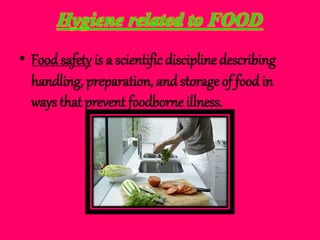
Hygiene related to FOOD
• Food safety is a scientific discipline describing
handling, preparation, and storage of food in
ways that prevent foodborne illness.
Hygiene related to FOOD
Prevent contaminating food
with pathogens spreading from people, pets, and
pests.
Store food at the proper temperature.
Do use safe waterand cooked materials
Cook foods for the appropriate length of time and
at the appropriate temperatureto kill pathogens.
Separate raw and cooked foods to prevent
contaminating the cooked foods.
Hygiene ppt by mrunali

Hygiene ppt by mrunali

  • 1.
  • 2.
    Index Hygiene Hygiene at home i.Kitchen ii. Bathroom iii. Laundry and toilet iv. Bedroom Hygiene at work place Hygiene at industry Hygiene at gym Hygiene related to food
  • 3.
    What is hygiene? Hygieneisa set of practices performed to maintaingood healthand prevent diseases, especially throughcleanliness.
  • 4.
    Hygiene at home Improvedhygiene in home and everyday life settings could have a significant impact in reducing the burden of infectious disease.
  • 5.
    Kitchen • Washing thedishes • Removing cobwebs • Cleaningthe stove and oven • Cleaning out the refrigerator • Cleaningdown the kitchenbench • Emptyingand washingthe kitchenrubbish bin • Sweeping and/orwashing(mopping) the floor • Wipingthe shelves and cleaning thecupboards, inside andout • Cleaningthe walls,windowsandbrushing fly screens
  • 6.
  • 7.
    Bathroom  Make sureeach member of the family uses their own hand towel.  Germs need a moist, dirty environment to thrive so make sure that your bathroom is clean and aired.  Make sure your toothbrushes are kept in a separate place from anythingelse. Change them every 3 months and never share them  Sweeping and washing(mopping) the floor  Cleaning the mirror, cupboards and/or shelves  Changing or washing the towels and the bath mat.  Keeping bathroom surfaces as dry as possible will help to combat the growth of micro organisms.
  • 9.
    Laundry and Toilet Washingclothes, linen (for example, towels, sheets) and blankets. Sweeping and washing (mopping) the floor. Cleaning the tub and washing machine. Cleaning the cupboards, walls and windows Cleaning the toilet. Removing cobwebs. Toilet hygiene also means closing the toilet lid before flushing and avoiding splashing after use. Cleaning the toilet bowl regularly with a toilet cleaner.
  • 13.
    Hygiene @ theworkplace • We probably spend more time at work than we do at home so it makes sense to follow the same hygiene, particularly as there are more people to spread germs. Good hygiene in the workplace is essential for reducing the risk of being unwell.
  • 14.
    Washyour hands regularlywithsoapand water, or use a hand sanitizer. Stay at home if you are ill, so you do not spreadit to other people Cover your nose and mouthwith a tissue when sneezing and coughing, then throwit in a binand wash your hands Try not to touchyour eyes, nose or mouth, as viruses can transfer fromyour hands and into the body Make sure sharedcups, glasses, dishes and cutlery are clean before you use them. Wash themin soap and water after use and dry thoroughly Keep your workstation clean and clear of fooddebris
  • 16.
    Hygieneat INDUSTRY • Industrialhygiene is the science of anticipating, recognizing, evaluating, and controlling workplace conditions that may cause workers' injury or illness. • Anticipate potential hazards • Recognize potential hazards • Evaluate exposure and risk • Control exposure and risk
  • 17.
  • 18.
    • Buy abetter bottle: Plastic water bottles tend to holdbacteria, the onlyonesyou can be sure of are metal. • Wipe, wash, repeat: Keepingyour hands clean can helpmake sure gym germs don’t doany damage. After usingeach machine or set of weights, use the hand sanitizer.
  • 19.
    Hygiene related toFOOD • Food safety is a scientific discipline describing handling, preparation, and storage of food in ways that prevent foodborne illness.
  • 20.
    Hygiene related toFOOD Prevent contaminating food with pathogens spreading from people, pets, and pests. Store food at the proper temperature. Do use safe waterand cooked materials Cook foods for the appropriate length of time and at the appropriate temperatureto kill pathogens. Separate raw and cooked foods to prevent contaminating the cooked foods.