Barriers to
Communication
Categorization of Barriers
 Semantic
 Organizational
 Inter-personal
 Individual
 Cross- cultural (Geographic)
 Physical / channel / and media
 Technological
Semantic Barriers
Science of meaning - Phonetics science of sound.
Semantics – coding /decoding
• Similar Pronunciation but multiple meaning.
• Badly expressed message – incoherence, poor sentence
structuring and jargons
• Wrong interpretation - Pandit, raja / Rajah
• Unqualified assumption by sender / receiver
• Technical language / jargon
Organizational Barriers
Interference from relative status and power of
participants, incompatible needs and expectations
o Organizational culture – impacts freedom and
trust
o Organizational rules and regulations
o Status relationship
o Complexity in organizational structure
o Inadequate facilities and opportunities
o Lack of cooperation between senior and
subordinate.
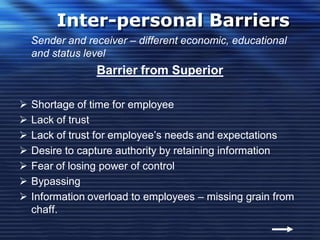
Inter-personal Barriers
Sender and receiver – different economic, educational
and status level
Barrier from Superior
 Shortage of time for employee
 Lack of trust
 Lack of trust for employee’s needs and expectations
 Desire to capture authority by retaining information
 Fear of losing power of control
 Bypassing
 Information overload to employees – missing grain from
chaff.
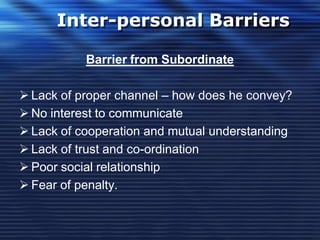
Inter-personal Barriers
Barrier from Subordinate
 Lack of proper channel – how does he convey?
 No interest to communicate
 Lack of cooperation and mutual understanding
 Lack of trust and co-ordination
 Poor social relationship
 Fear of penalty.
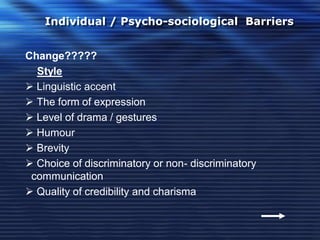
Individual / Psycho-sociological Barriers
Change?????
Style
 Linguistic accent
 The form of expression
 Level of drama / gestures
 Humour
 Brevity
 Choice of discriminatory or non- discriminatory
communication
 Quality of credibility and charisma
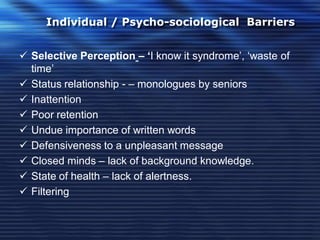
Individual / Psycho-sociological Barriers
 Selective Perception – ‘I know it syndrome’, ‘waste of
time’
 Status relationship - – monologues by seniors
 Inattention
 Poor retention
 Undue importance of written words
 Defensiveness to a unpleasant message
 Closed minds – lack of background knowledge.
 State of health – lack of alertness.
 Filtering
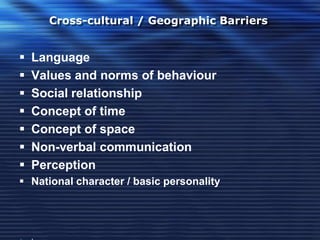
Cross-cultural / Geographic Barriers
 Language
 Values and norms of behaviour
 Social relationship
 Concept of time
 Concept of space
 Non-verbal communication
 Perception
 National character / basic personality
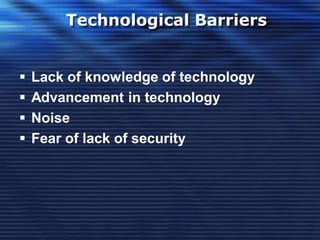
Technological Barriers
 Lack of knowledge of technology
 Advancement in technology
 Noise
 Fear of lack of security
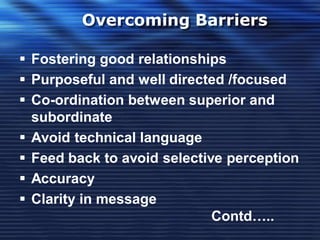
Overcoming Barriers
 Fostering good relationships
 Purposeful and well directed /focused
 Co-ordination between superior and
subordinate
 Avoid technical language
 Feed back to avoid selective perception
 Accuracy
 Clarity in message
Contd…..
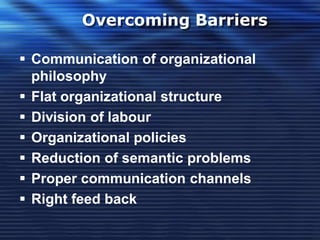
Overcoming Barriers
 Communication of organizational
philosophy
 Flat organizational structure
 Division of labour
 Organizational policies
 Reduction of semantic problems
 Proper communication channels
 Right feed back
Sender-Oriented Barriers
Badly expressed message
Rules for overcoming sender-oriented barriers
• Plan and clarify ideas
• Discuss, collate and pre-plan
• Create a climate of trust and confidence
• Empathize, win the trust
• Time your message carefully keep the when and where in mind
• Reinforce words with action harmonious words and actions
• Communicate efficiently solicit(request) feedback
Thanks

Barriers to communication

  • 1.
  • 2.
    Categorization of Barriers Semantic  Organizational  Inter-personal  Individual  Cross- cultural (Geographic)  Physical / channel / and media  Technological
  • 3.
    Semantic Barriers Science ofmeaning - Phonetics science of sound. Semantics – coding /decoding • Similar Pronunciation but multiple meaning. • Badly expressed message – incoherence, poor sentence structuring and jargons • Wrong interpretation - Pandit, raja / Rajah • Unqualified assumption by sender / receiver • Technical language / jargon
  • 4.
    Organizational Barriers Interference fromrelative status and power of participants, incompatible needs and expectations o Organizational culture – impacts freedom and trust o Organizational rules and regulations o Status relationship o Complexity in organizational structure o Inadequate facilities and opportunities o Lack of cooperation between senior and subordinate.
  • 5.
    Inter-personal Barriers Sender andreceiver – different economic, educational and status level Barrier from Superior  Shortage of time for employee  Lack of trust  Lack of trust for employee’s needs and expectations  Desire to capture authority by retaining information  Fear of losing power of control  Bypassing  Information overload to employees – missing grain from chaff.
  • 6.
    Inter-personal Barriers Barrier fromSubordinate  Lack of proper channel – how does he convey?  No interest to communicate  Lack of cooperation and mutual understanding  Lack of trust and co-ordination  Poor social relationship  Fear of penalty.
  • 7.
    Individual / Psycho-sociologicalBarriers Change????? Style  Linguistic accent  The form of expression  Level of drama / gestures  Humour  Brevity  Choice of discriminatory or non- discriminatory communication  Quality of credibility and charisma
  • 8.
    Individual / Psycho-sociologicalBarriers  Selective Perception – ‘I know it syndrome’, ‘waste of time’  Status relationship - – monologues by seniors  Inattention  Poor retention  Undue importance of written words  Defensiveness to a unpleasant message  Closed minds – lack of background knowledge.  State of health – lack of alertness.  Filtering
  • 9.
    Cross-cultural / GeographicBarriers  Language  Values and norms of behaviour  Social relationship  Concept of time  Concept of space  Non-verbal communication  Perception  National character / basic personality
  • 10.
    Technological Barriers  Lackof knowledge of technology  Advancement in technology  Noise  Fear of lack of security
  • 11.
    Overcoming Barriers  Fosteringgood relationships  Purposeful and well directed /focused  Co-ordination between superior and subordinate  Avoid technical language  Feed back to avoid selective perception  Accuracy  Clarity in message Contd…..
  • 12.
    Overcoming Barriers  Communicationof organizational philosophy  Flat organizational structure  Division of labour  Organizational policies  Reduction of semantic problems  Proper communication channels  Right feed back
  • 13.
    Sender-Oriented Barriers Badly expressedmessage Rules for overcoming sender-oriented barriers • Plan and clarify ideas • Discuss, collate and pre-plan • Create a climate of trust and confidence • Empathize, win the trust • Time your message carefully keep the when and where in mind • Reinforce words with action harmonious words and actions • Communicate efficiently solicit(request) feedback
  • 14.