Factors Affecting Effective
Communication
Presented By :-
Kiran Kumar
Hemanth
Vijay Kumar
Ravi Kumar
Manjunath &
Manu
Communication
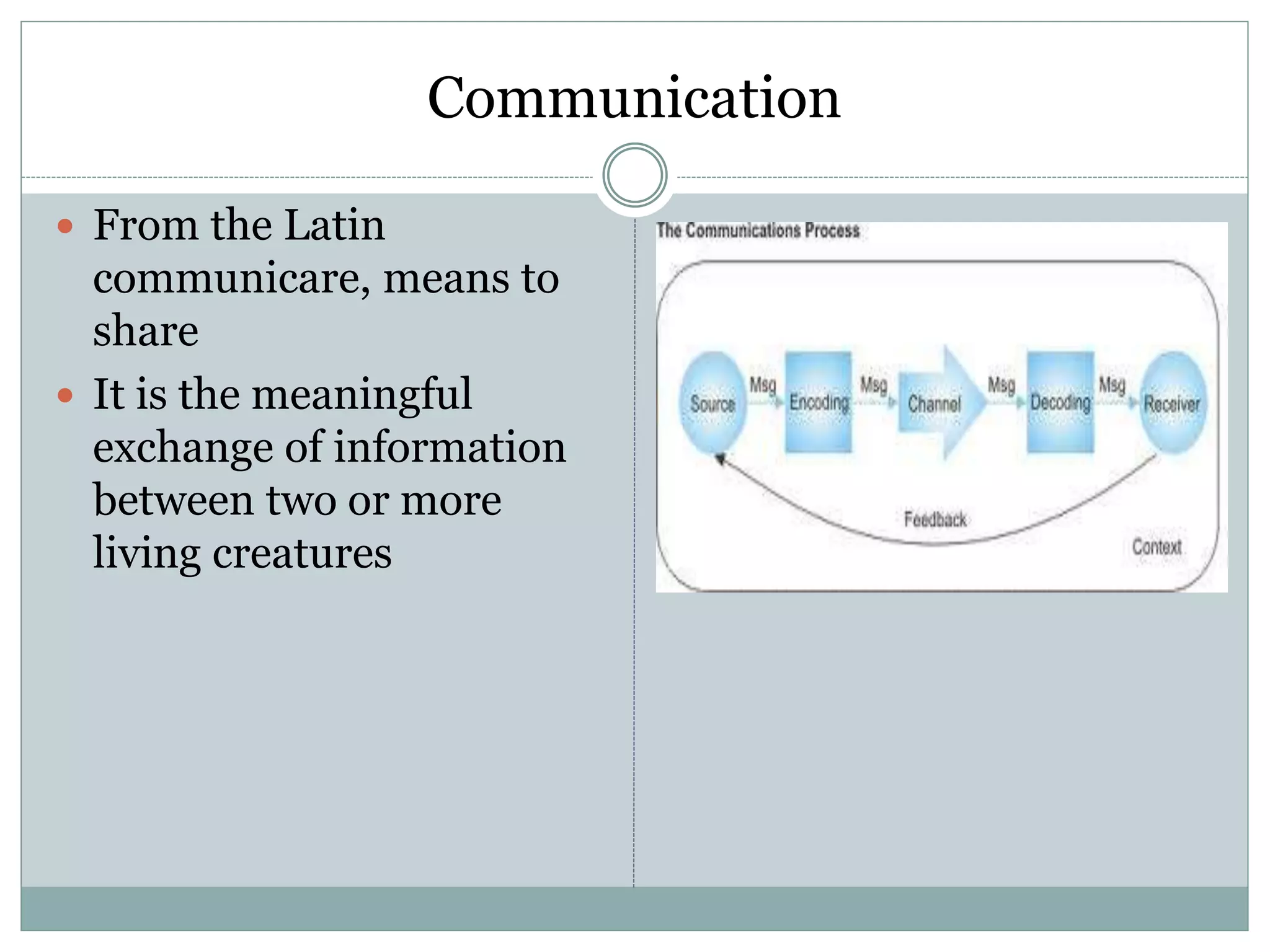
 From the Latin
communicare, means to
share
 It is the meaningful
exchange of information
between two or more
living creatures
Factors Affecting Communication
 Status/Role
 Cultural Differences
 Choice of communication
channels
 Length of Communication
 Use of Language
 Disabilities
 Known or Unknown
Receiver
 Individual Perceptions
 Atmosphere/Noise
 Clarity of Message
 Lack of Feedback
Status/Role
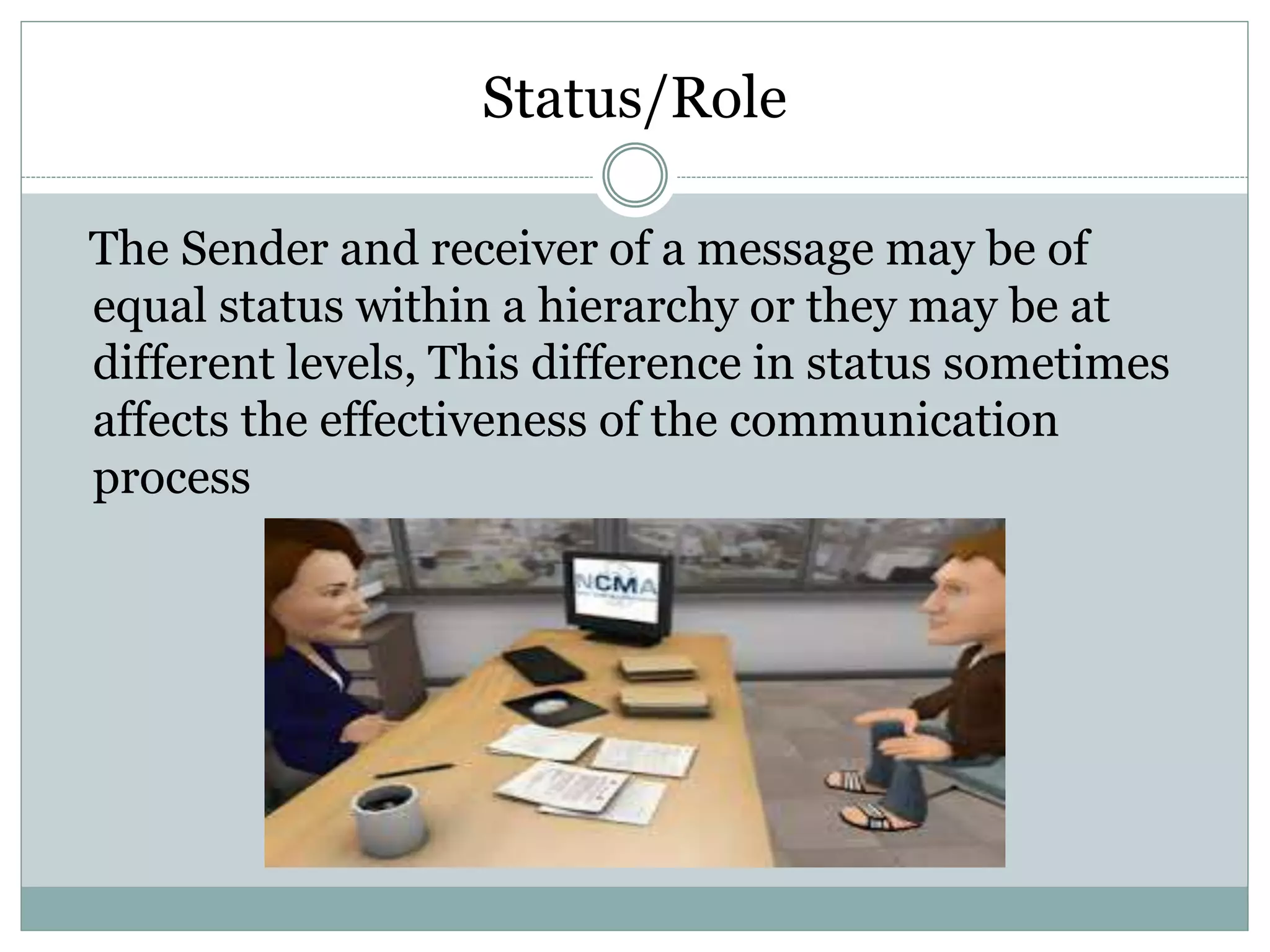
The Sender and receiver of a message may be of
equal status within a hierarchy or they may be at
different levels, This difference in status sometimes
affects the effectiveness of the communication
process
Cultural Differences
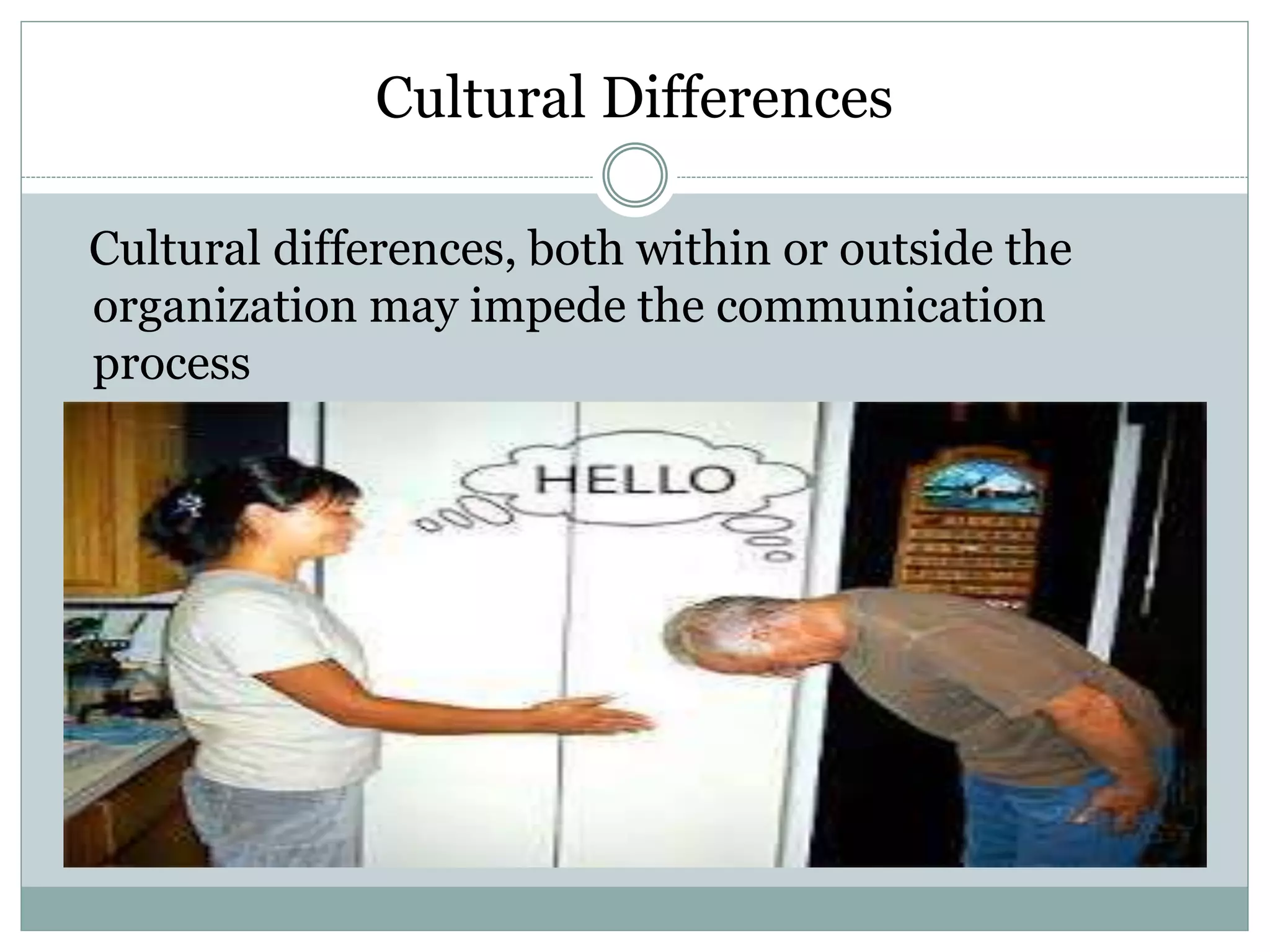
Cultural differences, both within or outside the
organization may impede the communication
process
Choice of Communication channels
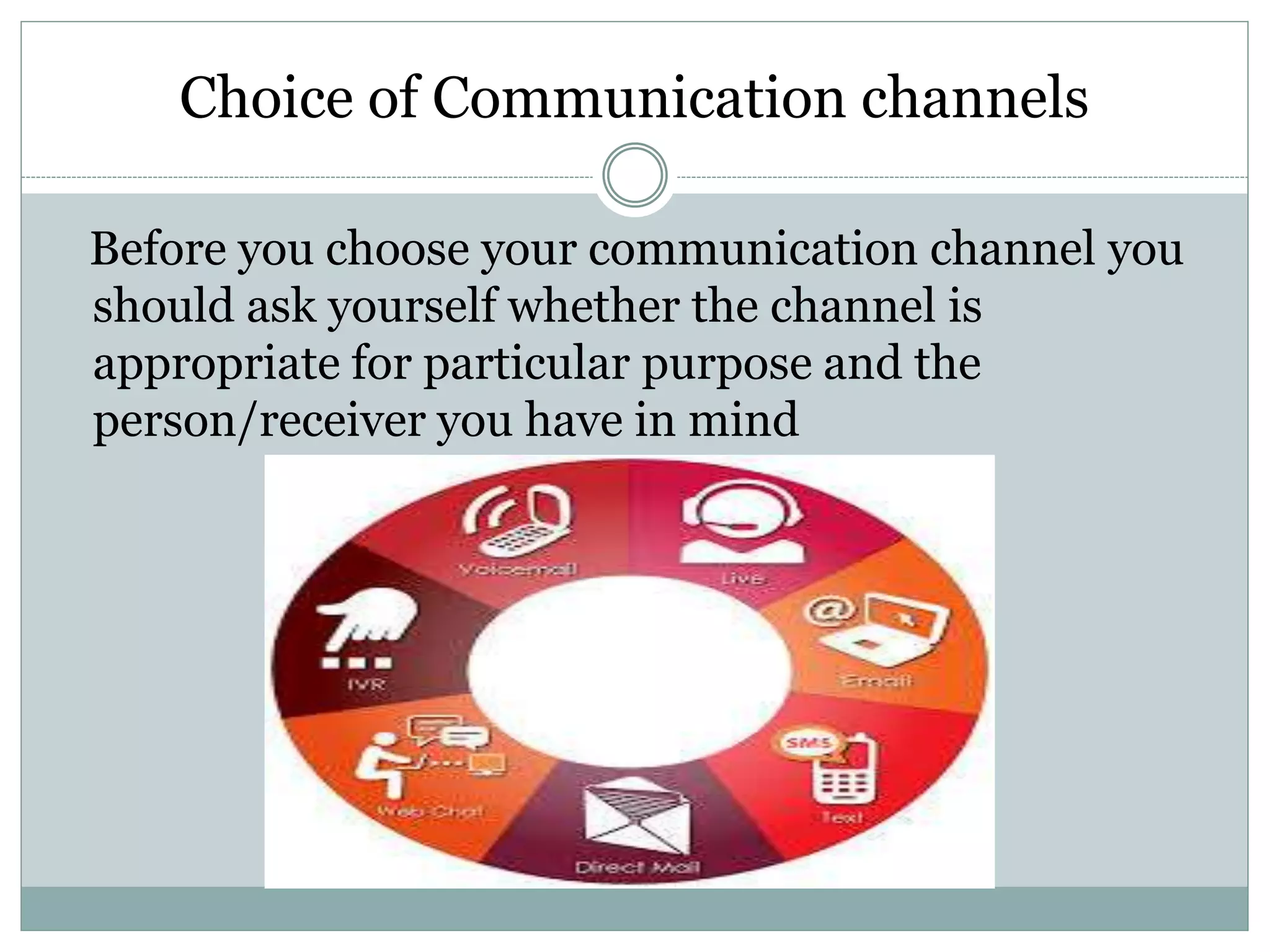
Before you choose your communication channel you
should ask yourself whether the channel is
appropriate for particular purpose and the
person/receiver you have in mind
Length of Communication
The Length of the message also affects
communication process. You need to be sure that it
serves the purpose and appropriate for the receiver
Use of Language
Poor choice of words or weak sentence structure also
pampers communication. The same goes for
inappropriate punctuation
For Example :
Women, without her, man is nothing
Women, without her man, is nothing
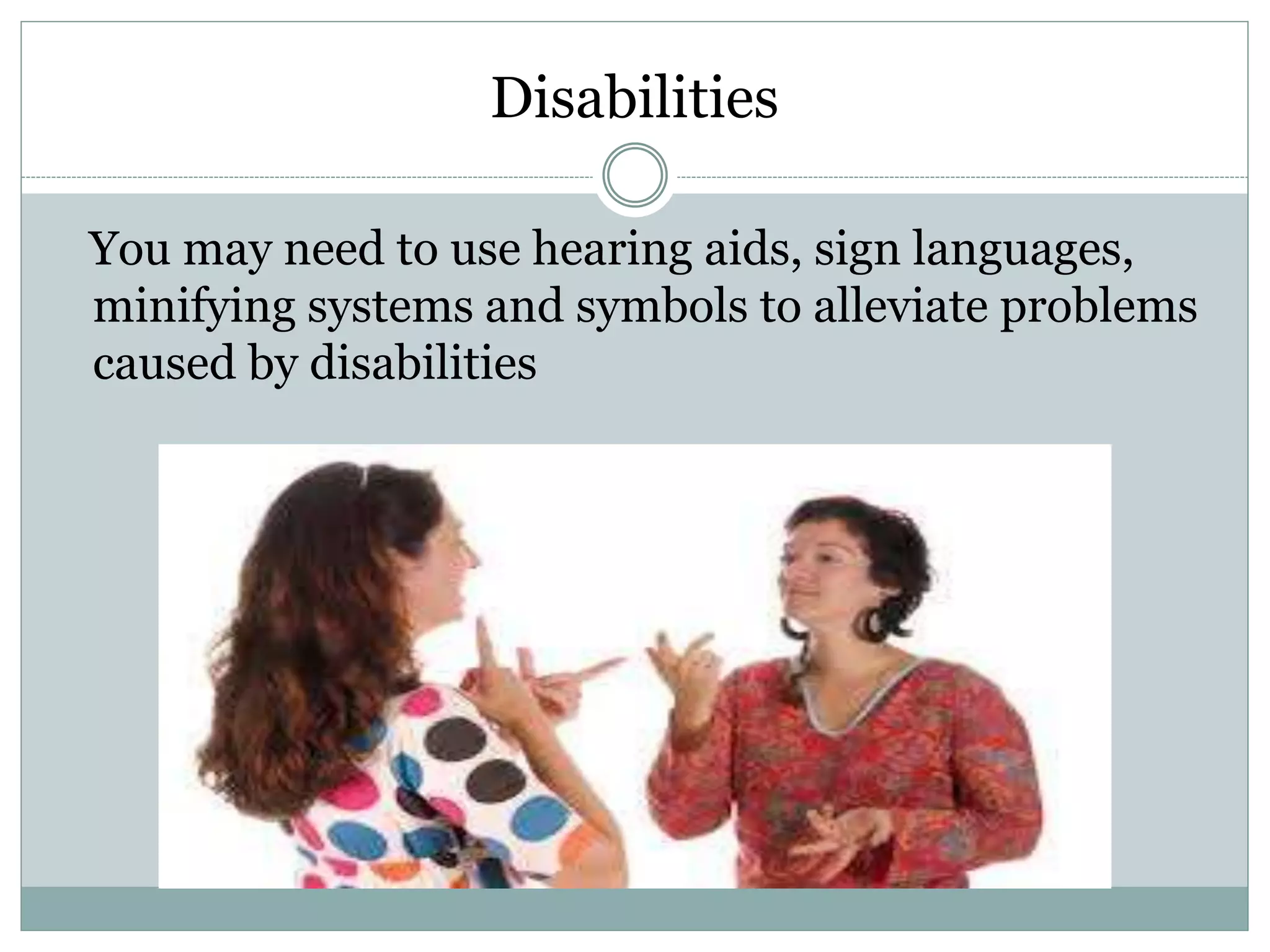
Disabilities
You may need to use hearing aids, sign languages,
minifying systems and symbols to alleviate problems
caused by disabilities
Known or Unknown Receiver
 Whether the receiver is known or unknown to you
also plays a major role in determining the
effectiveness of your communication
 A known receiver may be better able to understand
your message
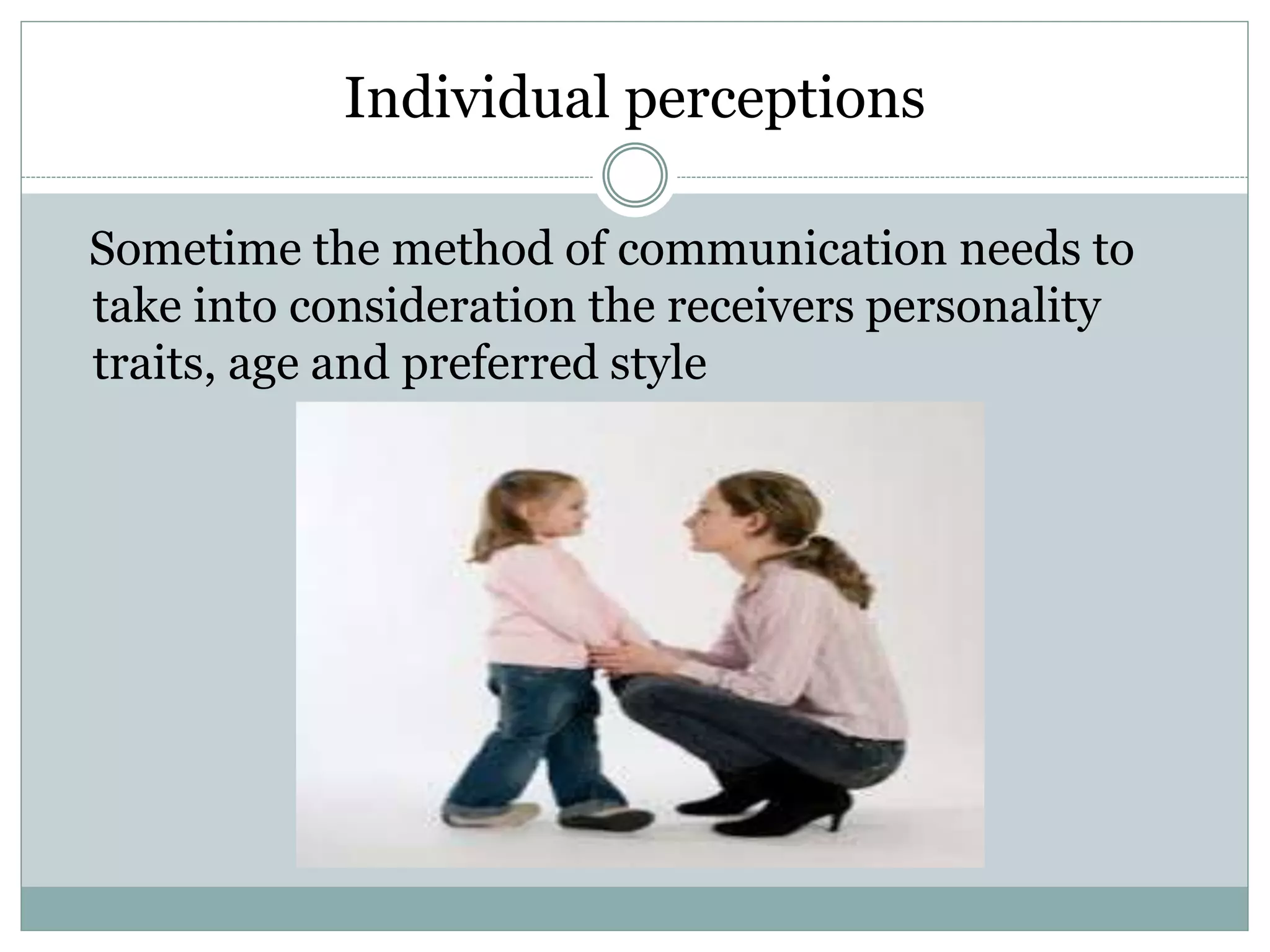
Individual perceptions
Sometime the method of communication needs to
take into consideration the receivers personality
traits, age and preferred style
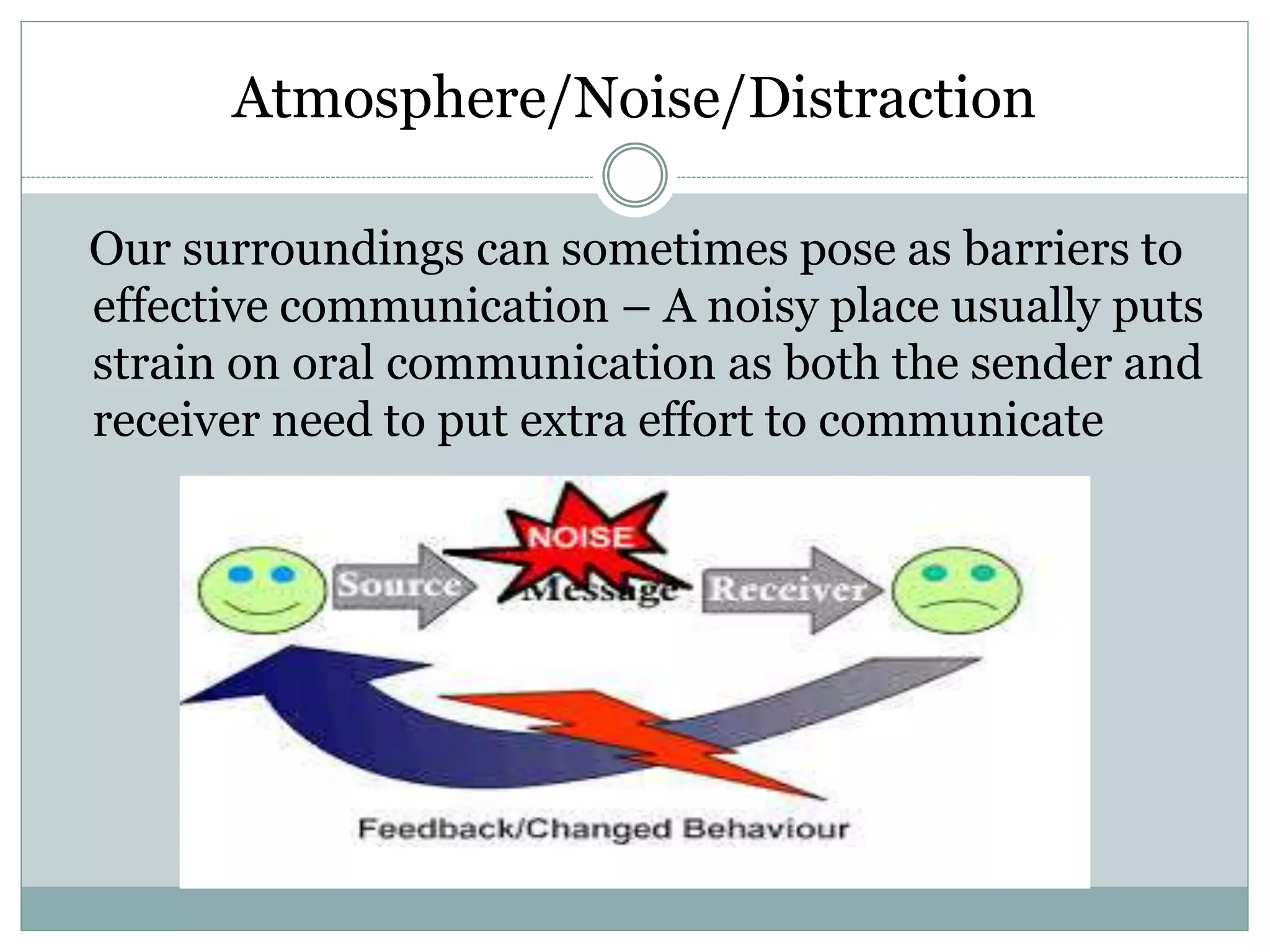
Atmosphere/Noise/Distraction
Our surroundings can sometimes pose as barriers to
effective communication – A noisy place usually puts
strain on oral communication as both the sender and
receiver need to put extra effort to communicate
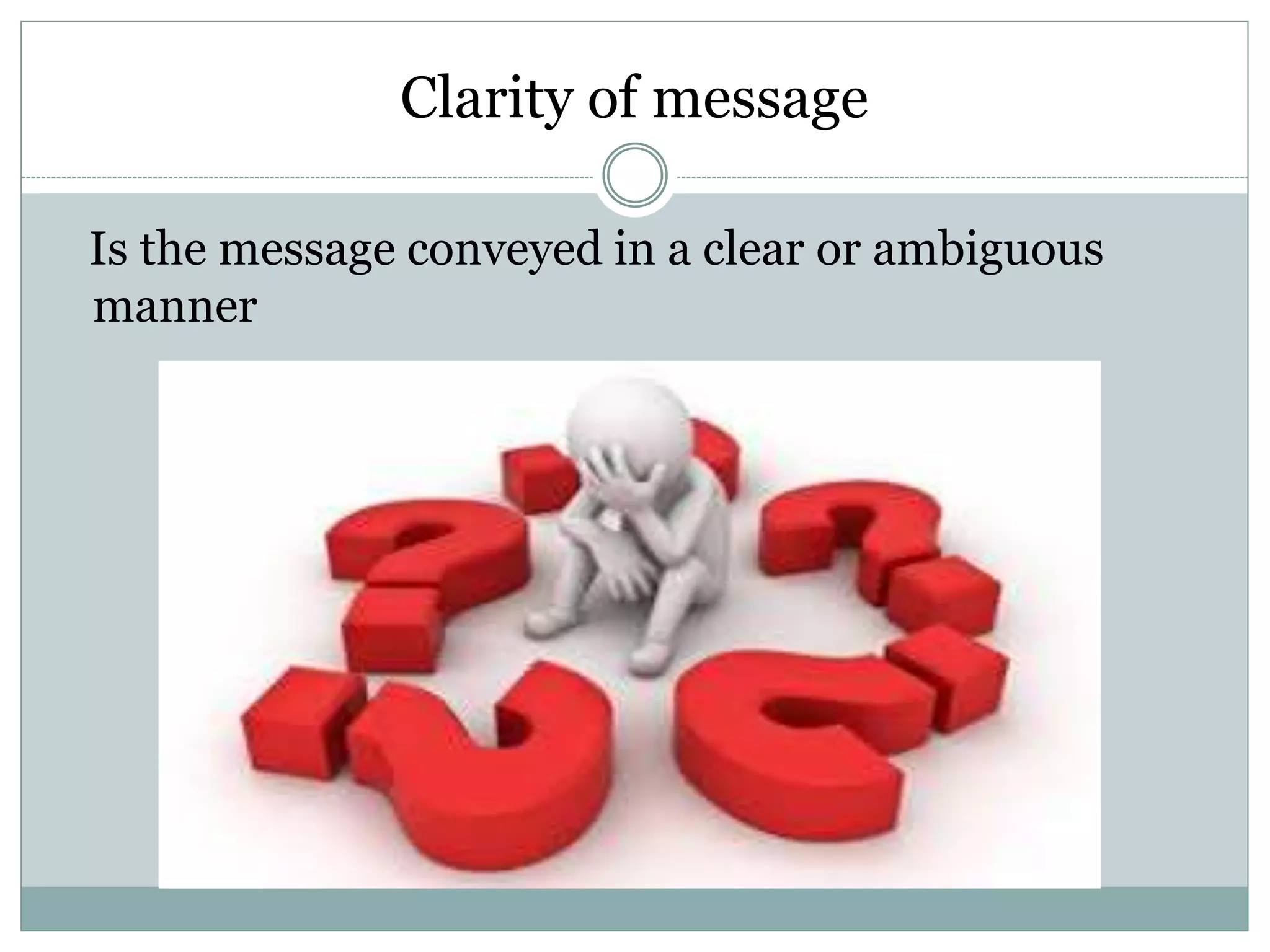
Clarity of message
Is the message conveyed in a clear or ambiguous
manner
Lack of Feedback
Feedback is important as it enables confirmation of
understanding to be made by both parties.
Conclusion
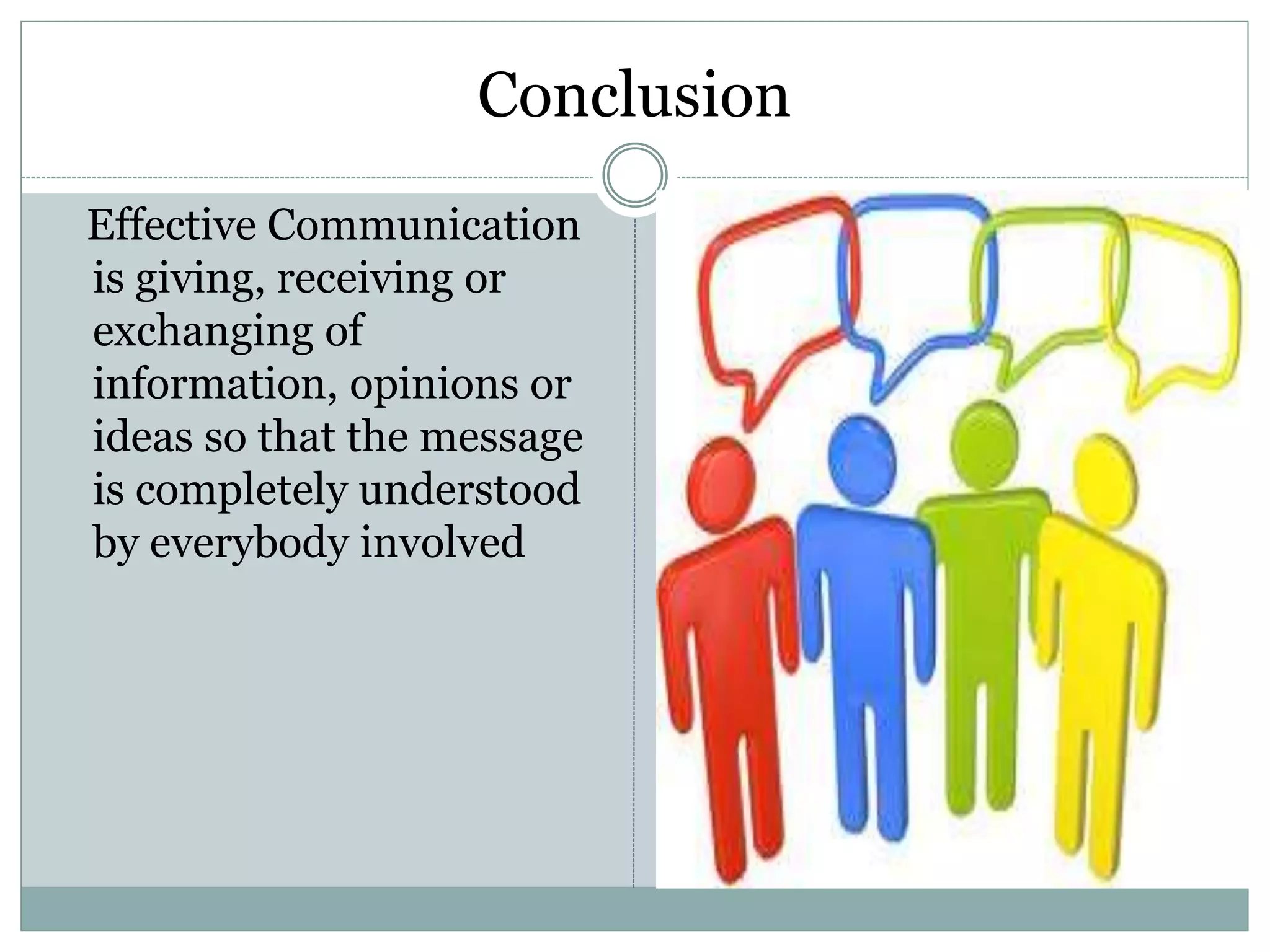
Effective Communication
is giving, receiving or
exchanging of
information, opinions or
ideas so that the message
is completely understood
by everybody involved
Conclusion With a Video

Factors affecting effective communication

  • 1.
    Factors Affecting Effective Communication PresentedBy :- Kiran Kumar Hemanth Vijay Kumar Ravi Kumar Manjunath & Manu
  • 2.
    Communication  From theLatin communicare, means to share  It is the meaningful exchange of information between two or more living creatures
  • 3.
    Factors Affecting Communication Status/Role  Cultural Differences  Choice of communication channels  Length of Communication  Use of Language  Disabilities  Known or Unknown Receiver  Individual Perceptions  Atmosphere/Noise  Clarity of Message  Lack of Feedback
  • 4.
    Status/Role The Sender andreceiver of a message may be of equal status within a hierarchy or they may be at different levels, This difference in status sometimes affects the effectiveness of the communication process
  • 5.
    Cultural Differences Cultural differences,both within or outside the organization may impede the communication process
  • 6.
    Choice of Communicationchannels Before you choose your communication channel you should ask yourself whether the channel is appropriate for particular purpose and the person/receiver you have in mind
  • 7.
    Length of Communication TheLength of the message also affects communication process. You need to be sure that it serves the purpose and appropriate for the receiver
  • 8.
    Use of Language Poorchoice of words or weak sentence structure also pampers communication. The same goes for inappropriate punctuation For Example : Women, without her, man is nothing Women, without her man, is nothing
  • 9.
    Disabilities You may needto use hearing aids, sign languages, minifying systems and symbols to alleviate problems caused by disabilities
  • 10.
    Known or UnknownReceiver  Whether the receiver is known or unknown to you also plays a major role in determining the effectiveness of your communication  A known receiver may be better able to understand your message
  • 11.
    Individual perceptions Sometime themethod of communication needs to take into consideration the receivers personality traits, age and preferred style
  • 12.
    Atmosphere/Noise/Distraction Our surroundings cansometimes pose as barriers to effective communication – A noisy place usually puts strain on oral communication as both the sender and receiver need to put extra effort to communicate
  • 13.
    Clarity of message Isthe message conveyed in a clear or ambiguous manner
  • 14.
    Lack of Feedback Feedbackis important as it enables confirmation of understanding to be made by both parties.
  • 15.
    Conclusion Effective Communication is giving,receiving or exchanging of information, opinions or ideas so that the message is completely understood by everybody involved
  • 16.