PRESENTED BY
IJAZ SHAIKH
“A barrier to communication is something that
keeps meanings from meeting”.
- Reuel Howe
“No man means all he says, and yet very few say all
they mean, for words are slippery and thought is
viscous”.
- Henry Brooks Adams
Thinking and Communication Skills – Week 4 Barriers to Communication
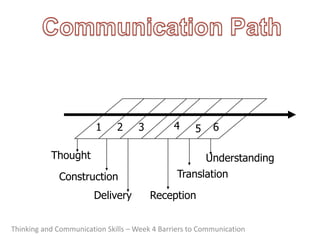
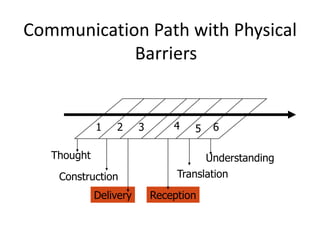
Thought
Construction
Delivery Reception
Translation
Understanding
1 2 3 4 5 6
Thought
Construction
Delivery Reception
Translation
Understanding
1 2 3 4 5 6
Communication Path with Physical
Barriers
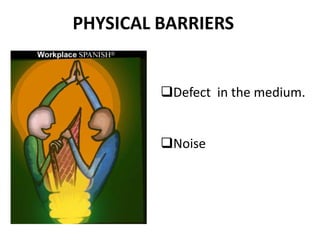
PHYSICAL BARRIERS
Defect in the medium.
Noise
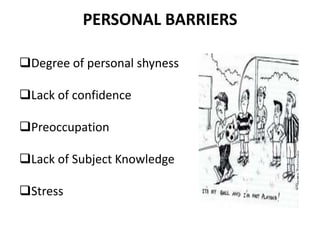
PERSONAL BARRIERS
Degree of personal shyness
Lack of confidence
Preoccupation
Lack of Subject Knowledge
Stress
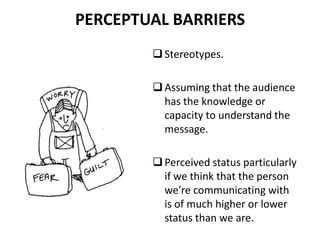
PERCEPTUAL BARRIERS
Stereotypes.
Assuming that the audience
has the knowledge or
capacity to understand the
message.
Perceived status particularly
if we think that the person
we’re communicating with
is of much higher or lower
status than we are.
CULTURAL BARRIERS
 Values and beliefs.
 Use of gestures.
 Space
LISTENING BARRIERS
 Automatic Talking
 Selective listening
 Being a "fixer"
OTHER VERBAL BARRIERS
 Time and timing barriers.
 Wrong channel.
Language.
 Interruptions.
 Lack of feedback.
Nonverbal Communication Barriers
Flashing or rolling
eyes.
Quick or slow
movements.
Arms crossed, legs
crossed.
Gestures made with
frustration1.
Poor personal care.
Staring at people or
avoiding eye contact.
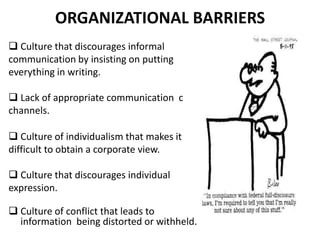
ORGANIZATIONAL BARRIERS
 Culture that discourages informal
communication by insisting on putting
everything in writing.
 Lack of appropriate communication c
channels.
 Culture of individualism that makes it
difficult to obtain a corporate view.
 Culture that discourages individual
expression.
 Culture of conflict that leads to
information being distorted or withheld.
WAYS TO OVERCOME ORGANIZATIONAL
BARRIERS
Be clear in your own mind about what you
want to communicate.
Step into the receiver’s shoes and anticipate
the impact of your communication.
Use feedback to encourage two-way
communication and check understanding.
CONTD……
When possible, communicate directly, face-to-face so
that you can use non-verbal signals.
Limit the number of links in the communication
chain. The last point is particularly important within
the context of organizational communications. Try to
avoid messages being diffused through various levels
of management; they may well get distorted as they
move downwards or upwards.
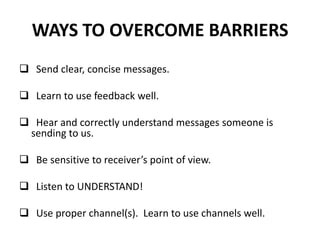
WAYS TO OVERCOME BARRIERS
 Send clear, concise messages.
 Learn to use feedback well.
 Hear and correctly understand messages someone is
sending to us.
 Be sensitive to receiver’s point of view.
 Listen to UNDERSTAND!
 Use proper channel(s). Learn to use channels well.
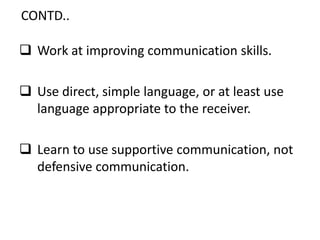
CONTD..
 Work at improving communication skills.
 Use direct, simple language, or at least use
language appropriate to the receiver.
 Learn to use supportive communication, not
defensive communication.
Before I can walk in another
person’s shoes,
I must remove my own.
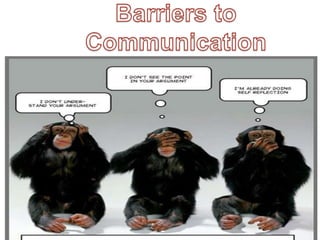
Barriers in communication

Barriers in communication

  • 2.
  • 3.
    “A barrier tocommunication is something that keeps meanings from meeting”. - Reuel Howe “No man means all he says, and yet very few say all they mean, for words are slippery and thought is viscous”. - Henry Brooks Adams
  • 4.
    Thinking and CommunicationSkills – Week 4 Barriers to Communication Thought Construction Delivery Reception Translation Understanding 1 2 3 4 5 6
  • 5.
    Thought Construction Delivery Reception Translation Understanding 1 23 4 5 6 Communication Path with Physical Barriers
  • 6.
    PHYSICAL BARRIERS Defect inthe medium. Noise
  • 7.
    PERSONAL BARRIERS Degree ofpersonal shyness Lack of confidence Preoccupation Lack of Subject Knowledge Stress
  • 9.
    PERCEPTUAL BARRIERS Stereotypes. Assuming thatthe audience has the knowledge or capacity to understand the message. Perceived status particularly if we think that the person we’re communicating with is of much higher or lower status than we are.
  • 10.
    CULTURAL BARRIERS  Valuesand beliefs.  Use of gestures.  Space
  • 11.
    LISTENING BARRIERS  AutomaticTalking  Selective listening  Being a "fixer"
  • 12.
    OTHER VERBAL BARRIERS Time and timing barriers.  Wrong channel. Language.  Interruptions.  Lack of feedback.
  • 13.
    Nonverbal Communication Barriers Flashingor rolling eyes. Quick or slow movements. Arms crossed, legs crossed. Gestures made with frustration1. Poor personal care. Staring at people or avoiding eye contact.
  • 14.
    ORGANIZATIONAL BARRIERS  Culturethat discourages informal communication by insisting on putting everything in writing.  Lack of appropriate communication c channels.  Culture of individualism that makes it difficult to obtain a corporate view.  Culture that discourages individual expression.  Culture of conflict that leads to information being distorted or withheld.
  • 15.
    WAYS TO OVERCOMEORGANIZATIONAL BARRIERS Be clear in your own mind about what you want to communicate. Step into the receiver’s shoes and anticipate the impact of your communication. Use feedback to encourage two-way communication and check understanding.
  • 16.
    CONTD…… When possible, communicatedirectly, face-to-face so that you can use non-verbal signals. Limit the number of links in the communication chain. The last point is particularly important within the context of organizational communications. Try to avoid messages being diffused through various levels of management; they may well get distorted as they move downwards or upwards.
  • 17.
    WAYS TO OVERCOMEBARRIERS  Send clear, concise messages.  Learn to use feedback well.  Hear and correctly understand messages someone is sending to us.  Be sensitive to receiver’s point of view.  Listen to UNDERSTAND!  Use proper channel(s). Learn to use channels well.
  • 18.
    CONTD..  Work atimproving communication skills.  Use direct, simple language, or at least use language appropriate to the receiver.  Learn to use supportive communication, not defensive communication.
  • 19.
    Before I canwalk in another person’s shoes, I must remove my own.