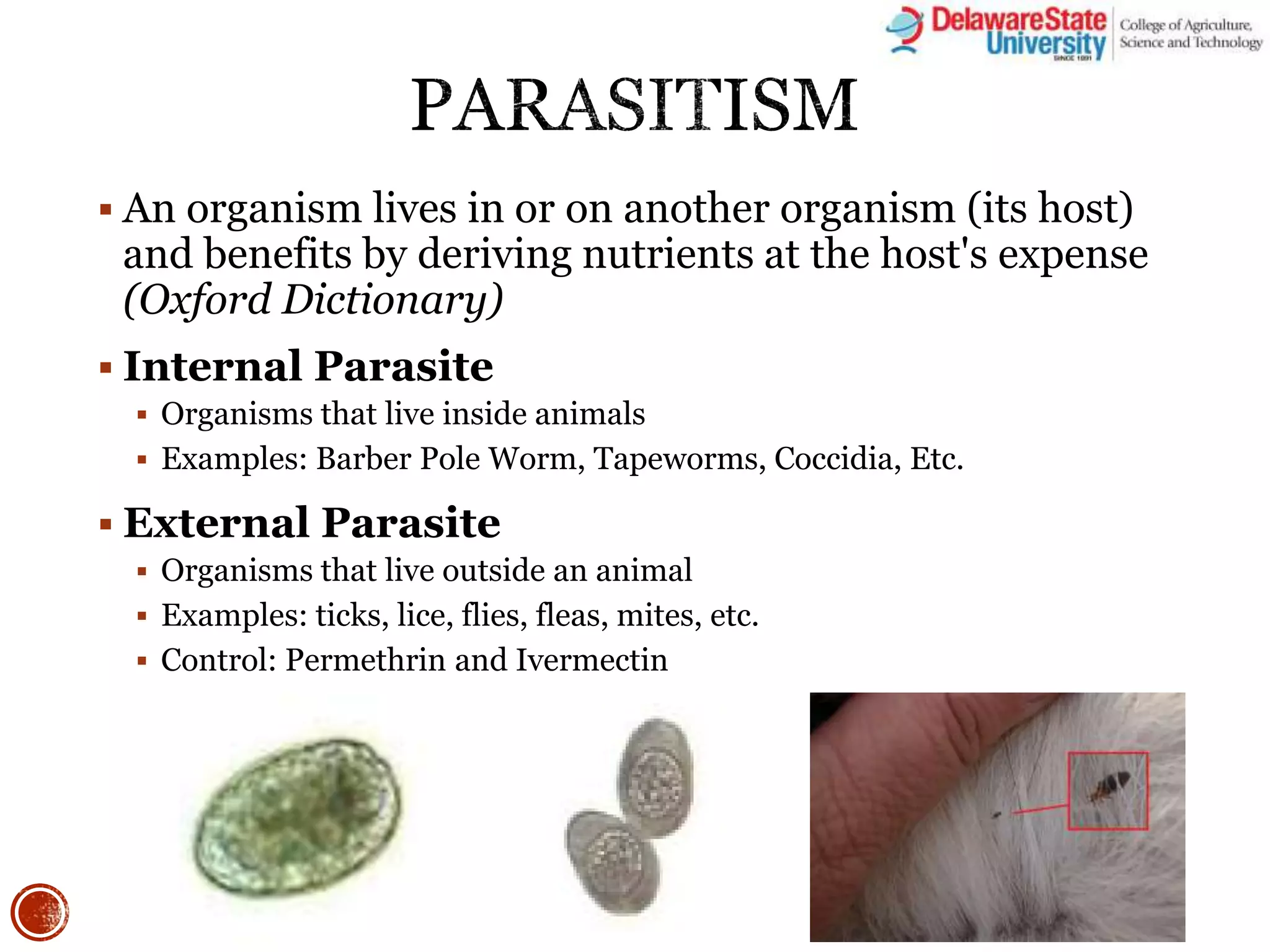
Kwame Matthews
Small Ruminant Specialist
Delaware State University
Kmatthews@desu.edu
302-857-6540
 An organism lives in or on another organism (its host)
and benefits by deriving nutrients at the host's expense
(Oxford Dictionary)
 Internal Parasite
 Organisms that live inside animals
 Examples: Barber Pole Worm, Tapeworms, Coccidia, Etc.
 External Parasite
 Organisms that live outside an animal
 Examples: ticks, lice, flies, fleas, mites, etc.
 Control: Permethrin and Ivermectin
 Sheep, goats and camelids can be
affected by many internal and
external parasites
 Two types:
1. Helminths
 Nematodes (roundworms)
 Cestodes (tapeworms)
 Trematodes (flukes)
2. Protozoa (coccidia)
 Most important parasites are
gastrointestinal nematode (GIN)
 High worm burden result in a reduction
in production and increase in clinical
signs
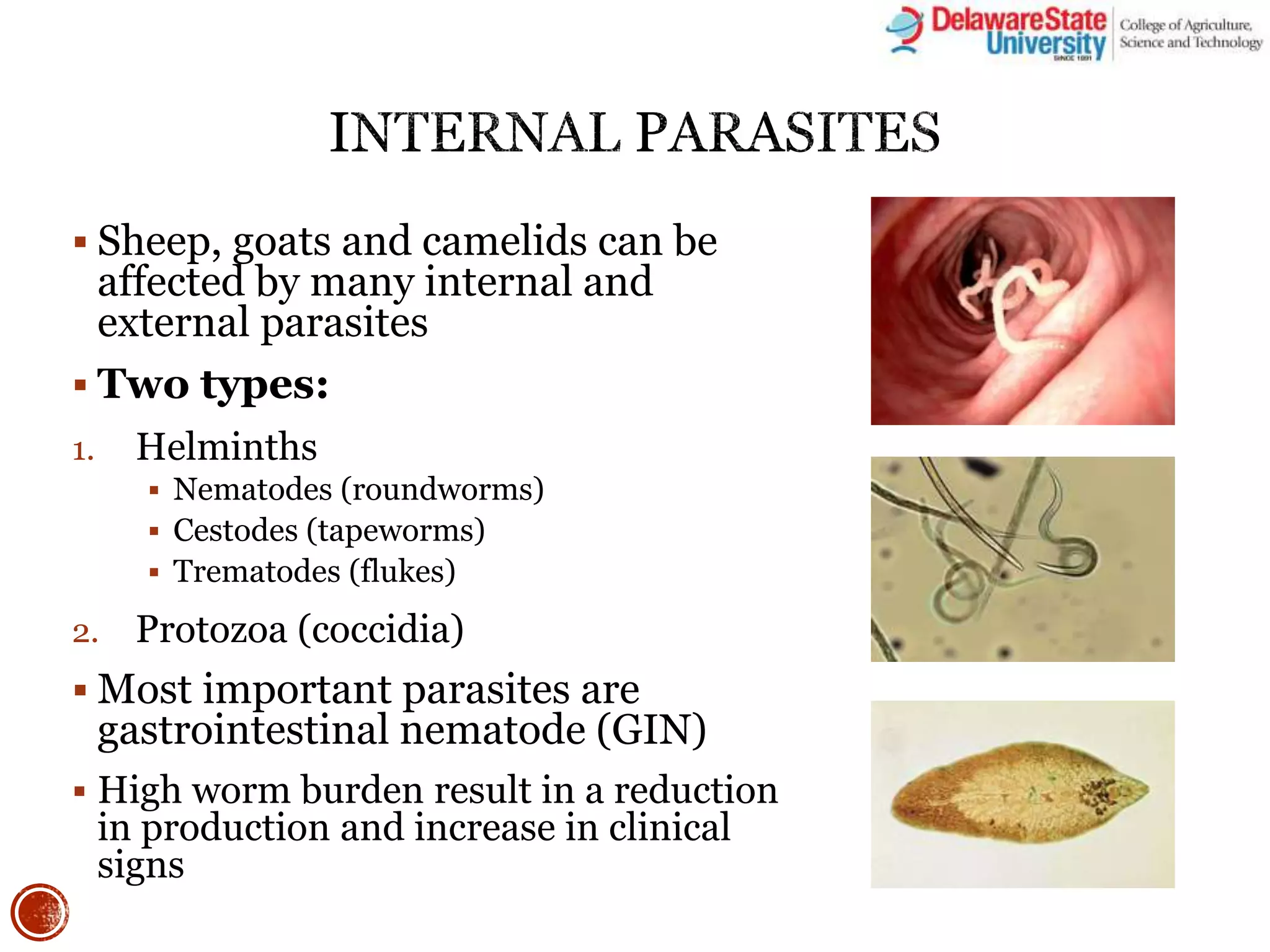
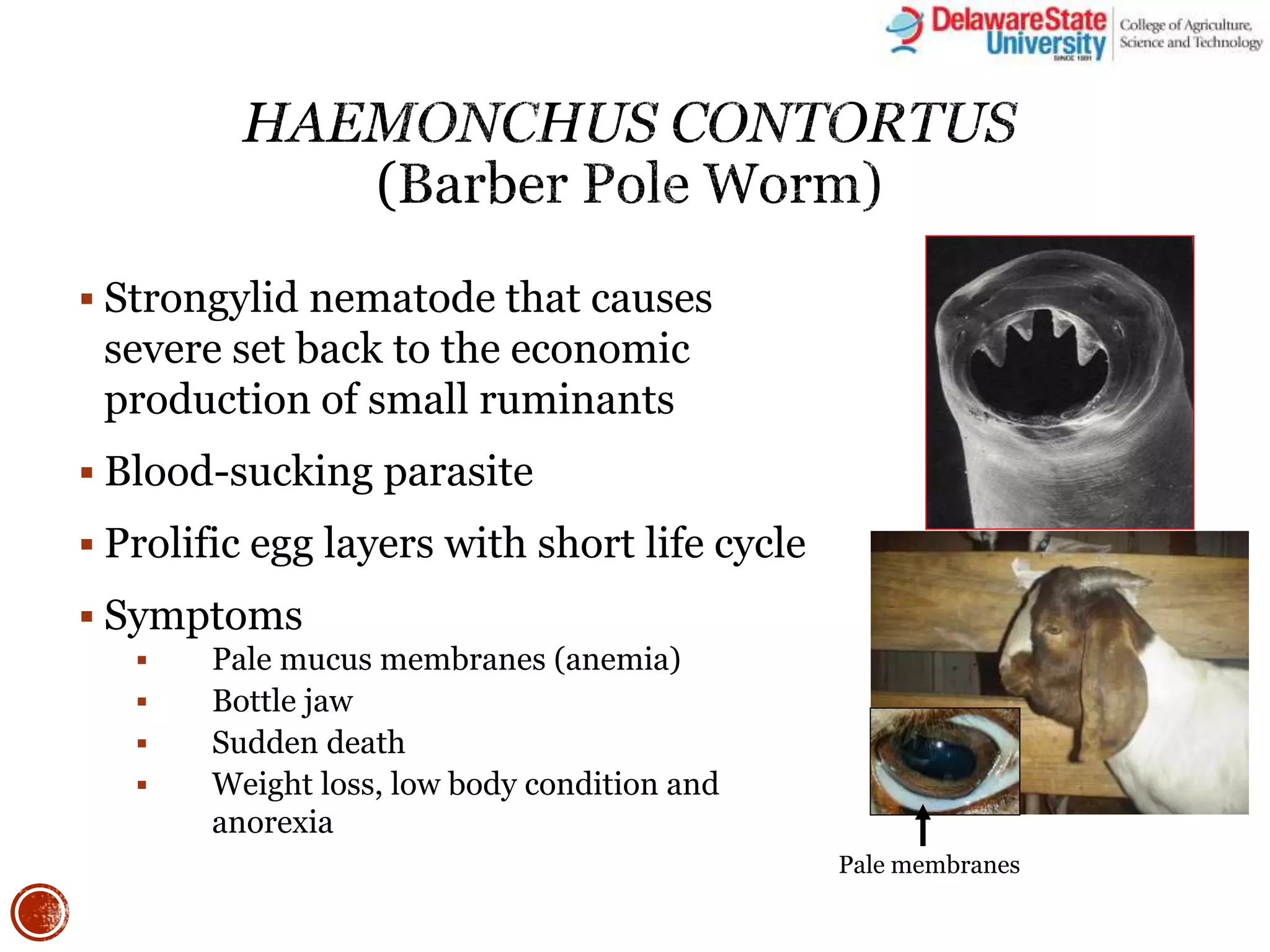
 Strongylid nematode that causes
severe set back to the economic
production of small ruminants
 Blood-sucking parasite
 Prolific egg layers with short life cycle
 Symptoms
 Pale mucus membranes (anemia)
 Bottle jaw
 Sudden death
 Weight loss, low body condition and
anorexia
Pale membranes
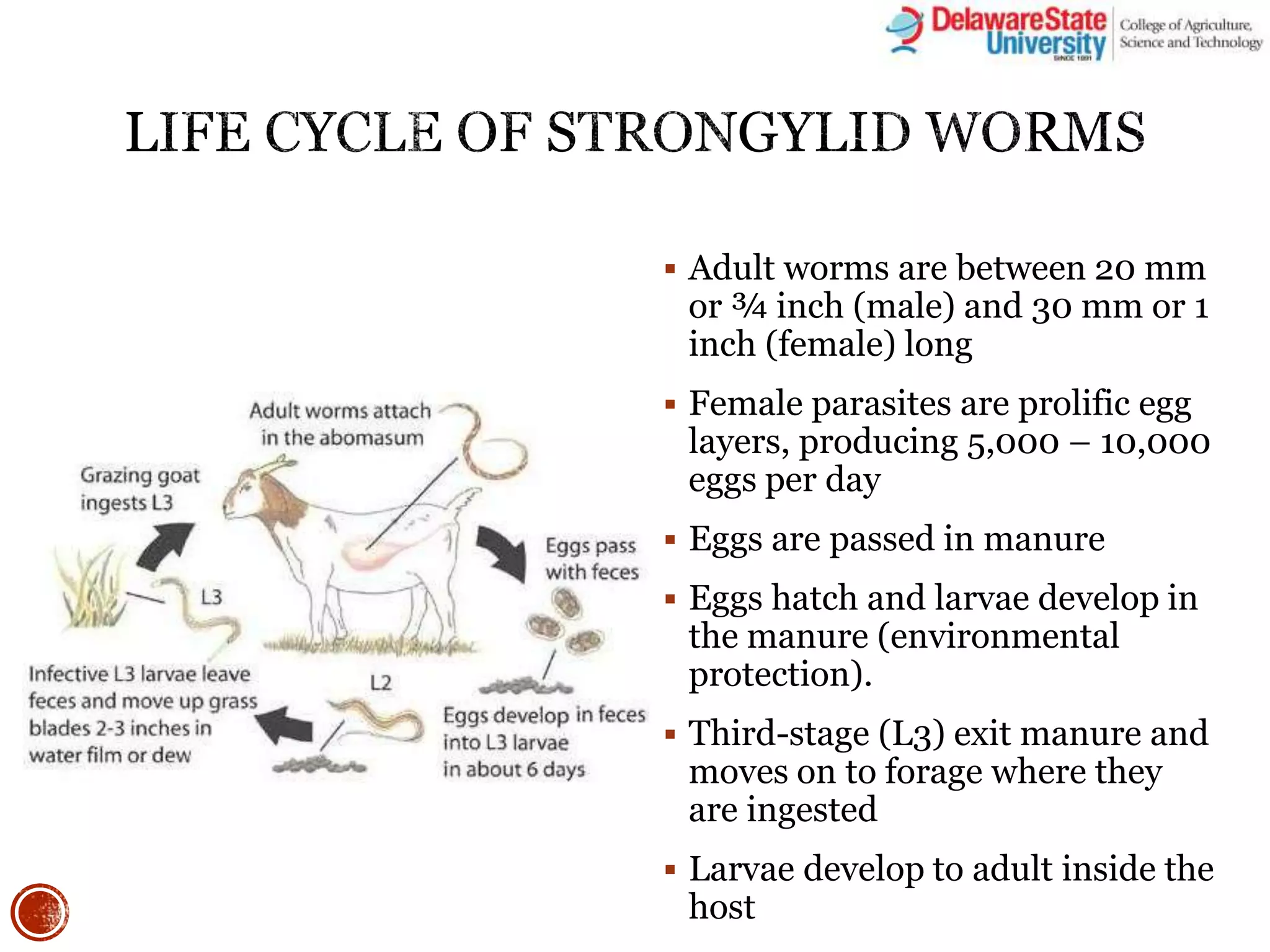
 Adult worms are between 20 mm
or ¾ inch (male) and 30 mm or 1
inch (female) long
 Female parasites are prolific egg
layers, producing 5,000 – 10,000
eggs per day
 Eggs are passed in manure
 Eggs hatch and larvae develop in
the manure (environmental
protection).
 Third-stage (L3) exit manure and
moves on to forage where they
are ingested
 Larvae develop to adult inside the
host
 Development of worm larvae occurs
between 50 – 96 °F.
 Minimum time eggs take to develop to
infective L3 is 3 – 4 days
 Ex-sheath their cuticles in the rumen
and move to the gastric pits of the
abomasum
 L4 then develop to a fully mature
adult
 Lancet, in their oral cavity, is used to
cut blood vessels in the host
abomasum for blood consumption
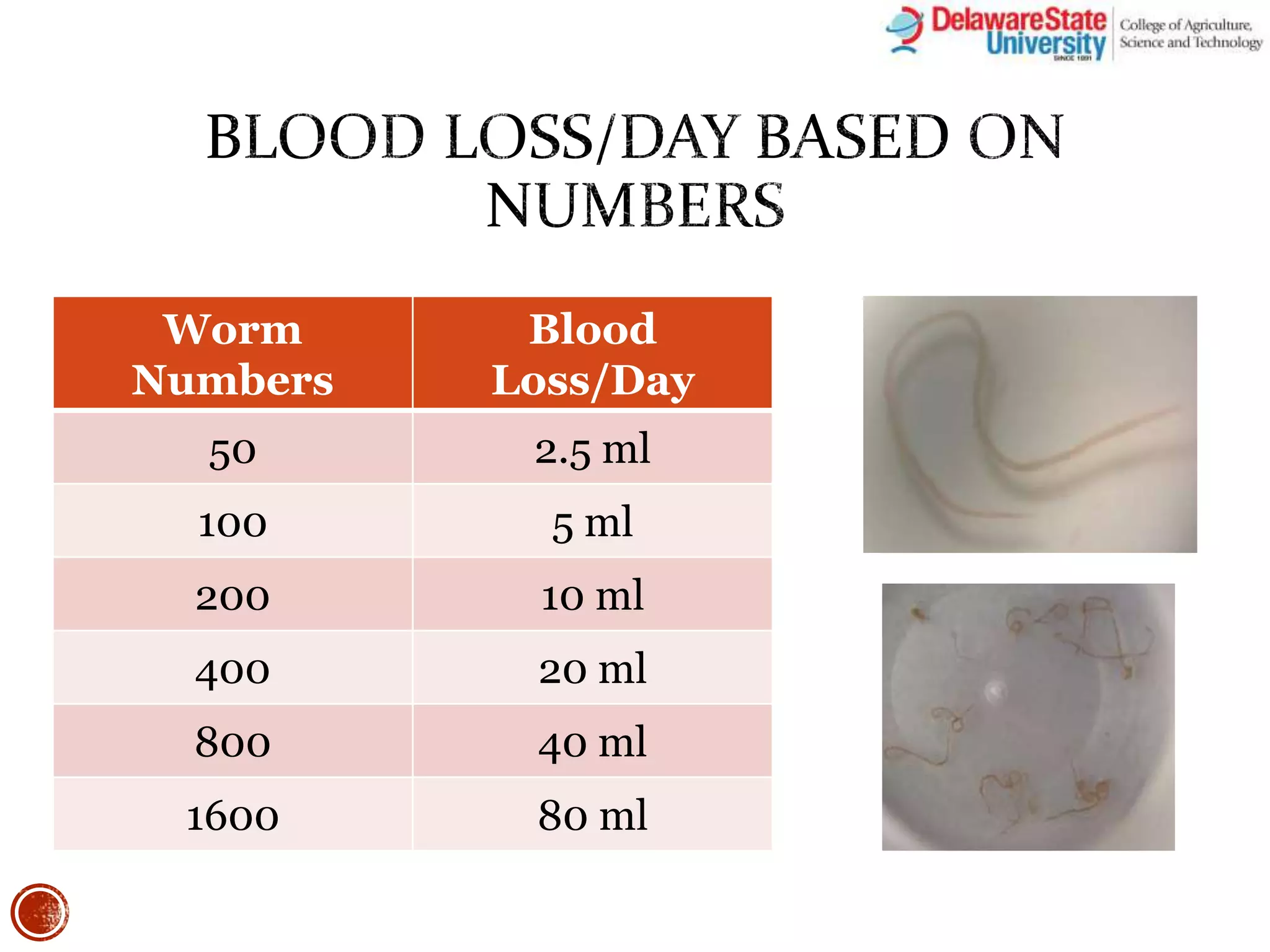
 0.05 ml of blood per worm per day
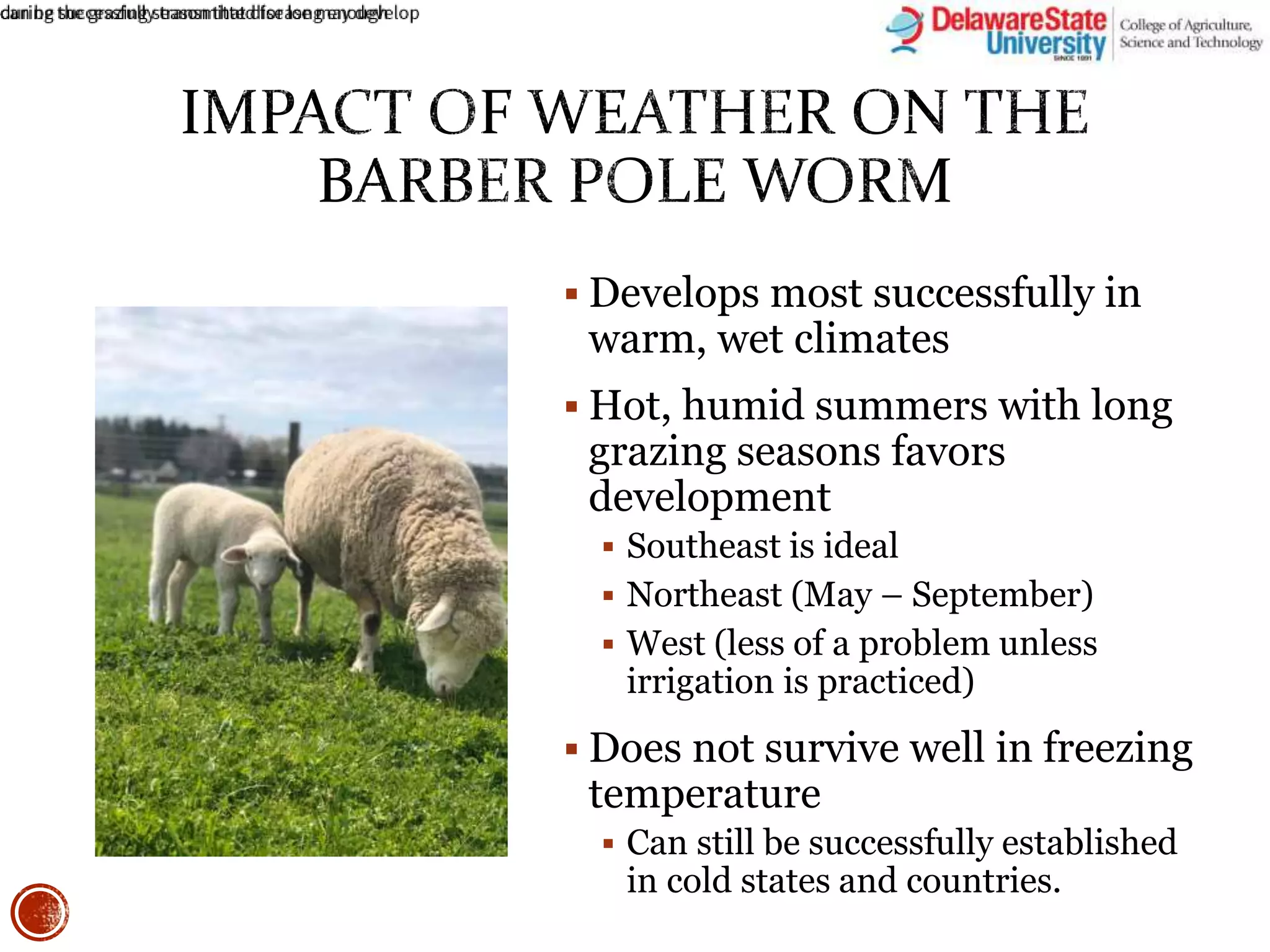
 Develops most successfully in
warm, wet climates
 Hot, humid summers with long
grazing seasons favors
development
 Southeast is ideal
 Northeast (May – September)
 West (less of a problem unless
irrigation is practiced)
 Does not survive well in freezing
temperature
 Can still be successfully established
in cold states and countries.
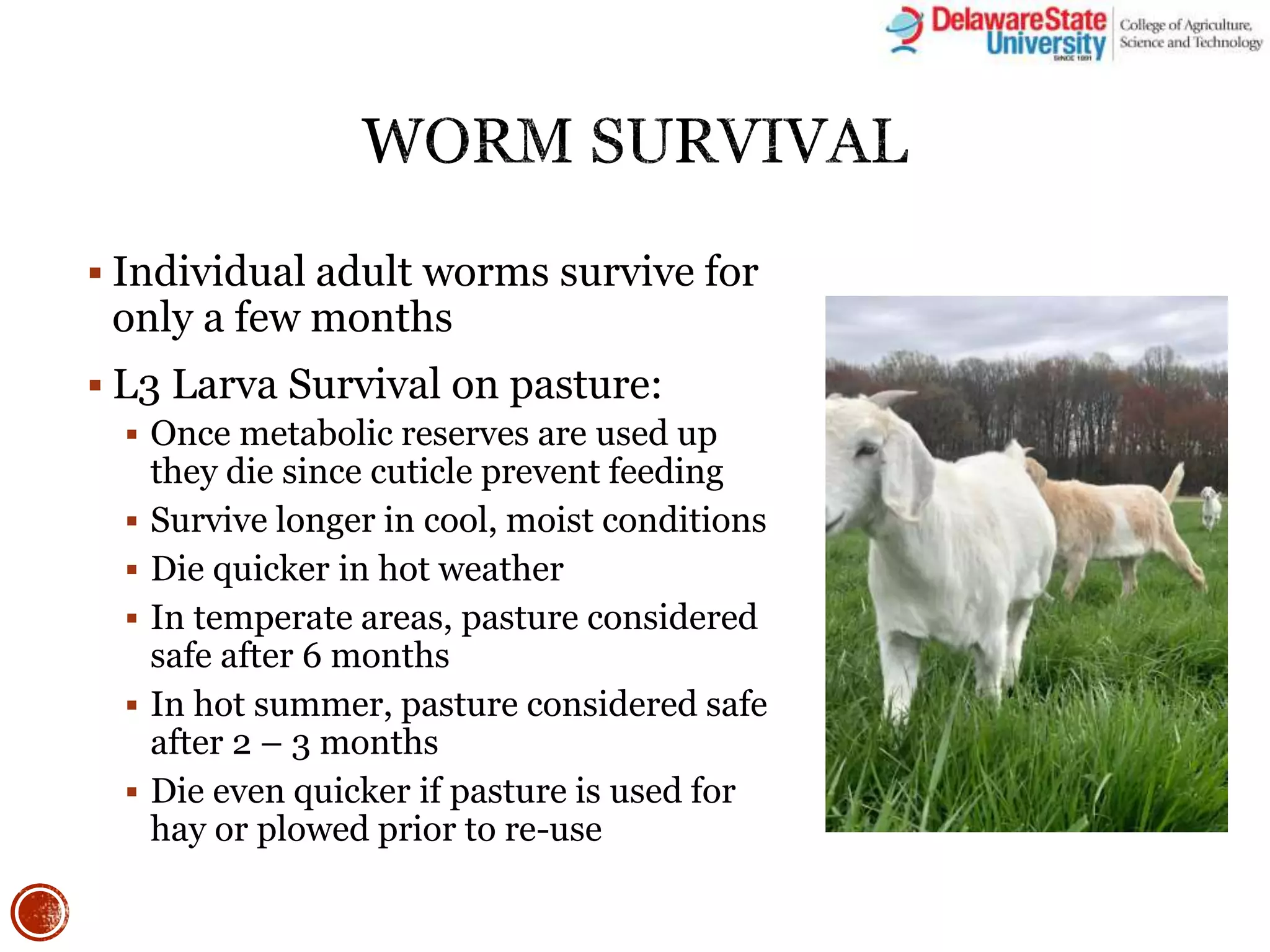
 Individual adult worms survive for
only a few months
 L3 Larva Survival on pasture:
 Once metabolic reserves are used up
they die since cuticle prevent feeding
 Survive longer in cool, moist conditions
 Die quicker in hot weather
 In temperate areas, pasture considered
safe after 6 months
 In hot summer, pasture considered safe
after 2 – 3 months
 Die even quicker if pasture is used for
hay or plowed prior to re-use
 Larval migration on forage is
affected by temperature, soil
moisture, and humidity.
 Larvae can migrate vertically (4
– 6 inches) in moisture on grass
blades
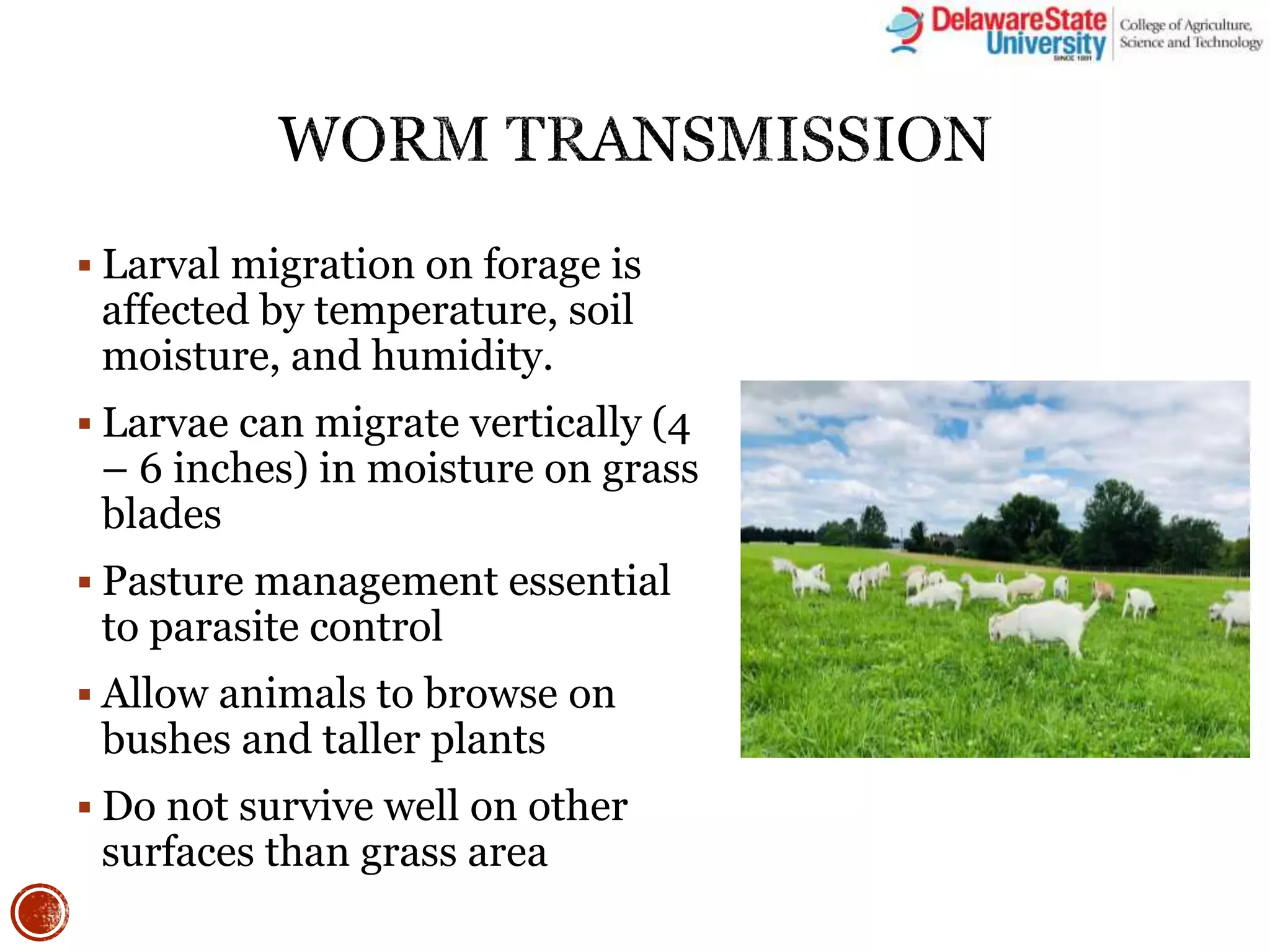
 Pasture management essential
to parasite control
 Allow animals to browse on
bushes and taller plants
 Do not survive well on other
surfaces than grass area
 Can go into a period of
“hypobiotic” (arrested)
development during winter to
survive
 Does not continue development and is
metabolically inactive
 Delay adulthood and egg production
 Occurs after infection and before
development is complete
 Occurs when conditions are least
favorable for larvae and egg
development
 Will survive the winter in the
arrested stage
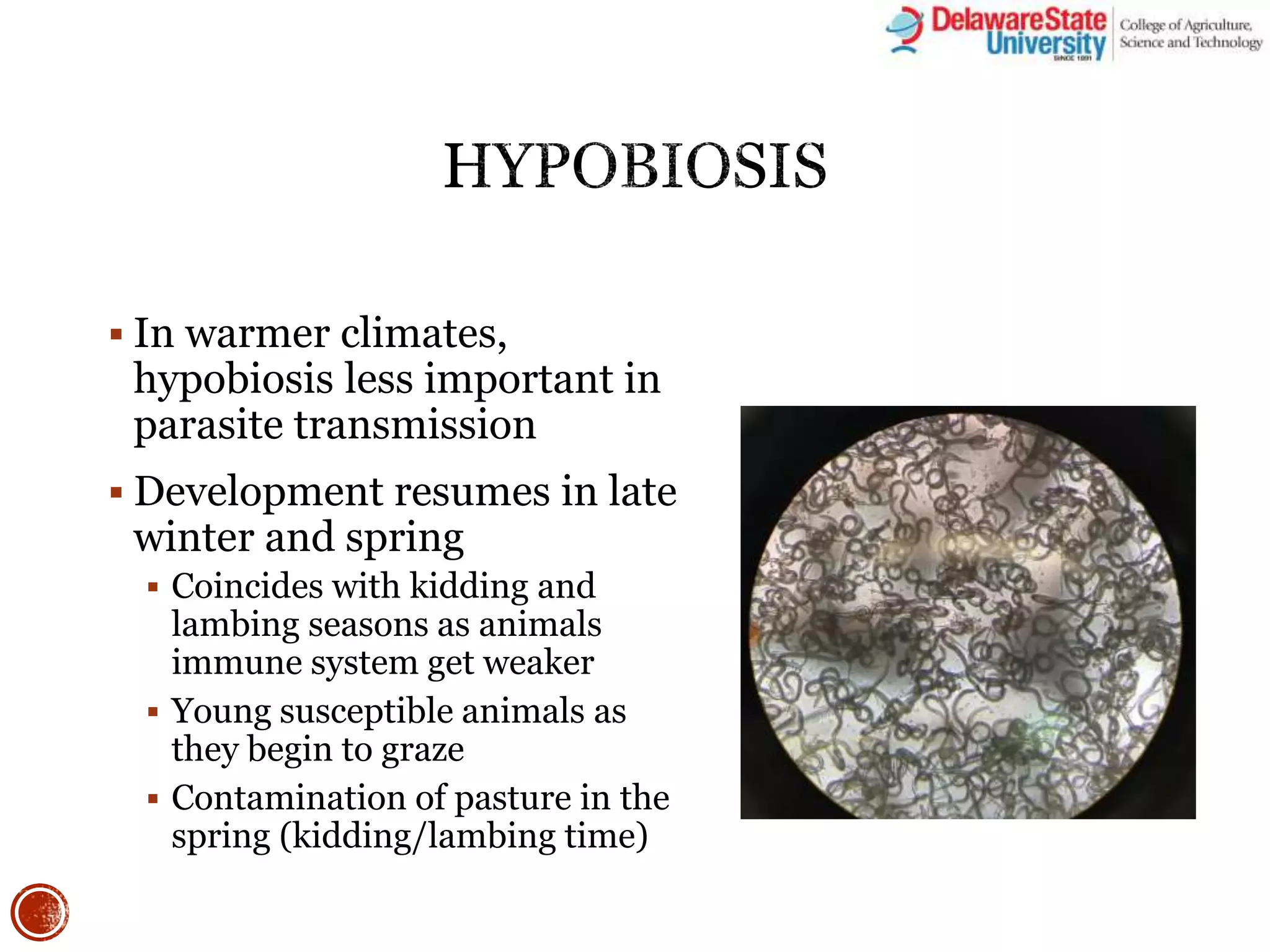
 In warmer climates,
hypobiosis less important in
parasite transmission
 Development resumes in late
winter and spring
 Coincides with kidding and
lambing seasons as animals
immune system get weaker
 Young susceptible animals as
they begin to graze
 Contamination of pasture in the
spring (kidding/lambing time)
Worm
Numbers
Blood
Loss/Day
50 2.5 ml
100 5 ml
200 10 ml
400 20 ml
800 40 ml
1600 80 ml
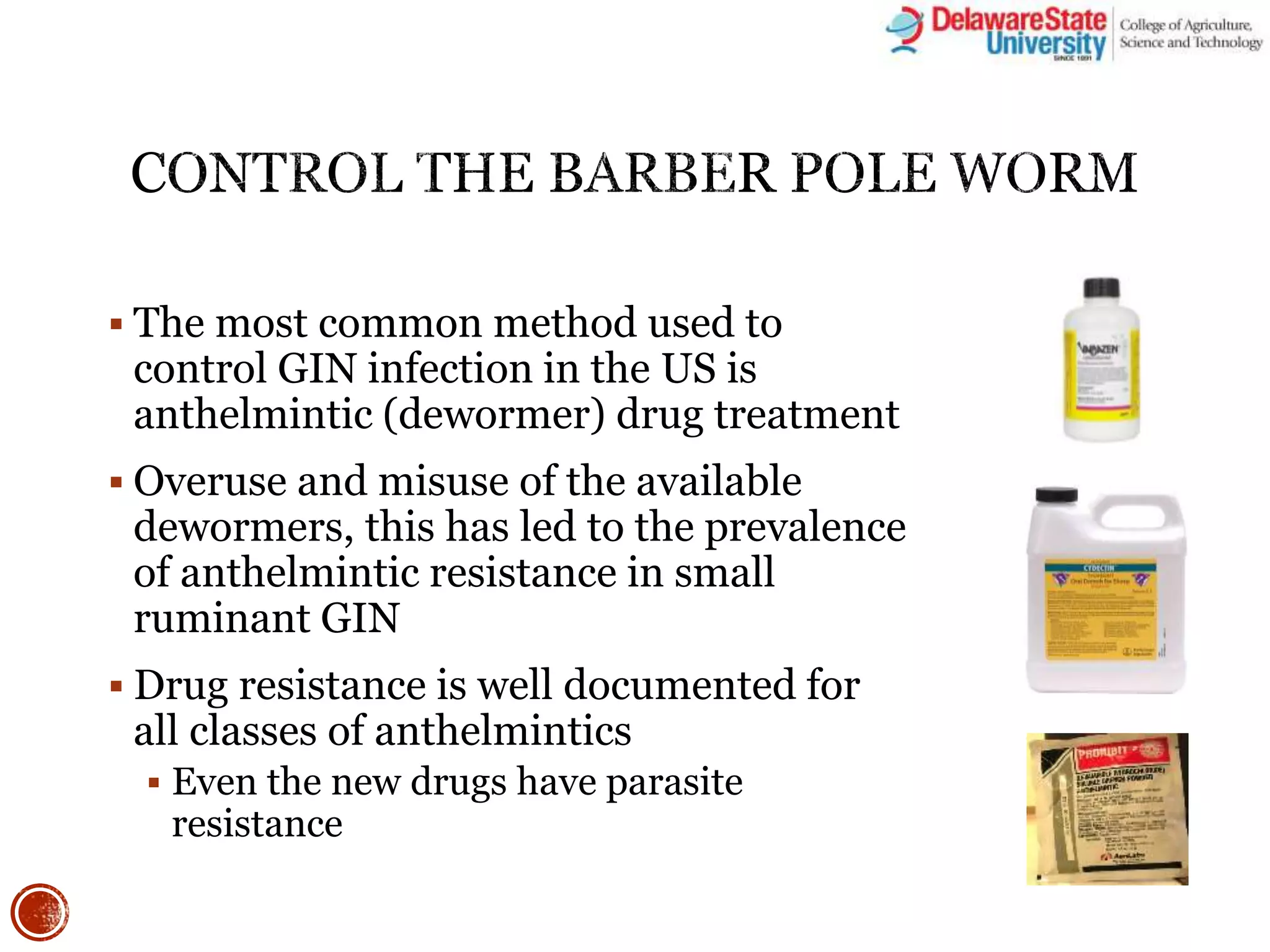
 The most common method used to
control GIN infection in the US is
anthelmintic (dewormer) drug treatment
 Overuse and misuse of the available
dewormers, this has led to the prevalence
of anthelmintic resistance in small
ruminant GIN
 Drug resistance is well documented for
all classes of anthelmintics
 Even the new drugs have parasite
resistance
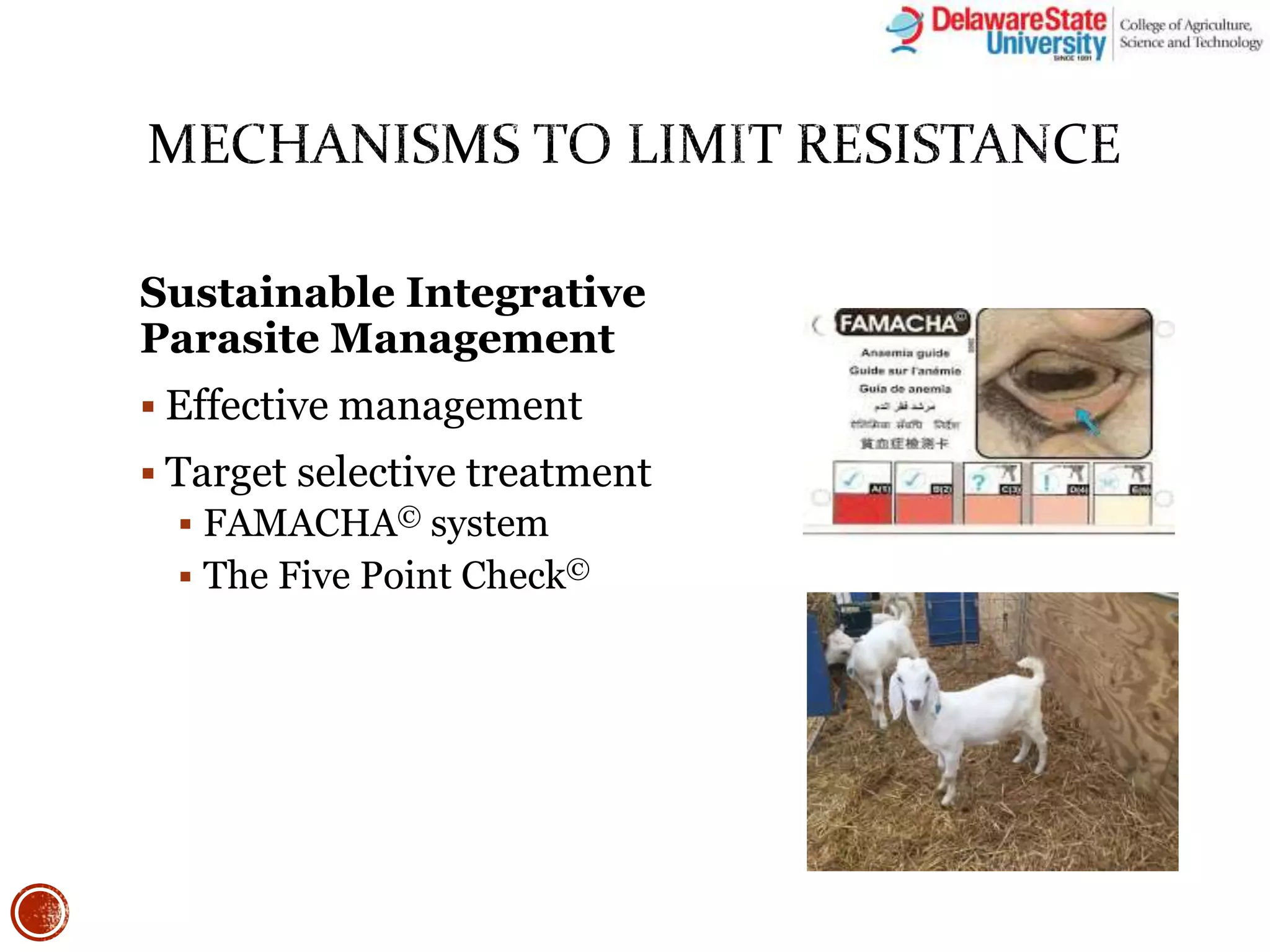
Sustainable Integrative
Parasite Management
 Effective management
 Target selective treatment
 FAMACHA© system
 The Five Point Check©
http: //www. wormx. info
The American Consortium for Small Ruminant Parasite Control
was formed in response to the critical state of the small
ruminant industry associated with the emergence of
anthelmintic resistant worms. The SCSRPC is a group of
scientists, veterinarians, and extension specialists devoted to (1)
developing novel methods for sustainable control of gastro-
intestinal nematodes in small ruminants and (2) educating the
stakeholders in the small ruminant industry on the most up-to-
date methods and recommendations for control of
gastrointestinal nematodes.
Barber Pole Worm

Barber Pole Worm

  • 1.
    Kwame Matthews Small RuminantSpecialist Delaware State University Kmatthews@desu.edu 302-857-6540
  • 2.
     An organismlives in or on another organism (its host) and benefits by deriving nutrients at the host's expense (Oxford Dictionary)  Internal Parasite  Organisms that live inside animals  Examples: Barber Pole Worm, Tapeworms, Coccidia, Etc.  External Parasite  Organisms that live outside an animal  Examples: ticks, lice, flies, fleas, mites, etc.  Control: Permethrin and Ivermectin
  • 3.
     Sheep, goatsand camelids can be affected by many internal and external parasites  Two types: 1. Helminths  Nematodes (roundworms)  Cestodes (tapeworms)  Trematodes (flukes) 2. Protozoa (coccidia)  Most important parasites are gastrointestinal nematode (GIN)  High worm burden result in a reduction in production and increase in clinical signs
  • 4.
     Strongylid nematodethat causes severe set back to the economic production of small ruminants  Blood-sucking parasite  Prolific egg layers with short life cycle  Symptoms  Pale mucus membranes (anemia)  Bottle jaw  Sudden death  Weight loss, low body condition and anorexia Pale membranes
  • 5.
     Adult wormsare between 20 mm or ¾ inch (male) and 30 mm or 1 inch (female) long  Female parasites are prolific egg layers, producing 5,000 – 10,000 eggs per day  Eggs are passed in manure  Eggs hatch and larvae develop in the manure (environmental protection).  Third-stage (L3) exit manure and moves on to forage where they are ingested  Larvae develop to adult inside the host
  • 6.
     Development ofworm larvae occurs between 50 – 96 °F.  Minimum time eggs take to develop to infective L3 is 3 – 4 days  Ex-sheath their cuticles in the rumen and move to the gastric pits of the abomasum  L4 then develop to a fully mature adult  Lancet, in their oral cavity, is used to cut blood vessels in the host abomasum for blood consumption  0.05 ml of blood per worm per day
  • 7.
     Develops mostsuccessfully in warm, wet climates  Hot, humid summers with long grazing seasons favors development  Southeast is ideal  Northeast (May – September)  West (less of a problem unless irrigation is practiced)  Does not survive well in freezing temperature  Can still be successfully established in cold states and countries.
  • 8.
     Individual adultworms survive for only a few months  L3 Larva Survival on pasture:  Once metabolic reserves are used up they die since cuticle prevent feeding  Survive longer in cool, moist conditions  Die quicker in hot weather  In temperate areas, pasture considered safe after 6 months  In hot summer, pasture considered safe after 2 – 3 months  Die even quicker if pasture is used for hay or plowed prior to re-use
  • 9.
     Larval migrationon forage is affected by temperature, soil moisture, and humidity.  Larvae can migrate vertically (4 – 6 inches) in moisture on grass blades  Pasture management essential to parasite control  Allow animals to browse on bushes and taller plants  Do not survive well on other surfaces than grass area
  • 10.
     Can gointo a period of “hypobiotic” (arrested) development during winter to survive  Does not continue development and is metabolically inactive  Delay adulthood and egg production  Occurs after infection and before development is complete  Occurs when conditions are least favorable for larvae and egg development  Will survive the winter in the arrested stage
  • 11.
     In warmerclimates, hypobiosis less important in parasite transmission  Development resumes in late winter and spring  Coincides with kidding and lambing seasons as animals immune system get weaker  Young susceptible animals as they begin to graze  Contamination of pasture in the spring (kidding/lambing time)
  • 12.
    Worm Numbers Blood Loss/Day 50 2.5 ml 1005 ml 200 10 ml 400 20 ml 800 40 ml 1600 80 ml
  • 13.
     The mostcommon method used to control GIN infection in the US is anthelmintic (dewormer) drug treatment  Overuse and misuse of the available dewormers, this has led to the prevalence of anthelmintic resistance in small ruminant GIN  Drug resistance is well documented for all classes of anthelmintics  Even the new drugs have parasite resistance
  • 14.
    Sustainable Integrative Parasite Management Effective management  Target selective treatment  FAMACHA© system  The Five Point Check©
  • 15.
    http: //www. wormx.info The American Consortium for Small Ruminant Parasite Control was formed in response to the critical state of the small ruminant industry associated with the emergence of anthelmintic resistant worms. The SCSRPC is a group of scientists, veterinarians, and extension specialists devoted to (1) developing novel methods for sustainable control of gastro- intestinal nematodes in small ruminants and (2) educating the stakeholders in the small ruminant industry on the most up-to- date methods and recommendations for control of gastrointestinal nematodes.

Editor's Notes

  • #3 Sheep and goats in the U.S. and around the world are infected with a wide range of internal and external parasites Require different treatments: Anthelmintic/dewormers or amprolium/sulfa drugs and Insecticides Permethrin and Ivermectin)
  • #4 The most important of these worms all belong to the same taxonomic group and are often referred to collectively as “trichostrongyles”.
  • #5 However, the main set back to the economic production of sheep and goats in the US and the rest of the world is losses due to GIN infection as they increase mortality and decrease growth. The most problematic of these internal parasites is the blood sucking, barber polled worm known as H. contortus due to its devastating effects on sheep and goats as it may cause anemia, bottle jaw, and sudden death.
  • #7 Normal development and survival occurs between 65-85 degrees F take 7 – 10 days Loss of red blood cells and blood proteins
  • #10 Larvae can migrate laterally (12 – 36 inches)
  • #14 These parasites are very problematic to their host and require treatment once identified. Traditionally, the most common method of treatment for GIN infection in the US is the use of broad spectrum anthelmintic which fall in one of three classes: the benzimidazole, macrocyclic lactones, or the imidazothiazole classes. Unfortunately, the overuse and misuse of the available anthelmintics have led to the prevalence of anthelmintic resistance in small ruminant GIN. In order to combat this problem, it is imperative that new chemotherapeutic strategies are developed.