Download to read offline

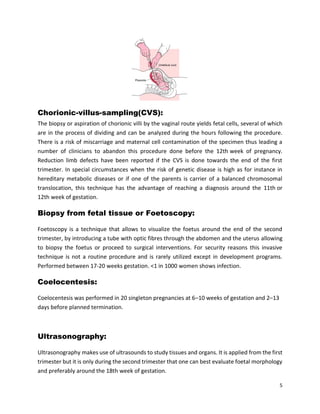
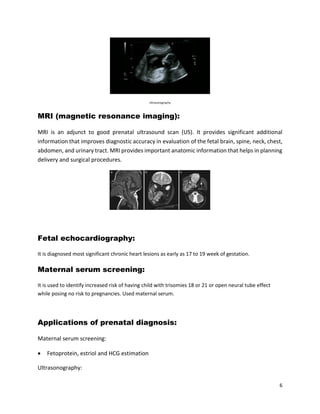
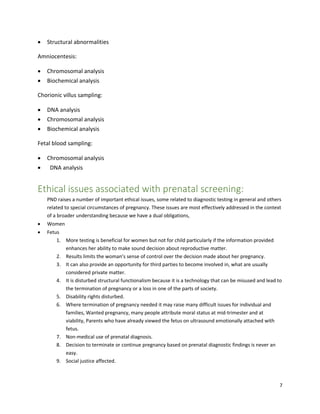
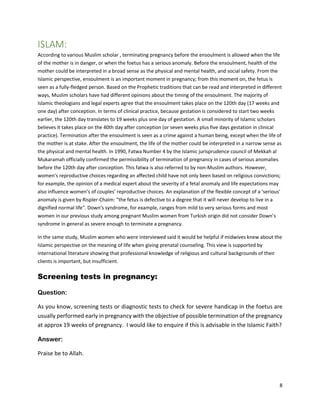
![10
4 – After the third stage, and after four months have passed, it is not permissible to abort the
pregnancy unless a group of trustworthy medical specialists decide that keeping the fetus in his
mother’s womb will cause her death, and that should only be done after all means of keeping the
fetus alive have been exhausted. A concession is made allowing abortion in this case so as to
ward off the greater of two evils and to serve the greater of two interests.
There is a hadith about If a woman dies with a child in her womb, or she dies during childbirth or
after childbirth but within the period of nifaas (post-partum bleeding)……
The Messenger of Allah (peace and blessings of Allah be upon him) said, If a woman dies during
the post-partum period, her child will drag her to Paradise by his umbilical cord.” The umbilical
cord is that which is cut by the midwife when the child is born.
The hadith was narrated by Imaam Ahmad in his Musnad with a saheeh isnaad. (al-Musnad,
3/489). There is a corroborating report narrated by Maalik (1/233) and Abu Dawood, 3/482).
Ruling on aborting a deformed foetus:
Question:
A woman is pregnant and has had several scans, which show that there are deformities in the
foetus. Is it permissible to abort it?
Answer:
Firstly: We have already stated in the ruling on aborting a fetus that is physically deformed, and
that this is permissible before the soul is breathed into the foetus, i.e., before 120 days of
pregnancy have passed. This is allowed after exhausting all possible means of treating the
problem. But after the soul has been breathed into the fetus it is not permissible to abort it
because of deformity.
The parents have to be patient and accept the will and decree of Allah, and remember the words
of Allah (interpretation of the meaning):
“And it may be that you dislike a thing which is good for you and that you like a thing which is
bad for you. Allah knows but you do not know”
[Al-Baqarah 2:216]
“it may be that you dislike a thing and Allah brings through it a great deal of good”
[al-Nisa’ 4:19]](https://image.slidesharecdn.com/prenataldiagnosis-201012154842/85/Prenatal-diagnosis-10-320.jpg)


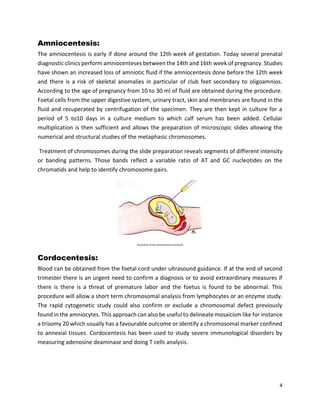
Prenatal testing consists of screening and diagnosis to detect problems with the pregnancy as early as possible. Screening can detect issues like neural tube defects, chromosome abnormalities, and genetic disorders. Prenatal diagnosis allows for medical treatment, decisions about continuing the pregnancy, and preparation if issues are diagnosed. Methods include invasive tests like amniocentesis and chorionic villus sampling, and non-invasive tests like ultrasound and maternal serum screening. Ethical issues include the impact on women's autonomy and sense of control, as well as disability rights and social justice concerns. Most religions address when termination of pregnancy is allowed, such as when the mother's life is endangered or serious fetal anomalies exist, with Islam generally permitting termination before 120 days


![PRENATAL_DIAGNOSIS[1].pptx](https://cdn.slidesharecdn.com/ss_thumbnails/prenataldiagnosis1-221119161845-d4594dec-thumbnail.jpg?width=640&height=640&fit=bounds)


