BACTERIAL DISEASES 
SUBMITTED BY 
ANULEKSHMI 
NATURAL SCIENCE
TUBERCULOSIS(TB) 
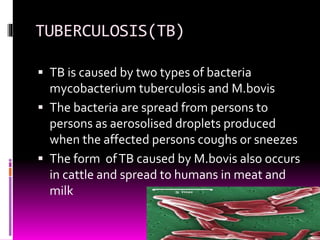
 TB is caused by two types of bacteria 
mycobacterium tuberculosis and M.bovis 
 The bacteria are spread from persons to 
persons as aerosolised droplets produced 
when the affected persons coughs or sneezes 
 The form of TB caused by M.bovis also occurs 
in cattle and spread to humans in meat and 
milk
Diagnosis 
 Diagnosis is by the tuberculin or mantoxu test 
 Where a purified protein derivative from the 
bacterium is injected in to the skin of the 
suspected patients. 
 Development of a red ,raised around the 
area of injection indicates an infection
treatment 
 Treatment is by multidrug antibiotic therapy, 
which has to be continued for a long time 
until the bacteria are completely eliminated 
 Infection can be prevented by vaccination 
with BCG(Bacilli Chalmette Guerrin)
DIPHTHERIA 
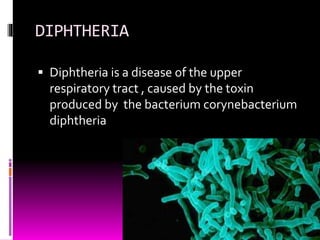
 Diphtheria is a disease of the upper 
respiratory tract , caused by the toxin 
produced by the bacterium corynebacterium 
diphtheria
pathogenesis 
 The bacterium infects its victim when the person 
inhales contaminated respiratory droplets from 
an infected person and rapidly colonies the 
upper regions of the respiratory tract 
 It produces an exotoxin that inhabits protein 
synthesis in the epithelial cells killing them 
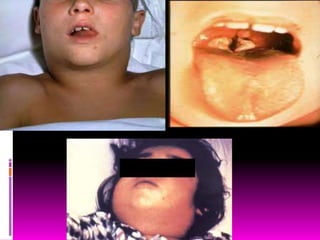
 As dead tissues accumulate the toxins mixes 
with the mucus secretion ,white blood cells and 
the colonies of bacteria forming a thick leathery 
greyish black membrane like material blocking 
the respiratory tract
treatment 
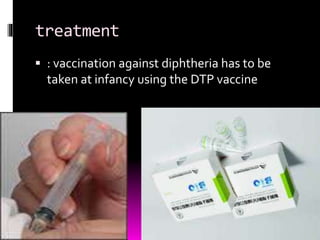
 : vaccination against diphtheria has to be 
taken at infancy using the DTP vaccine
pneumonia 
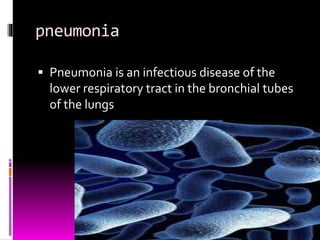
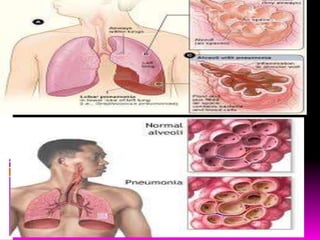
 Pneumonia is an infectious disease of the 
lower respiratory tract in the bronchial tubes 
of the lungs
Mode of infection and treatment 
 Infection is acquired when a person inhales 
or comes in to contact with aerosolic droplets 
droplets from infected peoples 
 Treatment is administration of antibiotics 
such as penicillin, tetracycline and 
chloramphenicol
LEPROSY 
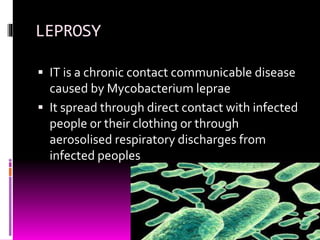
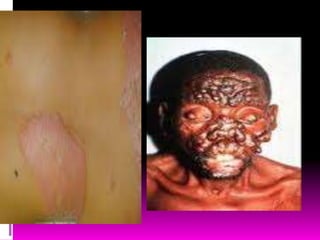
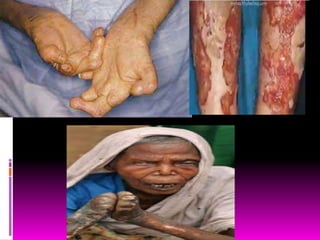
 IT is a chronic contact communicable disease 
caused by Mycobacterium leprae 
 It spread through direct contact with infected 
people or their clothing or through 
aerosolised respiratory discharges from 
infected peoples
THANK YOU

Bacterial diseases

  • 1.
    BACTERIAL DISEASES SUBMITTEDBY ANULEKSHMI NATURAL SCIENCE
  • 2.
    TUBERCULOSIS(TB)  TBis caused by two types of bacteria mycobacterium tuberculosis and M.bovis  The bacteria are spread from persons to persons as aerosolised droplets produced when the affected persons coughs or sneezes  The form of TB caused by M.bovis also occurs in cattle and spread to humans in meat and milk
  • 3.
    Diagnosis  Diagnosisis by the tuberculin or mantoxu test  Where a purified protein derivative from the bacterium is injected in to the skin of the suspected patients.  Development of a red ,raised around the area of injection indicates an infection
  • 5.
    treatment  Treatmentis by multidrug antibiotic therapy, which has to be continued for a long time until the bacteria are completely eliminated  Infection can be prevented by vaccination with BCG(Bacilli Chalmette Guerrin)
  • 6.
    DIPHTHERIA  Diphtheriais a disease of the upper respiratory tract , caused by the toxin produced by the bacterium corynebacterium diphtheria
  • 7.
    pathogenesis  Thebacterium infects its victim when the person inhales contaminated respiratory droplets from an infected person and rapidly colonies the upper regions of the respiratory tract  It produces an exotoxin that inhabits protein synthesis in the epithelial cells killing them  As dead tissues accumulate the toxins mixes with the mucus secretion ,white blood cells and the colonies of bacteria forming a thick leathery greyish black membrane like material blocking the respiratory tract
  • 9.
    treatment  :vaccination against diphtheria has to be taken at infancy using the DTP vaccine
  • 10.
    pneumonia  Pneumoniais an infectious disease of the lower respiratory tract in the bronchial tubes of the lungs
  • 12.
    Mode of infectionand treatment  Infection is acquired when a person inhales or comes in to contact with aerosolic droplets droplets from infected peoples  Treatment is administration of antibiotics such as penicillin, tetracycline and chloramphenicol
  • 13.
    LEPROSY  ITis a chronic contact communicable disease caused by Mycobacterium leprae  It spread through direct contact with infected people or their clothing or through aerosolised respiratory discharges from infected peoples
  • 16.