GENETIC DISORDERS
v
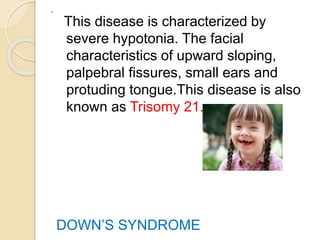
This disease is characterized by
severe hypotonia. The facial
characteristics of upward sloping,
palpebral fissures, small ears and
protuding tongue.This disease is also
known as Trisomy 21.
DOWN’S SYNDROME
n
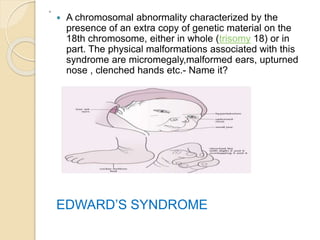
 A chromosomal abnormality characterized by the
presence of an extra copy of genetic material on the
18th chromosome, either in whole (trisomy 18) or in
part. The physical malformations associated with this
syndrome are micromegaly,malformed ears, upturned
nose , clenched hands etc.- Name it?
EDWARD’S SYNDROME
c
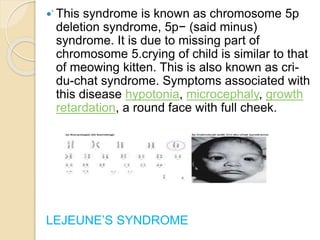
 This syndrome is known as chromosome 5p
deletion syndrome, 5p− (said minus)
syndrome. It is due to missing part of
chromosome 5.crying of child is similar to that
of meowing kitten. This is also known as cri-
du-chat syndrome. Symptoms associated with
this disease hypotonia, microcephaly, growth
retardation, a round face with full cheek.
LEJEUNE’S SYNDROME
.
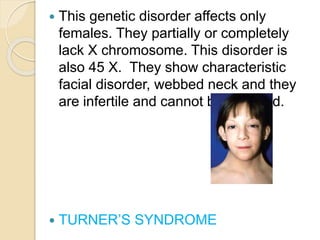
 This genetic disorder affects only
females. They partially or completely
lack X chromosome. This disorder is
also 45 X. They show characteristic
facial disorder, webbed neck and they
are infertile and cannot bear a child.
 TURNER’S SYNDROME
.
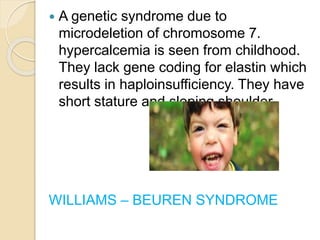
 A genetic syndrome due to
microdeletion of chromosome 7.
hypercalcemia is seen from childhood.
They lack gene coding for elastin which
results in haploinsufficiency. They have
short stature and sloping shoulder.
WILLIAMS – BEUREN SYNDROME
.
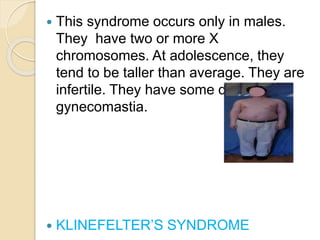
 This syndrome occurs only in males.
They have two or more X
chromosomes. At adolescence, they
tend to be taller than average. They are
infertile. They have some degree of
gynecomastia.
 KLINEFELTER’S SYNDROME
.
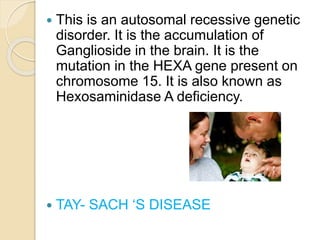
 This is an autosomal recessive genetic
disorder. It is the accumulation of
Ganglioside in the brain. It is the
mutation in the HEXA gene present on
chromosome 15. It is also known as
Hexosaminidase A deficiency.
 TAY- SACH ‘S DISEASE
.
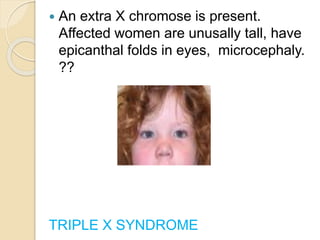
 An extra X chromose is present.
Affected women are unusally tall, have
epicanthal folds in eyes, microcephaly.
??
TRIPLE X SYNDROME
V
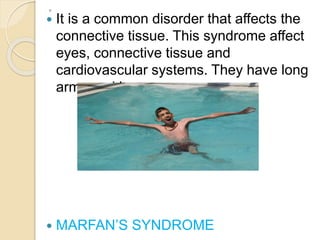
 It is a common disorder that affects the
connective tissue. This syndrome affect
eyes, connective tissue and
cardiovascular systems. They have long
arms and legs.
 MARFAN’S SYNDROME
.
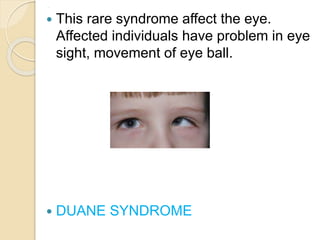
 This rare syndrome affect the eye.
Affected individuals have problem in eye
sight, movement of eye ball.
 DUANE SYNDROME
.
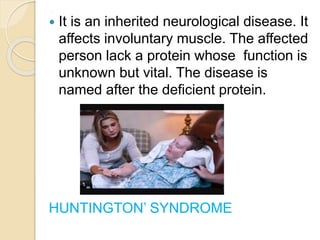
 It is an inherited neurological disease. It
affects involuntary muscle. The affected
person lack a protein whose function is
unknown but vital. The disease is
named after the deficient protein.
HUNTINGTON’ SYNDROME
 This is a rapid aging disease.
 PROGERIA
Genetic disorder

Genetic disorder

  • 1.
  • 2.
    v This disease ischaracterized by severe hypotonia. The facial characteristics of upward sloping, palpebral fissures, small ears and protuding tongue.This disease is also known as Trisomy 21. DOWN’S SYNDROME
  • 3.
    n  A chromosomalabnormality characterized by the presence of an extra copy of genetic material on the 18th chromosome, either in whole (trisomy 18) or in part. The physical malformations associated with this syndrome are micromegaly,malformed ears, upturned nose , clenched hands etc.- Name it? EDWARD’S SYNDROME
  • 4.
    c  This syndromeis known as chromosome 5p deletion syndrome, 5p− (said minus) syndrome. It is due to missing part of chromosome 5.crying of child is similar to that of meowing kitten. This is also known as cri- du-chat syndrome. Symptoms associated with this disease hypotonia, microcephaly, growth retardation, a round face with full cheek. LEJEUNE’S SYNDROME
  • 5.
    .  This geneticdisorder affects only females. They partially or completely lack X chromosome. This disorder is also 45 X. They show characteristic facial disorder, webbed neck and they are infertile and cannot bear a child.  TURNER’S SYNDROME
  • 6.
    .  A geneticsyndrome due to microdeletion of chromosome 7. hypercalcemia is seen from childhood. They lack gene coding for elastin which results in haploinsufficiency. They have short stature and sloping shoulder. WILLIAMS – BEUREN SYNDROME
  • 7.
    .  This syndromeoccurs only in males. They have two or more X chromosomes. At adolescence, they tend to be taller than average. They are infertile. They have some degree of gynecomastia.  KLINEFELTER’S SYNDROME
  • 8.
    .  This isan autosomal recessive genetic disorder. It is the accumulation of Ganglioside in the brain. It is the mutation in the HEXA gene present on chromosome 15. It is also known as Hexosaminidase A deficiency.  TAY- SACH ‘S DISEASE
  • 9.
    .  An extraX chromose is present. Affected women are unusally tall, have epicanthal folds in eyes, microcephaly. ?? TRIPLE X SYNDROME
  • 10.
    V  It isa common disorder that affects the connective tissue. This syndrome affect eyes, connective tissue and cardiovascular systems. They have long arms and legs.  MARFAN’S SYNDROME
  • 11.
    .  This raresyndrome affect the eye. Affected individuals have problem in eye sight, movement of eye ball.  DUANE SYNDROME
  • 12.
    .  It isan inherited neurological disease. It affects involuntary muscle. The affected person lack a protein whose function is unknown but vital. The disease is named after the deficient protein. HUNTINGTON’ SYNDROME
  • 13.
     This isa rapid aging disease.  PROGERIA