Recommended
PPT
Lesson 7 Single Gene Disorders (F) Kcr
PPT
All Rbsk Birth defects presentation in this ppt.ppt
PPT
embryology and the parts BirthDefects6.ppt
PPT
Lesson 7 Single Gene Disorders (H)
PPT
Lesson 7 Huntingtons And Cystic Fibrosis
PPTX
PPTX
8.2.7.p inherited diseases
PPT
PPTX
PPT
PPT
PPTX
PPT
PPT
6.2 Human Genetic Disorders 2019
PPTX
Autosomal recessive inheritance
PPTX
Infectious and non infectious disease (AS and A Level Biology Chapter 10)
PPTX
DISEASES OF GENETIC MUTATION, TREATMENTS(2).pptx
PPT
PPTX
PDF
Factors influencing prenatal development: Genetic factors
PPT
PPTX
15. Single gene inheritance.pptbmcmlxklx
DOCX
PPTX
Modes of inheritance (part 2)-Dr.Gourav
PPTX
PPTX
Genetic Basis & Clinical Features of Achondroplasia [Autosaved].pptx
PPTX
PPT
PPT
2. Movement In and Out of Cells v1.0.ppt
PPT
8. Homeostasis v1.0.ppt boardworks powerpoint
More Related Content
PPT
Lesson 7 Single Gene Disorders (F) Kcr
PPT
All Rbsk Birth defects presentation in this ppt.ppt
PPT
embryology and the parts BirthDefects6.ppt
PPT
Lesson 7 Single Gene Disorders (H)
PPT
Lesson 7 Huntingtons And Cystic Fibrosis
PPTX
PPTX
8.2.7.p inherited diseases
PPT
Similar to 6. Inherited Diseases v1.0.ppt boardworks
PPTX
PPT
PPT
PPTX
PPT
PPT
6.2 Human Genetic Disorders 2019
PPTX
Autosomal recessive inheritance
PPTX
Infectious and non infectious disease (AS and A Level Biology Chapter 10)
PPTX
DISEASES OF GENETIC MUTATION, TREATMENTS(2).pptx
PPT
PPTX
PDF
Factors influencing prenatal development: Genetic factors
PPT
PPTX
15. Single gene inheritance.pptbmcmlxklx
DOCX
PPTX
Modes of inheritance (part 2)-Dr.Gourav
PPTX
PPTX
Genetic Basis & Clinical Features of Achondroplasia [Autosaved].pptx
PPTX
PPT
More from ssuser19e7321
PPT
2. Movement In and Out of Cells v1.0.ppt
PPT
8. Homeostasis v1.0.ppt boardworks powerpoint
PPT
12. Energy and Biomass v1.0.ppt boardworks powerpoint
PPT
5. Inheritance v1.0.ppt boardworks powerpont
PPT
10. Plant Growth v1.0.ppt boardworks powerpoint
PPT
7. Enzymes v1.0.ppt boardworks powerpoint
PPT
3. Cell Division v1.0.ppt boardworks powerpoint
PPT
Introduction_Transfer_of_Heat for secondary school students
PPT
Heat transfer for secondary school students
Recently uploaded
PPTX
Determination of Permanent Wilting Point (PWP) by Sunflower pot culture techn...
PDF
Campbell Biology 12th Edition PDF Textbook
PPTX
Biodiversity-Chapter-5-Topic-1-Diversity-Indices.pptx
PDF
Consequences of Undecidability in Physics on the Theory of Everything
PDF
Cloud microphysical processes: graduate lecture slides on Cloud Physics UNR C...
PDF
Enhancing the Role of Knowledge Holders in the UN CBD: Pioneering Capacity-Bu...
PPTX
Private blockchains (or Permissioned) are created and maintained by private o...
PDF
Summer 2025 Goat Veterinary Consultancies- goatvetoz newsletter
PDF
Biopsychology 10th Edition PDF by John P. J. Pinel
PPTX
Typical_Menstrual_Cycle introductiom .pptx
PPTX
RESTRICTION ENDONUCLEASE ,TYPES , MECHANISM , APPLICATION
PDF
Class - 10 Science Book Full Concept Explanation With Last Five Years Solved ...
PPT
Electron Impact Scattering r-matrix method.ppt
PDF
Complications of Blood Transfusion.pdf Karrar Hayder K. Rustum
PDF
Child Development 9th Edition PDF Textbook
PDF
Rock Types and Formations: Igneous, Sedimentary, and Metamorphic
PPTX
the achaemenid history from Cyrus till Darius III.
PPT
LIPIDS, LIPOPROTEINS AND DISORDERS-2.ppt
PPTX
Structural Determination of Protein_Lab Meeting.pptx
PPT
DLC911_Feedback.ppt for grade 10 students
6. Inherited Diseases v1.0.ppt boardworks 1. 2. 3. © Boardworks Ltd 2007
3 of 51
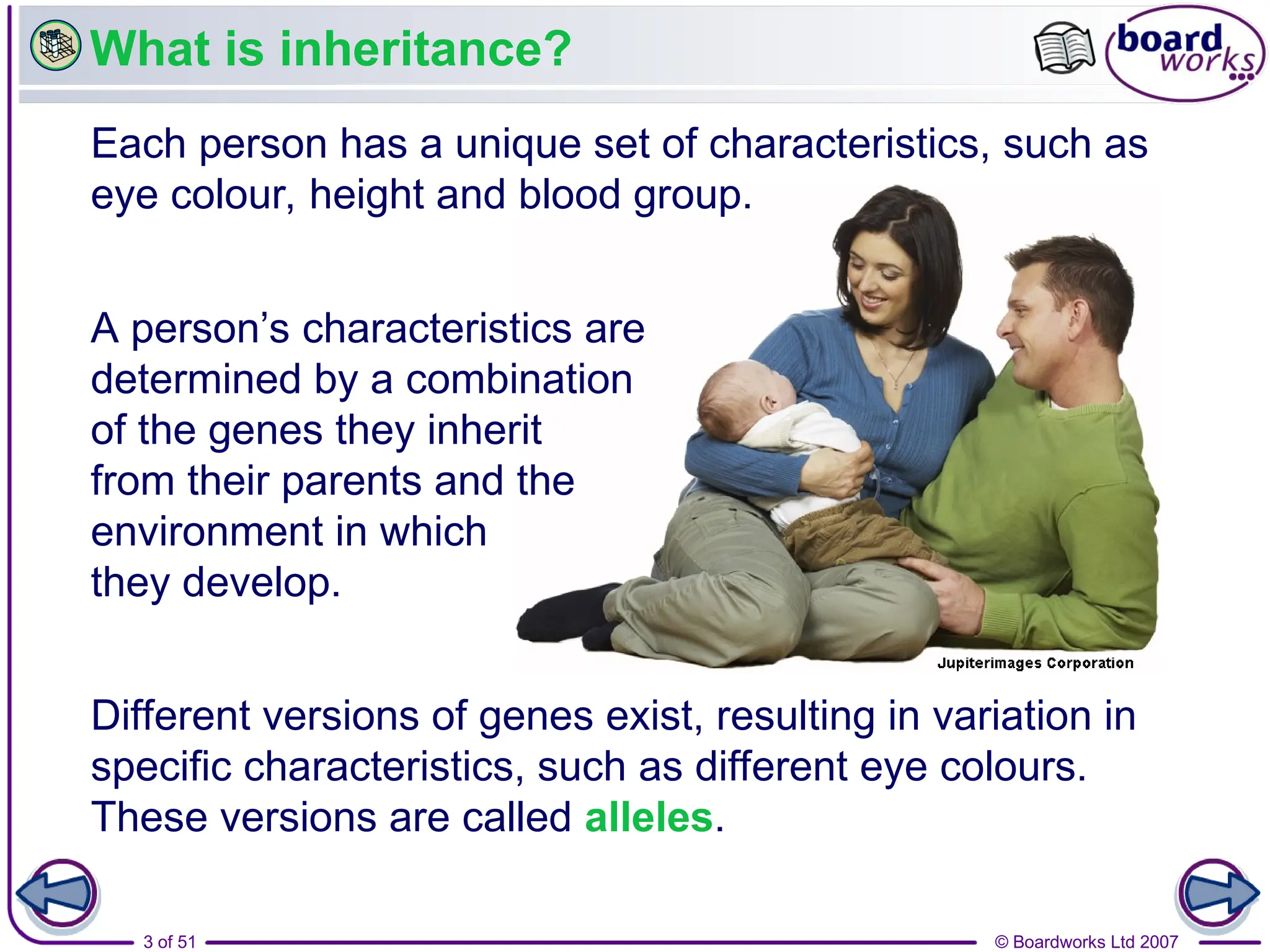
What is inheritance?
Different versions of genes exist, resulting in variation in
specific characteristics, such as different eye colours.
These versions are called alleles.
Each person has a unique set of characteristics, such as
eye colour, height and blood group.
A person’s characteristics are
determined by a combination
of the genes they inherit
from their parents and the
environment in which
they develop.
4. © Boardworks Ltd 2007
4 of 51
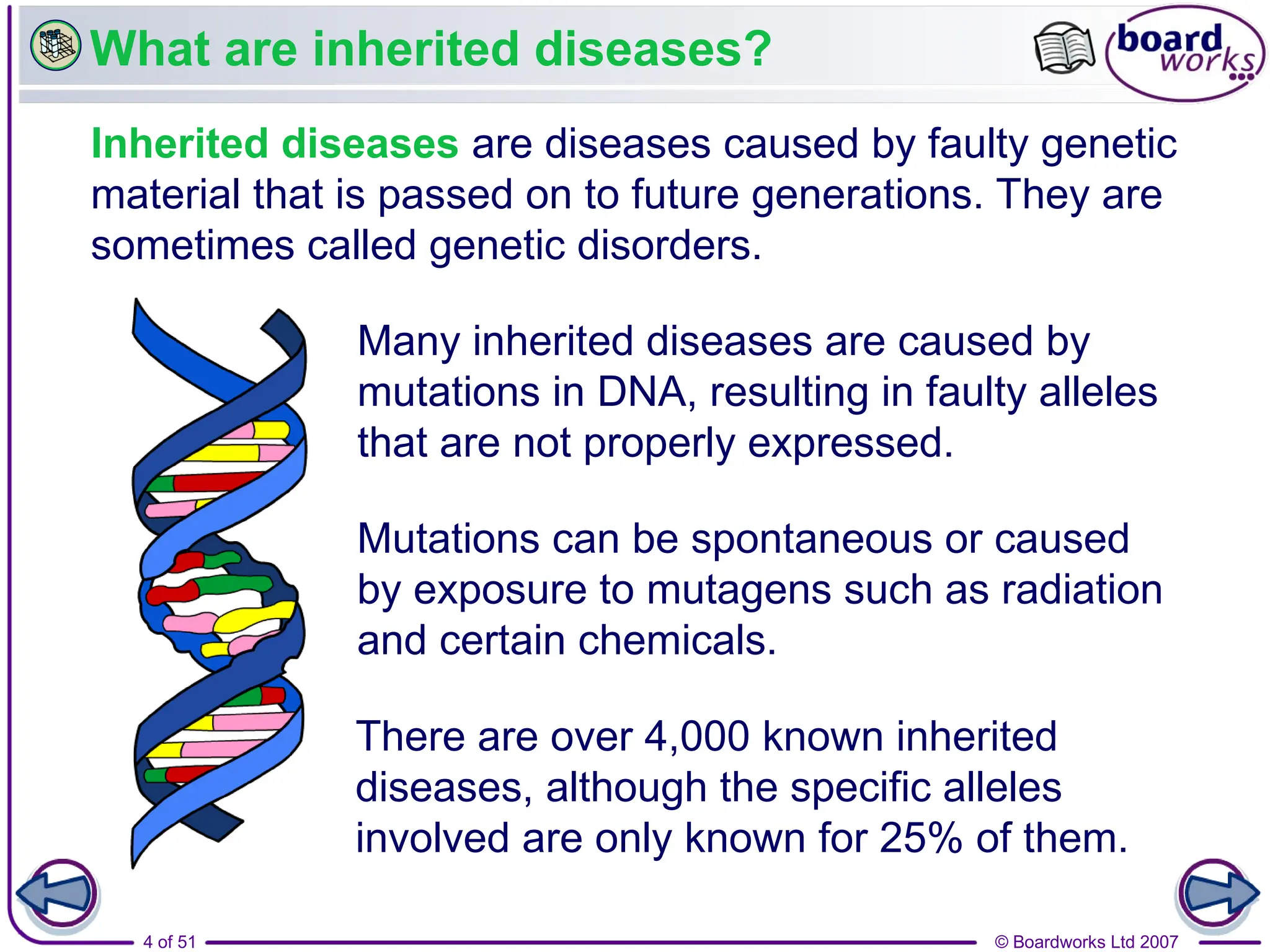
What are inherited diseases?
Inherited diseases are diseases caused by faulty genetic
material that is passed on to future generations. They are
sometimes called genetic disorders.
Mutations can be spontaneous or caused
by exposure to mutagens such as radiation
and certain chemicals.
There are over 4,000 known inherited
diseases, although the specific alleles
involved are only known for 25% of them.
Many inherited diseases are caused by
mutations in DNA, resulting in faulty alleles
that are not properly expressed.
5. © Boardworks Ltd 2007
5 of 51
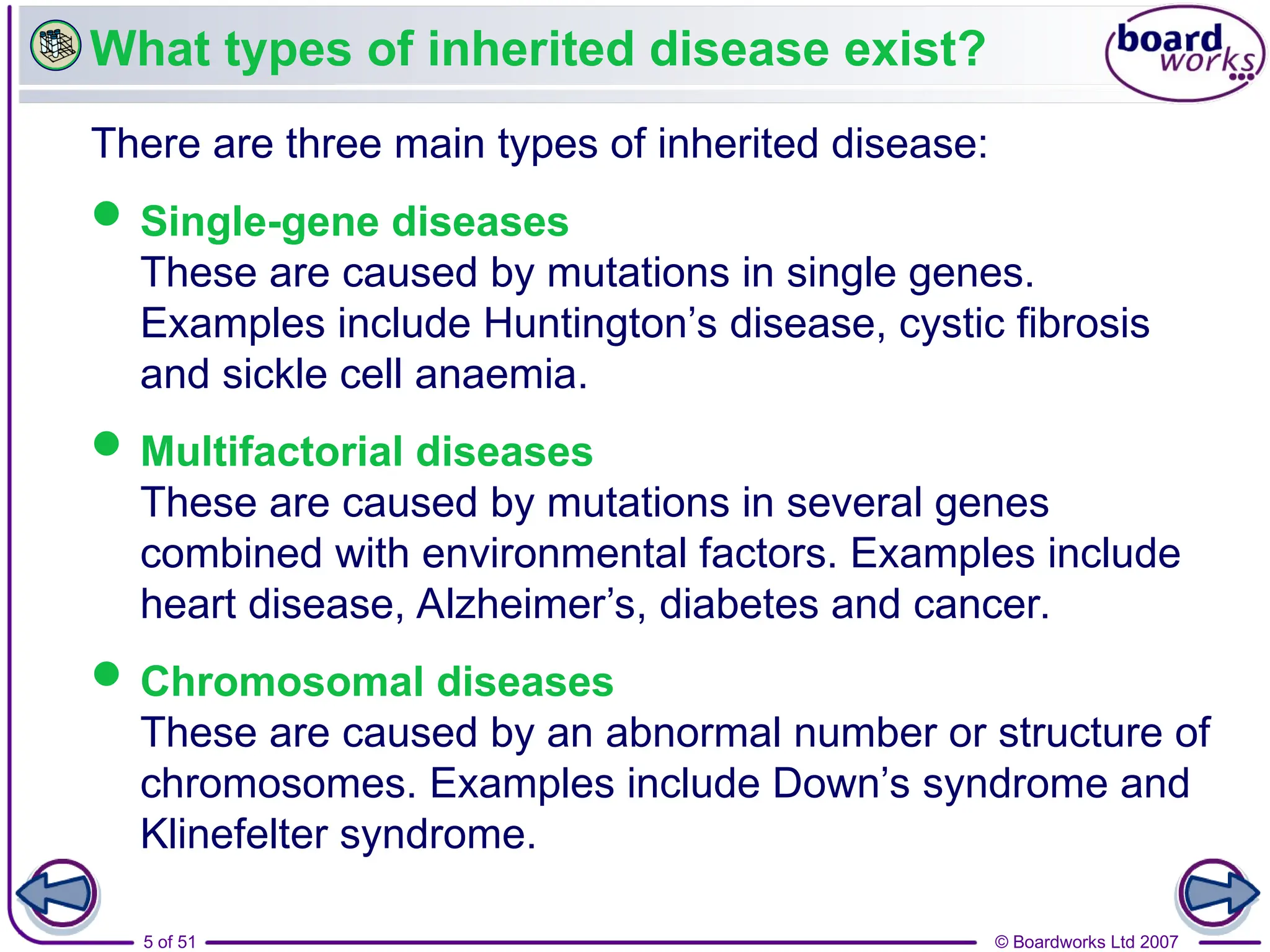
What types of inherited disease exist?
There are three main types of inherited disease:
Single-gene diseases
These are caused by mutations in single genes.
Examples include Huntington’s disease, cystic fibrosis
and sickle cell anaemia.
Multifactorial diseases
These are caused by mutations in several genes
combined with environmental factors. Examples include
heart disease, Alzheimer’s, diabetes and cancer.
Chromosomal diseases
These are caused by an abnormal number or structure of
chromosomes. Examples include Down’s syndrome and
Klinefelter syndrome.
6. © Boardworks Ltd 2007
6 of 51
What are carriers?
Like ‘normal’ alleles, faulty alleles can be dominant or
recessive.
Does everyone who carries a faulty allele develop a disease?
This means that people can
have a copy of a faulty allele
that codes for an inherited
disease, but not have the
disease themselves. These
people are called carriers.
Why is it important to know
if someone is a carrier?
Carriers can potentially pass
the disease on to their children.
7. © Boardworks Ltd 2007
7 of 51
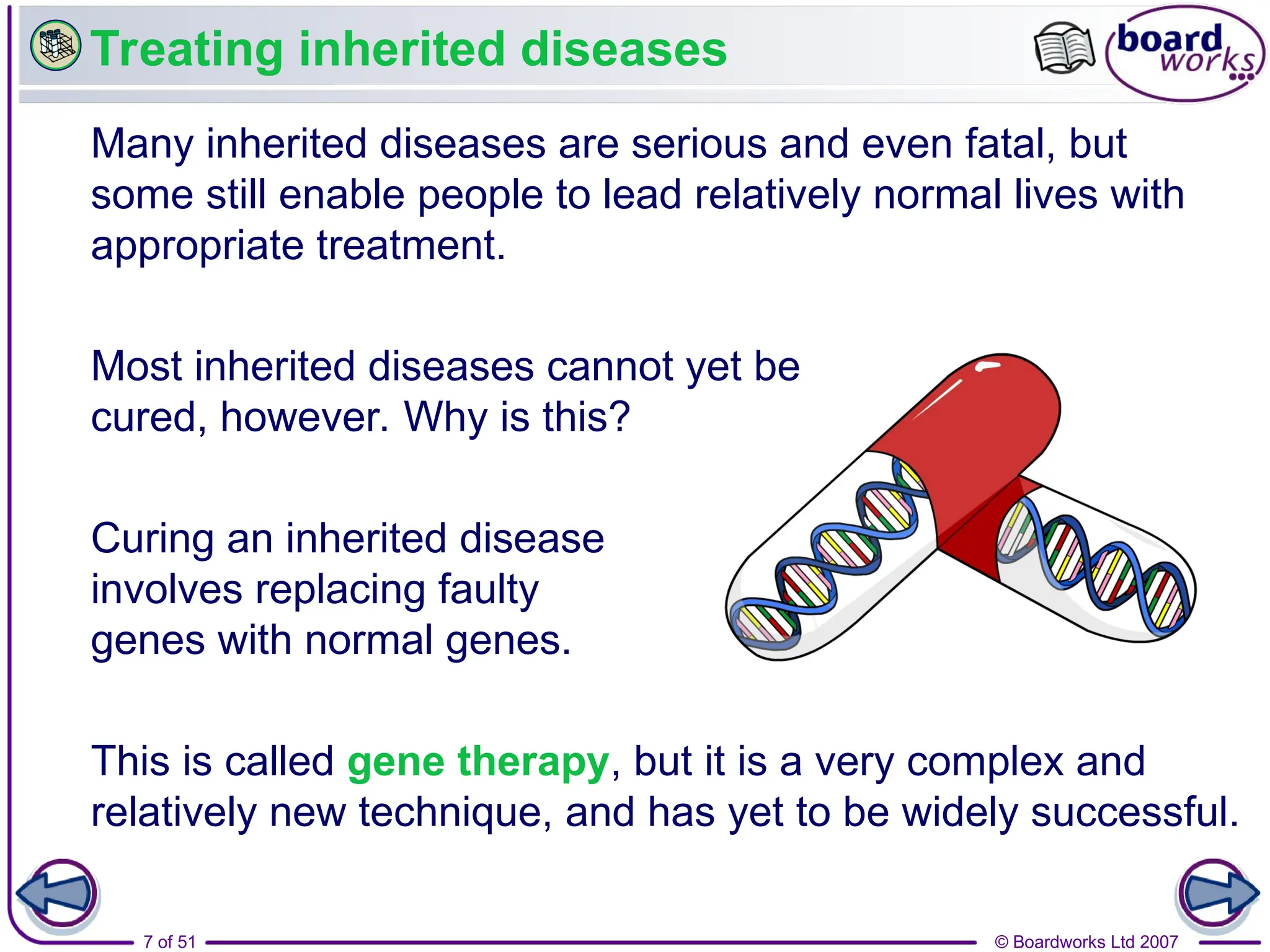
Treating inherited diseases
Many inherited diseases are serious and even fatal, but
some still enable people to lead relatively normal lives with
appropriate treatment.
Most inherited diseases cannot yet be
cured, however. Why is this?
Curing an inherited disease
involves replacing faulty
genes with normal genes.
This is called gene therapy, but it is a very complex and
relatively new technique, and has yet to be widely successful.
8. 9. 10. © Boardworks Ltd 2007
10 of 51
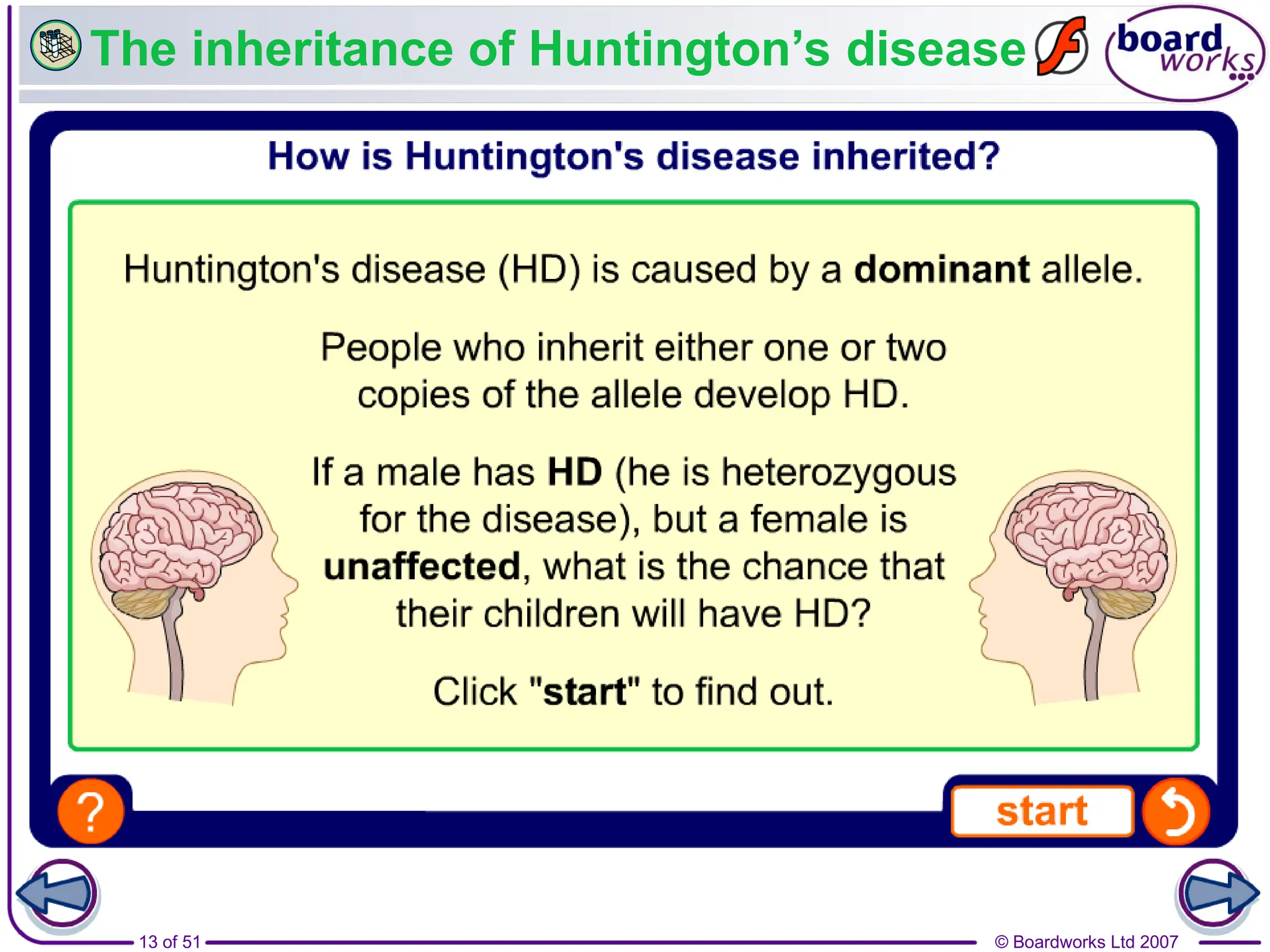
What is Huntington’s disease?
Huntington’s disease, sometimes called Huntington’s
chorea, is a rare and fatal inherited disease of the central
nervous system.
Huntington’s disease is caused by a
single dominant allele, which means
that heterozygous individuals will
develop the disease.
Around 4,800 people in the UK have Huntington’s disease.
The disease causes damage to brain
cells, leading to a gradual loss of
co-ordination, decline in mental ability
and changes in personality.
11. © Boardworks Ltd 2007
11 of 51
The symptoms of Huntington’s disease
Symptoms of Huntington’s disease usually begin to develop
between the ages of 30 and 50, although they can appear
earlier in rare occasions.
lack of concentration and memory loss
twitching, clumsiness and stumbling
Early symptoms include:
depression and mood changes
Huntington’s disease is incurable, but medication can
help to reduce the symptoms. However, as the disease
progresses, the person’s co-ordination and movement
becomes worse, and their mental abilities decline further.
12. © Boardworks Ltd 2007
12 of 51
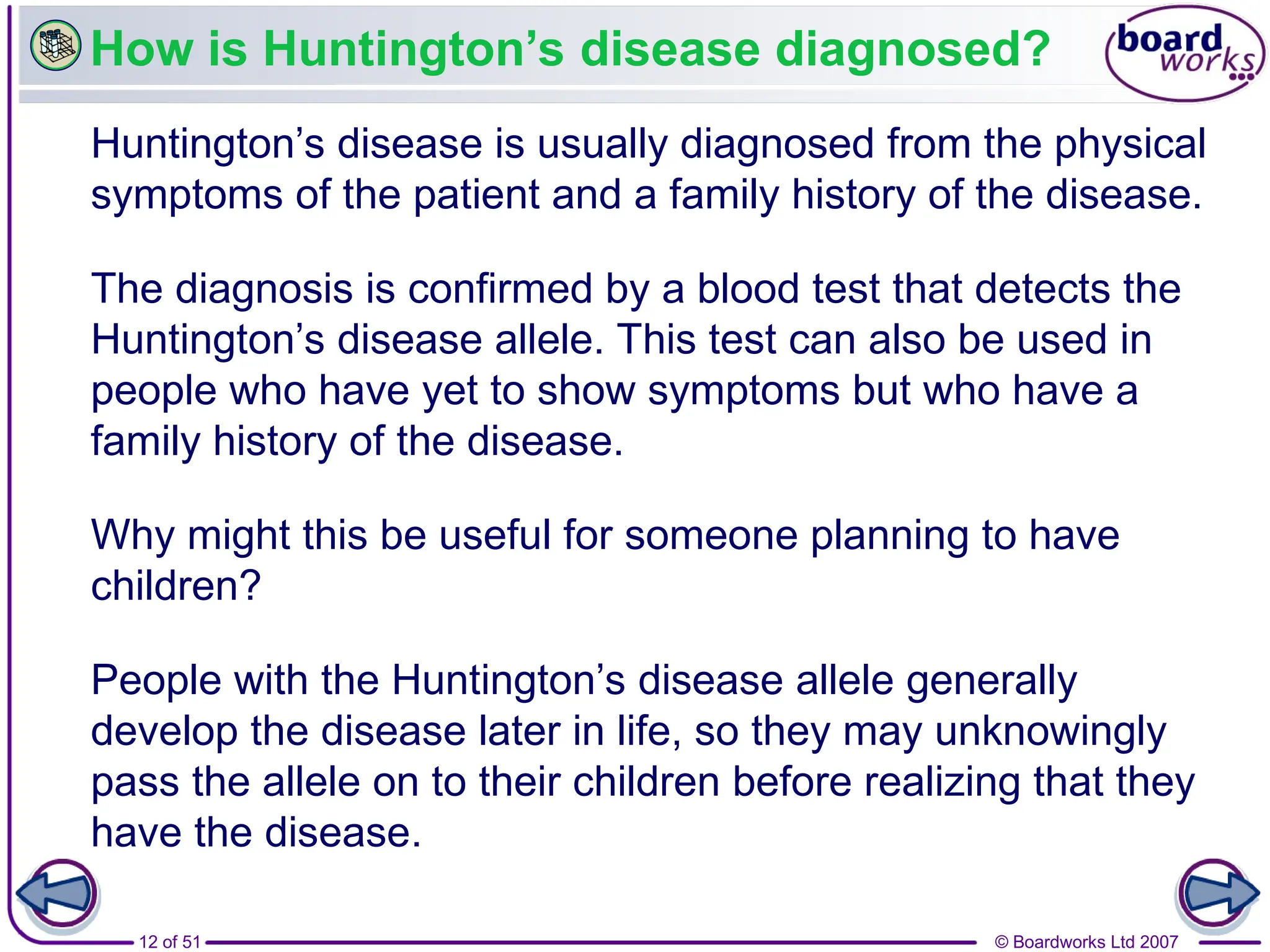
How is Huntington’s disease diagnosed?
Huntington’s disease is usually diagnosed from the physical
symptoms of the patient and a family history of the disease.
Why might this be useful for someone planning to have
children?
People with the Huntington’s disease allele generally
develop the disease later in life, so they may unknowingly
pass the allele on to their children before realizing that they
have the disease.
The diagnosis is confirmed by a blood test that detects the
Huntington’s disease allele. This test can also be used in
people who have yet to show symptoms but who have a
family history of the disease.
13. 14. 15. 16. © Boardworks Ltd 2007
16 of 51
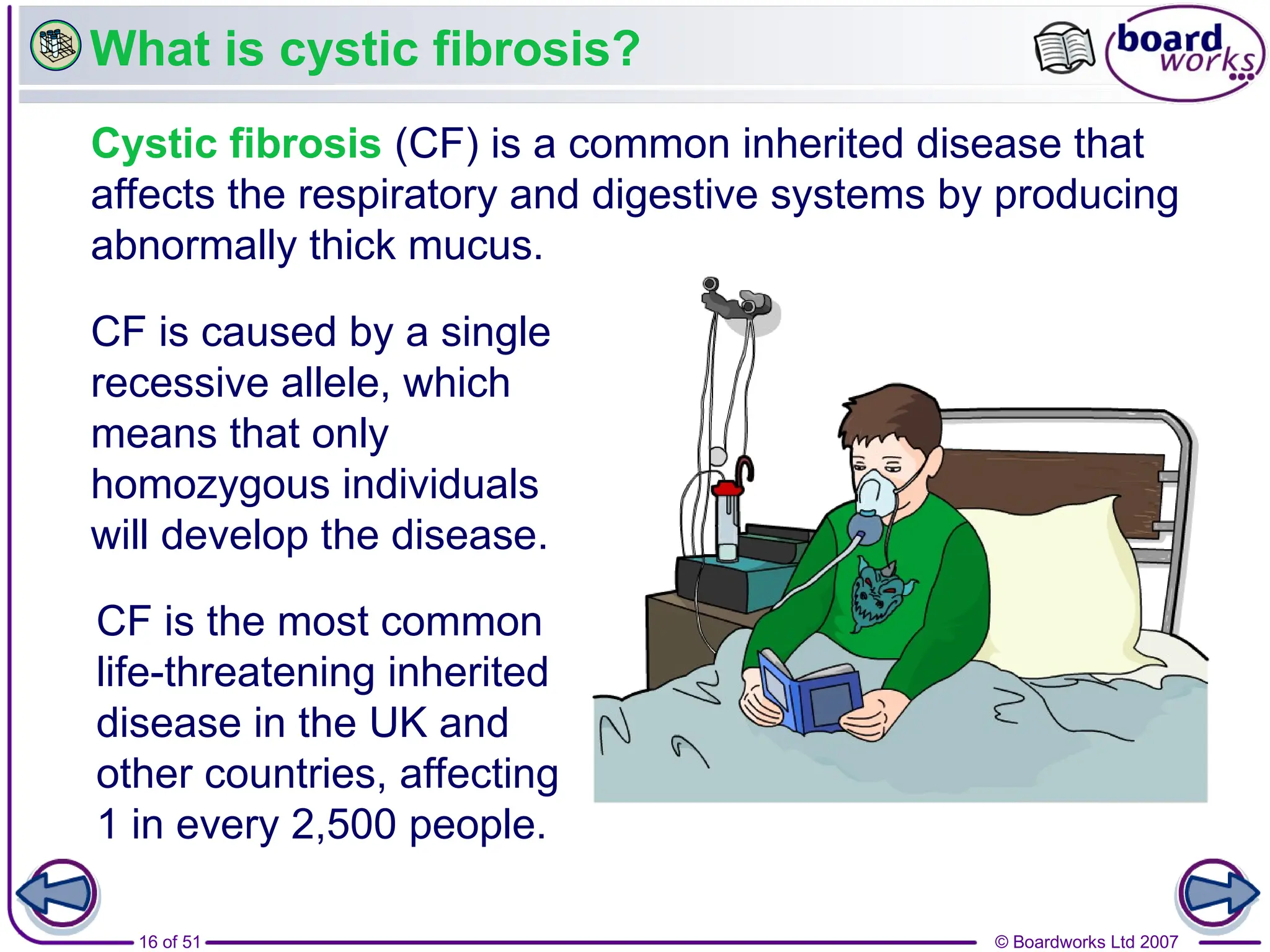
What is cystic fibrosis?
Cystic fibrosis (CF) is a common inherited disease that
affects the respiratory and digestive systems by producing
abnormally thick mucus.
CF is caused by a single
recessive allele, which
means that only
homozygous individuals
will develop the disease.
CF is the most common
life-threatening inherited
disease in the UK and
other countries, affecting
1 in every 2,500 people.
17. © Boardworks Ltd 2007
17 of 51
The symptoms of cystic fibrosis
The symptoms of CF usually develop during early childhood.
breathlessness and coughs
repeated chest infections –
bacteria are trapped and
thrive in the thick mucus.
Thick mucus clogs the airways,
leading to:
The mucus also clogs the pancreatic duct and blocks
enzyme secretion. This results in poor digestion, causing
low weight gain and low energy levels.
lung alveoli
mucus
18. © Boardworks Ltd 2007
18 of 51
How is cystic fibrosis diagnosed?
Cystic fibrosis is usually diagnosed via a sweat test.
During a sweat test, a
chemical and electric
current are applied to a
patch of skin causing it to
start producing sweat. The
sweat is collected and the
chloride levels are tested.
One of the symptoms of CF is salty sweat, caused by the
abnormal transport of sodium and chloride ions.
A high concentration of chloride ions indicates CF.
19. © Boardworks Ltd 2007
19 of 51
Testing fetuses for CF
If a couple has a family history of cystic
fibrosis, they may want to test their unborn
child's chromosomes for the disease.
chorionic villus sampling – fetal cells are collected from
the chorionic villi in the placenta with a suction tube.
amniocentesis – fetal cells are
collected from the amniotic fluid via a
hollow needle
Each procedure has a small risk of miscarriage or infection.
Are the tests worthwhile? How might the results affect the
parents?
There are two types of test:
20. 21. © Boardworks Ltd 2007
21 of 51
Treating cystic fibrosis
Physiotherapy loosens mucus,
making it easier to cough up.
The symptoms of CF can be effectively managed by a
combination of treatments that greatly improve quality of life.
Drugs widen the airways and
break down excess mucus,
while antibiotics treat chest
infections.
Enzyme tablets boost pancreatic enzyme levels, improving
digestion and growth, and increasing energy levels.
Oxygen gas helps improve
breathing.
22. © Boardworks Ltd 2007
22 of 51
Living with cystic fibrosis
Depending on the severity of their symptoms, most children
with CF are capable of leading relatively active lives.
In fact, regular exercise is
often recommended because
it improves health, fitness and
strength.
As people with CF get older,
their lungs begin to deteriorate
and some choose to go on a
waiting list for a lung transplant.
The average life expectancy of a person with CF has
increased as treatment improves, and is now in the
mid-30s, compared with just a few months in the 1950s.
23. 24. 25. 26. © Boardworks Ltd 2007
26 of 51
What is sickle cell anaemia?
Sickle cell anaemia is an inherited disease that causes
red blood cells to distort and form curved, sickle shapes.
Over 6,000 people in the UK have sickle cell anaemia.
The disease mainly affects
people of African, Caribbean,
Mediterranean and Asian
descent.
Sickle cell anaemia is caused
by a single recessive allele,
which produces abnormal
haemoglobin – the protein
that carries oxygen in red
blood cells.
27. © Boardworks Ltd 2007
27 of 51
The symptoms of sickle cell anaemia
These are caused the fragile nature of sickle blood cells,
which only last 10–20 days as opposed to about 4 months.
Common symptoms of sickle cell anaemia include anaemia,
tiredness, weakness and jaundice.
‘Crises’ are caused by
sickle cells blocking
blood vessels. This
reduces the oxygen
supply to organs,
causing pain and
organ damage.
In addition, people with sickle cell anaemia may have
severe pain attacks called ‘crises’.
sickle cells
causing blockage
28. © Boardworks Ltd 2007
28 of 51
Living with sickle cell anaemia
There is no cure for sickle cell anaemia, but with regular
medical attention most people are able to lead relatively
normal lives.
During a sickle cell crisis,
the person may need urgent
hospital treatment.
In the future, sickle cell anaemia may be routinely treated
using bone marrow transplants or gene therapy.
This involves strong pain relief
and may also require
antibiotics, oxygen treatment
and even a blood transfusion.
29. © Boardworks Ltd 2007
29 of 51
What is sickle cell trait?
People who have just one sickle cell allele are carriers of
the allele. The do not have sickle cell anaemia, but instead
have sickle cell trait.
In countries in Africa,
Asia and Central and
South America, the
sickle cell allele occurs
with a high frequency.
People with sickle cell trait don’t show any symptoms of
the condition themselves but nevertheless have a few
sickle blood cells.
Why might this be the case?
30. © Boardworks Ltd 2007
30 of 51
Malaria and sickle cell trait
Many countries in the developing world have a high incidence
of malaria, one of the most common life-threatening diseases
in the world
Malaria is caused by infection with
a parasite that lives and multiplies
in red blood cells. The parasite is
transmitted by mosquito bites.
What advantage might sickle
cell trait offer people in countries
where malaria is common?
The shape of sickle cells reduces the ability of the parasite to
reproduce. This results in a resistance to malaria.
31. 32. 33. 34. © Boardworks Ltd 2007
34 of 51
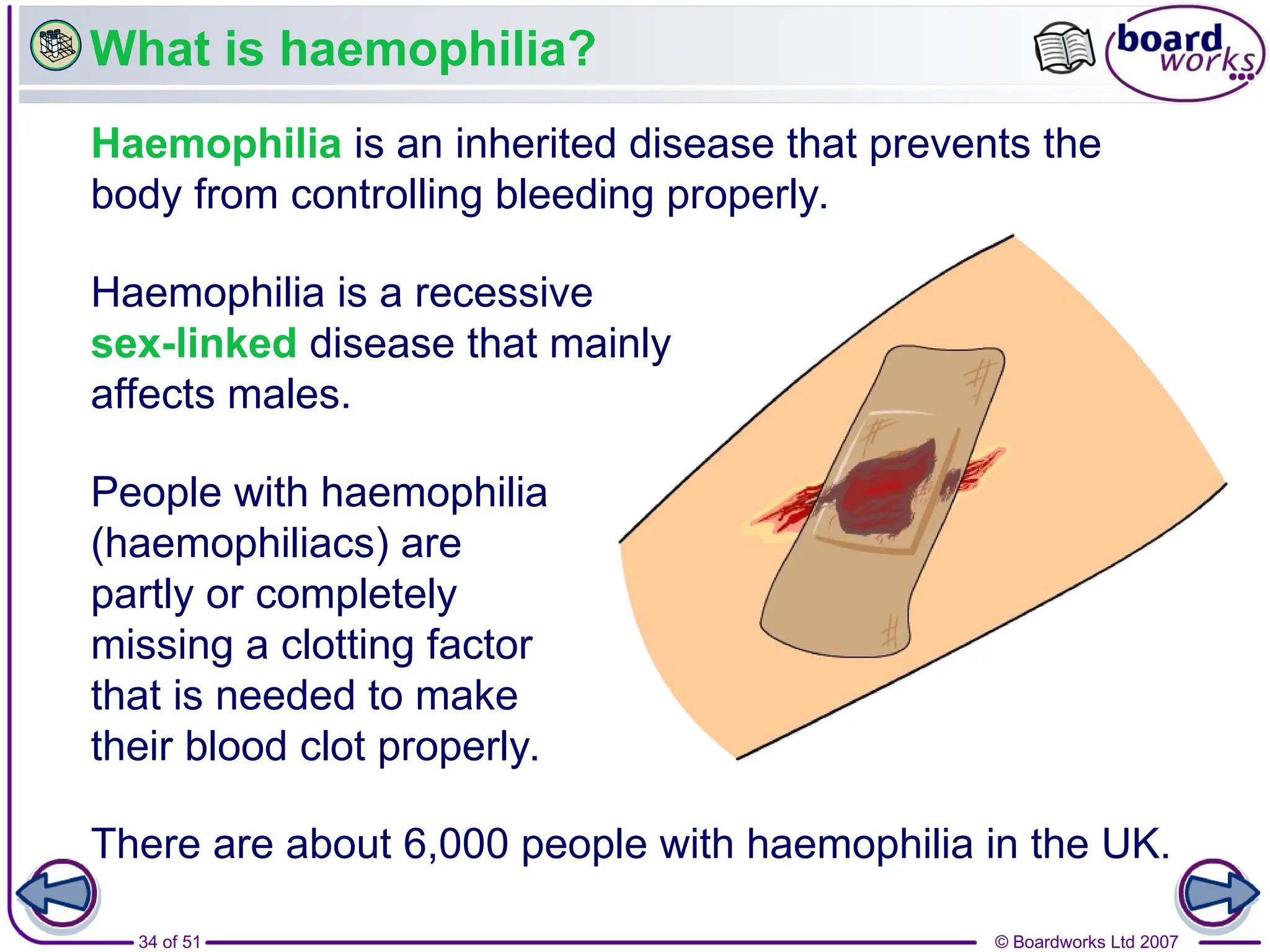
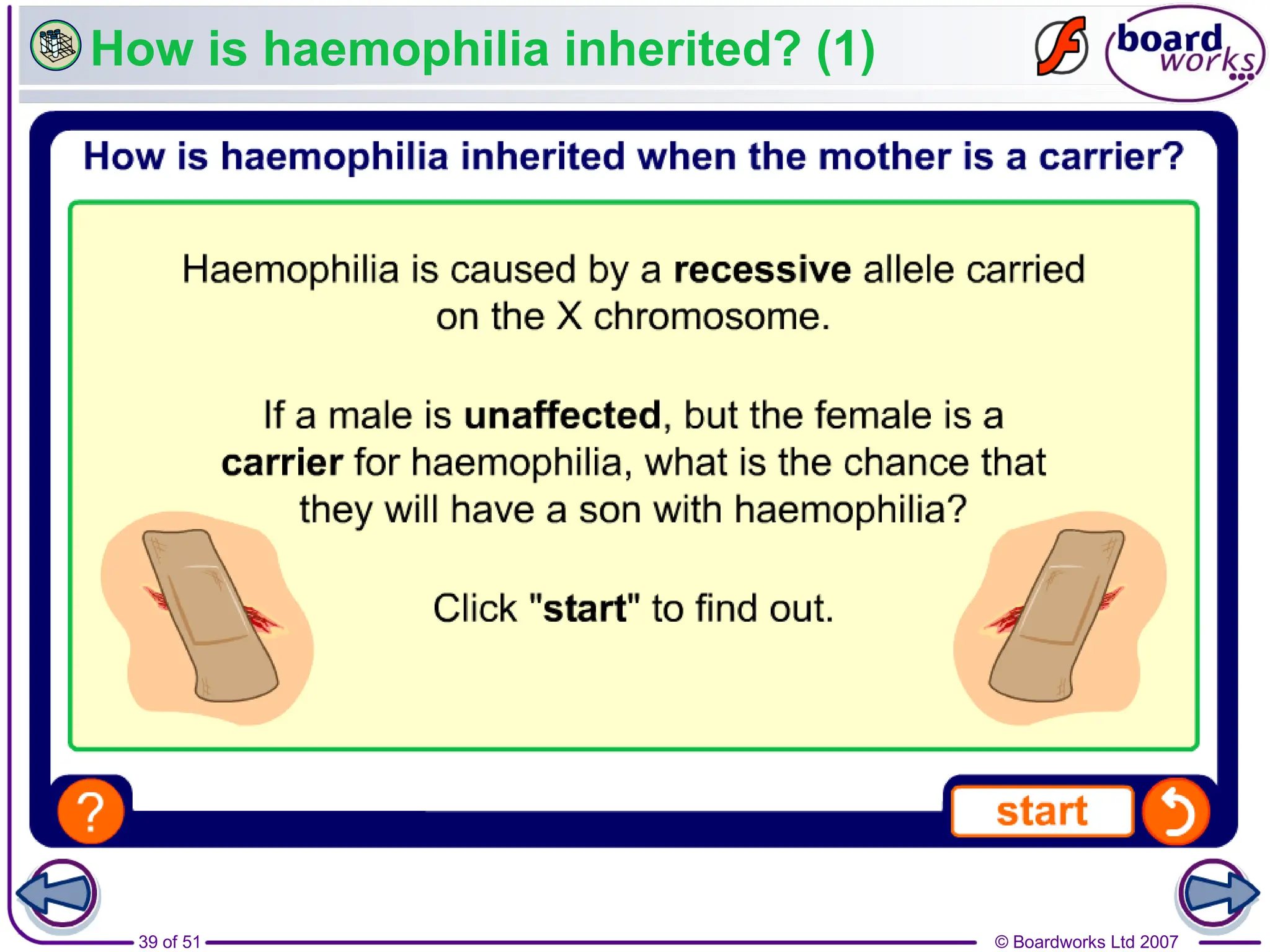
What is haemophilia?
Haemophilia is an inherited disease that prevents the
body from controlling bleeding properly.
Haemophilia is a recessive
sex-linked disease that mainly
affects males.
There are about 6,000 people with haemophilia in the UK.
People with haemophilia
(haemophiliacs) are
partly or completely
missing a clotting factor
that is needed to make
their blood clot properly.
35. © Boardworks Ltd 2007
35 of 51
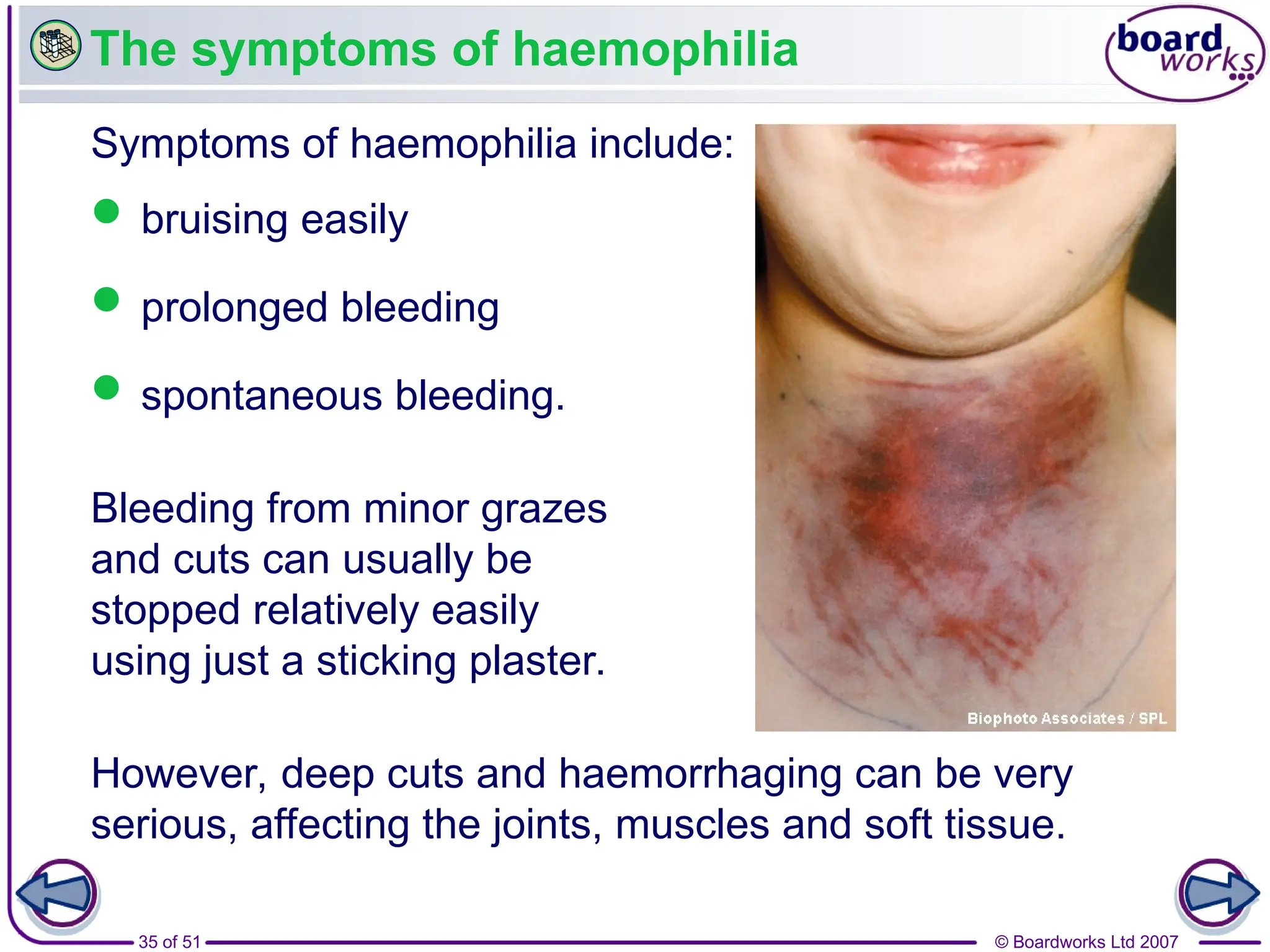
The symptoms of haemophilia
Symptoms of haemophilia include:
bruising easily
However, deep cuts and haemorrhaging can be very
serious, affecting the joints, muscles and soft tissue.
Bleeding from minor grazes
and cuts can usually be
stopped relatively easily
using just a sticking plaster.
prolonged bleeding
spontaneous bleeding.
36. © Boardworks Ltd 2007
36 of 51
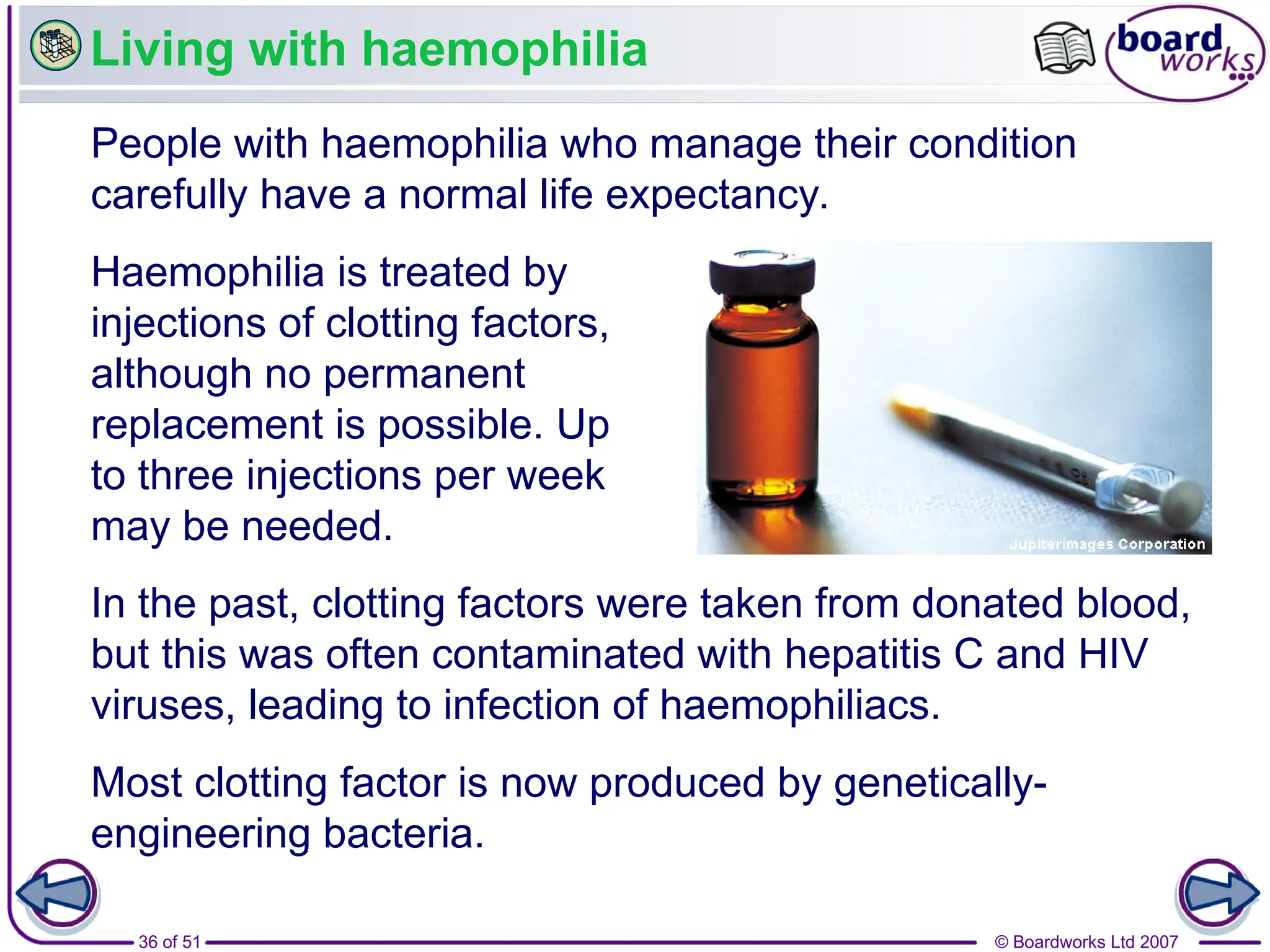
Living with haemophilia
People with haemophilia who manage their condition
carefully have a normal life expectancy.
Haemophilia is treated by
injections of clotting factors,
although no permanent
replacement is possible. Up
to three injections per week
may be needed.
In the past, clotting factors were taken from donated blood,
but this was often contaminated with hepatitis C and HIV
viruses, leading to infection of haemophiliacs.
Most clotting factor is now produced by genetically-
engineering bacteria.
37. © Boardworks Ltd 2007
37 of 51
(male)
X Y
Haemophilia in males
Haemophilia is far more common among males than females
because it is a recessive X-linked disease.
Males only have one X chromosome,
which is inherited from their mother.
haemophilia
allele
This is because there is only one version
of the allele and its effects will therefore
not be masked by another version.
Any allele contained within
the chromosome, whether it
is dominant or recessive, will
always be expressed.
38. © Boardworks Ltd 2007
38 of 51
Haemophilia in females
The recessive haemophilia allele is masked by the dominant
normal allele on the other X chromosome. The female is
therefore not affected by the disease, but is a carrier.
What happens if a
female inherits one
haemophilia allele?
female
carrier
=
What happens if a
female inherits two
haemophilia alleles?
female
haemophiliac
=
She will develop haemophilia. This is extremely rare.
39. 40. 41. 42. © Boardworks Ltd 2007
42 of 51
What is Down’s syndrome?
Down’s syndrome is a genetic disorder that occurs
when a person inherits an extra copy of chromosome 21.
People with Down’s syndrome often have characteristic
physical features, learning disabilities and have a higher
risk of certain medical conditions.
In the UK, Down's syndrome
affects about one in every
1,000 children born each year.
The risk of having a child with
Down’s syndrome increases
with maternal age, especially
over the age of 40.
43. © Boardworks Ltd 2007
43 of 51
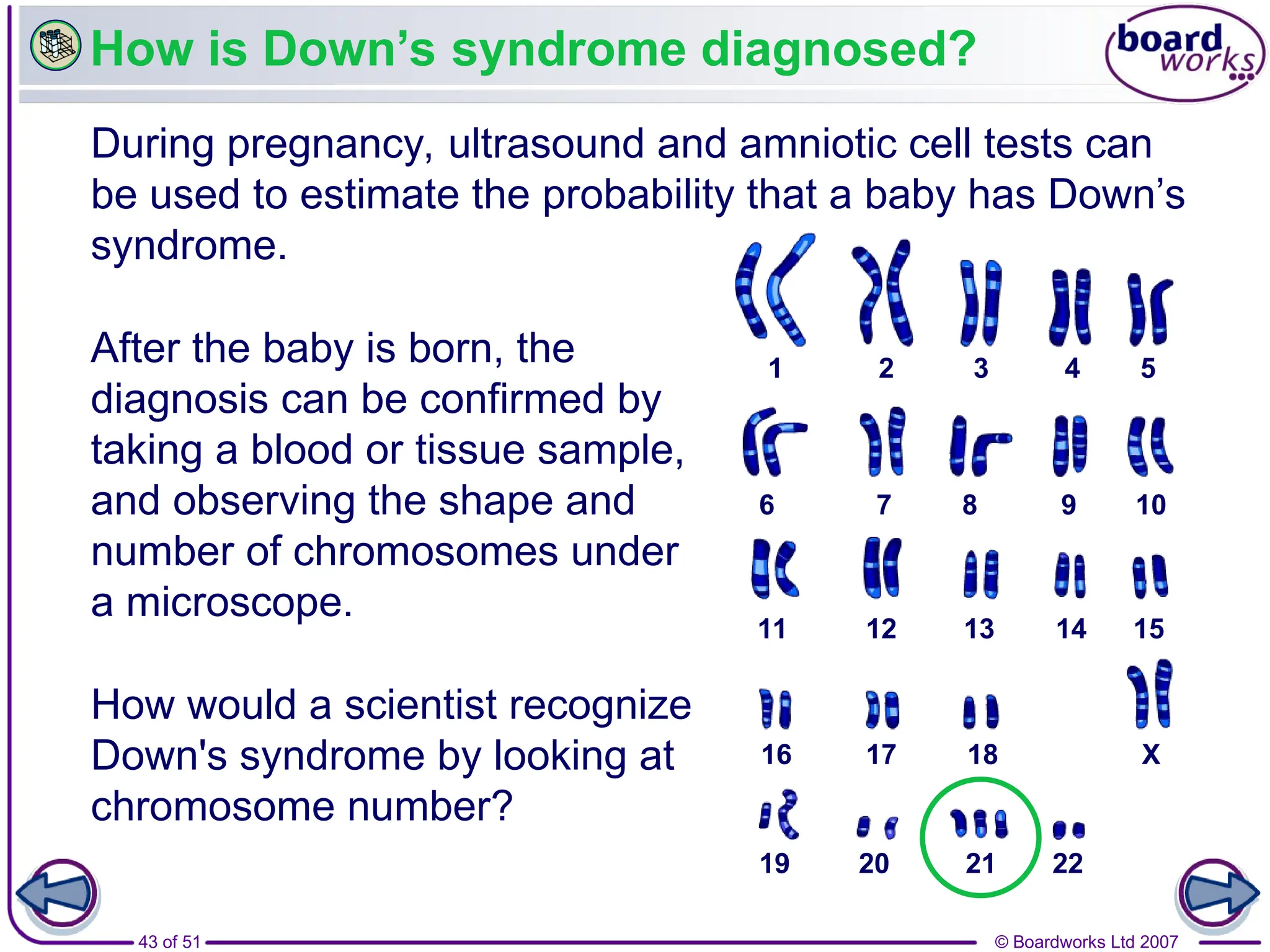
How is Down’s syndrome diagnosed?
During pregnancy, ultrasound and amniotic cell tests can
be used to estimate the probability that a baby has Down’s
syndrome.
After the baby is born, the
diagnosis can be confirmed by
taking a blood or tissue sample,
and observing the shape and
number of chromosomes under
a microscope.
How would a scientist recognize
Down's syndrome by looking at
chromosome number?
1 2 3 5
4
9
8 10
12
11
7
6
13 14 15
16 17 18
19 20 21 22
X
44. © Boardworks Ltd 2007
44 of 51
Living with Down’s syndrome
Speech and language therapy can be very useful in helping
people with Down’s syndrome communicate and express
themselves.
People with Down’s syndrome
can live healthy and varied
lives, and have a life
expectancy of around 60 years.
With support, people with
Down’s syndrome often go to
mainstream schools, and are
able to live semi-independent
adult lives. Many are also
able to become employed.
45. 46. 47. © Boardworks Ltd 2007
47 of 51
Glossary (1/2)
allele – One version of a gene, found at a specific location
along a chromosome.
carrier – An individual with a recessive allele, the effect of
which is masked by a dominant allele.
cystic fibrosis – A recessive inherited disease affecting
the lungs and digestive system.
Down’s syndrome – A genetic disorder occurring when
a person inherits an extra copy of chromosome 21.
gene therapy – Curing a genetic disease by replacing a
faulty allele with a ‘healthy’ version.
haemophilia – A sex-linked inherited disease resulting in
a failure of the blood to clot properly.
48. © Boardworks Ltd 2007
48 of 51
Glossary (1/2)
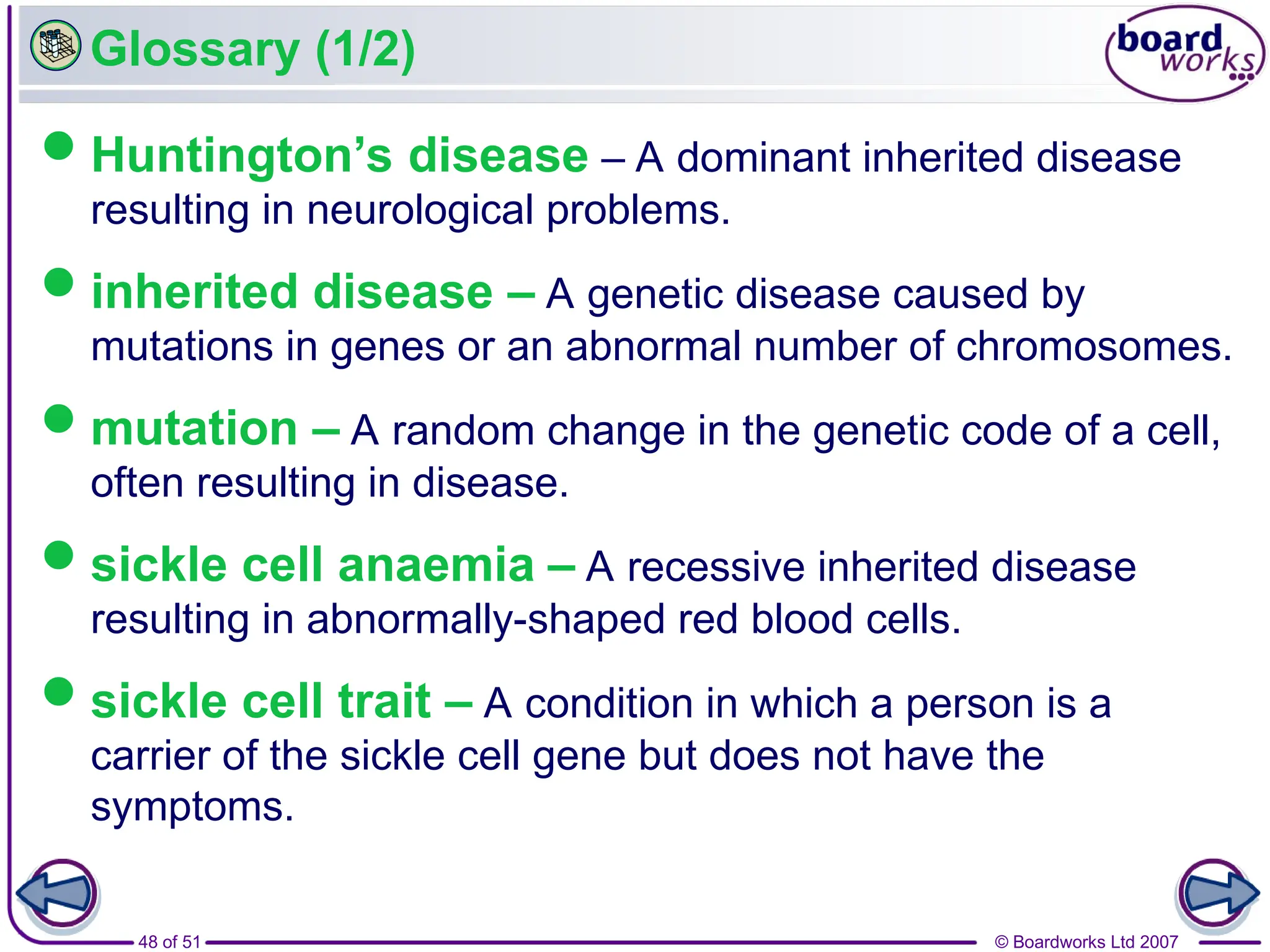
Huntington’s disease – A dominant inherited disease
resulting in neurological problems.
inherited disease – A genetic disease caused by
mutations in genes or an abnormal number of chromosomes.
mutation – A random change in the genetic code of a cell,
often resulting in disease.
sickle cell anaemia – A recessive inherited disease
resulting in abnormally-shaped red blood cells.
sickle cell trait – A condition in which a person is a
carrier of the sickle cell gene but does not have the
symptoms.
49. 50. 51. Editor's Notes #3 Photo credit: © 2007 Jupiterimages Corporation
Teacher notes
See the ‘Inheritance’ presentation for more information on alleles and variation. #4 Teacher notes
See the ‘Inheritance’ presentation for more information on mutation and genetic variation. #6 Photo credit: TEK Image / Science Photo Library
Image shows a sterile cotton swab inside a sample tube, over a DNA autoradiogram film. The swab is used to collect a sample of cells from the lining of the mouth. DNA (deoxyribonucleic acid) is extracted from the cells and analysed to determine the genetic sequence (shown by the autoradiogram). Genetic testing may be used to establish paternity, to identify criminals or to determine if someone is predisposed to a disease.
Teacher notes
See the ‘Inheritance’ presentation for more information on dominant and recessive alleles. #7 Teacher notes
See the Boardworks GCSE Science (Biology) ‘Genetic Engineering’ presentation for more information on gene therapy. #8 Teacher notes
This true-or-false activity could be used as a plenary or revision exercise on inherited diseases, or at the start of the lesson to gauge students’ existing knowledge of the subject matter. Coloured traffic light cards (red = false, yellow = don’t know, green = true) could be used to make this a whole-class exercise. #11 Teacher notes
As the disease progresses, constant nursing care is needed. The cause of death in people with Huntington’s disease is often a secondary illnesses such as pneumonia. #16 Teacher notes
In males with CF, thick mucus also clogs the tubes carrying sperm from the testes (vas deferens), leading to infertility. #19 Teacher notes
The risk of miscarriage as a result of amniocentesis or chorionic villus sampling is 0.5–2%. Amniocentesis can be performed from the 15th to the 18th week of pregnancy, and chorionic villus sampling from the 10th to the 12th week. The results from neither test are 100% accurate. #21 Photo credit: Cystic Fibrosis Trust #22 Photo credit: Rob Blissett
Teacher notes
In recent years, lung transplants have been offered to adults with CF whose own lungs are no longer functioning. Unfortunately, due to low numbers of organ donors and a lack of suitable matches the potential for lung transplantation as a treatment for CF is limited.
More information about CF is available at:
www.cftrust.org.uk
www.cff.org
www.nhsdirect.nhs.uk/articles/article.aspx?articleId=118 #26 Photo credit: Eye of Science / Science Photo Library
Image shows a coloured scanning electron micrograph (SEM) of red blood cells in sickle cell anaemia. Normal red blood cells (rounded) contrast with distorted sickle-shaped cells (pink). Magnification: x3000 at 6x7cm size.
Teacher notes
There are several forms of sickle cell diseases, of which sickle cell anaemia is just one. #27 Teacher notes
People with sickle cell anaemia are also more likely to develop both minor and serious infections. #28 Photo credit: Wellcome Library, London
Teacher notes
See the ‘Growth and Development’ presentation for more information about bone marrow transplants. #29 Teacher notes
The red areas on the map show regions where the sickle-cell trait is more commonly found.
More information about sickle cell anaemia is available at:
www.sicklecellsociety.org
www.sicklecelldisease.org/
www.sickleandthal.org.uk/
www.nhsdirect.nhs.uk/articles/article.aspx?articleId=337
#30 Photo credit: Hugh Sturrock / Wellcome Library
A mosquito in flight with its abdomen full of blood.
Teacher notes
The parasite causing malaria is a single-celled protozoa called Plasmodium.
Students could be asked to explain, in terms of natural selection, how the sickle cell allele survives in populations where malaria is common. #34 Teacher notes
There are several types of haemophilia:
people with haemophilia A, the most common type (about 90% of cases), are missing clotting factor VIII
people with haemophilia B are missing clotting factor IX
people with haemophilia C are missing clotting factor XI
Red-green colour blindness is another example of a hereditary X chromosome-linked condition, which affects around one in 20 males, but just one in 200 females. Red-green colour blindness is a recessive disorder which causes a reduced ability to distinguish between certain colours. #35 Photo credit: Biophoto Associates / Science Photo Library
Image shows haemorrhage in the neck of a haemophiliac. #36 Photo credit: © 2007 Jupiterimages Corporation
Teacher notes
More information about haemophilia is available at:
www.haemophilia.org.uk
www.nhsdirect.nhs.uk/articles/article.aspx?articleId=183 #37 Teacher notes
See the ‘Inheritance’ presentation for more information about sex chromosomes and how they are inherited. #38 Teacher notes
Very rarely, it is possible for female carriers to become mild haemophiliacs if one copy of their X chromosome is inactivated. #42 Photo credit: Lauren Shear / Science Photo Library
Teacher notes
Students could be asked to apply their knowledge of meiosis to explain at what stage of cell division the extra chromosome 21 is inherited.
See the ‘Cell Division’ presentation for more information about meiosis. #44 Photo credit: Lauren Shear / Science Photo Library
Teacher notes
People with Down’s syndrome are fertile, but the risk of passing on the syndrome is high (35-50%), even if only one parent has the condition.
More information about Down’s syndrome is available at:
www.downs-syndrome.org.uk/
www.nhsdirect.nhs.uk/articles/article.aspx?articleId=136
www.information.downsed.org/ #45 Teacher notes
Students may benefit from a refresher activity about meiosis before working through this activity.
See the ‘Cell Division’ presentation from more information on meiosis. #50 Teacher notes
Appropriately coloured voting cards could be used with this classification activity to increase class participation. #51 Teacher notes
This multiple-choice quiz could be used as a plenary activity to assess students’ understanding of inherited diseases. The questions can be skipped through without answering by clicking “next”. Students could be asked to complete the questions in their books and the activity could be concluded by the completion on the IWB.
















![Genetic Basis & Clinical Features of Achondroplasia [Autosaved].pptx](https://cdn.slidesharecdn.com/ss_thumbnails/geneticbasisclinicalfeaturesofachondroplasiaautosaved-240504095205-862c43d1-thumbnail.jpg?width=640&height=640&fit=bounds)


