Genetic
Disorder
Dr. Saugat Chapagain
Genetic Disorder
Caused by a mutation of a gene, group of genes
or an entire chromosome.
The mutation or defect is inherited.
 Classification:
1. Single gene defect (mendelian disorder)
1. Autosomal (dominant/ recessive)
2. Sex linked (dominant/ recessive)
2. Multifactorial
3. Cytogenic or chromosomal
 Chromosome-
 Carrier of DNA with hereditary information.
 Normal somatic cell contains 46 chromosomes
 2x 23 pairs
 22 pairs autosomes and 1 pair sex chromosomes.
 Male – XY
 Female – XX
 Gene-
 Unit of inheritance of character.
 Mutation-
 Permanent change in the DNA
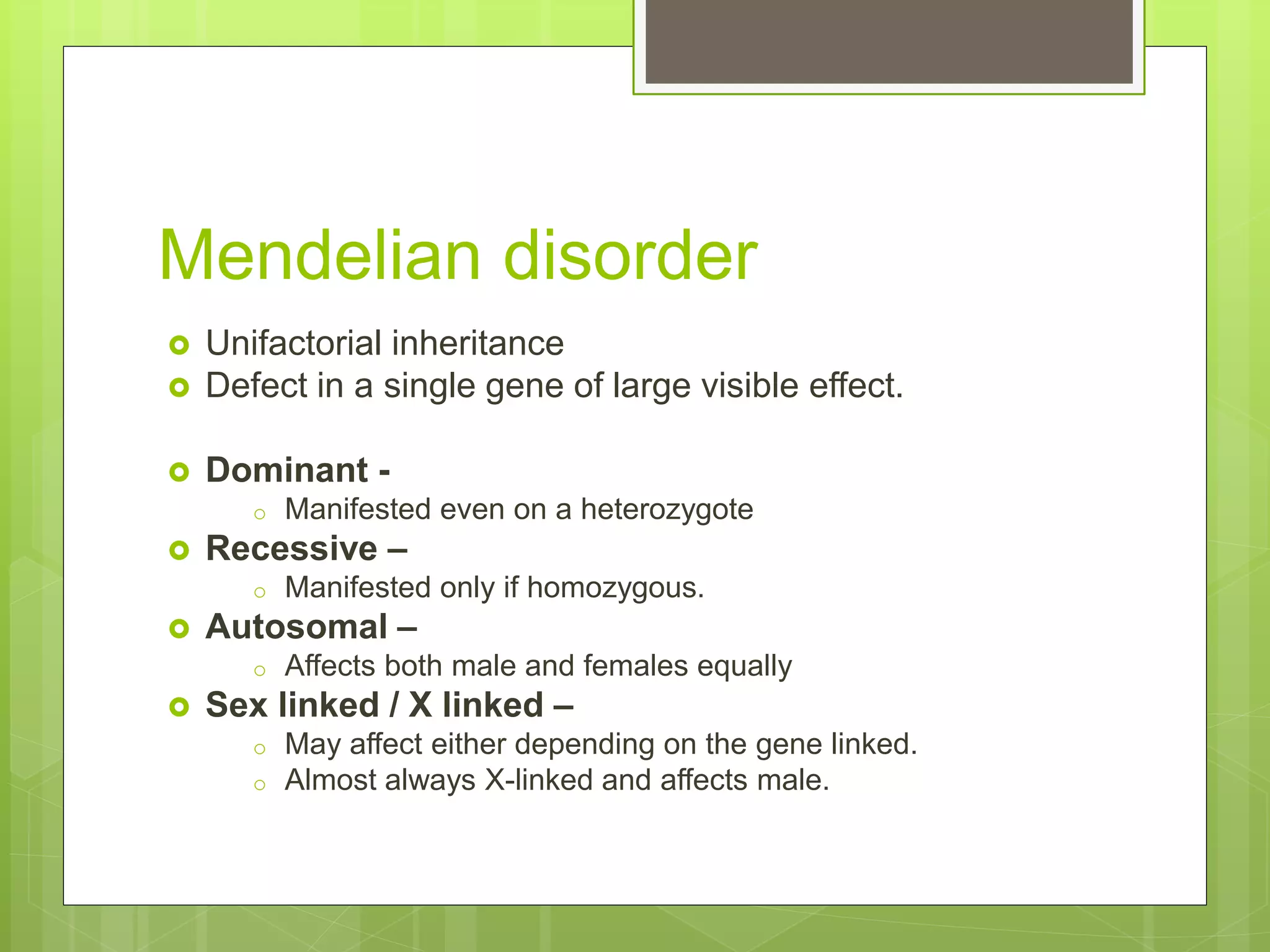
Mendelian disorder
 Unifactorial inheritance
 Defect in a single gene of large visible effect.
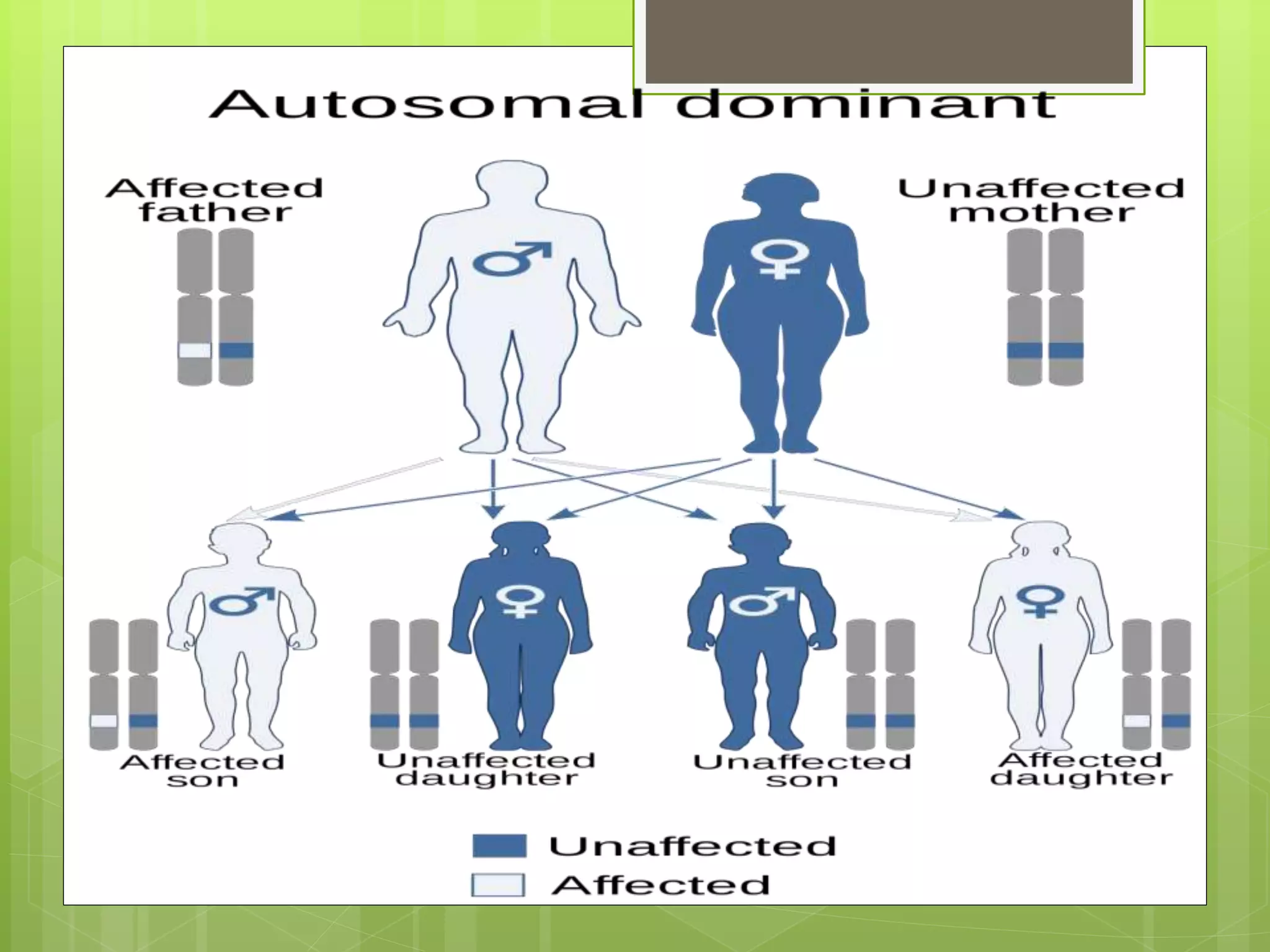
 Dominant -
o Manifested even on a heterozygote
 Recessive –
o Manifested only if homozygous.
 Autosomal –
o Affects both male and females equally
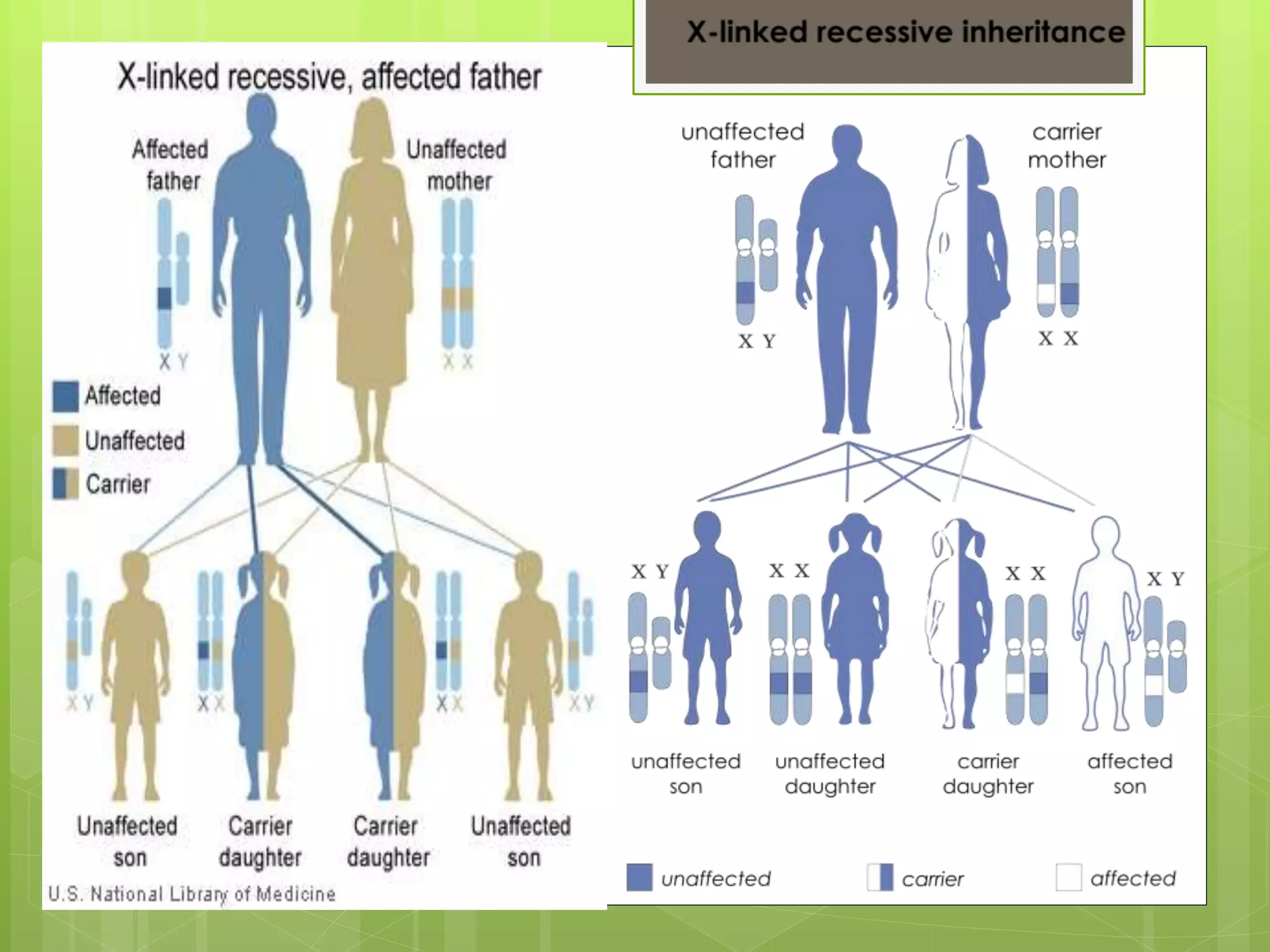
 Sex linked / X linked –
o May affect either depending on the gene linked.
o Almost always X-linked and affects male.
1. Autosomal dominant:
 Familial hypercholesterolemia
 Polycystic Kidney Disease
 Hereditary spherocytosis
 Von Willebrand’s disease
2. Autosomal recessive:
 Thalassaemia
 Sickle cell anaemia
 Cystic fibrosis
 Alpha 1 antitrypsin deficiency
 Glycogen storage disorder
 Neurogenic muscular
atrophies
 Spinal muscular atrophy
 Congenital adrenal
hyperplasia.
3. X-linked recessive
 Haemophilia A
 Haemophilia B (X-mas
disease)
 G6PD deficiency
 Nephrogenic diabetes
insipidus
4. X-linked dominant
 Vitamin D resistant rickets.
Examples
Multifactorial disorders
 Polygenic inheritance
 2 or more genes + environmental factors
 Examples –
 Congenital heart diseases
 Coronary heart diseases
 Essential hypertention
 Diabetes mellitus
 Cleft palate or lip
 Pyronic stenosis
Cytogenic/ chromosomal
disorders
 Aberrations in the number or structure of chromosomes.
 Haploid / polyploidy (69XX, 92XX)
 Aneuploidy (47XXY)
 Autosomal disorders:
 Trisomy 21/ Down’s Syndrome
 Trisomy 18/ Edward’s Syndrome
 Trisomy 13/ Patau’s syndrome
 Cri du Chat syndrome (missing part of 5th chromosome)
 Sex chromosomal disorders:
 Klinefelter’s syndrome (47XXY)
 Turner’s syndrome (45 XO)
 Triple X syndrome (47 XXX)
 47 XYY – has normal phenotype
Patau’s Down’s
Klinefelter’s Syndrome
Turner’s Syndrome
47 XXX
6. genetic disorder

6. genetic disorder

  • 1.
  • 2.
    Genetic Disorder Caused bya mutation of a gene, group of genes or an entire chromosome. The mutation or defect is inherited.  Classification: 1. Single gene defect (mendelian disorder) 1. Autosomal (dominant/ recessive) 2. Sex linked (dominant/ recessive) 2. Multifactorial 3. Cytogenic or chromosomal
  • 3.
     Chromosome-  Carrierof DNA with hereditary information.  Normal somatic cell contains 46 chromosomes  2x 23 pairs  22 pairs autosomes and 1 pair sex chromosomes.  Male – XY  Female – XX  Gene-  Unit of inheritance of character.  Mutation-  Permanent change in the DNA
  • 4.
    Mendelian disorder  Unifactorialinheritance  Defect in a single gene of large visible effect.  Dominant - o Manifested even on a heterozygote  Recessive – o Manifested only if homozygous.  Autosomal – o Affects both male and females equally  Sex linked / X linked – o May affect either depending on the gene linked. o Almost always X-linked and affects male.
  • 9.
    1. Autosomal dominant: Familial hypercholesterolemia  Polycystic Kidney Disease  Hereditary spherocytosis  Von Willebrand’s disease 2. Autosomal recessive:  Thalassaemia  Sickle cell anaemia  Cystic fibrosis  Alpha 1 antitrypsin deficiency  Glycogen storage disorder  Neurogenic muscular atrophies  Spinal muscular atrophy  Congenital adrenal hyperplasia. 3. X-linked recessive  Haemophilia A  Haemophilia B (X-mas disease)  G6PD deficiency  Nephrogenic diabetes insipidus 4. X-linked dominant  Vitamin D resistant rickets. Examples
  • 10.
    Multifactorial disorders  Polygenicinheritance  2 or more genes + environmental factors  Examples –  Congenital heart diseases  Coronary heart diseases  Essential hypertention  Diabetes mellitus  Cleft palate or lip  Pyronic stenosis
  • 11.
    Cytogenic/ chromosomal disorders  Aberrationsin the number or structure of chromosomes.  Haploid / polyploidy (69XX, 92XX)  Aneuploidy (47XXY)  Autosomal disorders:  Trisomy 21/ Down’s Syndrome  Trisomy 18/ Edward’s Syndrome  Trisomy 13/ Patau’s syndrome  Cri du Chat syndrome (missing part of 5th chromosome)  Sex chromosomal disorders:  Klinefelter’s syndrome (47XXY)  Turner’s syndrome (45 XO)  Triple X syndrome (47 XXX)  47 XYY – has normal phenotype
  • 12.
  • 15.
  • 16.
  • 17.