REMEDIAL BIOLOGY(B.PHARM 1STSEM)
By Karan Sharma
Assistant Professor
Topic:- CLASSIFICATION OF PLANT(Chapter 1)
Remedial Biology:- It is branch of science which deal with study of living organisms and
their function.
Plant:- Plants are predominantly photosynthetic eukaryotes of the kingdom Plantae
:- Plants are all unique regarding physical appearance,structure and physiological behavior.
:- also vary in habitats, tolerance, and nutrient requirement
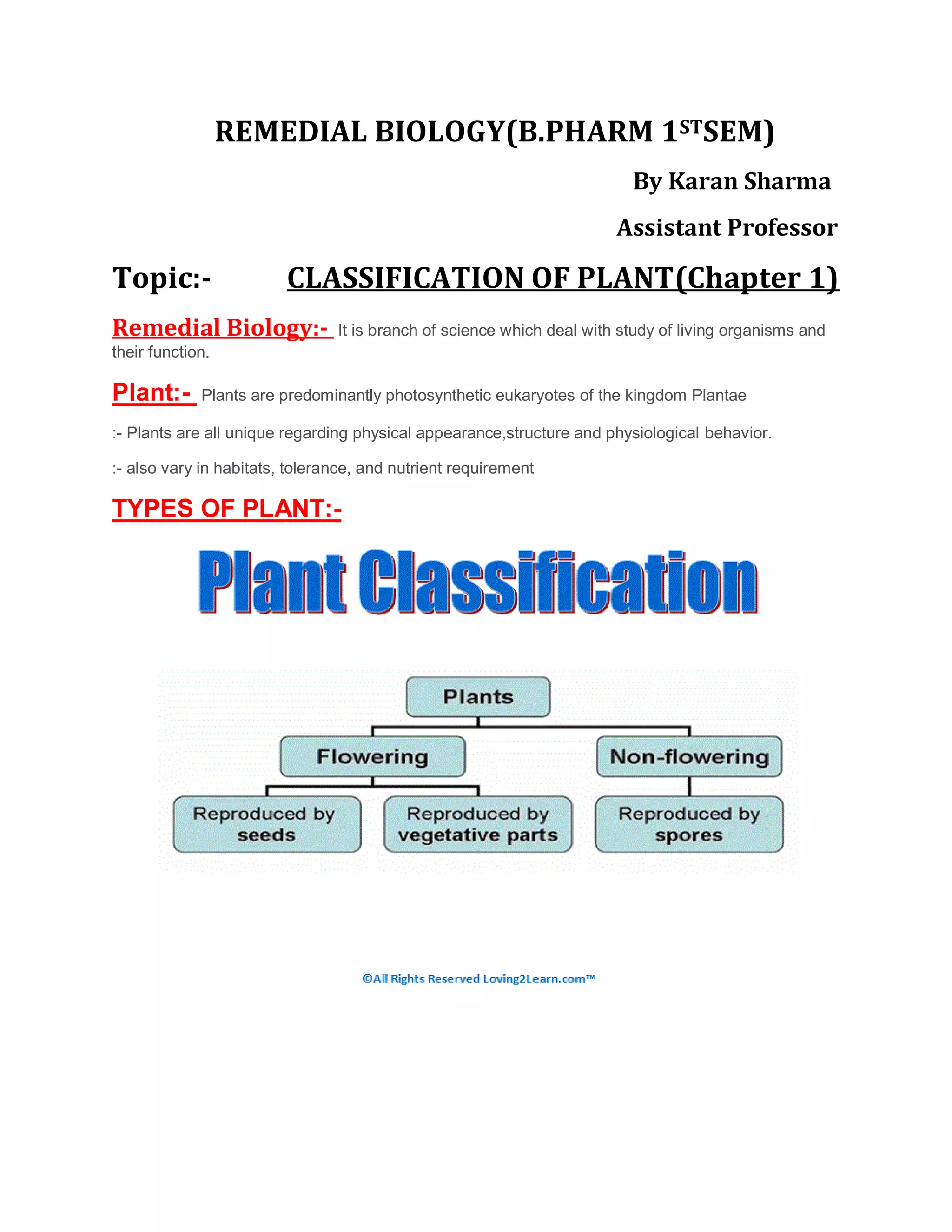
TYPES OF PLANT:-
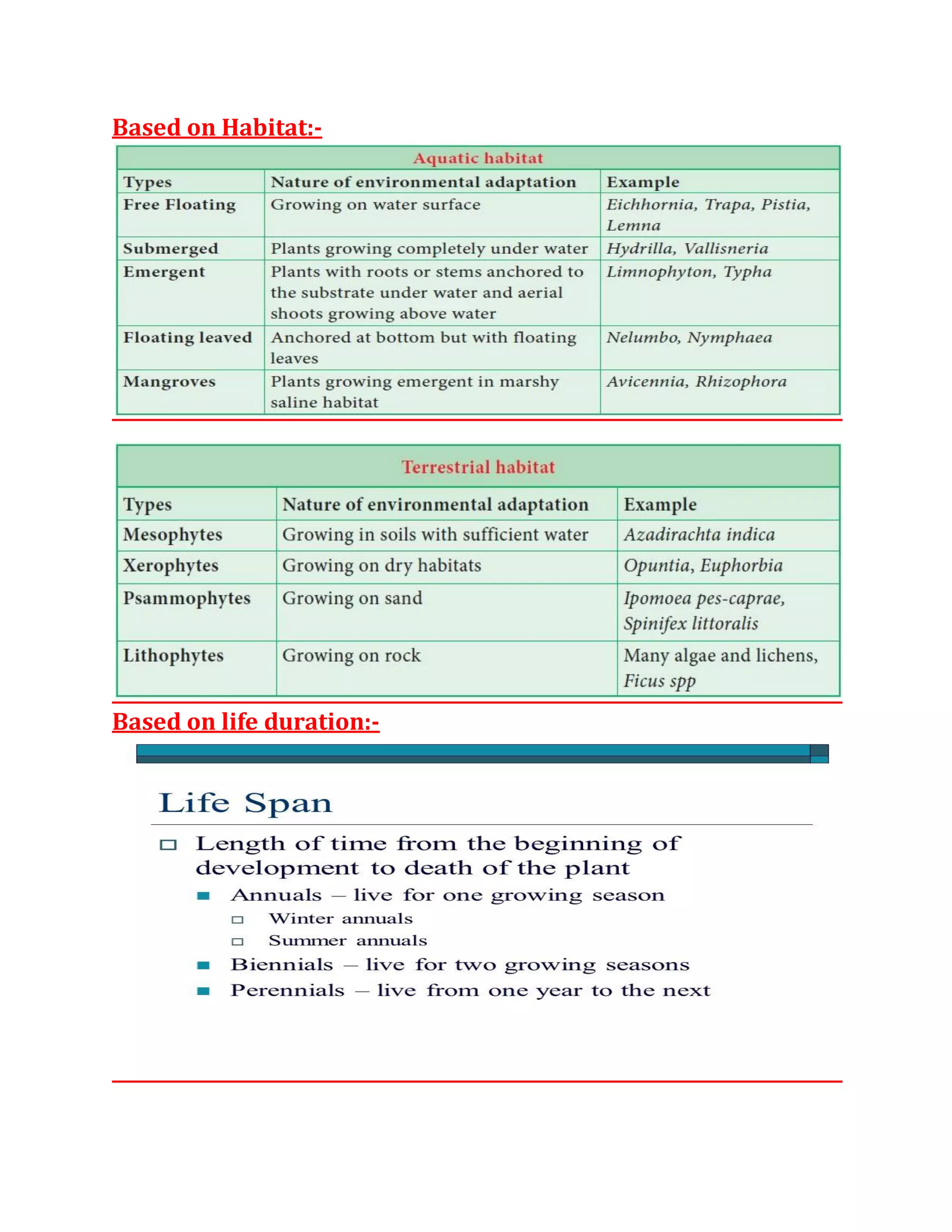
Based on Habitat:-
Based on life duration:-
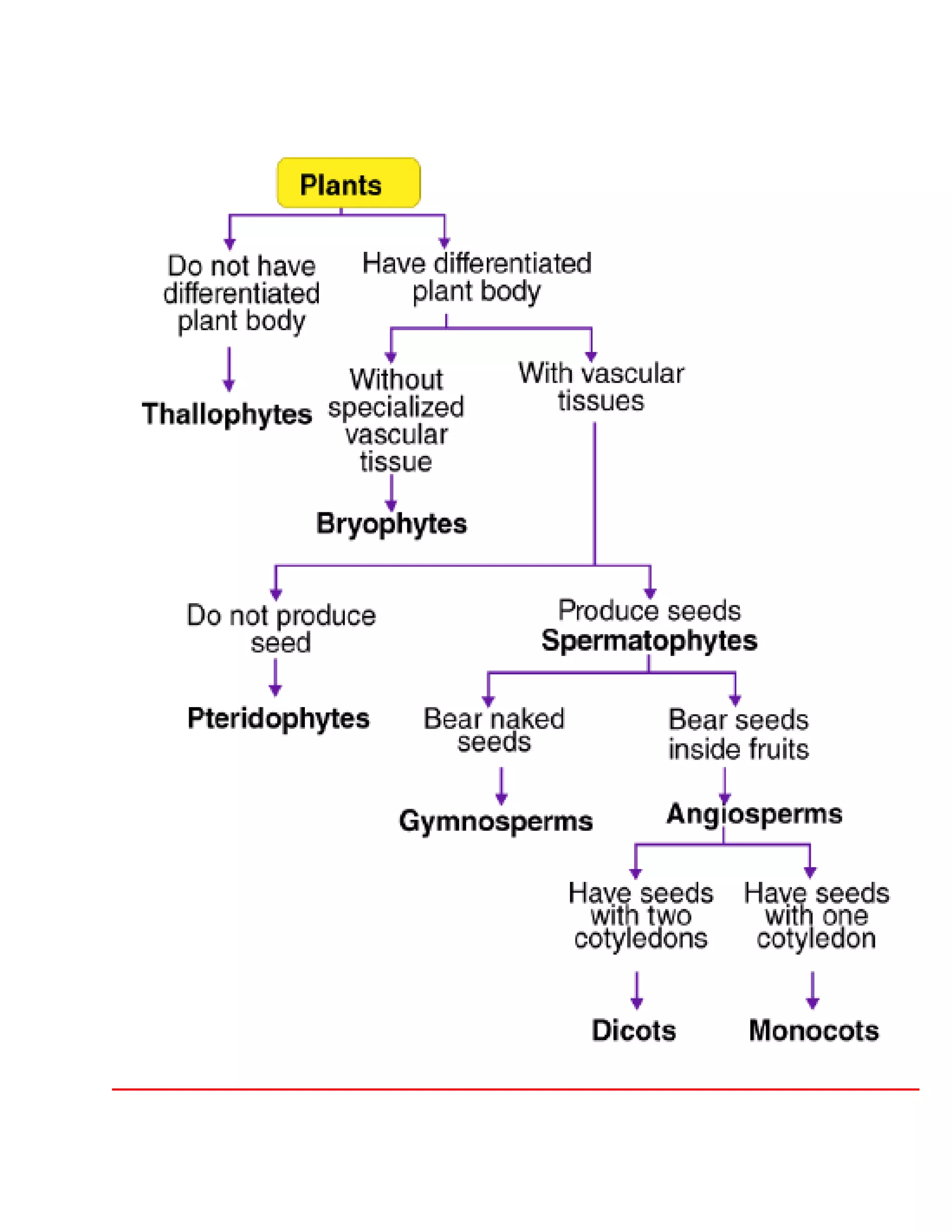
Based on plant habits or body:-
Plant Kingdom:-
 Characteristic features of Plant Kingdom
These living organisms are made of eukaryotic cells and
are multicellular. The cells have a cell wall which is made of cellulose.
These are autotrophic and synthesize food by photosynthesis due to the
presence of chloroplasts.
 CLASSIFICATION OF PLANT KINGDOM
Based on whether plants have a well-differentiated body and the
presence or absence of specialized tissues for transport, and the ability
to bear seeds Kingdom Plantae (Plant Kingdom) is can be classified into
different divisions. The features and examples of each division are
mentioned hereunder.
1.DIVISION THALLOPHYTA
These are the lowermost plants of the plant kingdom, without a well-
differentiated body design. This means that the plant body is not
differentiated as roots, stem, and leaves. They are commonly
called algae, are permanently aquatic.
2.DIVISION BRYOPHYTA
These are small terrestrial plants. They show differentiation in the body
design, with stem, leaf-like structures, and root-like structures. But, they
do not have any specialized tissue to conduct water and other
substances. They live in damp and sandy habitats and are often referred
to as the amphibians of the plant kingdom. Examples are RICCIA,
FUNARIA, AND MARCHANTIA
3.DIVISION PTERIDOPHYTA
These are supposed to be the oldest vascular plants. The plant body is
differentiated into roots, stem, and leaves, apart from having a
specialized tissue for conduction. This tissue helps in the conduction of
water and other substances from part of the plant to the other.
These plants have naked embryos called spores. The reproductive
organs in these plants are inconspicuous. Examples: MARSELIA,
FERNS
(SOURCE: WIKIPEDIA)
4.DIVISION PHANEROGAMAE
Phanerogams are seed-bearing plants. The plant body is well
differentiated with stem, leaves, and roots. There are well differentiated
reproductive tissues that produce seeds. These plants also have a well-
developed vascular system. Depending on whether the seeds produced
are naked or whether they are enclosed, phanerogams are further
classified into two subdivisions. They
are Gymnosperms and Angiosperms
5.GYMNOSPERMS
Gymnosperms are plants with naked seeds. There are about 650 living
species of gymnosperm plants. The plants are usually perineal,
evergreen and woody. They have a well-developed vascular tissue but
do not have vessels. The reproductive organs generally form cones or
strobilus. There is no fruit formation and the seeds are hence said to be
naked. Examples: CYCAS, PINUS, DEODAR
PINE CONE (WIKIMEDIA COMMONS
6.ANGIOSPERMS
Angiosperms are seed-bearing plants. Seeds develop inside tissues that
get modified to form the fruit of the plant. Also called the flowering
plants, they are found abundantly in nature. These plants are usually
terrestrial and they may be annual, biennial or perennial. The vascular
system is very well developed with xylem and phloem. Angiosperms
also show the feature of double fertilization. Examples: MUSTARD
PLANT, PEA PLANT.
On the basis of the cotyledons (seed leaves) Angiosperms are further
divided into Monocotyledonous plants and Dicotyledonous plants.
Monocots have seeds with single seed leaf, having vascular bundles
arranged in a complex manner. Dicots, on the other hand, have two
cotyledons. The vascular bundle is arranged in a ring.
CHAPTER OVER

B PHARMA REMEDIAL BIOLOGY Chapter 1.pdf

  • 1.
    REMEDIAL BIOLOGY(B.PHARM 1STSEM) ByKaran Sharma Assistant Professor Topic:- CLASSIFICATION OF PLANT(Chapter 1) Remedial Biology:- It is branch of science which deal with study of living organisms and their function. Plant:- Plants are predominantly photosynthetic eukaryotes of the kingdom Plantae :- Plants are all unique regarding physical appearance,structure and physiological behavior. :- also vary in habitats, tolerance, and nutrient requirement TYPES OF PLANT:-
  • 2.
    Based on Habitat:- Basedon life duration:-
  • 3.
    Based on planthabits or body:- Plant Kingdom:-
  • 5.
     Characteristic featuresof Plant Kingdom These living organisms are made of eukaryotic cells and are multicellular. The cells have a cell wall which is made of cellulose. These are autotrophic and synthesize food by photosynthesis due to the presence of chloroplasts.  CLASSIFICATION OF PLANT KINGDOM Based on whether plants have a well-differentiated body and the presence or absence of specialized tissues for transport, and the ability to bear seeds Kingdom Plantae (Plant Kingdom) is can be classified into different divisions. The features and examples of each division are mentioned hereunder. 1.DIVISION THALLOPHYTA These are the lowermost plants of the plant kingdom, without a well- differentiated body design. This means that the plant body is not differentiated as roots, stem, and leaves. They are commonly called algae, are permanently aquatic. 2.DIVISION BRYOPHYTA These are small terrestrial plants. They show differentiation in the body design, with stem, leaf-like structures, and root-like structures. But, they do not have any specialized tissue to conduct water and other substances. They live in damp and sandy habitats and are often referred to as the amphibians of the plant kingdom. Examples are RICCIA, FUNARIA, AND MARCHANTIA 3.DIVISION PTERIDOPHYTA
  • 6.
    These are supposedto be the oldest vascular plants. The plant body is differentiated into roots, stem, and leaves, apart from having a specialized tissue for conduction. This tissue helps in the conduction of water and other substances from part of the plant to the other. These plants have naked embryos called spores. The reproductive organs in these plants are inconspicuous. Examples: MARSELIA, FERNS (SOURCE: WIKIPEDIA) 4.DIVISION PHANEROGAMAE Phanerogams are seed-bearing plants. The plant body is well differentiated with stem, leaves, and roots. There are well differentiated reproductive tissues that produce seeds. These plants also have a well- developed vascular system. Depending on whether the seeds produced are naked or whether they are enclosed, phanerogams are further classified into two subdivisions. They are Gymnosperms and Angiosperms 5.GYMNOSPERMS Gymnosperms are plants with naked seeds. There are about 650 living species of gymnosperm plants. The plants are usually perineal, evergreen and woody. They have a well-developed vascular tissue but
  • 7.
    do not havevessels. The reproductive organs generally form cones or strobilus. There is no fruit formation and the seeds are hence said to be naked. Examples: CYCAS, PINUS, DEODAR PINE CONE (WIKIMEDIA COMMONS 6.ANGIOSPERMS Angiosperms are seed-bearing plants. Seeds develop inside tissues that get modified to form the fruit of the plant. Also called the flowering plants, they are found abundantly in nature. These plants are usually terrestrial and they may be annual, biennial or perennial. The vascular system is very well developed with xylem and phloem. Angiosperms also show the feature of double fertilization. Examples: MUSTARD PLANT, PEA PLANT. On the basis of the cotyledons (seed leaves) Angiosperms are further divided into Monocotyledonous plants and Dicotyledonous plants. Monocots have seeds with single seed leaf, having vascular bundles arranged in a complex manner. Dicots, on the other hand, have two cotyledons. The vascular bundle is arranged in a ring. CHAPTER OVER