FREE LIVING AND
SYMBIOTIC NITROGEN
FIXERS
I PG MICROBIOLOGY
SRCW
17-10-2023 SRCW I PG MICROBIOLOGY 1
17-10-2023 SRCW I PG MICROBIOLOGY 2
NITROGEN FIXING BACTERIA
17-10-2023 SRCW I PG MICROBIOLOGY 3
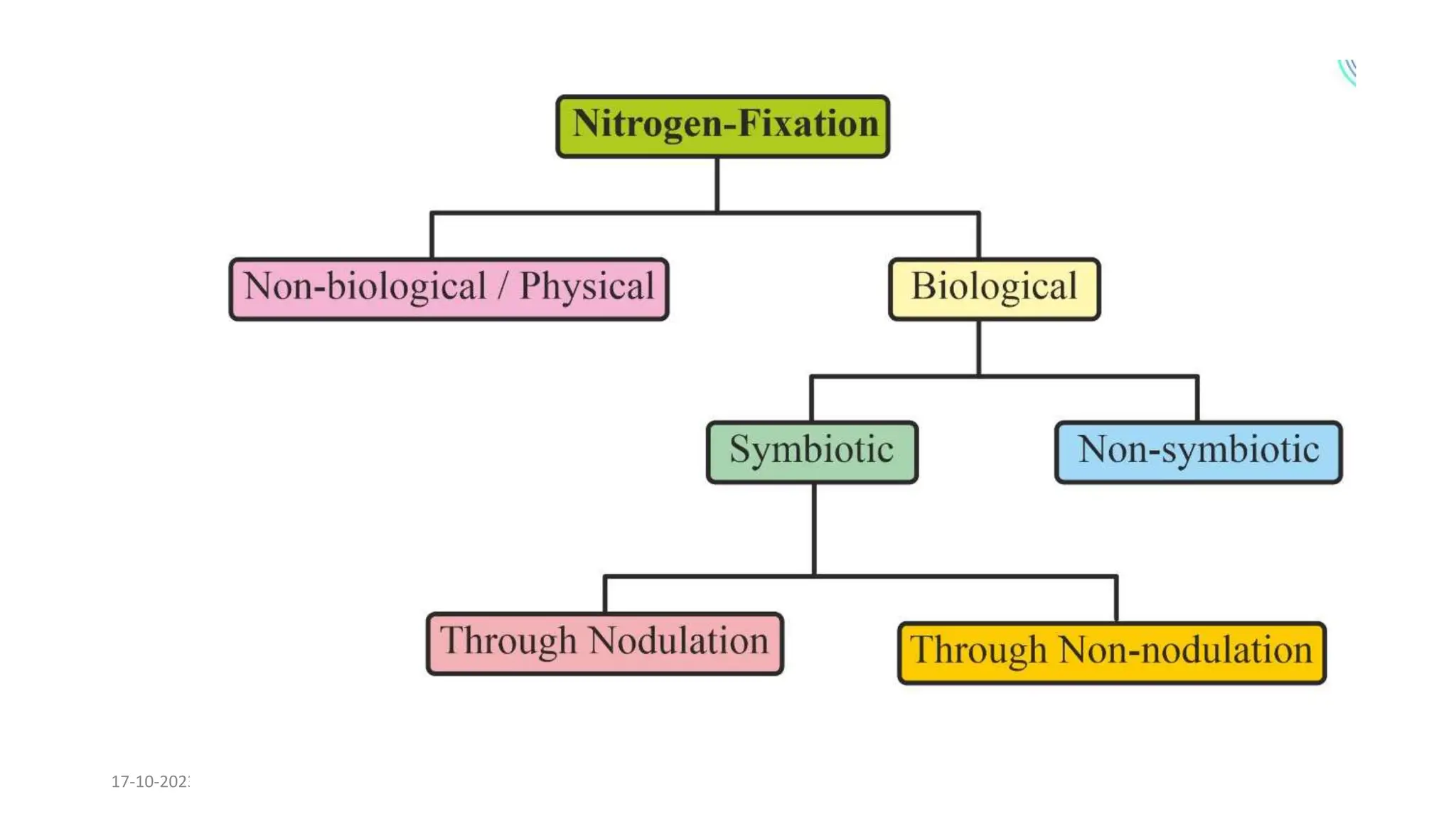
17-10-2023 SRCW I PG MICROBIOLOGY 4
AZOTOBACTER
1
• Nitrogen – basis of
amino acids,
proteins,
hormones and
many vitamins
2
• Conversion of
atmospheric
nitrogen gas to
fixed nitrogen
(inorganic –
ammonia)-
Nitrogen Fixation
3
• Reduction of
atmospheric
nitrogen by living
organisms –
Biological
nitrogen fixation
INTRODUCTION
17-10-2023 SRCW I PG MICROBIOLOGY 5
NITROGEN
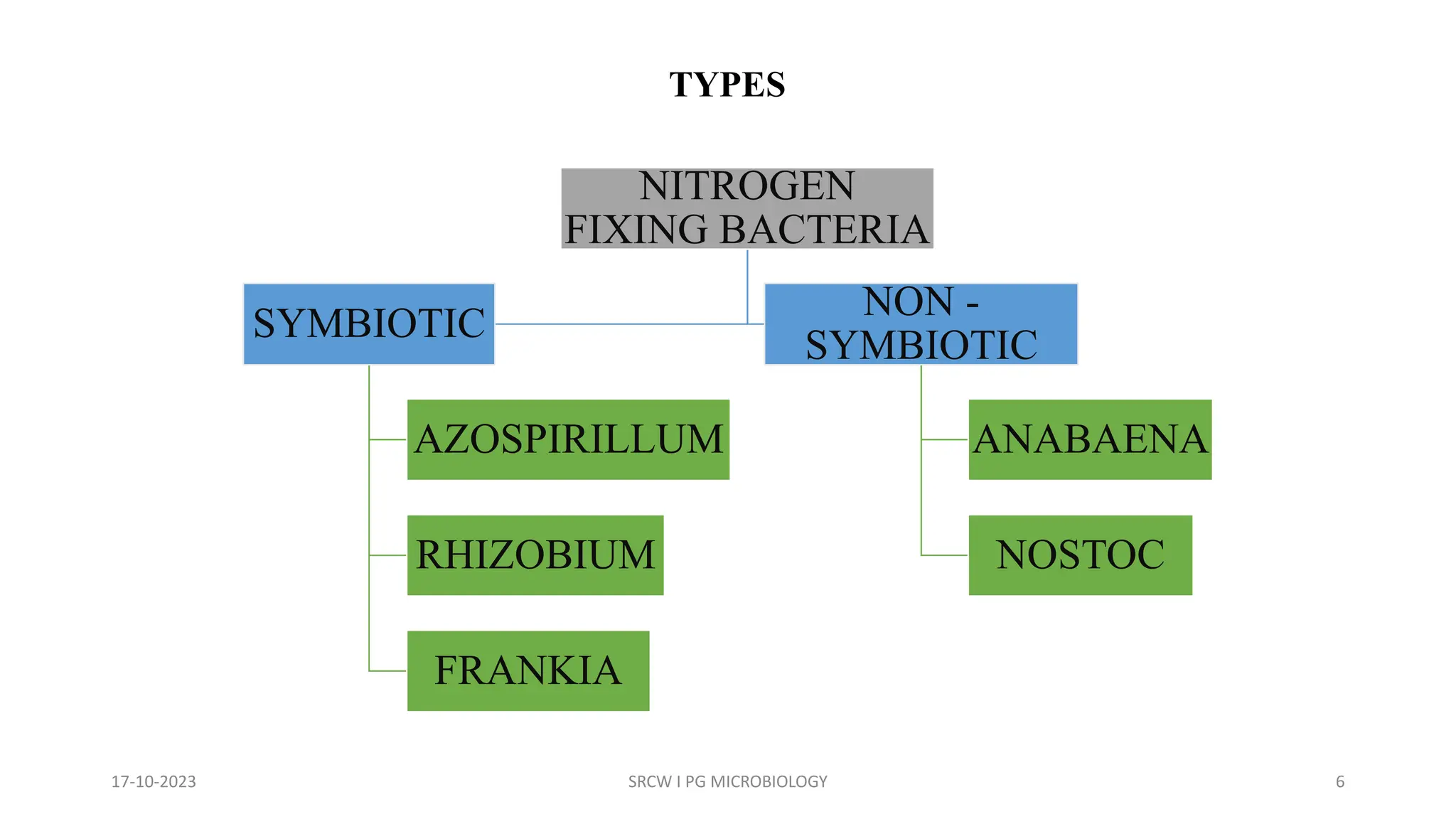
FIXING BACTERIA
SYMBIOTIC
AZOSPIRILLUM
RHIZOBIUM
FRANKIA
NON -
SYMBIOTIC
ANABAENA
NOSTOC
TYPES
17-10-2023 SRCW I PG MICROBIOLOGY 6
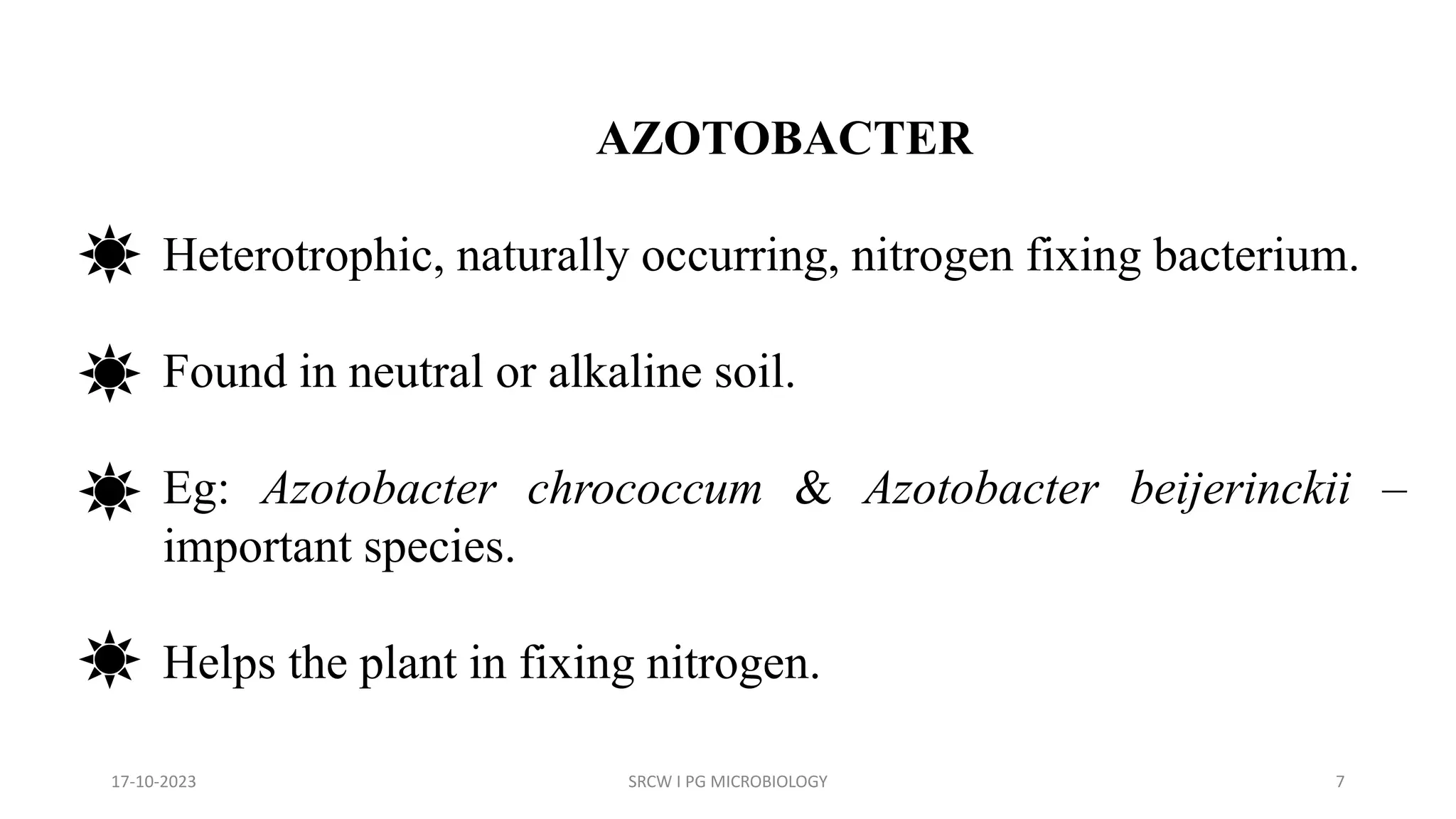
AZOTOBACTER
Heterotrophic, naturally occurring, nitrogen fixing bacterium.
Found in neutral or alkaline soil.
Eg: Azotobacter chrococcum & Azotobacter beijerinckii –
important species.
Helps the plant in fixing nitrogen.
17-10-2023 SRCW I PG MICROBIOLOGY 7
Converts – N2
to Ammonia
Found in
rhizosphere of
crops – rice,
maize,
sugarcane,
vegetables
Seeds
inoculated with
Azotobacter –
aid uptake of
nutrients (N, P)
in wheat
They have the
potential to
improve plant
nutrition
AZOTOBACTER
17-10-2023 SRCW I PG MICROBIOLOGY 8
17-10-2023 SRCW I PG MICROBIOLOGY 9
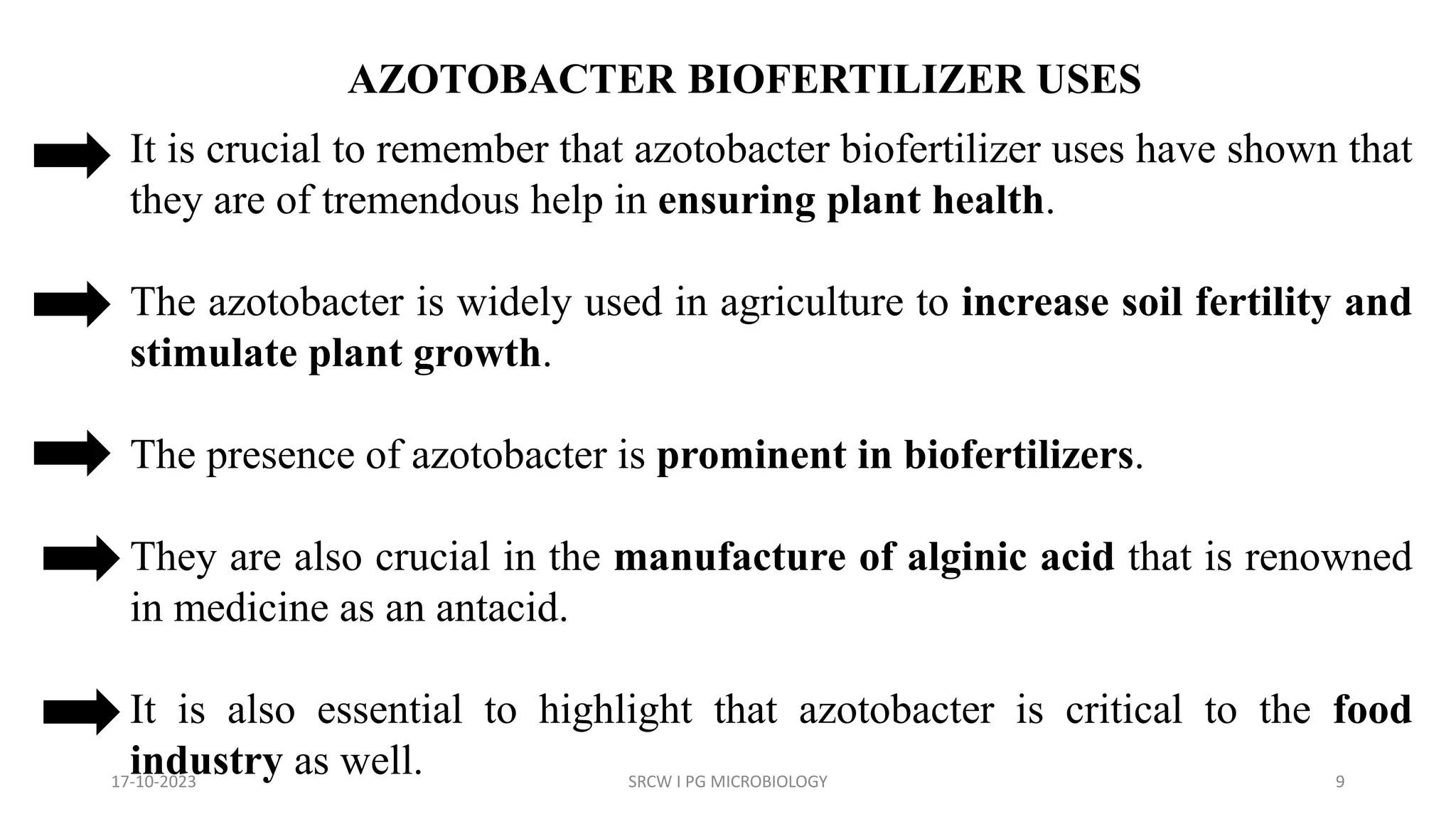
AZOTOBACTER BIOFERTILIZER USES
It is crucial to remember that azotobacter biofertilizer uses have shown that
they are of tremendous help in ensuring plant health.
The azotobacter is widely used in agriculture to increase soil fertility and
stimulate plant growth.
The presence of azotobacter is prominent in biofertilizers.
They are also crucial in the manufacture of alginic acid that is renowned
in medicine as an antacid.
It is also essential to highlight that azotobacter is critical to the food
industry as well.
AZOTOBACTER - CHARACTERISTICS
1
• Highly efficient for plant health
2
• Rod shape
• Gram negative bacteria
3
• Has flagellum
4
• Survive in harsh conditions – by forming
cysts
17-10-2023 SRCW I PG MICROBIOLOGY 10
17-10-2023 SRCW I PG MICROBIOLOGY 11
AZOSPIRILLUM
Azospirillum is a plant growth-promoting diazotroph.
It is a free-living, gram-negative bacteria.
They are rod shaped and do not produce spores.
They are microaerophilic, i.e., they are aerobic but can survive
under low oxygen conditions as well.
They are found in freshwater and in close association with plant
roots in soil habitats. It is the plant growth-promoting bacteria
(PGPB)
17-10-2023 SRCW I PG MICROBIOLOGY 12
17-10-2023 SRCW I PG MICROBIOLOGY 13
•They secrete plant hormones that make the root grow more branches
and root hairs.
•It makes nutrients such as nitrogen and phosphorus more available to
the plants.
•It also produces antioxidants that protect the plants in stressful
conditions.
•It competes with disease-causing microbes, making the plant less
susceptible to diseases.
CHARACTERISTICS
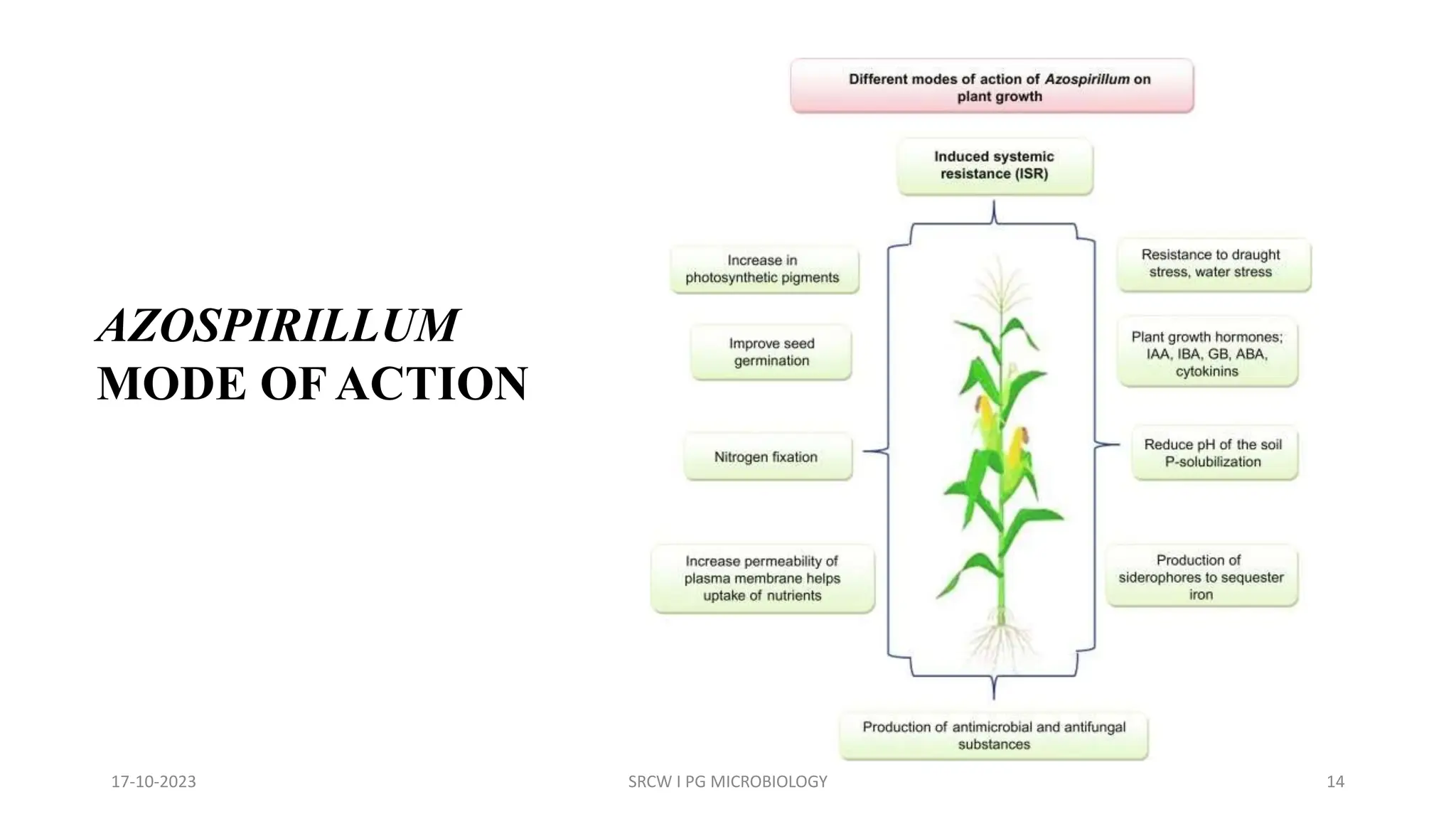
17-10-2023 SRCW I PG MICROBIOLOGY 14
AZOSPIRILLUM
MODE OF ACTION
17-10-2023 SRCW I PG MICROBIOLOGY 15
Azotobacter Azospirillum
Description
Azotobacter is an aerobic, soil-dwelling bacteria. Azospirillum is microaerophilic and surface colonising bacteria.
Oxygen Requirement
They are aerobic bacteria and require high oxygen concentration for
them to function.
They are aerobic, but are also microaerophilic and can survive in low
oxygen conditions.
Shape of Bacteria
Oval or spherical shape. Oblong-rod shaped.
Formation of Cysts
They form cysts to protect themselves from harsh environmental
conditions.
No formation of cysts.
Functions
It functions mainly as a nitrogen fixer, also useful in the production
of biofertilisers and biopolymers.
It is mainly useful as a plant growth-promoting bacteria.
Family of the Bacteria
Pseudomonadaceae Azospirillaceae
Temperature for Growth
20°C to 30°C 5°C to 42°C
DIFFERENCE
17-10-2023 SRCW I PG MICROBIOLOGY 16
MARKET PRODUCTS

AZOTOBACTER & AZOSPIRIILUM.pptx

  • 1.
    FREE LIVING AND SYMBIOTICNITROGEN FIXERS I PG MICROBIOLOGY SRCW 17-10-2023 SRCW I PG MICROBIOLOGY 1
  • 2.
    17-10-2023 SRCW IPG MICROBIOLOGY 2 NITROGEN FIXING BACTERIA
  • 3.
    17-10-2023 SRCW IPG MICROBIOLOGY 3
  • 4.
    17-10-2023 SRCW IPG MICROBIOLOGY 4 AZOTOBACTER
  • 5.
    1 • Nitrogen –basis of amino acids, proteins, hormones and many vitamins 2 • Conversion of atmospheric nitrogen gas to fixed nitrogen (inorganic – ammonia)- Nitrogen Fixation 3 • Reduction of atmospheric nitrogen by living organisms – Biological nitrogen fixation INTRODUCTION 17-10-2023 SRCW I PG MICROBIOLOGY 5
  • 6.
  • 7.
    AZOTOBACTER Heterotrophic, naturally occurring,nitrogen fixing bacterium. Found in neutral or alkaline soil. Eg: Azotobacter chrococcum & Azotobacter beijerinckii – important species. Helps the plant in fixing nitrogen. 17-10-2023 SRCW I PG MICROBIOLOGY 7
  • 8.
    Converts – N2 toAmmonia Found in rhizosphere of crops – rice, maize, sugarcane, vegetables Seeds inoculated with Azotobacter – aid uptake of nutrients (N, P) in wheat They have the potential to improve plant nutrition AZOTOBACTER 17-10-2023 SRCW I PG MICROBIOLOGY 8
  • 9.
    17-10-2023 SRCW IPG MICROBIOLOGY 9 AZOTOBACTER BIOFERTILIZER USES It is crucial to remember that azotobacter biofertilizer uses have shown that they are of tremendous help in ensuring plant health. The azotobacter is widely used in agriculture to increase soil fertility and stimulate plant growth. The presence of azotobacter is prominent in biofertilizers. They are also crucial in the manufacture of alginic acid that is renowned in medicine as an antacid. It is also essential to highlight that azotobacter is critical to the food industry as well.
  • 10.
    AZOTOBACTER - CHARACTERISTICS 1 •Highly efficient for plant health 2 • Rod shape • Gram negative bacteria 3 • Has flagellum 4 • Survive in harsh conditions – by forming cysts 17-10-2023 SRCW I PG MICROBIOLOGY 10
  • 11.
    17-10-2023 SRCW IPG MICROBIOLOGY 11 AZOSPIRILLUM Azospirillum is a plant growth-promoting diazotroph. It is a free-living, gram-negative bacteria. They are rod shaped and do not produce spores. They are microaerophilic, i.e., they are aerobic but can survive under low oxygen conditions as well. They are found in freshwater and in close association with plant roots in soil habitats. It is the plant growth-promoting bacteria (PGPB)
  • 12.
    17-10-2023 SRCW IPG MICROBIOLOGY 12
  • 13.
    17-10-2023 SRCW IPG MICROBIOLOGY 13 •They secrete plant hormones that make the root grow more branches and root hairs. •It makes nutrients such as nitrogen and phosphorus more available to the plants. •It also produces antioxidants that protect the plants in stressful conditions. •It competes with disease-causing microbes, making the plant less susceptible to diseases. CHARACTERISTICS
  • 14.
    17-10-2023 SRCW IPG MICROBIOLOGY 14 AZOSPIRILLUM MODE OF ACTION
  • 15.
    17-10-2023 SRCW IPG MICROBIOLOGY 15 Azotobacter Azospirillum Description Azotobacter is an aerobic, soil-dwelling bacteria. Azospirillum is microaerophilic and surface colonising bacteria. Oxygen Requirement They are aerobic bacteria and require high oxygen concentration for them to function. They are aerobic, but are also microaerophilic and can survive in low oxygen conditions. Shape of Bacteria Oval or spherical shape. Oblong-rod shaped. Formation of Cysts They form cysts to protect themselves from harsh environmental conditions. No formation of cysts. Functions It functions mainly as a nitrogen fixer, also useful in the production of biofertilisers and biopolymers. It is mainly useful as a plant growth-promoting bacteria. Family of the Bacteria Pseudomonadaceae Azospirillaceae Temperature for Growth 20°C to 30°C 5°C to 42°C DIFFERENCE
  • 16.
    17-10-2023 SRCW IPG MICROBIOLOGY 16 MARKET PRODUCTS