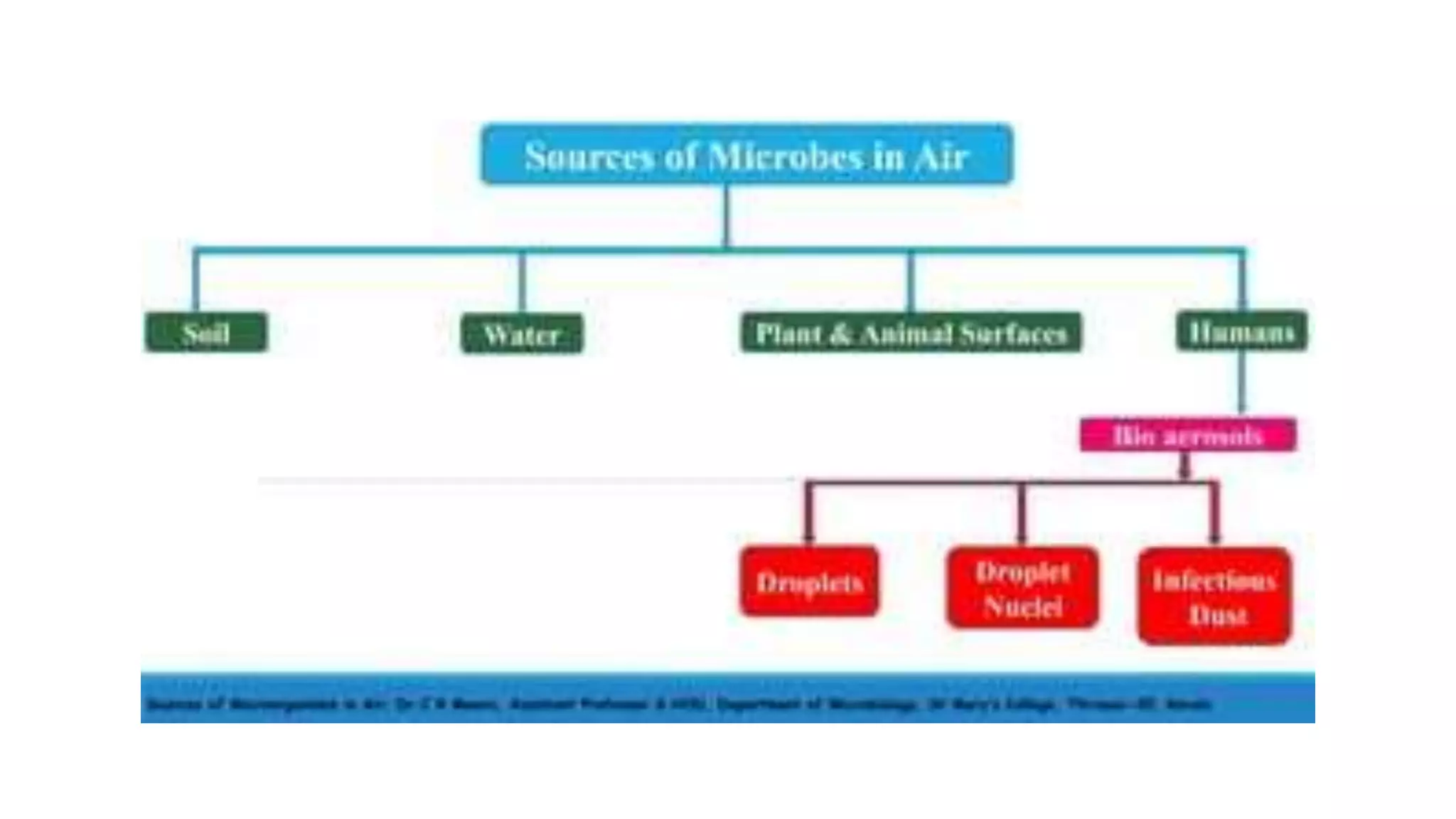
This document discusses the sources and forms of discharge of airborne microbes. It outlines that microbes can become airborne from soil, water, wind and tides, and human activities like coughing or sneezing. Microbes are expelled in three forms: droplets from sneezing or coughing that are large and fall quickly from the air; droplet nuclei that remain after droplets evaporate and are very small, remaining airborne for hours; and infectious dust particles that form when droplets dry on surfaces and become re-aerosolized. The size and moisture content of expelled particles determines how long microbes remain suspended in the air.