PALKAR OMKAR SANTOSH
TE MECHANICAL
ROLL NO 10ME032
Guided By
Prof. R.R.Mane
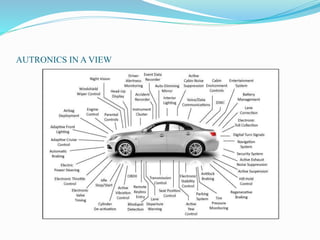
AUTRONICS IN A VIEW
INTRODUCTION
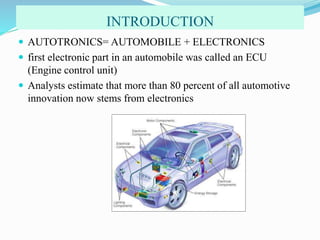
 AUTOTRONICS= AUTOMOBILE + ELECTRONICS
 first electronic part in an automobile was called an ECU
(Engine control unit)
 Analysts estimate that more than 80 percent of all automotive
innovation now stems from electronics
HISTORY:
 TIMELINE:
 1970’s: Introduction of electronics for engine controls
 1980’s: Anti-lock braking introduced
 Early 1990’s: Airbags become standard
 Late 1990’s: Rapid expansion of body electronics – seat motors (body
 Computers), instrument panel lighting, auto locking systems and
keyless entry
 Early 2000’s to date: infotainment, including sophisticated audio and
video ; Signals sent via satellite (such as the OnStar System); GPS and
mapping Capabilities; satellite radio
 Late 2000’s: Steer-by-wire, wireless connectivity
 This seminar describes automobile applications of
autotronics in following domains:
• Braking system
 Steering system
 Suspension system
 Transmission system
 Engine (fuel intake)
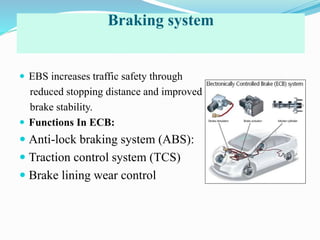
Braking system
 EBS increases traffic safety through
reduced stopping distance and improved
brake stability.
 Functions In ECB:
 Anti-lock braking system (ABS):
 Traction control system (TCS)
 Brake lining wear control
 ABS:
 ABS is an acronym for anti-lock braking system. First developed and
patented in 1936, ABS is actually derived from the German term "anti
blockier system."
 Anti-lock brakes are designed to prevent skidding and help drivers
maintain steering control during an emergency stopping situation
 Difference between ABS & Traction Control
 ABS
manage the grip of the tires for braking maneuver
 Traction Control
manage the grip of the tires for accelerating maneuver
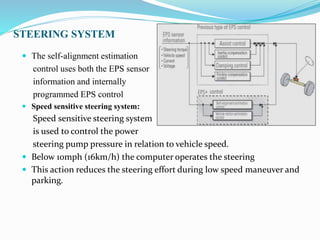
STEERING SYSTEM
 The self-alignment estimation
control uses both the EPS sensor
information and internally
programmed EPS control
 Speed sensitive steering system:
Speed sensitive steering system
is used to control the power
steering pump pressure in relation to vehicle speed.
 Below 10mph (16km/h) the computer operates the steering
 This action reduces the steering effort during low speed maneuver and
parking.
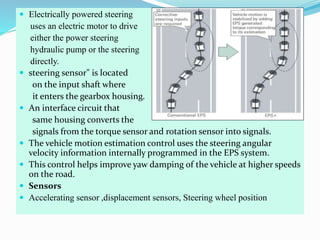
 Electrically powered steering
uses an electric motor to drive
either the power steering
hydraulic pump or the steering
directly.
 steering sensor" is located
on the input shaft where
it enters the gearbox housing.
 An interface circuit that
same housing converts the
signals from the torque sensor and rotation sensor into signals.
 The vehicle motion estimation control uses the steering angular
velocity information internally programmed in the EPS system.
 This control helps improve yaw damping of the vehicle at higher speeds
on the road.
 Sensors
 Accelerating sensor ,displacement sensors, Steering wheel position
SUSPENSION SYSTEM
 suspension systems in most vehicles on the road today are passive.
 Shock absorbers help to dissipate the energy applied to the springs and
damp the oscillations .
 Active Roll Control Systems :
 Vehicles lean when cornering due to the weight transfer imposed by
lateral acceleration. Factors contributing to the roll angle of the vehicle
include vehicle height and suspension stiffness.
 ARC system uses hydraulic and electronic technology to the vehicle roll
angle in cornering, which improves handling.
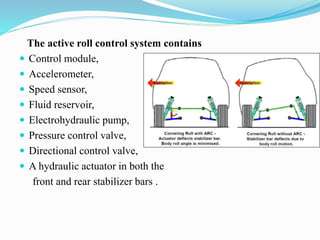
The active roll control system contains
 Control module,
 Accelerometer,
 Speed sensor,
 Fluid reservoir,
 Electrohydraulic pump,
 Pressure control valve,
 Directional control valve,
 A hydraulic actuator in both the
front and rear stabilizer bars .
TRANSMISSION SYSTEM
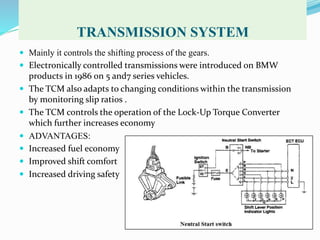
 Mainly it controls the shifting process of the gears.
 Electronically controlled transmissions were introduced on BMW
products in 1986 on 5 and7 series vehicles.
 The TCM also adapts to changing conditions within the transmission
by monitoring slip ratios .
 The TCM controls the operation of the Lock-Up Torque Converter
which further increases economy
 ADVANTAGES:
 Increased fuel economy
 Improved shift comfort
 Increased driving safety
Electronic Fuel Injection
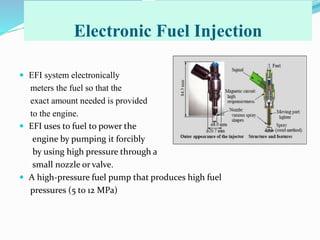
 EFI system electronically
meters the fuel so that the
exact amount needed is provided
to the engine.
 EFI uses to fuel to power the
engine by pumping it forcibly
by using high pressure through a
small nozzle or valve.
 A high-pressure fuel pump that produces high fuel
pressures (5 to 12 MPa)
ADAPTIVE CRUISE CONTROL
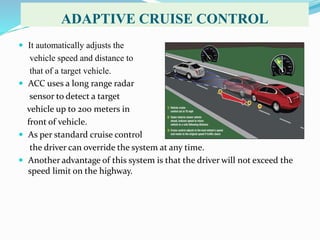
 It automatically adjusts the
vehicle speed and distance to
that of a target vehicle.
 ACC uses a long range radar
sensor to detect a target
vehicle up to 200 meters in
front of vehicle.
 As per standard cruise control
the driver can override the system at any time.
 Another advantage of this system is that the driver will not exceed the
speed limit on the highway.
Airbags
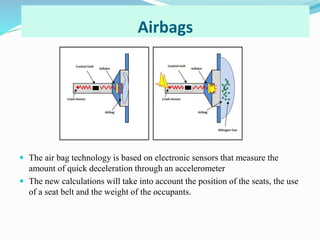
 The air bag technology is based on electronic sensors that measure the
amount of quick deceleration through an accelerometer
 The new calculations will take into account the position of the seats, the use
of a seat belt and the weight of the occupants.
Latest research
 Active bumper system,
 active hood lift system,
 vehicle to vehicle communication
 Camber thrust in F 1 vehicles
 Global Positioning System
 Rain sensing wipers
 Adaptive light system
CONCLUSION
 we briefly presented current and future vehicular
electronics system
 an approach that uses modern technique to solve most of
the local vehicular problems.
 the automobile industry and will likely continue as people
always want and expect more from their cars.
Autotronics

Autotronics

  • 1.
    PALKAR OMKAR SANTOSH TEMECHANICAL ROLL NO 10ME032 Guided By Prof. R.R.Mane
  • 2.
  • 3.
    INTRODUCTION  AUTOTRONICS= AUTOMOBILE+ ELECTRONICS  first electronic part in an automobile was called an ECU (Engine control unit)  Analysts estimate that more than 80 percent of all automotive innovation now stems from electronics
  • 4.
    HISTORY:  TIMELINE:  1970’s:Introduction of electronics for engine controls  1980’s: Anti-lock braking introduced  Early 1990’s: Airbags become standard  Late 1990’s: Rapid expansion of body electronics – seat motors (body  Computers), instrument panel lighting, auto locking systems and keyless entry  Early 2000’s to date: infotainment, including sophisticated audio and video ; Signals sent via satellite (such as the OnStar System); GPS and mapping Capabilities; satellite radio  Late 2000’s: Steer-by-wire, wireless connectivity
  • 5.
     This seminardescribes automobile applications of autotronics in following domains: • Braking system  Steering system  Suspension system  Transmission system  Engine (fuel intake)
  • 6.
    Braking system  EBSincreases traffic safety through reduced stopping distance and improved brake stability.  Functions In ECB:  Anti-lock braking system (ABS):  Traction control system (TCS)  Brake lining wear control
  • 7.
     ABS:  ABSis an acronym for anti-lock braking system. First developed and patented in 1936, ABS is actually derived from the German term "anti blockier system."  Anti-lock brakes are designed to prevent skidding and help drivers maintain steering control during an emergency stopping situation  Difference between ABS & Traction Control  ABS manage the grip of the tires for braking maneuver  Traction Control manage the grip of the tires for accelerating maneuver
  • 8.
    STEERING SYSTEM  Theself-alignment estimation control uses both the EPS sensor information and internally programmed EPS control  Speed sensitive steering system: Speed sensitive steering system is used to control the power steering pump pressure in relation to vehicle speed.  Below 10mph (16km/h) the computer operates the steering  This action reduces the steering effort during low speed maneuver and parking.
  • 9.
     Electrically poweredsteering uses an electric motor to drive either the power steering hydraulic pump or the steering directly.  steering sensor" is located on the input shaft where it enters the gearbox housing.  An interface circuit that same housing converts the signals from the torque sensor and rotation sensor into signals.  The vehicle motion estimation control uses the steering angular velocity information internally programmed in the EPS system.  This control helps improve yaw damping of the vehicle at higher speeds on the road.  Sensors  Accelerating sensor ,displacement sensors, Steering wheel position
  • 10.
    SUSPENSION SYSTEM  suspensionsystems in most vehicles on the road today are passive.  Shock absorbers help to dissipate the energy applied to the springs and damp the oscillations .  Active Roll Control Systems :  Vehicles lean when cornering due to the weight transfer imposed by lateral acceleration. Factors contributing to the roll angle of the vehicle include vehicle height and suspension stiffness.  ARC system uses hydraulic and electronic technology to the vehicle roll angle in cornering, which improves handling.
  • 11.
    The active rollcontrol system contains  Control module,  Accelerometer,  Speed sensor,  Fluid reservoir,  Electrohydraulic pump,  Pressure control valve,  Directional control valve,  A hydraulic actuator in both the front and rear stabilizer bars .
  • 12.
    TRANSMISSION SYSTEM  Mainlyit controls the shifting process of the gears.  Electronically controlled transmissions were introduced on BMW products in 1986 on 5 and7 series vehicles.  The TCM also adapts to changing conditions within the transmission by monitoring slip ratios .  The TCM controls the operation of the Lock-Up Torque Converter which further increases economy  ADVANTAGES:  Increased fuel economy  Improved shift comfort  Increased driving safety
  • 13.
    Electronic Fuel Injection EFI system electronically meters the fuel so that the exact amount needed is provided to the engine.  EFI uses to fuel to power the engine by pumping it forcibly by using high pressure through a small nozzle or valve.  A high-pressure fuel pump that produces high fuel pressures (5 to 12 MPa)
  • 14.
    ADAPTIVE CRUISE CONTROL It automatically adjusts the vehicle speed and distance to that of a target vehicle.  ACC uses a long range radar sensor to detect a target vehicle up to 200 meters in front of vehicle.  As per standard cruise control the driver can override the system at any time.  Another advantage of this system is that the driver will not exceed the speed limit on the highway.
  • 15.
    Airbags  The airbag technology is based on electronic sensors that measure the amount of quick deceleration through an accelerometer  The new calculations will take into account the position of the seats, the use of a seat belt and the weight of the occupants.
  • 16.
    Latest research  Activebumper system,  active hood lift system,  vehicle to vehicle communication  Camber thrust in F 1 vehicles  Global Positioning System  Rain sensing wipers  Adaptive light system
  • 17.
    CONCLUSION  we brieflypresented current and future vehicular electronics system  an approach that uses modern technique to solve most of the local vehicular problems.  the automobile industry and will likely continue as people always want and expect more from their cars.