PREPARED BY : DEEP PARSIYA
ENROLLMENT NO. :150850119052
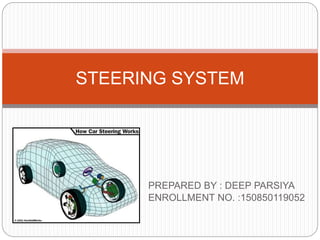
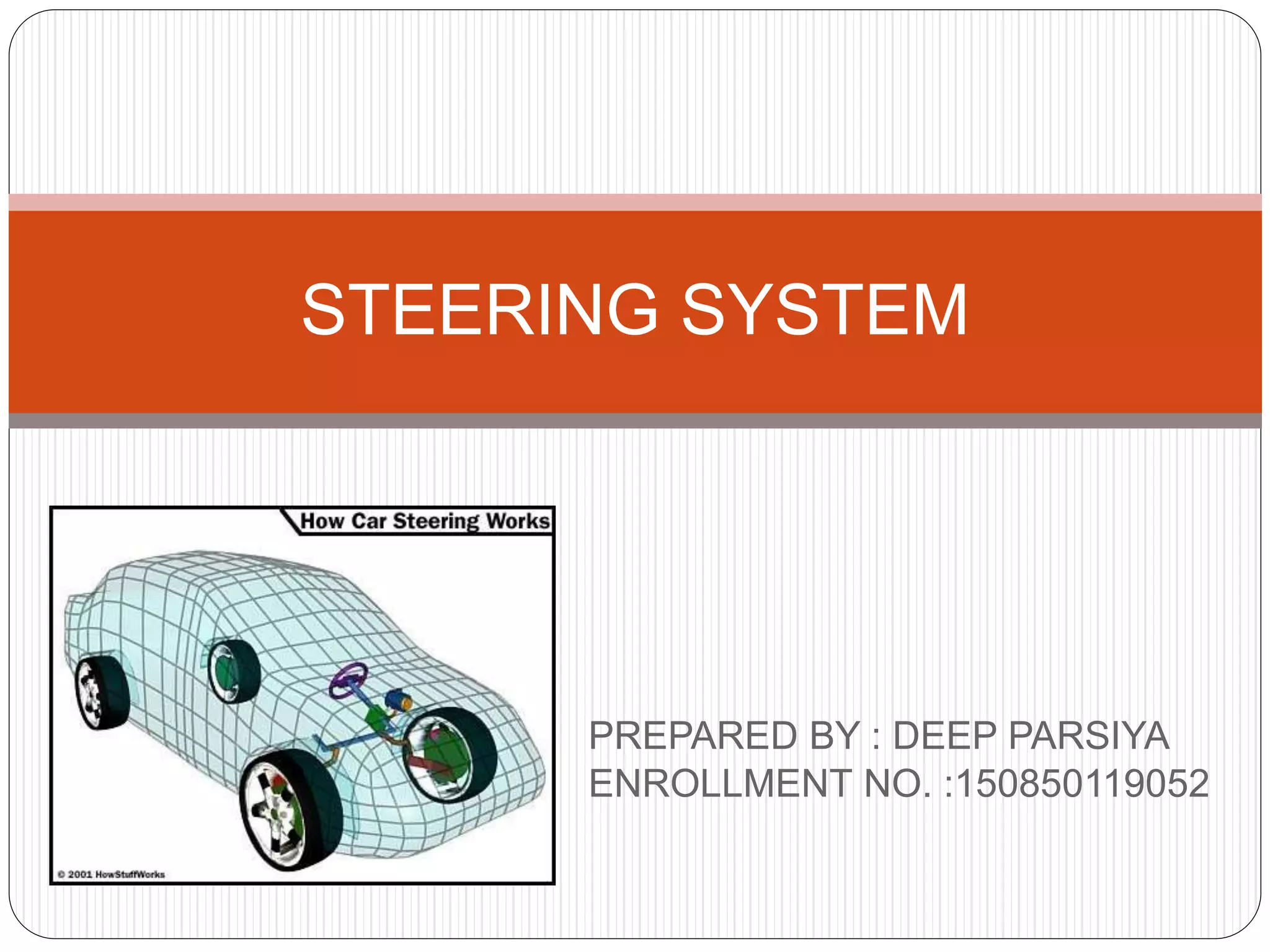
STEERING SYSTEM
STEERING SYSTEM
 An automobile is steered with the help of steering gears
and linkages, which transfer the motion of the hand
operated steering wheel to the pivoted front wheel hubs
via steering column.
 The other parts that are used for steering a vehicle are
steering wheel pads, steering shafts, steering boxes,
steering arms and steering stabilizers. These parts are
made of durable materials like stainless steel, iron.
FUNCTION OF STEERING
SYSTEM
 It helps in swinging the wheels to the left or right.
 It converts the rotary movement of the steering
wheel into an angular turn of the front wheels.
 It multiplies the effort of the driver by leverage in
order to make it fairly easy to turn the wheels.
 It absorbs a major part of the road shocks
thereby preventing them to get transmitted to the
hands of the driver
TYEPS OF STEERING SYSTEM
 Rack & pinion Manual steering
 Hydraulic Power steering
 Electro-Hydraulic Power steering (EHPS)
 Electronic Power steering (EPS)
 Four wheel steering
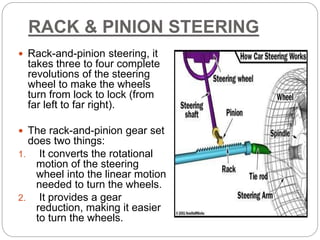
 Rack-and-pinion steering, it
takes three to four complete
revolutions of the steering
wheel to make the wheels
turn from lock to lock (from
far left to far right).
 The rack-and-pinion gear set
does two things:
1. It converts the rotational
motion of the steering
wheel into the linear motion
needed to turn the wheels.
2. It provides a gear
reduction, making it easier
to turn the wheels.
RACK & PINION STEERING
RACK & PINION TYPE
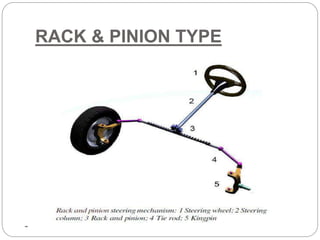
 When you turn the steering wheel, the gear spins,
moving the rack. The tie rod at each end of the
rack connects to the steering arm on the spindle
 Some cars have variable-ratio steering, which
uses a rack-and-pinion gear set that has a
different tooth pitch (number of teeth per inch) in
the centre than it has on the outside.
 This makes the car respond quickly when starting
a turn (the rack is near the centre), and also
reduces effort near the wheel's turning limits
Hydraulic Power steering
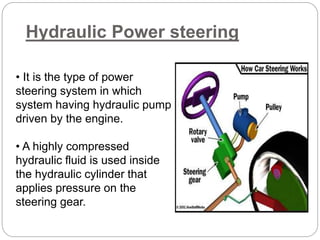
• It is the type of power
steering system in which
system having hydraulic pump
driven by the engine.
• A highly compressed
hydraulic fluid is used inside
the hydraulic cylinder that
applies pressure on the
steering gear.
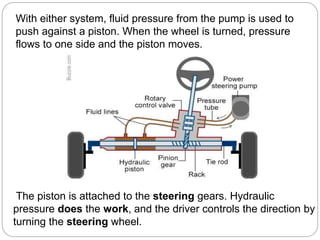
With either system, fluid pressure from the pump is used to
push against a piston. When the wheel is turned, pressure
flows to one side and the piston moves.
The piston is attached to the steering gears. Hydraulic
pressure does the work, and the driver controls the direction by
turning the steering wheel.
Electro-Hydraulic Power
steering
• Electro-hydraulic power
steering systems,
sometimes called "hybrid"
systems, use the
same hydraulic assist
technology as standard
systems.
• But
the hydraulic pressure
comes from a pump drivan
by an electric motor instead
of a drive belt at the
engine.
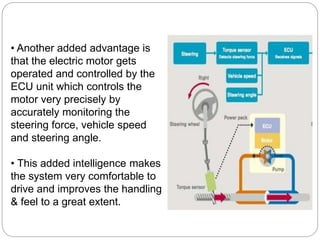
• Another added advantage is
that the electric motor gets
operated and controlled by the
ECU unit which controls the
motor very precisely by
accurately monitoring the
steering force, vehicle speed
and steering angle.
• This added intelligence makes
the system very comfortable to
drive and improves the handling
& feel to a great extent.
Electronic Power
steering(EPS)
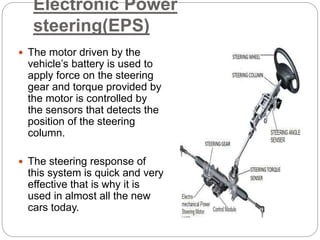
 The motor driven by the
vehicle’s battery is used to
apply force on the steering
gear and torque provided by
the motor is controlled by
the sensors that detects the
position of the steering
column.
 The steering response of
this system is quick and very
effective that is why it is
used in almost all the new
cars today.
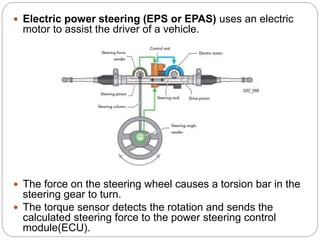
 Electric power steering (EPS or EPAS) uses an electric
motor to assist the driver of a vehicle.
 The force on the steering wheel causes a torsion bar in the
steering gear to turn.
 The torque sensor detects the rotation and sends the
calculated steering force to the power steering control
module(ECU).
 The steering angle sensor reports the current
steering angle and steering speed.
 Depending on the steering force control module
calculate the necessary assisting force and
actuates the motor.
 Depending upon the electric signal the motor runs
and the motor is connected to the steering rack
and pinion steering.
 The motor engages in the steering rack via a
worm gear and drive pinion which transmits the
force required for steering assistance.
Advantages of EPS System
 No hydraulic fluid
 Space savings
 Lighter in Weight
 Reduction in noise
 Less Maintenance
 Better Mileage
Four Wheel Steering
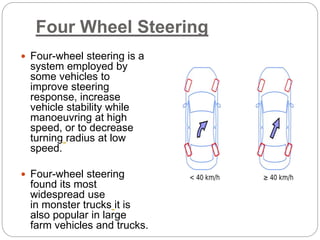
 Four-wheel steering is a
system employed by
some vehicles to
improve steering
response, increase
vehicle stability while
manoeuvring at high
speed, or to decrease
turning radius at low
speed.
 Four-wheel steering
found its most
widespread use
in monster trucks it is
also popular in large
farm vehicles and trucks.
Steering system

Steering system

  • 1.
    PREPARED BY :DEEP PARSIYA ENROLLMENT NO. :150850119052 STEERING SYSTEM
  • 2.
    STEERING SYSTEM  Anautomobile is steered with the help of steering gears and linkages, which transfer the motion of the hand operated steering wheel to the pivoted front wheel hubs via steering column.  The other parts that are used for steering a vehicle are steering wheel pads, steering shafts, steering boxes, steering arms and steering stabilizers. These parts are made of durable materials like stainless steel, iron.
  • 3.
    FUNCTION OF STEERING SYSTEM It helps in swinging the wheels to the left or right.  It converts the rotary movement of the steering wheel into an angular turn of the front wheels.  It multiplies the effort of the driver by leverage in order to make it fairly easy to turn the wheels.  It absorbs a major part of the road shocks thereby preventing them to get transmitted to the hands of the driver
  • 4.
    TYEPS OF STEERINGSYSTEM  Rack & pinion Manual steering  Hydraulic Power steering  Electro-Hydraulic Power steering (EHPS)  Electronic Power steering (EPS)  Four wheel steering
  • 5.
     Rack-and-pinion steering,it takes three to four complete revolutions of the steering wheel to make the wheels turn from lock to lock (from far left to far right).  The rack-and-pinion gear set does two things: 1. It converts the rotational motion of the steering wheel into the linear motion needed to turn the wheels. 2. It provides a gear reduction, making it easier to turn the wheels. RACK & PINION STEERING
  • 6.
  • 7.
     When youturn the steering wheel, the gear spins, moving the rack. The tie rod at each end of the rack connects to the steering arm on the spindle  Some cars have variable-ratio steering, which uses a rack-and-pinion gear set that has a different tooth pitch (number of teeth per inch) in the centre than it has on the outside.  This makes the car respond quickly when starting a turn (the rack is near the centre), and also reduces effort near the wheel's turning limits
  • 8.
    Hydraulic Power steering •It is the type of power steering system in which system having hydraulic pump driven by the engine. • A highly compressed hydraulic fluid is used inside the hydraulic cylinder that applies pressure on the steering gear.
  • 9.
    With either system,fluid pressure from the pump is used to push against a piston. When the wheel is turned, pressure flows to one side and the piston moves. The piston is attached to the steering gears. Hydraulic pressure does the work, and the driver controls the direction by turning the steering wheel.
  • 10.
    Electro-Hydraulic Power steering • Electro-hydraulicpower steering systems, sometimes called "hybrid" systems, use the same hydraulic assist technology as standard systems. • But the hydraulic pressure comes from a pump drivan by an electric motor instead of a drive belt at the engine.
  • 11.
    • Another addedadvantage is that the electric motor gets operated and controlled by the ECU unit which controls the motor very precisely by accurately monitoring the steering force, vehicle speed and steering angle. • This added intelligence makes the system very comfortable to drive and improves the handling & feel to a great extent.
  • 12.
    Electronic Power steering(EPS)  Themotor driven by the vehicle’s battery is used to apply force on the steering gear and torque provided by the motor is controlled by the sensors that detects the position of the steering column.  The steering response of this system is quick and very effective that is why it is used in almost all the new cars today.
  • 13.
     Electric powersteering (EPS or EPAS) uses an electric motor to assist the driver of a vehicle.  The force on the steering wheel causes a torsion bar in the steering gear to turn.  The torque sensor detects the rotation and sends the calculated steering force to the power steering control module(ECU).
  • 14.
     The steeringangle sensor reports the current steering angle and steering speed.  Depending on the steering force control module calculate the necessary assisting force and actuates the motor.  Depending upon the electric signal the motor runs and the motor is connected to the steering rack and pinion steering.  The motor engages in the steering rack via a worm gear and drive pinion which transmits the force required for steering assistance.
  • 15.
    Advantages of EPSSystem  No hydraulic fluid  Space savings  Lighter in Weight  Reduction in noise  Less Maintenance  Better Mileage
  • 16.
    Four Wheel Steering Four-wheel steering is a system employed by some vehicles to improve steering response, increase vehicle stability while manoeuvring at high speed, or to decrease turning radius at low speed.  Four-wheel steering found its most widespread use in monster trucks it is also popular in large farm vehicles and trucks.