PERIPHERAL AND CENTRAL AUDITORY ASSESSMENT Ravi Pachigolla, MD Jeffery T. Vrabec, MD
Introduction Pure tone audiometry Tympanometry Acoustic reflex measurements ECochG Auditory Brainstem Response (ABR) Otoacoustic Emissions
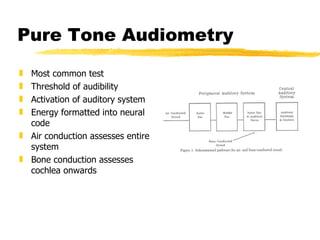
Pure Tone Audiometry Most common test Threshold of audibility Activation of auditory system Energy formatted into neural code Air conduction assesses entire system Bone conduction assesses cochlea onwards
Pure Tones Auditory acuity Spectrally specific High frequency tones stimulate basal turn of the cochlea Low frequency tones stimulate apical turn of the cochlea
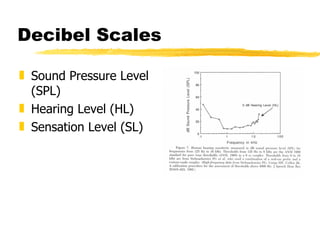
Decibel Scales Sound Pressure Level (SPL) Hearing Level (HL) Sensation Level (SL)
Assessment of thresholds Octave frequencies tested Bone conduction thresholds Mastoid or forehead used Mastoid preferred because less intensity required Occlusion effect Ascending series of tone presentations
Speech Audiometry Speech Reception Threshold using spondaic words Standardized word lists Familiarization with spondees Ascending series of presentation Excellent speech discrimination in conductive hearing loss patients Poor speech discrimination in cochlear hearing loss patients Poorest speech discrimination in retrocochlear hearing loss patients
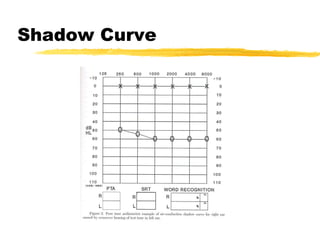
Clinical Masking Nontest ear can influence thresholds of test ear Shadow curve apparent without masking Interaural attenuation varies from 40 to 80 dB with air conduction Interaural attenuation is about 0 dB with bone conduction
Shadow Curve
Clinical Masking cont. Compare bone conduction threshold of nontest ear with air conduction threshold of test ear to determine whether masking is necessary
Masking using narrow bands of noise
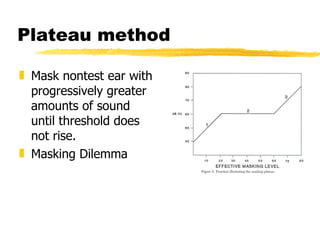
Plateau method Mask nontest ear with progressively greater amounts of sound until threshold does not rise. Masking Dilemma
Acoustic Immitance Impedance Reflected energy Tympanometry Acoustic Reflex
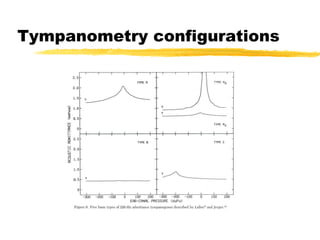
Tympanometry configurations
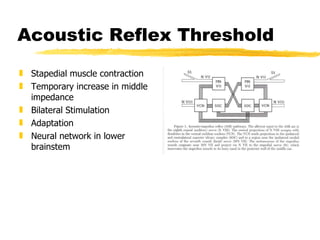
Acoustic Reflex Threshold Stapedial muscle contraction Temporary increase in middle impedance Bilateral Stimulation Adaptation Neural network in lower brainstem
Clinical application of ASR Middle Ear Disease Otosclerosis Cochlear hearing loss and loudness recruitment Retrocochlear lesions may abolish the ASR Brainstem lesions may abolish the contralateral reflexes Determination of site of a seventh nerve lesion Acoustic Reflex Decay
Electrocochleography Cochlear Microphonic Summating Potential Compound Action Potential Increased SP/AP ratio suggests hydrops Ability to enhance wave I of the ABR in patients with severe high frequency hearing loss
Electrocochleography setup
ECochG and Meniere’s Increased SP/AP ratio Latency not important Ratio greater than 0.45 suggests meniere’s Hydrops affects elasticity of the basilar membrane
Auditory Brainstem Response Auditory evoked potential Farfield recording Acoustic clicks or tonal stimuli used Rate of stimulus presentation
ABR continued Waves I - V Unaffected by sleep and pharmacotherapy ABR latencies decrease from birth until 2 years Wave V used for threshold testing (most robust) ABR thresholds about 10 to 20 dB poorer than behavioral measures
Latency of response
ABR continued Lesions of the eighth cranial nerve Interwave latency Interaural latency difference Absolute latency Amplitude ratio
Retrocochlear lesion
Otoacoustic Emissions Energy leakage Evidence of a healthy, functioning cochlea Spontaneous and evoked emissions Evoked emission seen only in cochleae with thresholds less than 20 to 30 dB Conductive losses affect emissions Screening tool in infants
Central Auditory Function Comprehension Background noise Behavioral tests Monotic vs. dichotic Monaural vs. binaural
Case Presentation 31 yo male with left sided hearing loss noticed when listening to portable radio No other otologic complaints, no pmh or contributory family or social history PE normal
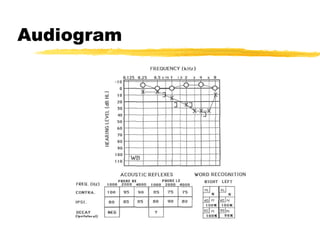
Audiogram
Assessment  Mild high frequency sensorineural hearing loss Small amount of rollover Ipsi reflexes elevated in left ear Contra reflexes elevated in left ear suggesting retrocochlear pathology MRI showed 5 mm acoustic neuroma
Analysis Abnormal reflex responses in left ear indicate 7th nerve affected Elevated contralateral thresholds in right ear means that decussating pathways from left VCN to right brainstem affected

Auditory assess 200003

  • 1.
    PERIPHERAL AND CENTRALAUDITORY ASSESSMENT Ravi Pachigolla, MD Jeffery T. Vrabec, MD
  • 2.
    Introduction Pure toneaudiometry Tympanometry Acoustic reflex measurements ECochG Auditory Brainstem Response (ABR) Otoacoustic Emissions
  • 3.
    Pure Tone AudiometryMost common test Threshold of audibility Activation of auditory system Energy formatted into neural code Air conduction assesses entire system Bone conduction assesses cochlea onwards
  • 4.
    Pure Tones Auditoryacuity Spectrally specific High frequency tones stimulate basal turn of the cochlea Low frequency tones stimulate apical turn of the cochlea
  • 5.
    Decibel Scales SoundPressure Level (SPL) Hearing Level (HL) Sensation Level (SL)
  • 6.
    Assessment of thresholdsOctave frequencies tested Bone conduction thresholds Mastoid or forehead used Mastoid preferred because less intensity required Occlusion effect Ascending series of tone presentations
  • 7.
    Speech Audiometry SpeechReception Threshold using spondaic words Standardized word lists Familiarization with spondees Ascending series of presentation Excellent speech discrimination in conductive hearing loss patients Poor speech discrimination in cochlear hearing loss patients Poorest speech discrimination in retrocochlear hearing loss patients
  • 8.
    Clinical Masking Nontestear can influence thresholds of test ear Shadow curve apparent without masking Interaural attenuation varies from 40 to 80 dB with air conduction Interaural attenuation is about 0 dB with bone conduction
  • 9.
  • 10.
    Clinical Masking cont.Compare bone conduction threshold of nontest ear with air conduction threshold of test ear to determine whether masking is necessary
  • 11.
    Masking using narrowbands of noise
  • 12.
    Plateau method Masknontest ear with progressively greater amounts of sound until threshold does not rise. Masking Dilemma
  • 13.
    Acoustic Immitance ImpedanceReflected energy Tympanometry Acoustic Reflex
  • 14.
  • 15.
    Acoustic Reflex ThresholdStapedial muscle contraction Temporary increase in middle impedance Bilateral Stimulation Adaptation Neural network in lower brainstem
  • 16.
    Clinical application ofASR Middle Ear Disease Otosclerosis Cochlear hearing loss and loudness recruitment Retrocochlear lesions may abolish the ASR Brainstem lesions may abolish the contralateral reflexes Determination of site of a seventh nerve lesion Acoustic Reflex Decay
  • 17.
    Electrocochleography Cochlear MicrophonicSummating Potential Compound Action Potential Increased SP/AP ratio suggests hydrops Ability to enhance wave I of the ABR in patients with severe high frequency hearing loss
  • 18.
  • 19.
    ECochG and Meniere’sIncreased SP/AP ratio Latency not important Ratio greater than 0.45 suggests meniere’s Hydrops affects elasticity of the basilar membrane
  • 20.
    Auditory Brainstem ResponseAuditory evoked potential Farfield recording Acoustic clicks or tonal stimuli used Rate of stimulus presentation
  • 21.
    ABR continued WavesI - V Unaffected by sleep and pharmacotherapy ABR latencies decrease from birth until 2 years Wave V used for threshold testing (most robust) ABR thresholds about 10 to 20 dB poorer than behavioral measures
  • 22.
  • 23.
    ABR continued Lesionsof the eighth cranial nerve Interwave latency Interaural latency difference Absolute latency Amplitude ratio
  • 24.
  • 25.
    Otoacoustic Emissions Energyleakage Evidence of a healthy, functioning cochlea Spontaneous and evoked emissions Evoked emission seen only in cochleae with thresholds less than 20 to 30 dB Conductive losses affect emissions Screening tool in infants
  • 26.
    Central Auditory FunctionComprehension Background noise Behavioral tests Monotic vs. dichotic Monaural vs. binaural
  • 27.
    Case Presentation 31yo male with left sided hearing loss noticed when listening to portable radio No other otologic complaints, no pmh or contributory family or social history PE normal
  • 28.
  • 29.
    Assessment Mildhigh frequency sensorineural hearing loss Small amount of rollover Ipsi reflexes elevated in left ear Contra reflexes elevated in left ear suggesting retrocochlear pathology MRI showed 5 mm acoustic neuroma
  • 30.
    Analysis Abnormal reflexresponses in left ear indicate 7th nerve affected Elevated contralateral thresholds in right ear means that decussating pathways from left VCN to right brainstem affected