AUDIENCE EXPLAINED
'Audience' is a very important concept throughout media studies. All media texts are
made with an audience in mind, ie a group of people who will receive it and make
some sort of sense out of it. And generally, but not always, the producers make
some money out of that audience. Therefore it is important to understand what
happens when an audience "meets" a media text.

Constructing Audience
When a media text is being planned, perhaps the most important question the
producers consider is "Does it have an audience?" If the answer to this is 'no', then
there is no point in going any further. If no one is going to watch/read/play/buy the
text, the producers aren't going to make any money or get their message across.
Audience research is a major part of any media company's work. They use
questionnaires, focus groups, and comparisons to existing media texts, and spend a
great deal of time and money finding out if there is anyone out there who might be
interested in their idea.

It's a serious business; media producers basically want to know the

                income bracket/status
                age
                gender
                race
                location

of their potential audience, a method of categorising known as demographics.
Once they know this they can begin to shape their text to appeal to a group with
known reading/viewing/listening habits.

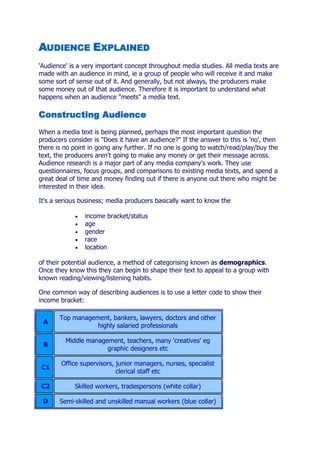
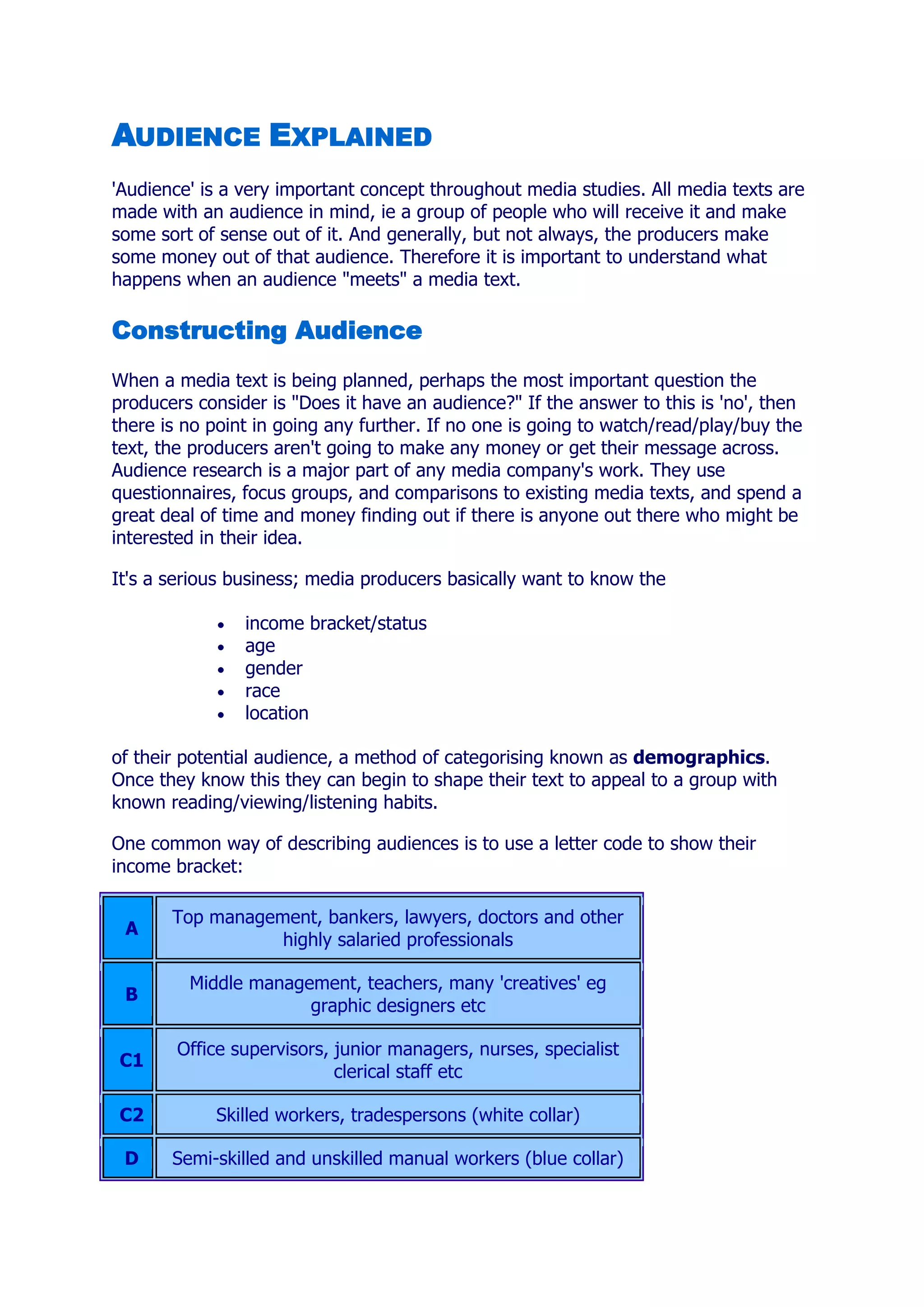
One common way of describing audiences is to use a letter code to show their
income bracket:

       Top management, bankers, lawyers, doctors and other
 A
                  highly salaried professionals

         Middle management, teachers, many 'creatives' eg
 B
                      graphic designers etc

        Office supervisors, junior managers, nurses, specialist
C1
                            clerical staff etc

C2          Skilled workers, tradespersons (white collar)

 D     Semi-skilled and unskilled manual workers (blue collar)
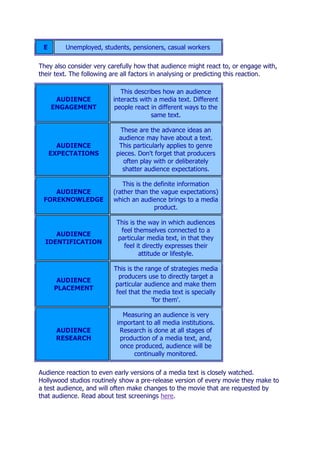
E       Unemployed, students, pensioners, casual workers

They also consider very carefully how that audience might react to, or engage with,
their text. The following are all factors in analysing or predicting this reaction.

                             This describes how an audience
      AUDIENCE            interacts with a media text. Different
     ENGAGEMENT            people react in different ways to the
                                        same text.

                            These are the advance ideas an
                            audience may have about a text.
       AUDIENCE             This particularly applies to genre
     EXPECTATIONS          pieces. Don't forget that producers
                              often play with or deliberately
                             shatter audience expectations.

                             This is the definite information
    AUDIENCE              (rather than the vague expectations)
 FOREKNOWLEDGE            which an audience brings to a media
                                         product.

                           This is the way in which audiences
                            feel themselves connected to a
     AUDIENCE
                           particular media text, in that they
  IDENTIFICATION
                             feel it directly expresses their
                                    attitude or lifestyle.

                          This is the range of strategies media
                            producers use to directly target a
       AUDIENCE
                          particular audience and make them
      PLACEMENT
                           feel that the media text is specially
                                        'for them'.

                             Measuring an audience is very
                           important to all media institutions.
      AUDIENCE              Research is done at all stages of
      RESEARCH              production of a media text, and,
                            once produced, audience will be
                                continually monitored.

Audience reaction to even early versions of a media text is closely watched.
Hollywood studios routinely show a pre-release version of every movie they make to
a test audience, and will often make changes to the movie that are requested by
that audience. Read about test screenings here.
Creating Audience
Once a media text has been made, its producers need to ensure that it reaches the
audience it is intended for. All media texts will have some sort of marketing
campaign attached to them. Elements of this might include

                posters
                print, radio, TV and internet advertisements
                trailers
                promotional interviews (eg stars appearing on chat shows,
                information leaked to Internet bloggers)
                tie-in campaigns (eg a blockbuster movie using McDonalds meals)
                merchandising (t-shirts, baseball caps, key rings)

Marketing campaigns are intended to create awareness of a media text. Once that
awareness has been created, hopefully audiences will come flocking in their
hundreds of millions.

Counting Audience
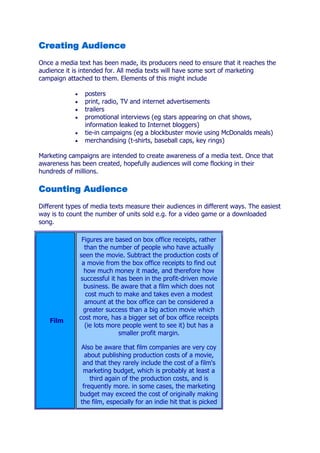
Different types of media texts measure their audiences in different ways. The easiest
way is to count the number of units sold e.g. for a video game or a downloaded
song.

               Figures are based on box office receipts, rather
                than the number of people who have actually
              seen the movie. Subtract the production costs of
               a movie from the box office receipts to find out
                how much money it made, and therefore how
              successful it has been in the profit-driven movie
                business. Be aware that a film which does not
                cost much to make and takes even a modest
                amount at the box office can be considered a
               greater success than a big action movie which
              cost more, has a bigger set of box office receipts
   Film
                (ie lots more people went to see it) but has a
                            smaller profit margin.

              Also be aware that film companies are very coy
                about publishing production costs of a movie,
               and that they rarely include the cost of a film's
               marketing budget, which is probably at least a
                  third again of the production costs, and is
               frequently more. in some cases, the marketing
              budget may exceed the cost of originally making
              the film, especially for an indie hit that is picked
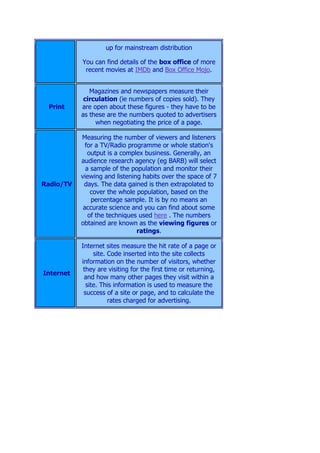
up for mainstream distribution

           You can find details of the box office of more
            recent movies at IMDb and Box Office Mojo.


              Magazines and newspapers measure their
            circulation (ie numbers of copies sold). They
 Print     are open about these figures - they have to be
           as these are the numbers quoted to advertisers
                when negotiating the price of a page.

           Measuring the number of viewers and listeners
             for a TV/Radio programme or whole station's
              output is a complex business. Generally, an
           audience research agency (eg BARB) will select
             a sample of the population and monitor their
           viewing and listening habits over the space of 7
Radio/TV    days. The data gained is then extrapolated to
               cover the whole population, based on the
               percentage sample. It is by no means an
            accurate science and you can find about some
              of the techniques used here . The numbers
           obtained are known as the viewing figures or
                               ratings.

           Internet sites measure the hit rate of a page or
                site. Code inserted into the site collects
           information on the number of visitors, whether
            they are visiting for the first time or returning,
Internet
            and how many other pages they visit within a
             site. This information is used to measure the
            success of a site or page, and to calculate the
                      rates charged for advertising.

Audience explained

  • 1.
    AUDIENCE EXPLAINED 'Audience' isa very important concept throughout media studies. All media texts are made with an audience in mind, ie a group of people who will receive it and make some sort of sense out of it. And generally, but not always, the producers make some money out of that audience. Therefore it is important to understand what happens when an audience "meets" a media text. Constructing Audience When a media text is being planned, perhaps the most important question the producers consider is "Does it have an audience?" If the answer to this is 'no', then there is no point in going any further. If no one is going to watch/read/play/buy the text, the producers aren't going to make any money or get their message across. Audience research is a major part of any media company's work. They use questionnaires, focus groups, and comparisons to existing media texts, and spend a great deal of time and money finding out if there is anyone out there who might be interested in their idea. It's a serious business; media producers basically want to know the income bracket/status age gender race location of their potential audience, a method of categorising known as demographics. Once they know this they can begin to shape their text to appeal to a group with known reading/viewing/listening habits. One common way of describing audiences is to use a letter code to show their income bracket: Top management, bankers, lawyers, doctors and other A highly salaried professionals Middle management, teachers, many 'creatives' eg B graphic designers etc Office supervisors, junior managers, nurses, specialist C1 clerical staff etc C2 Skilled workers, tradespersons (white collar) D Semi-skilled and unskilled manual workers (blue collar)
  • 2.
    E Unemployed, students, pensioners, casual workers They also consider very carefully how that audience might react to, or engage with, their text. The following are all factors in analysing or predicting this reaction. This describes how an audience AUDIENCE interacts with a media text. Different ENGAGEMENT people react in different ways to the same text. These are the advance ideas an audience may have about a text. AUDIENCE This particularly applies to genre EXPECTATIONS pieces. Don't forget that producers often play with or deliberately shatter audience expectations. This is the definite information AUDIENCE (rather than the vague expectations) FOREKNOWLEDGE which an audience brings to a media product. This is the way in which audiences feel themselves connected to a AUDIENCE particular media text, in that they IDENTIFICATION feel it directly expresses their attitude or lifestyle. This is the range of strategies media producers use to directly target a AUDIENCE particular audience and make them PLACEMENT feel that the media text is specially 'for them'. Measuring an audience is very important to all media institutions. AUDIENCE Research is done at all stages of RESEARCH production of a media text, and, once produced, audience will be continually monitored. Audience reaction to even early versions of a media text is closely watched. Hollywood studios routinely show a pre-release version of every movie they make to a test audience, and will often make changes to the movie that are requested by that audience. Read about test screenings here.
  • 3.
    Creating Audience Once amedia text has been made, its producers need to ensure that it reaches the audience it is intended for. All media texts will have some sort of marketing campaign attached to them. Elements of this might include posters print, radio, TV and internet advertisements trailers promotional interviews (eg stars appearing on chat shows, information leaked to Internet bloggers) tie-in campaigns (eg a blockbuster movie using McDonalds meals) merchandising (t-shirts, baseball caps, key rings) Marketing campaigns are intended to create awareness of a media text. Once that awareness has been created, hopefully audiences will come flocking in their hundreds of millions. Counting Audience Different types of media texts measure their audiences in different ways. The easiest way is to count the number of units sold e.g. for a video game or a downloaded song. Figures are based on box office receipts, rather than the number of people who have actually seen the movie. Subtract the production costs of a movie from the box office receipts to find out how much money it made, and therefore how successful it has been in the profit-driven movie business. Be aware that a film which does not cost much to make and takes even a modest amount at the box office can be considered a greater success than a big action movie which cost more, has a bigger set of box office receipts Film (ie lots more people went to see it) but has a smaller profit margin. Also be aware that film companies are very coy about publishing production costs of a movie, and that they rarely include the cost of a film's marketing budget, which is probably at least a third again of the production costs, and is frequently more. in some cases, the marketing budget may exceed the cost of originally making the film, especially for an indie hit that is picked
  • 4.
    up for mainstreamdistribution You can find details of the box office of more recent movies at IMDb and Box Office Mojo. Magazines and newspapers measure their circulation (ie numbers of copies sold). They Print are open about these figures - they have to be as these are the numbers quoted to advertisers when negotiating the price of a page. Measuring the number of viewers and listeners for a TV/Radio programme or whole station's output is a complex business. Generally, an audience research agency (eg BARB) will select a sample of the population and monitor their viewing and listening habits over the space of 7 Radio/TV days. The data gained is then extrapolated to cover the whole population, based on the percentage sample. It is by no means an accurate science and you can find about some of the techniques used here . The numbers obtained are known as the viewing figures or ratings. Internet sites measure the hit rate of a page or site. Code inserted into the site collects information on the number of visitors, whether they are visiting for the first time or returning, Internet and how many other pages they visit within a site. This information is used to measure the success of a site or page, and to calculate the rates charged for advertising.