AUDIENCE 
• Identify the importance in defining a target 
audience for media producers 
• Show the differences between a mass 
audience and a niche audience; a target 
audience and an actual audience
AUDIENCE 
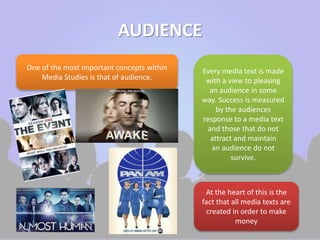
One of the most important concepts within 
Media Studies is that of audience. 
Every media text is made 
with a view to pleasing 
an audience in some 
way. Success is measured 
by the audiences 
response to a media text 
and those that do not 
attract and maintain 
an audience do not 
survive. 
At the heart of this is the 
fact that all media texts are 
created in order to make 
money
TARGET AUDIENCE 
If a media text is deemed successful it needs to attempt to ensure it offers 
appropriate pleasures (gratifications) its audience. Each media text will be 
targeted towards a specific group and the way it is constructed will be carefully 
considered in light of who the target audience is. 
• The Mass/Mainstream Audience 
• Some media texts attempt to appeal to a broad range 
of people. Although difficult to achieve, this is an ideal 
way to create very large audiences and, therefore, 
maximise the potential for success and ultimately 
profit. This group, consisting of males and females, 
young and old and a wide range of social groups is 
often called the mainstream or mass audience.
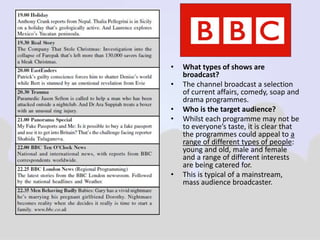
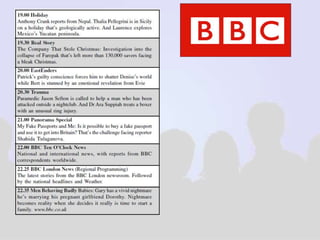
• What types of shows are 
broadcast? 
• The channel broadcast a selection 
of current affairs, comedy, soap and 
drama programmes. 
• Who is the target audience? 
• Whilst each programme may not be 
to everyone’s taste, it is clear that 
the programmes could appeal to a 
range of different types of people: 
young and old, male and female 
and a range of different interests 
are being catered for. 
• This is typical of a mainstream, 
mass audience broadcaster.
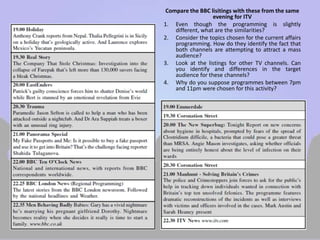
Compare the BBC lisitings with these from the same 
evening for ITV 
1. Even though the programming is slightly 
different, what are the similarities? 
2. Consider the topics chosen for the current affairs 
programming. How do they identify the fact that 
both channels are attempting to attract a mass 
audience? 
3. Look at the listings for other TV channels. Can 
you identify and differences in the target 
audience for these channels? 
4. Why do you suppose programmes between 7pm 
and 11pm were chosen for this activity?
MAINSTREAM AUDIENCE 
• BBC 1 and ITV are in direct competition with each 
other for the mass audience. This audience is 
very lucrative but there is a distinct possibility 
that this large audience will be split between the 
mainstream broadcasters.
NICHE AUDIENCE 
• The mass audience is not 
the only one that can make 
a lot of money for media 
producers. Some media 
texts are created with a 
specific sub-section of the 
audience in mind - a niche 
audience. Whilst a niche 
audience is likely to be 
smaller in number than a 
mass audience, appealing 
to a specific group can be 
profitable.
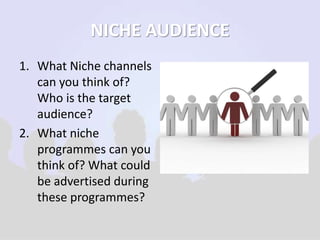
NICHE AUDIENCE 
1. What Niche channels 
can you think of? 
Who is the target 
audience? 
2. What niche 
programmes can you 
think of? What could 
be advertised during 
these programmes?
TARGET AUDIENCE 
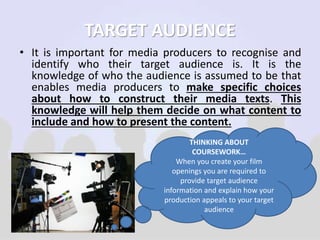
• It is important for media producers to recognise and 
identify who their target audience is. It is the 
knowledge of who the audience is assumed to be that 
enables media producers to make specific choices 
about how to construct their media texts. This 
knowledge will help them decide on what content to 
include and how to present the content. 
THINKING ABOUT 
COURSEWORK… 
When you create your film 
openings you are required to 
provide target audience 
information and explain how your 
production appeals to your target 
audience
IDENTIFYING THE TARGET AUDIENCE 
The primary aim for any media producer is to create a text which successfully 
identifies what it is that the target audience want and then to present it to them in 
a way that ensures they will return again. 
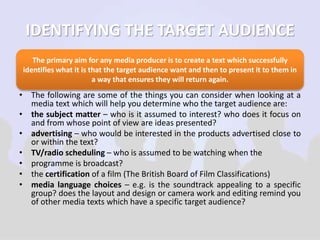
• The following are some of the things you can consider when looking at a 
media text which will help you determine who the target audience are: 
• the subject matter – who is it assumed to interest? who does it focus on 
and from whose point of view are ideas presented? 
• advertising – who would be interested in the products advertised close to 
or within the text? 
• TV/radio scheduling – who is assumed to be watching when the 
• programme is broadcast? 
• the certification of a film (The British Board of Film Classifications) 
• media language choices – e.g. is the soundtrack appealing to a specific 
group? does the layout and design or camera work and editing remind you 
of other media texts which have a specific target audience?
TARGET AUDIENCE VS. 
ACTUAL AUDIENCE 
• Even though media producers may have a specific audience 
in mind when creating a media text, this is not to say that 
only those people targeted will access these texts. Men are 
known to read women’s lifestyle magazines and women will 
watch Fifth Gear even though they may not be the target 
audience for these texts and are in the minority. The actual 
audience may end up being quite different to the intended 
target audience. 
THINKING ABOUT 
COURSEWORK… 
For your film opening coursework 
you might what to refer to a 
primary and a secondary audience
TARGET AUDIENCE 
• Using the front cover of Bliss and the packaging 
for Sugar identify the aspects of the media 
language which are chosen in order to attract the 
target audience of teenage girls. Consider the 
celebrities chosen for the front page, the choice 
of colour and the lexis (words). Also, consider the 
content of the magazines 
• – what assumptions are being made about 
teenage girls’ interests and aspirations?
DEFINING A TEENAGE GIRL 
• Magazines such as Bliss and Sugar have a target 
audience of older teenage girls. The content of 
these magazines reflect this, in the fact that they 
focus on celebrity gossip, fashion and make-up 
and also on relationships and sex. At times the 
sexual content can be quite explicit and these 
magazines have been criticised in the past for 
having this type of content as it is understood 
that the actual audience are more likely to be in 
their low teens.

Audience

  • 1.
    AUDIENCE • Identifythe importance in defining a target audience for media producers • Show the differences between a mass audience and a niche audience; a target audience and an actual audience
  • 2.
    AUDIENCE One ofthe most important concepts within Media Studies is that of audience. Every media text is made with a view to pleasing an audience in some way. Success is measured by the audiences response to a media text and those that do not attract and maintain an audience do not survive. At the heart of this is the fact that all media texts are created in order to make money
  • 3.
    TARGET AUDIENCE Ifa media text is deemed successful it needs to attempt to ensure it offers appropriate pleasures (gratifications) its audience. Each media text will be targeted towards a specific group and the way it is constructed will be carefully considered in light of who the target audience is. • The Mass/Mainstream Audience • Some media texts attempt to appeal to a broad range of people. Although difficult to achieve, this is an ideal way to create very large audiences and, therefore, maximise the potential for success and ultimately profit. This group, consisting of males and females, young and old and a wide range of social groups is often called the mainstream or mass audience.
  • 4.
    • What typesof shows are broadcast? • The channel broadcast a selection of current affairs, comedy, soap and drama programmes. • Who is the target audience? • Whilst each programme may not be to everyone’s taste, it is clear that the programmes could appeal to a range of different types of people: young and old, male and female and a range of different interests are being catered for. • This is typical of a mainstream, mass audience broadcaster.
  • 6.
    Compare the BBClisitings with these from the same evening for ITV 1. Even though the programming is slightly different, what are the similarities? 2. Consider the topics chosen for the current affairs programming. How do they identify the fact that both channels are attempting to attract a mass audience? 3. Look at the listings for other TV channels. Can you identify and differences in the target audience for these channels? 4. Why do you suppose programmes between 7pm and 11pm were chosen for this activity?
  • 7.
    MAINSTREAM AUDIENCE •BBC 1 and ITV are in direct competition with each other for the mass audience. This audience is very lucrative but there is a distinct possibility that this large audience will be split between the mainstream broadcasters.
  • 8.
    NICHE AUDIENCE •The mass audience is not the only one that can make a lot of money for media producers. Some media texts are created with a specific sub-section of the audience in mind - a niche audience. Whilst a niche audience is likely to be smaller in number than a mass audience, appealing to a specific group can be profitable.
  • 9.
    NICHE AUDIENCE 1.What Niche channels can you think of? Who is the target audience? 2. What niche programmes can you think of? What could be advertised during these programmes?
  • 10.
    TARGET AUDIENCE •It is important for media producers to recognise and identify who their target audience is. It is the knowledge of who the audience is assumed to be that enables media producers to make specific choices about how to construct their media texts. This knowledge will help them decide on what content to include and how to present the content. THINKING ABOUT COURSEWORK… When you create your film openings you are required to provide target audience information and explain how your production appeals to your target audience
  • 11.
    IDENTIFYING THE TARGETAUDIENCE The primary aim for any media producer is to create a text which successfully identifies what it is that the target audience want and then to present it to them in a way that ensures they will return again. • The following are some of the things you can consider when looking at a media text which will help you determine who the target audience are: • the subject matter – who is it assumed to interest? who does it focus on and from whose point of view are ideas presented? • advertising – who would be interested in the products advertised close to or within the text? • TV/radio scheduling – who is assumed to be watching when the • programme is broadcast? • the certification of a film (The British Board of Film Classifications) • media language choices – e.g. is the soundtrack appealing to a specific group? does the layout and design or camera work and editing remind you of other media texts which have a specific target audience?
  • 12.
    TARGET AUDIENCE VS. ACTUAL AUDIENCE • Even though media producers may have a specific audience in mind when creating a media text, this is not to say that only those people targeted will access these texts. Men are known to read women’s lifestyle magazines and women will watch Fifth Gear even though they may not be the target audience for these texts and are in the minority. The actual audience may end up being quite different to the intended target audience. THINKING ABOUT COURSEWORK… For your film opening coursework you might what to refer to a primary and a secondary audience
  • 16.
    TARGET AUDIENCE •Using the front cover of Bliss and the packaging for Sugar identify the aspects of the media language which are chosen in order to attract the target audience of teenage girls. Consider the celebrities chosen for the front page, the choice of colour and the lexis (words). Also, consider the content of the magazines • – what assumptions are being made about teenage girls’ interests and aspirations?
  • 17.
    DEFINING A TEENAGEGIRL • Magazines such as Bliss and Sugar have a target audience of older teenage girls. The content of these magazines reflect this, in the fact that they focus on celebrity gossip, fashion and make-up and also on relationships and sex. At times the sexual content can be quite explicit and these magazines have been criticised in the past for having this type of content as it is understood that the actual audience are more likely to be in their low teens.

Editor's Notes

  • #8 Notice how Eastenders and Coronation Street were both broadcast on the same evening, but not at the same time. If the two soaps clashed then it would force the soap audience to choose between them. This would be disastrous as both the BBC and ITV expect large numbers for these flagship mainstream programmes.
  • #9 Niche audiences are ones which have a specific interest in the content of the media text. This means they are more likely to: • be loyal (watching or reading on a regular basis) • purchase other products related to the media texts – merchandise/ DVDs etc. • respond to advertising which is targeted towards their interests Advertisers like niche audiences as they make it far easier to ensure the advertising is seen by potentially interested people. If you wanted to advertise a new motor oil, you may be better off placing your advert in Max Power rather than The TV Times or on television when Fifth Gear is broadcast rather than spending on the exceptionally expensive slots between parts 1 and 2 of X Factor. Your adverts may be seen by less people, but the people that see them are more likely to be potential purchasers of your product.