Project self-assessment
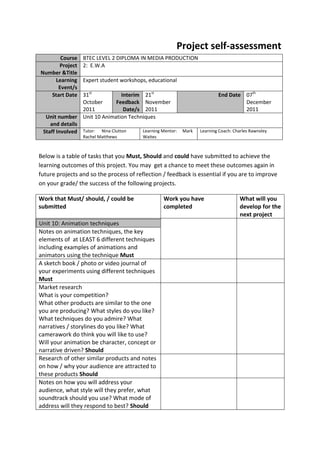
      Course     BTEC LEVEL 2 DIPLOMA IN MEDIA PRODUCTION
      Project    2: E.W.A
Number &Title
    Learning     Expert student workshops, educational
     Event/s
   Start Date   31st             Interim 21st                            End Date 07th
                October       Feedback November                                   December
                2011              Date/s 2011                                     2011
  Unit number Unit 10 Animation Techniques
    and details
 Staff Involved Tutor: Nina Clutton      Learning Mentor: Mark   Learning Coach: Charles Rawnsley
                 Rachel Matthews         Waites


Below is a table of tasks that you Must, Should and could have submitted to achieve the
learning outcomes of this project. You may get a chance to meet these outcomes again in
future projects and so the process of reflection / feedback is essential if you are to improve
on your grade/ the success of the following projects.

Work that Must/ should, / could be                Work you have                     What will you
submitted                                         completed                         develop for the
                                                                                    next project
Unit 10: Animation techniques
Notes on animation techniques, the key
elements of at LEAST 6 different techniques
including examples of animations and
animators using the technique Must
A sketch book / photo or video journal of
your experiments using different techniques
Must
Market research
What is your competition?
What other products are similar to the one
you are producing? What styles do you like?
What techniques do you admire? What
narratives / storylines do you like? What
camerawork do think you will like to use?
Will your animation be character, concept or
narrative driven? Should
Research of other similar products and notes
on how / why your audience are attracted to
these products Should
Notes on how you will address your
audience, what style will they prefer, what
soundtrack should you use? What mode of
address will they respond to best? Should
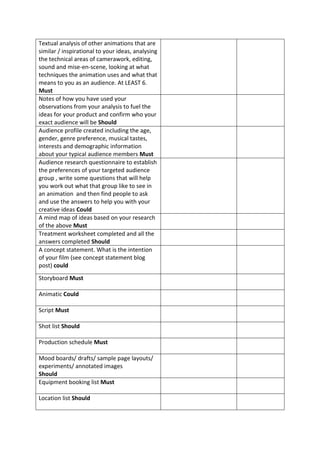
Textual analysis of other animations that are
similar / inspirational to your ideas, analysing
the technical areas of camerawork, editing,
sound and mise-en-scene, looking at what
techniques the animation uses and what that
means to you as an audience. At LEAST 6.
Must
Notes of how you have used your
observations from your analysis to fuel the
ideas for your product and confirm who your
exact audience will be Should
Audience profile created including the age,
gender, genre preference, musical tastes,
interests and demographic information
about your typical audience members Must
Audience research questionnaire to establish
the preferences of your targeted audience
group , write some questions that will help
you work out what that group like to see in
an animation and then find people to ask
and use the answers to help you with your
creative ideas Could
A mind map of ideas based on your research
of the above Must
Treatment worksheet completed and all the
answers completed Should
A concept statement. What is the intention
of your film (see concept statement blog
post) could
Storyboard Must

Animatic Could

Script Must

Shot list Should

Production schedule Must

Mood boards/ drafts/ sample page layouts/
experiments/ annotated images
Should
Equipment booking list Must

Location list Should
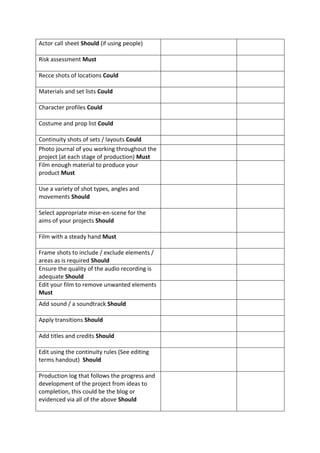
Actor call sheet Should (if using people)

Risk assessment Must

Recce shots of locations Could

Materials and set lists Could

Character profiles Could

Costume and prop list Could

Continuity shots of sets / layouts Could
Photo journal of you working throughout the
project (at each stage of production) Must
Film enough material to produce your
product Must

Use a variety of shot types, angles and
movements Should

Select appropriate mise-en-scene for the
aims of your projects Should

Film with a steady hand Must

Frame shots to include / exclude elements /
areas as is required Should
Ensure the quality of the audio recording is
adequate Should
Edit your film to remove unwanted elements
Must
Add sound / a soundtrack Should

Apply transitions Should

Add titles and credits Should

Edit using the continuity rules (See editing
terms handout) Should

Production log that follows the progress and
development of the project from ideas to
completion, this could be the blog or
evidenced via all of the above Should
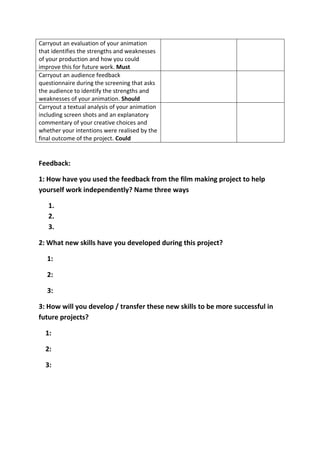
Carryout an evaluation of your animation
that identifies the strengths and weaknesses
of your production and how you could
improve this for future work. Must
Carryout an audience feedback
questionnaire during the screening that asks
the audience to identify the strengths and
weaknesses of your animation. Should
Carryout a textual analysis of your animation
including screen shots and an explanatory
commentary of your creative choices and
whether your intentions were realised by the
final outcome of the project. Could


Feedback:

1: How have you used the feedback from the film making project to help
yourself work independently? Name three ways

   1.
   2.
   3.

2: What new skills have you developed during this project?

   1:

   2:

   3:

3: How will you develop / transfer these new skills to be more successful in
future projects?

  1:

  2:

  3:
3: State three techniques that you have used to manage your time in this
project?

1:

2:

3:


4: How have you used target setting to help you complete the project and
how will you develop this use for future projects?

Animation selfassessment feedback

  • 1.
    Project self-assessment Course BTEC LEVEL 2 DIPLOMA IN MEDIA PRODUCTION Project 2: E.W.A Number &Title Learning Expert student workshops, educational Event/s Start Date 31st Interim 21st End Date 07th October Feedback November December 2011 Date/s 2011 2011 Unit number Unit 10 Animation Techniques and details Staff Involved Tutor: Nina Clutton Learning Mentor: Mark Learning Coach: Charles Rawnsley Rachel Matthews Waites Below is a table of tasks that you Must, Should and could have submitted to achieve the learning outcomes of this project. You may get a chance to meet these outcomes again in future projects and so the process of reflection / feedback is essential if you are to improve on your grade/ the success of the following projects. Work that Must/ should, / could be Work you have What will you submitted completed develop for the next project Unit 10: Animation techniques Notes on animation techniques, the key elements of at LEAST 6 different techniques including examples of animations and animators using the technique Must A sketch book / photo or video journal of your experiments using different techniques Must Market research What is your competition? What other products are similar to the one you are producing? What styles do you like? What techniques do you admire? What narratives / storylines do you like? What camerawork do think you will like to use? Will your animation be character, concept or narrative driven? Should Research of other similar products and notes on how / why your audience are attracted to these products Should Notes on how you will address your audience, what style will they prefer, what soundtrack should you use? What mode of address will they respond to best? Should
  • 2.
    Textual analysis ofother animations that are similar / inspirational to your ideas, analysing the technical areas of camerawork, editing, sound and mise-en-scene, looking at what techniques the animation uses and what that means to you as an audience. At LEAST 6. Must Notes of how you have used your observations from your analysis to fuel the ideas for your product and confirm who your exact audience will be Should Audience profile created including the age, gender, genre preference, musical tastes, interests and demographic information about your typical audience members Must Audience research questionnaire to establish the preferences of your targeted audience group , write some questions that will help you work out what that group like to see in an animation and then find people to ask and use the answers to help you with your creative ideas Could A mind map of ideas based on your research of the above Must Treatment worksheet completed and all the answers completed Should A concept statement. What is the intention of your film (see concept statement blog post) could Storyboard Must Animatic Could Script Must Shot list Should Production schedule Must Mood boards/ drafts/ sample page layouts/ experiments/ annotated images Should Equipment booking list Must Location list Should
  • 3.
    Actor call sheetShould (if using people) Risk assessment Must Recce shots of locations Could Materials and set lists Could Character profiles Could Costume and prop list Could Continuity shots of sets / layouts Could Photo journal of you working throughout the project (at each stage of production) Must Film enough material to produce your product Must Use a variety of shot types, angles and movements Should Select appropriate mise-en-scene for the aims of your projects Should Film with a steady hand Must Frame shots to include / exclude elements / areas as is required Should Ensure the quality of the audio recording is adequate Should Edit your film to remove unwanted elements Must Add sound / a soundtrack Should Apply transitions Should Add titles and credits Should Edit using the continuity rules (See editing terms handout) Should Production log that follows the progress and development of the project from ideas to completion, this could be the blog or evidenced via all of the above Should
  • 4.
    Carryout an evaluationof your animation that identifies the strengths and weaknesses of your production and how you could improve this for future work. Must Carryout an audience feedback questionnaire during the screening that asks the audience to identify the strengths and weaknesses of your animation. Should Carryout a textual analysis of your animation including screen shots and an explanatory commentary of your creative choices and whether your intentions were realised by the final outcome of the project. Could Feedback: 1: How have you used the feedback from the film making project to help yourself work independently? Name three ways 1. 2. 3. 2: What new skills have you developed during this project? 1: 2: 3: 3: How will you develop / transfer these new skills to be more successful in future projects? 1: 2: 3:
  • 5.
    3: State threetechniques that you have used to manage your time in this project? 1: 2: 3: 4: How have you used target setting to help you complete the project and how will you develop this use for future projects?