HAP-II
ENERGETICS
(Adenosine Triphosphate and
Cratinine Phosphate )
Mr N.JEGAN
Associate Professor
K.M.COLLEGE OF PHARMACY.
MADURAI.
Adenosine triphosphate
Adenosine triphosphate is an organic compound
and hydrotrope that provides energy to drive many processes
in living cells
e.g. Muscle contraction
Nerve impulse propagation
Chemical synthesis
ATP
ATP is a nucleotide which contains ribose
(the sugar unit), adenine (the base) and three
phosphate groups attached to the ribose.
Site of ATP formation
The process takes place in the mitochondria,
where ATP synthase is located in the inner
mitochondrial membrane.
Mechanisms of ATP formation
There are two basic mechanism involved for ATP
formation
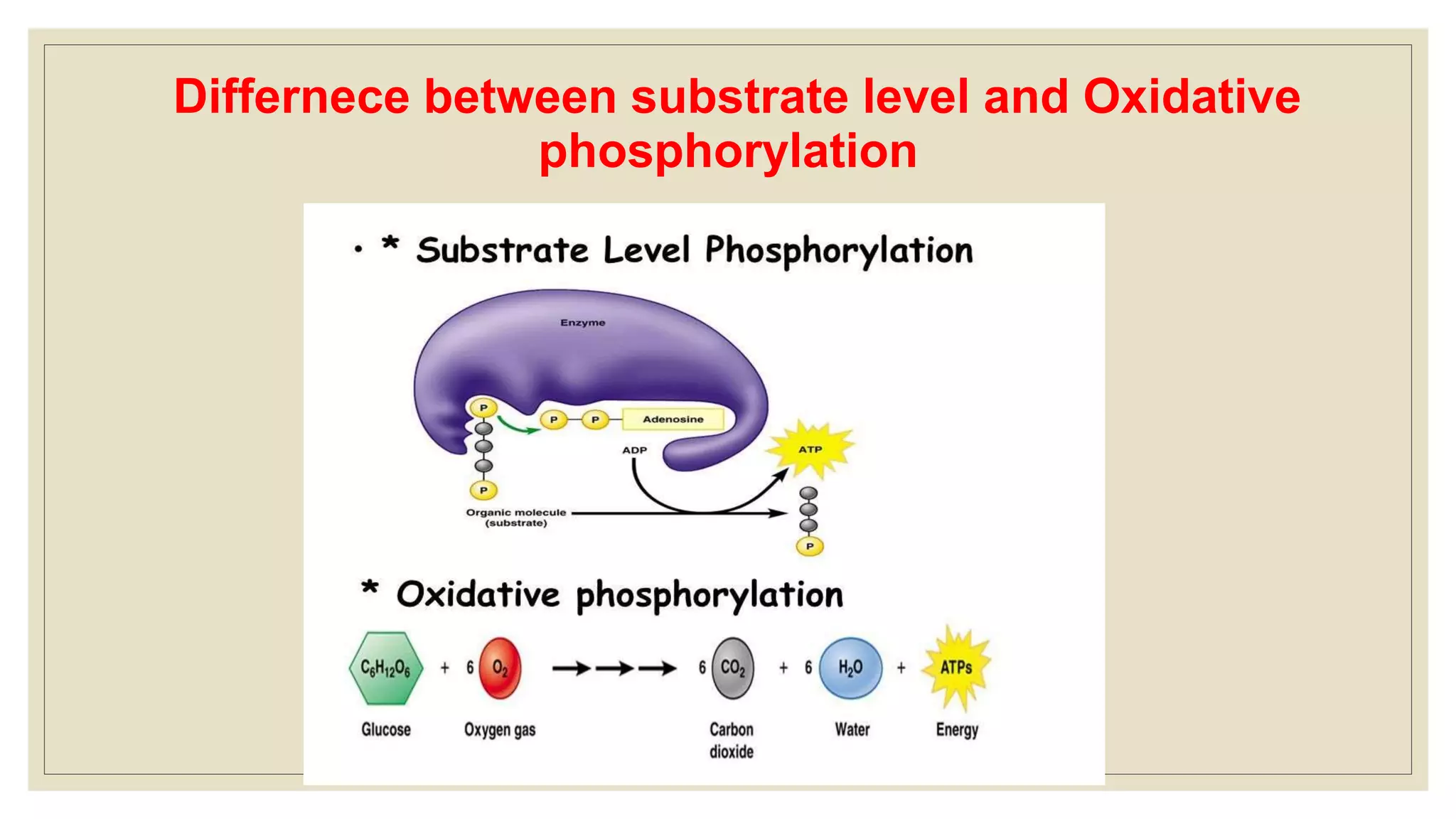
1.Substrate level phosphorylation
2.Oxidative phosphorylation
Substrate level phosphorylation
ATP is formed when transfer a phosphate group from
substrate to ADP by enzyme.
It form the 10% of ATP
Eg. It is occur in Glycolysis and Krebs cycle
Oxidative phosphorylation
This process takes place in mitochondria and is energetically coupled to
a proton gradient over a membrane.
The H+ gradients established by electron transport chain are used by
the enzyme ATP synthase as a source of energy for direct linking of an
inorganic phosphate to ADP.
It form the 90% of ATP
Eg Cellular respiration
Differnece between substrate level and Oxidative
phosphorylation
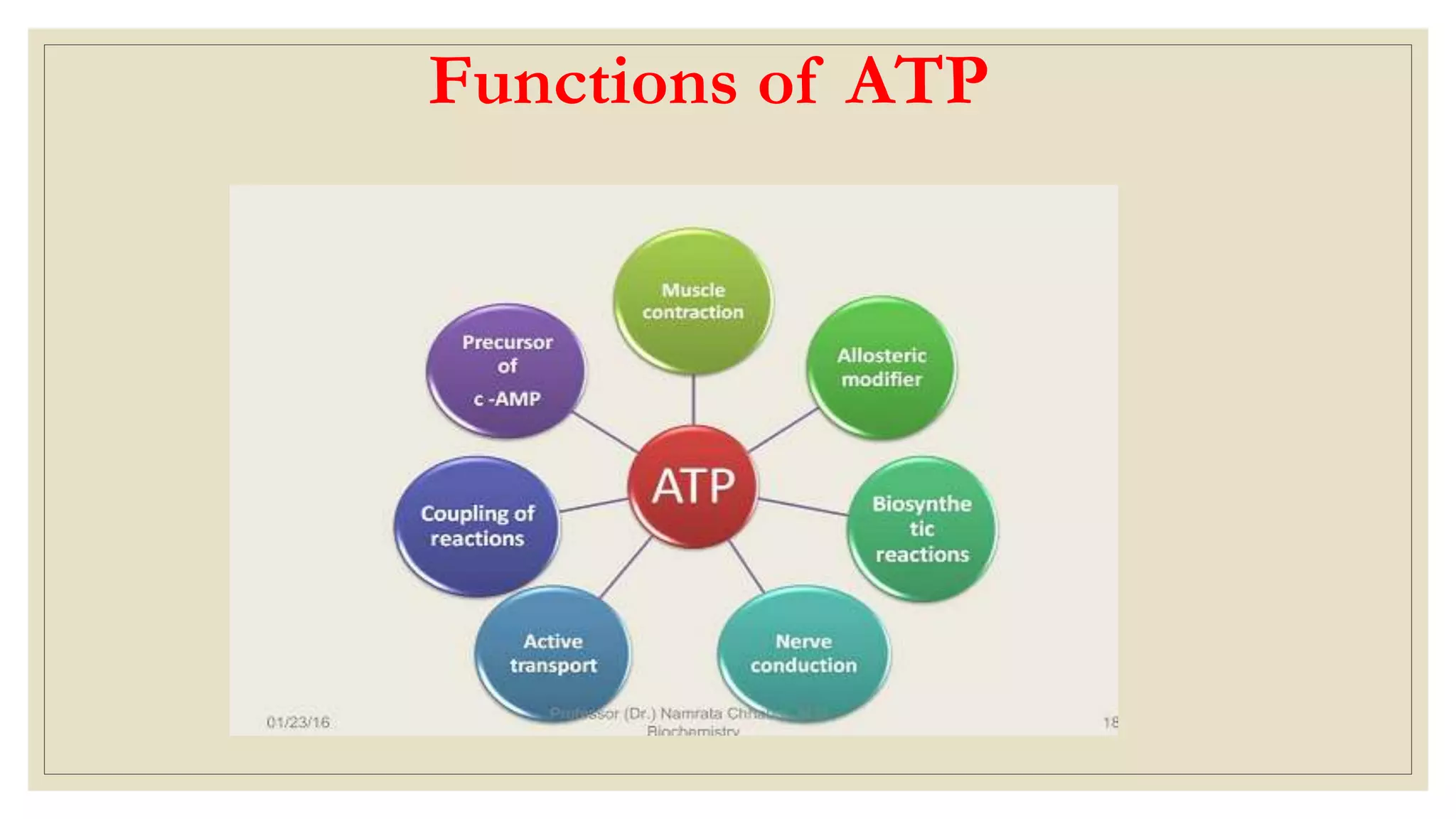
Functions of ATP
Functions of ATP
1. Intracellular signaling
ATP is involved in signal transduction by serving as substrate for kinases,
enzymes that transfer phosphate groups.
2. DNA and RNA synthesis
ATP is one of four "monomers" required in the synthesis of RNA and DNA
3. Amino acid activation in protein synthesis
The coupling reaction proceeds in two steps:
aa + ATP ⟶ aa-AMP + PPi
aa-AMP + tRNA ⟶ aa-tRNA + AMP
4. ATP binding cassette transporter
Transporting chemicals out of a cell against a gradient is often associated with ATP
hydrolysis.
5. Extracellular signalling and neurotransmision
Cells secrete ATP to communicate with other cells in a process called purinergic signalling
ATP serves as a neurotransmitter in many parts of the nervous system
6. Protein solubility
ATP has recently been proposed to act as a biological hydrotrope and has been shown to
affect proteome-wide solubility.
7.Muscle contraction
ATP is essential for skeletal Muscle
8. Allosteric modulator
It is bind to a receptor to change that receptor's response to stimulus
9.Precursor of cAMP
Creatinine Phosphate
Creatine and Creatinine
◦ Creatine and creatinine are not the same substance
◦ Creatine is found in the muscles.
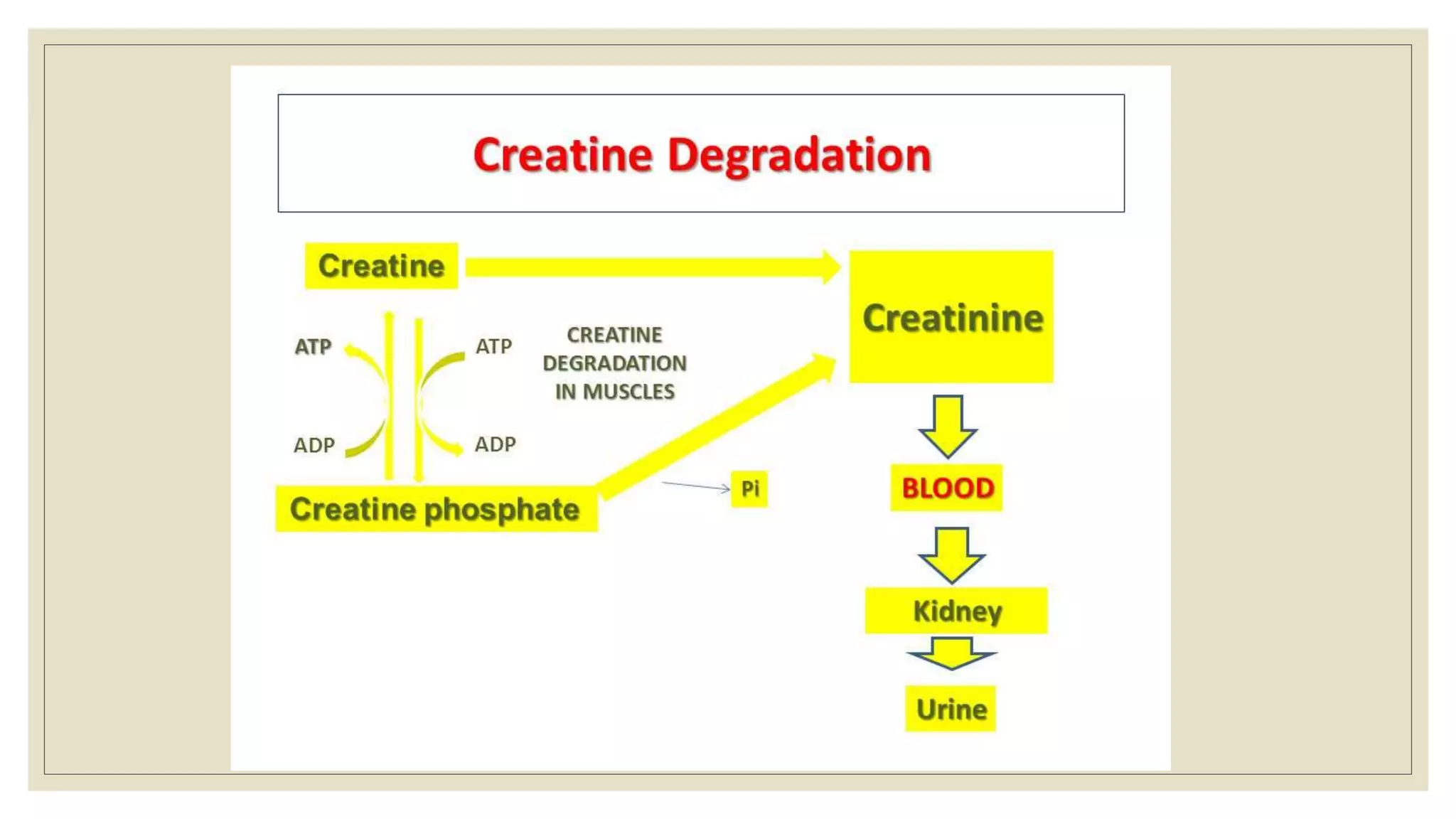
◦ Creatinine is a break-down product (a waste product) of creatine
phosphate and creatine in muscles, and is usually produced at a fairly
constant rate by the body depending on muscle mass
◦ Phosphocreatine, also known as creatine phosphate (CP) or PCr (Pcr)
Creatinine Phosphate
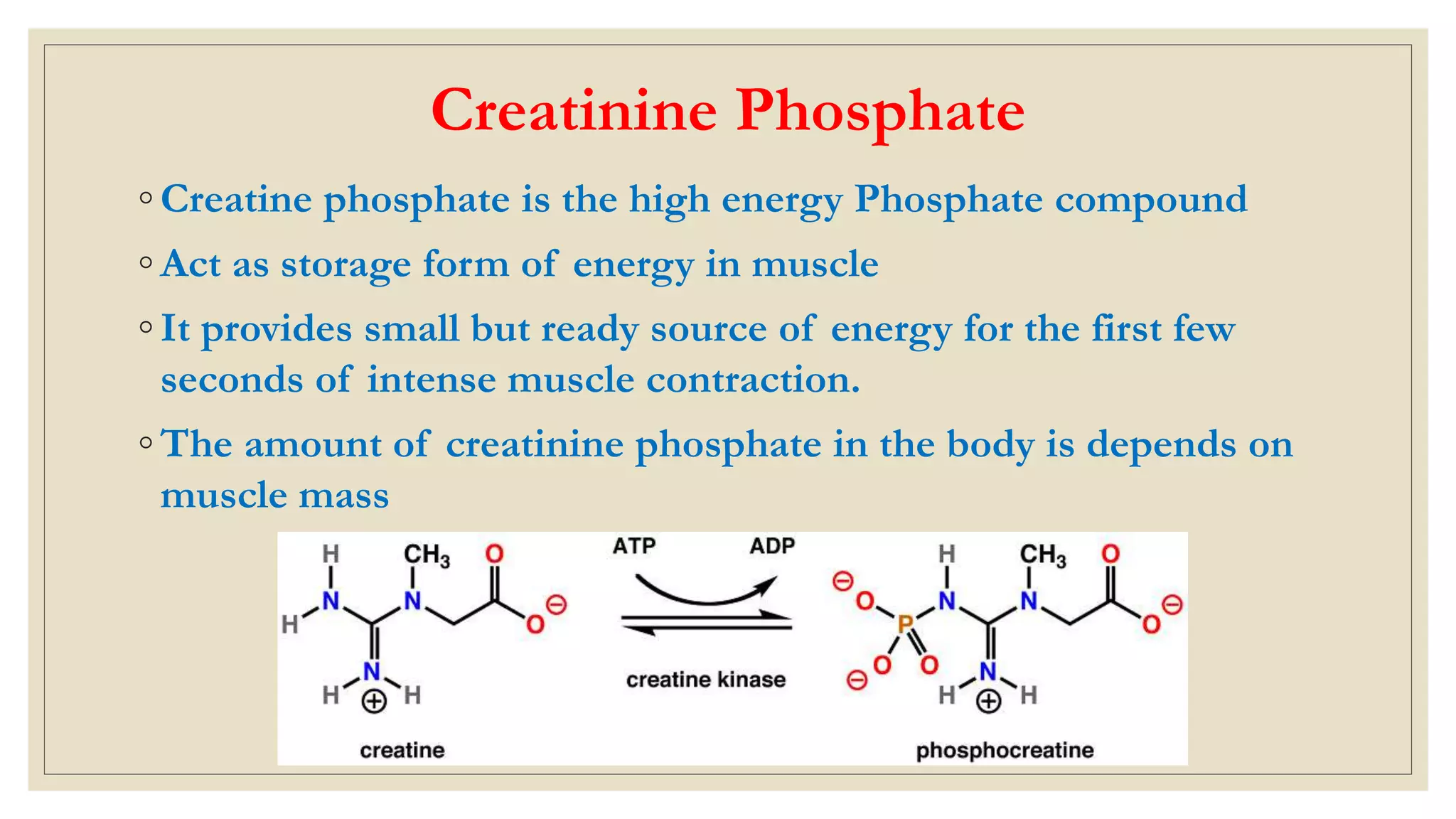
◦ Creatine phosphate is the high energy Phosphate compound
◦ Act as storage form of energy in muscle
◦ It provides small but ready source of energy for the first few
seconds of intense muscle contraction.
◦ The amount of creatinine phosphate in the body is depends on
muscle mass
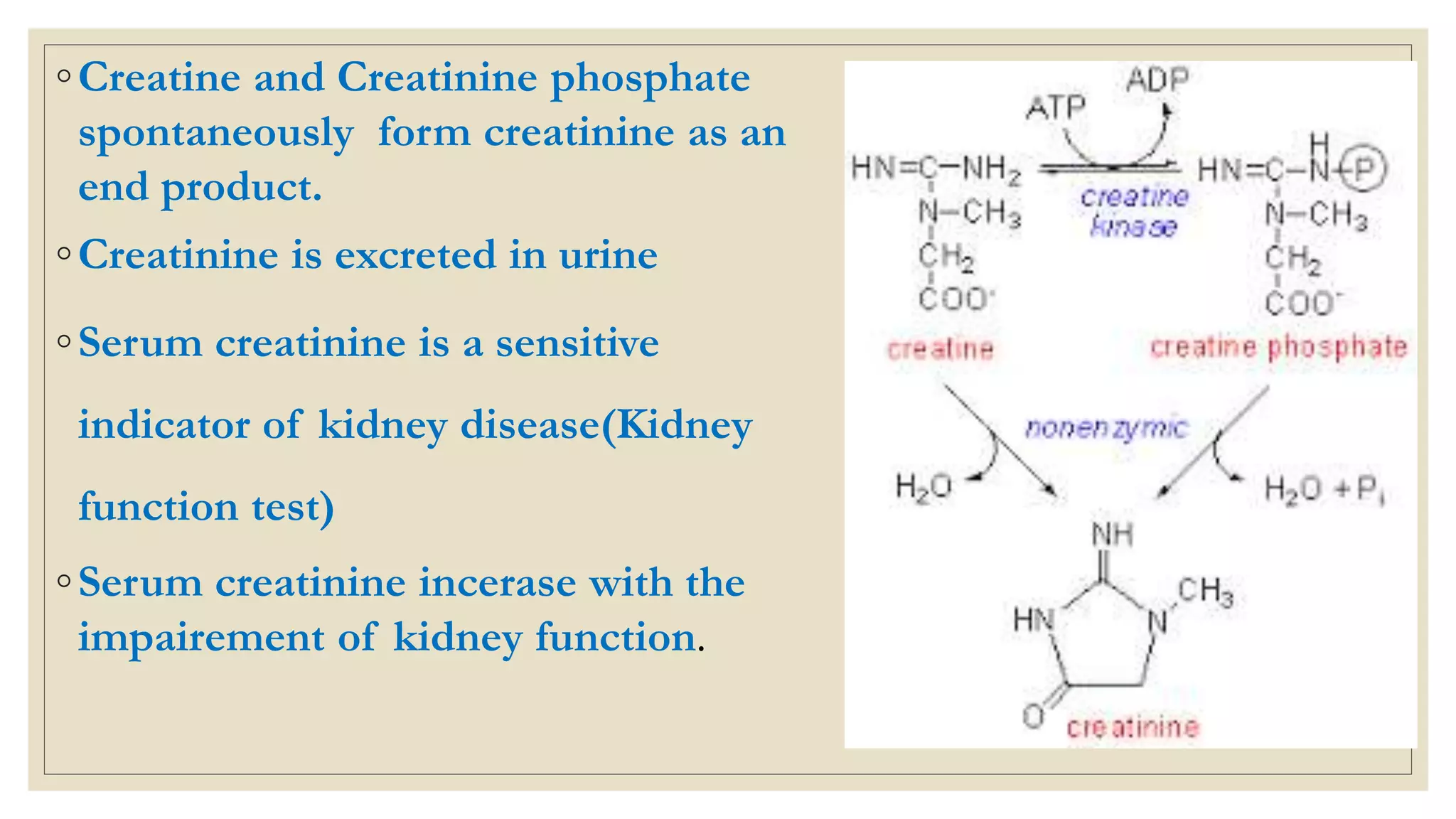
◦Creatine and Creatinine phosphate
spontaneously form creatinine as an
end product.
◦Creatinine is excreted in urine
◦Serum creatinine is a sensitive
indicator of kidney disease(Kidney
function test)
◦Serum creatinine incerase with the
impairement of kidney function.
Function of Phosphocreatine
1) Act as a Storage form of energy in muscles.
2) Creatinine has the power of slowing down certain diseases
e.g. Parkinson's disease.
THANK YOU…!

ATP

  • 1.
    HAP-II ENERGETICS (Adenosine Triphosphate and CratininePhosphate ) Mr N.JEGAN Associate Professor K.M.COLLEGE OF PHARMACY. MADURAI.
  • 2.
    Adenosine triphosphate Adenosine triphosphateis an organic compound and hydrotrope that provides energy to drive many processes in living cells e.g. Muscle contraction Nerve impulse propagation Chemical synthesis
  • 3.
    ATP ATP is anucleotide which contains ribose (the sugar unit), adenine (the base) and three phosphate groups attached to the ribose.
  • 4.
    Site of ATPformation The process takes place in the mitochondria, where ATP synthase is located in the inner mitochondrial membrane.
  • 5.
    Mechanisms of ATPformation There are two basic mechanism involved for ATP formation 1.Substrate level phosphorylation 2.Oxidative phosphorylation
  • 6.
    Substrate level phosphorylation ATPis formed when transfer a phosphate group from substrate to ADP by enzyme. It form the 10% of ATP Eg. It is occur in Glycolysis and Krebs cycle
  • 7.
    Oxidative phosphorylation This processtakes place in mitochondria and is energetically coupled to a proton gradient over a membrane. The H+ gradients established by electron transport chain are used by the enzyme ATP synthase as a source of energy for direct linking of an inorganic phosphate to ADP. It form the 90% of ATP Eg Cellular respiration
  • 8.
    Differnece between substratelevel and Oxidative phosphorylation
  • 9.
  • 10.
    Functions of ATP 1.Intracellular signaling ATP is involved in signal transduction by serving as substrate for kinases, enzymes that transfer phosphate groups. 2. DNA and RNA synthesis ATP is one of four "monomers" required in the synthesis of RNA and DNA 3. Amino acid activation in protein synthesis The coupling reaction proceeds in two steps: aa + ATP ⟶ aa-AMP + PPi aa-AMP + tRNA ⟶ aa-tRNA + AMP 4. ATP binding cassette transporter Transporting chemicals out of a cell against a gradient is often associated with ATP hydrolysis.
  • 11.
    5. Extracellular signallingand neurotransmision Cells secrete ATP to communicate with other cells in a process called purinergic signalling ATP serves as a neurotransmitter in many parts of the nervous system 6. Protein solubility ATP has recently been proposed to act as a biological hydrotrope and has been shown to affect proteome-wide solubility. 7.Muscle contraction ATP is essential for skeletal Muscle 8. Allosteric modulator It is bind to a receptor to change that receptor's response to stimulus 9.Precursor of cAMP
  • 12.
  • 13.
    Creatine and Creatinine ◦Creatine and creatinine are not the same substance ◦ Creatine is found in the muscles. ◦ Creatinine is a break-down product (a waste product) of creatine phosphate and creatine in muscles, and is usually produced at a fairly constant rate by the body depending on muscle mass ◦ Phosphocreatine, also known as creatine phosphate (CP) or PCr (Pcr)
  • 14.
    Creatinine Phosphate ◦ Creatinephosphate is the high energy Phosphate compound ◦ Act as storage form of energy in muscle ◦ It provides small but ready source of energy for the first few seconds of intense muscle contraction. ◦ The amount of creatinine phosphate in the body is depends on muscle mass
  • 15.
    ◦Creatine and Creatininephosphate spontaneously form creatinine as an end product. ◦Creatinine is excreted in urine ◦Serum creatinine is a sensitive indicator of kidney disease(Kidney function test) ◦Serum creatinine incerase with the impairement of kidney function.
  • 17.
    Function of Phosphocreatine 1)Act as a Storage form of energy in muscles. 2) Creatinine has the power of slowing down certain diseases e.g. Parkinson's disease.
  • 18.