ENDOCRINE SYSTEM
(Thymus gland)
Mr N.JEGAN
Associate Professor
K.M.COLLEGE OF PHARMACY.
MADURAI.
Thymus gland-Location
Location:
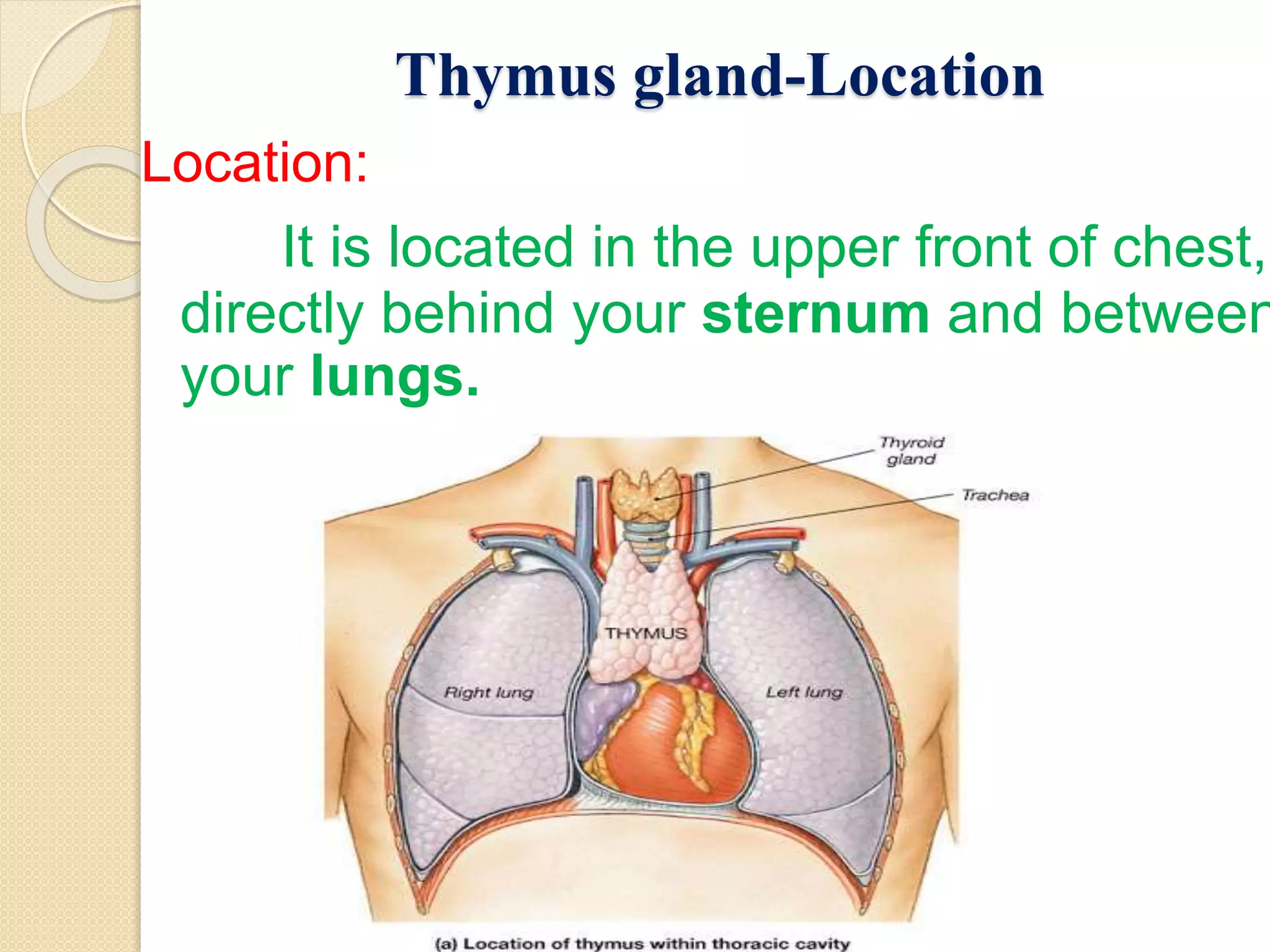
It is located in the upper front of chest,
directly behind your sternum and between
your lungs.
Thymus gland-Structure
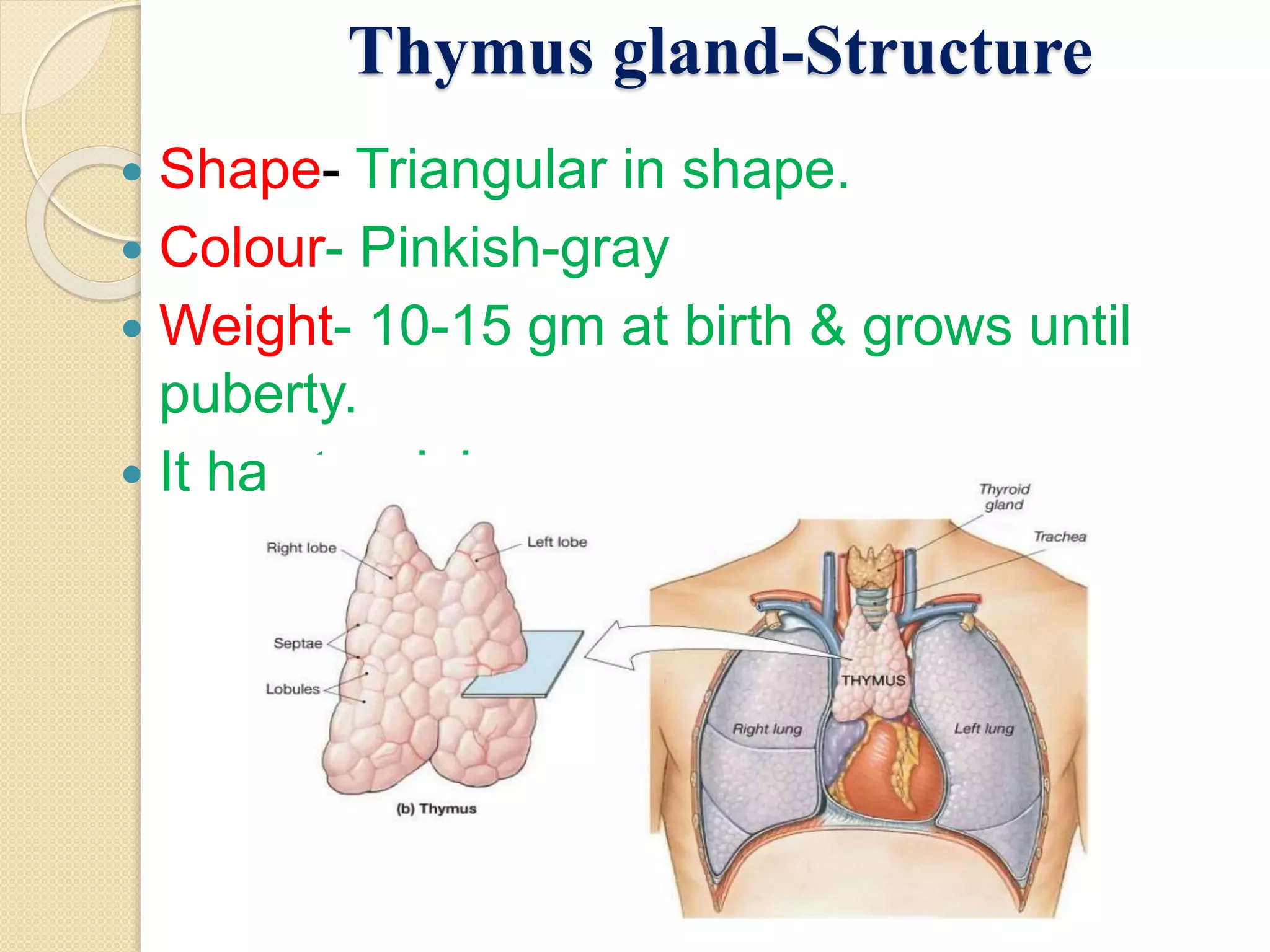
 Shape- Triangular in shape.
 Colour- Pinkish-gray
 Weight- 10-15 gm at birth & grows until
puberty.
 It has two lobes.
Thymus gland-Structure
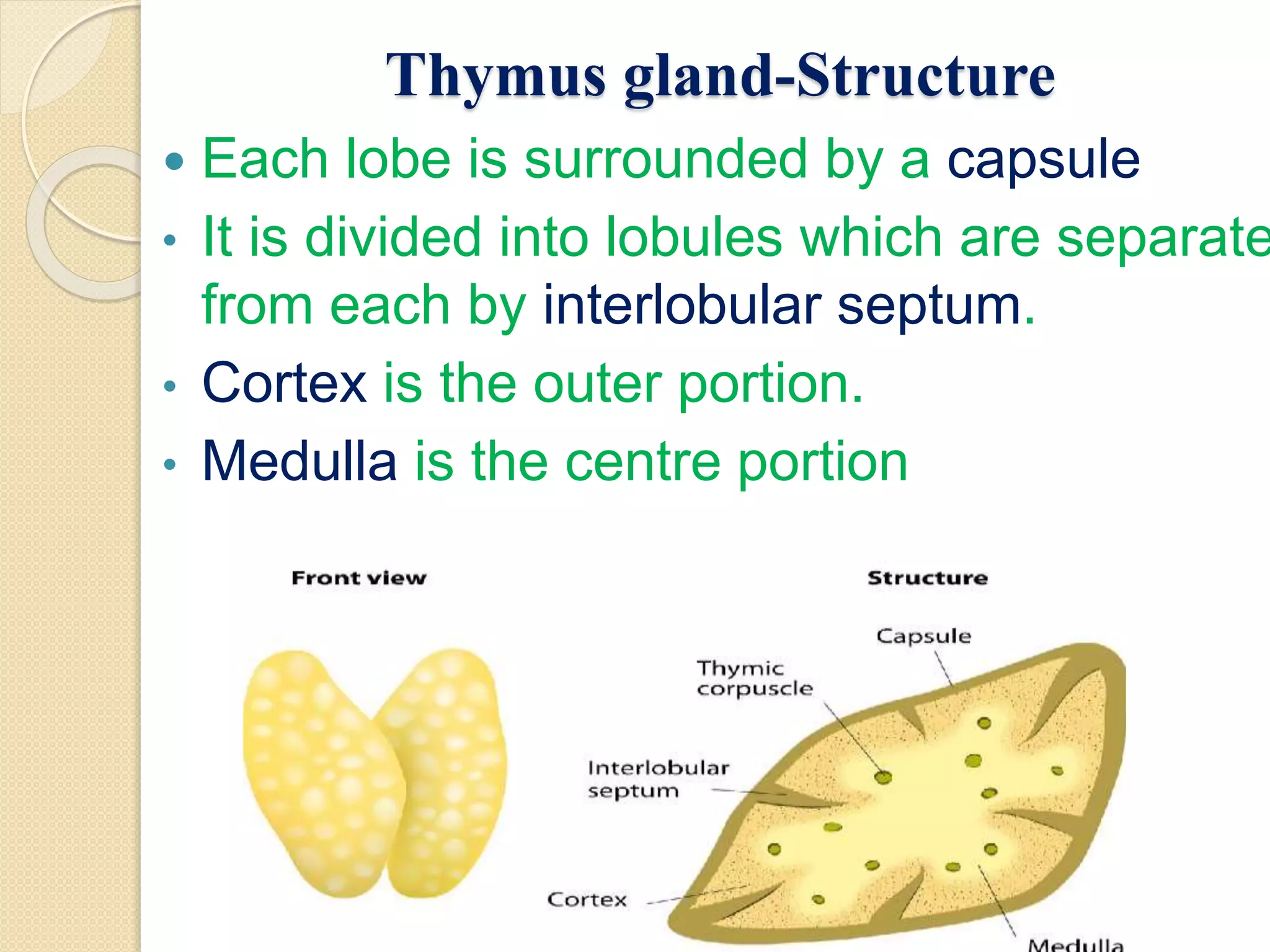
 Each lobe is surrounded by a capsule
• It is divided into lobules which are separate
from each by interlobular septum.
• Cortex is the outer portion.
• Medulla is the centre portion
Thymus gland- Internal Structure
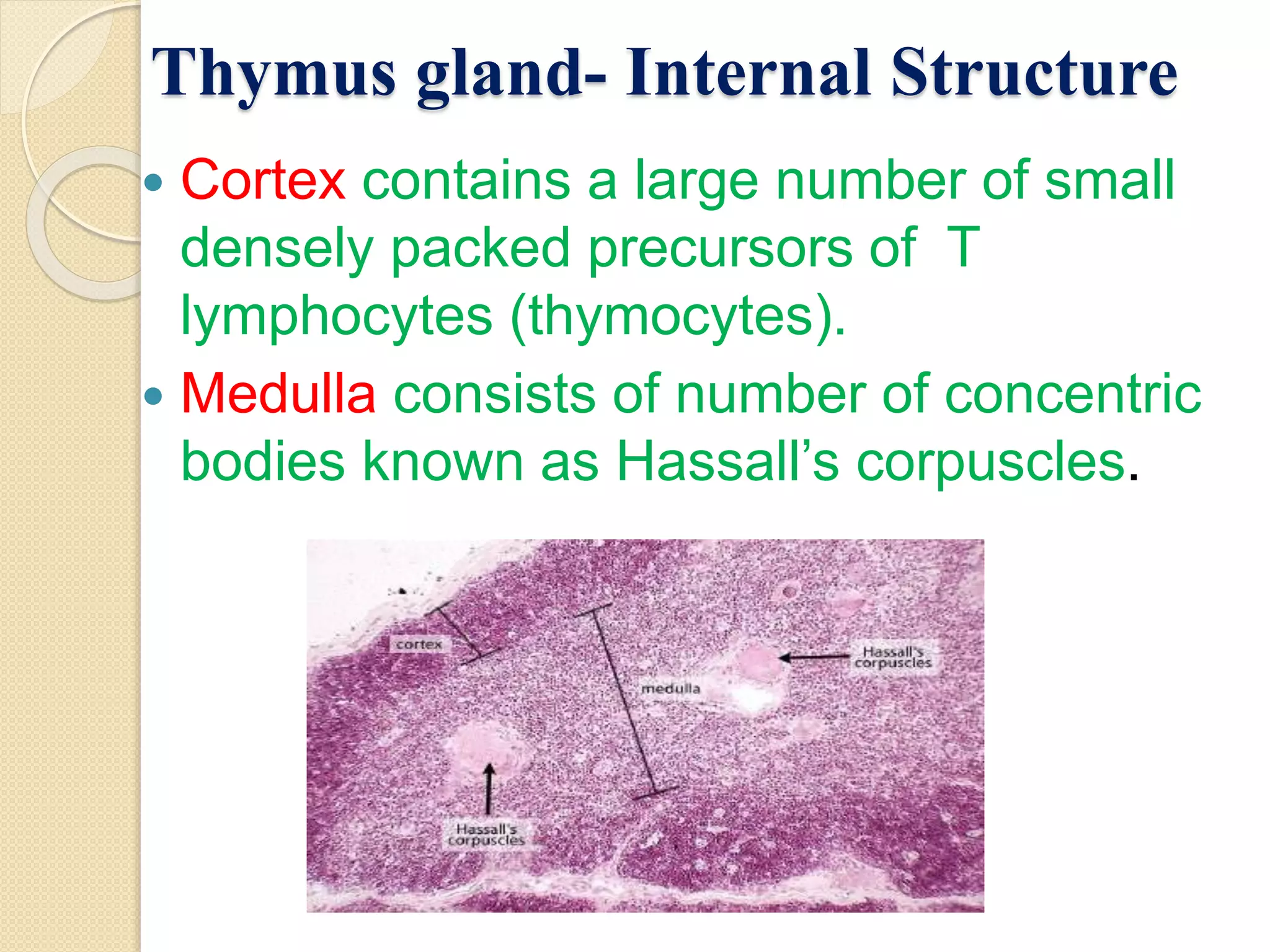
 Cortex contains a large number of small
densely packed precursors of T
lymphocytes (thymocytes).
 Medulla consists of number of concentric
bodies known as Hassall’s corpuscles.
Thymus gland- Hormone
 Secretion of thymus gland collectively
called as
Thymosin
• Derivatives of thymosin hormones
1.Thymulin
2.Thymosin α 1
3.Thymopoietin
Thymosin- Functions
 Development and maturation of
T lymphocytes
cell
• T Lymphocyte is the type of white
blood cell that is an essential of
the immune system in our body.
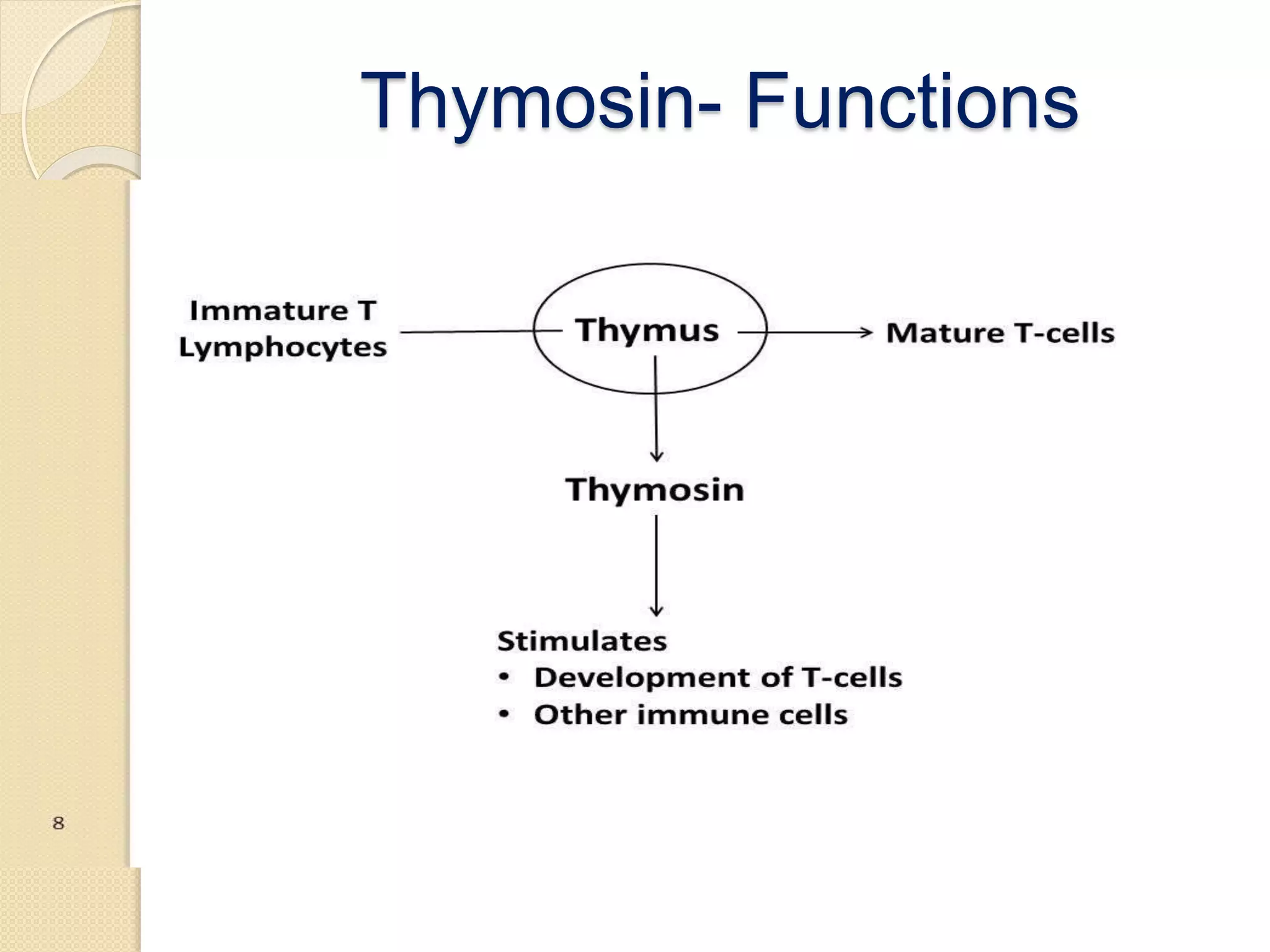
Thymosin- Functions
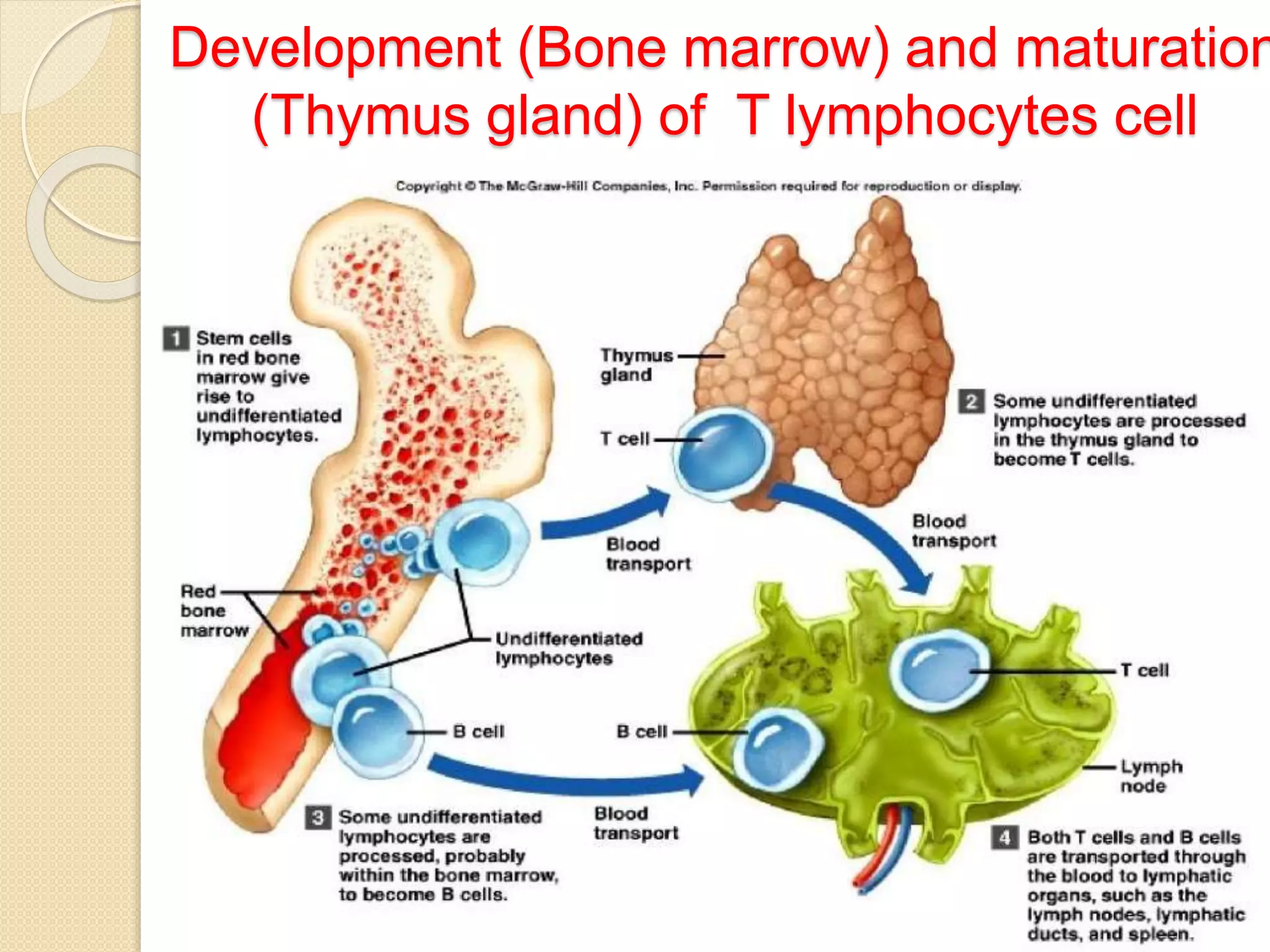
Development (Bone marrow) and maturation
(Thymus gland) of T lymphocytes cell
Thymus gland- Disease
Myasthenia gravis
(weakness and rapid fatigue
of muscles )
It occurs when the thymus is
abnormally large and produces
antibodies that block or destroy
the muscles' receptor sites.
 Pure red cell aplasia
Reduction of red blood cells
(erythrocytes) produced by the bone
marrow
 Hypogammaglobulinemia
Not enough gamma globulins are
produced in the blood.
THANKING YOU

Thymus

  • 1.
    ENDOCRINE SYSTEM (Thymus gland) MrN.JEGAN Associate Professor K.M.COLLEGE OF PHARMACY. MADURAI.
  • 2.
    Thymus gland-Location Location: It islocated in the upper front of chest, directly behind your sternum and between your lungs.
  • 3.
    Thymus gland-Structure  Shape-Triangular in shape.  Colour- Pinkish-gray  Weight- 10-15 gm at birth & grows until puberty.  It has two lobes.
  • 4.
    Thymus gland-Structure  Eachlobe is surrounded by a capsule • It is divided into lobules which are separate from each by interlobular septum. • Cortex is the outer portion. • Medulla is the centre portion
  • 5.
    Thymus gland- InternalStructure  Cortex contains a large number of small densely packed precursors of T lymphocytes (thymocytes).  Medulla consists of number of concentric bodies known as Hassall’s corpuscles.
  • 6.
    Thymus gland- Hormone Secretion of thymus gland collectively called as Thymosin • Derivatives of thymosin hormones 1.Thymulin 2.Thymosin α 1 3.Thymopoietin
  • 7.
    Thymosin- Functions  Developmentand maturation of T lymphocytes cell • T Lymphocyte is the type of white blood cell that is an essential of the immune system in our body.
  • 8.
  • 9.
    Development (Bone marrow)and maturation (Thymus gland) of T lymphocytes cell
  • 10.
    Thymus gland- Disease Myastheniagravis (weakness and rapid fatigue of muscles ) It occurs when the thymus is abnormally large and produces antibodies that block or destroy the muscles' receptor sites.
  • 11.
     Pure redcell aplasia Reduction of red blood cells (erythrocytes) produced by the bone marrow  Hypogammaglobulinemia Not enough gamma globulins are produced in the blood.
  • 12.