Downloaded 2,127 times
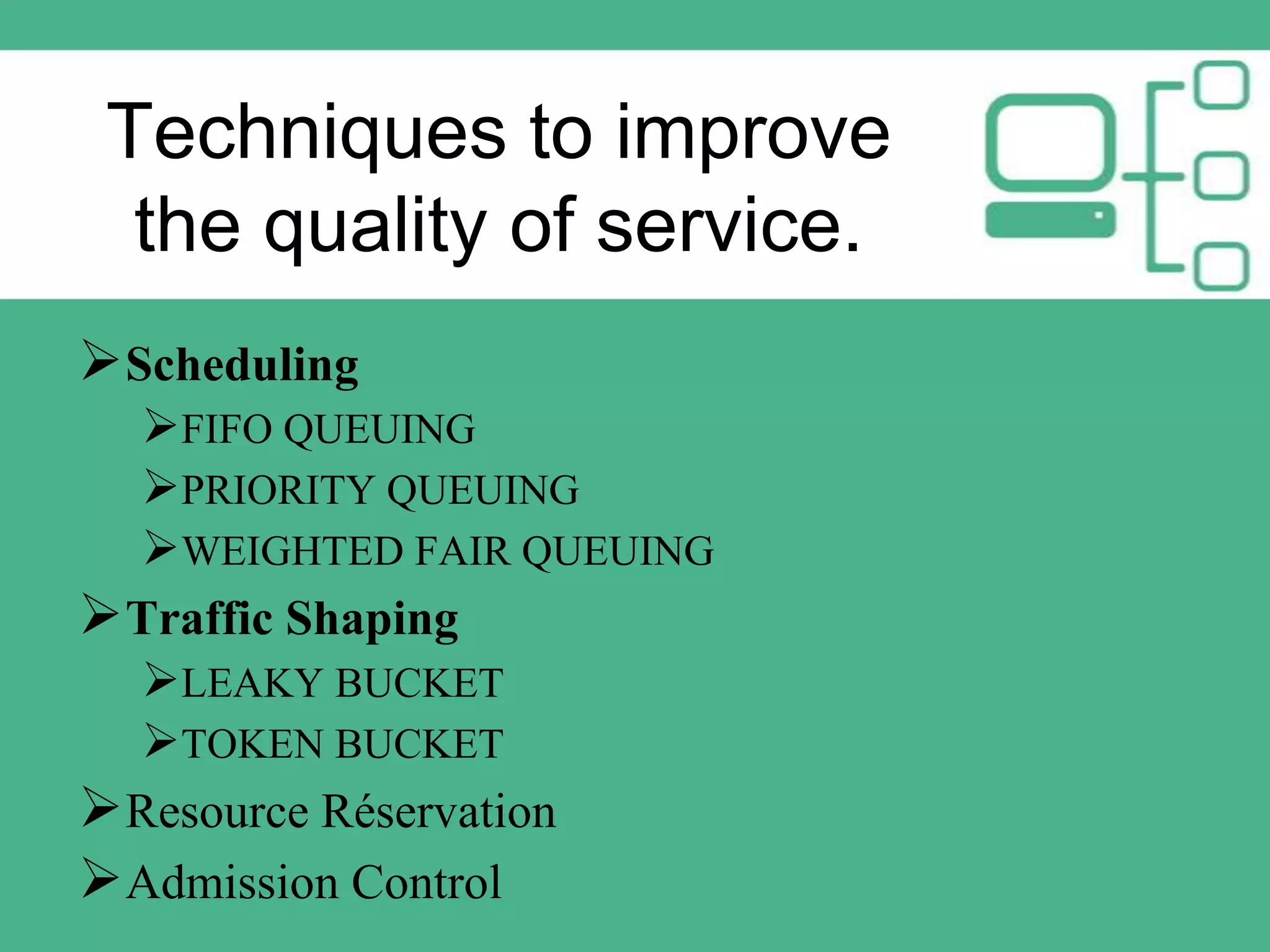
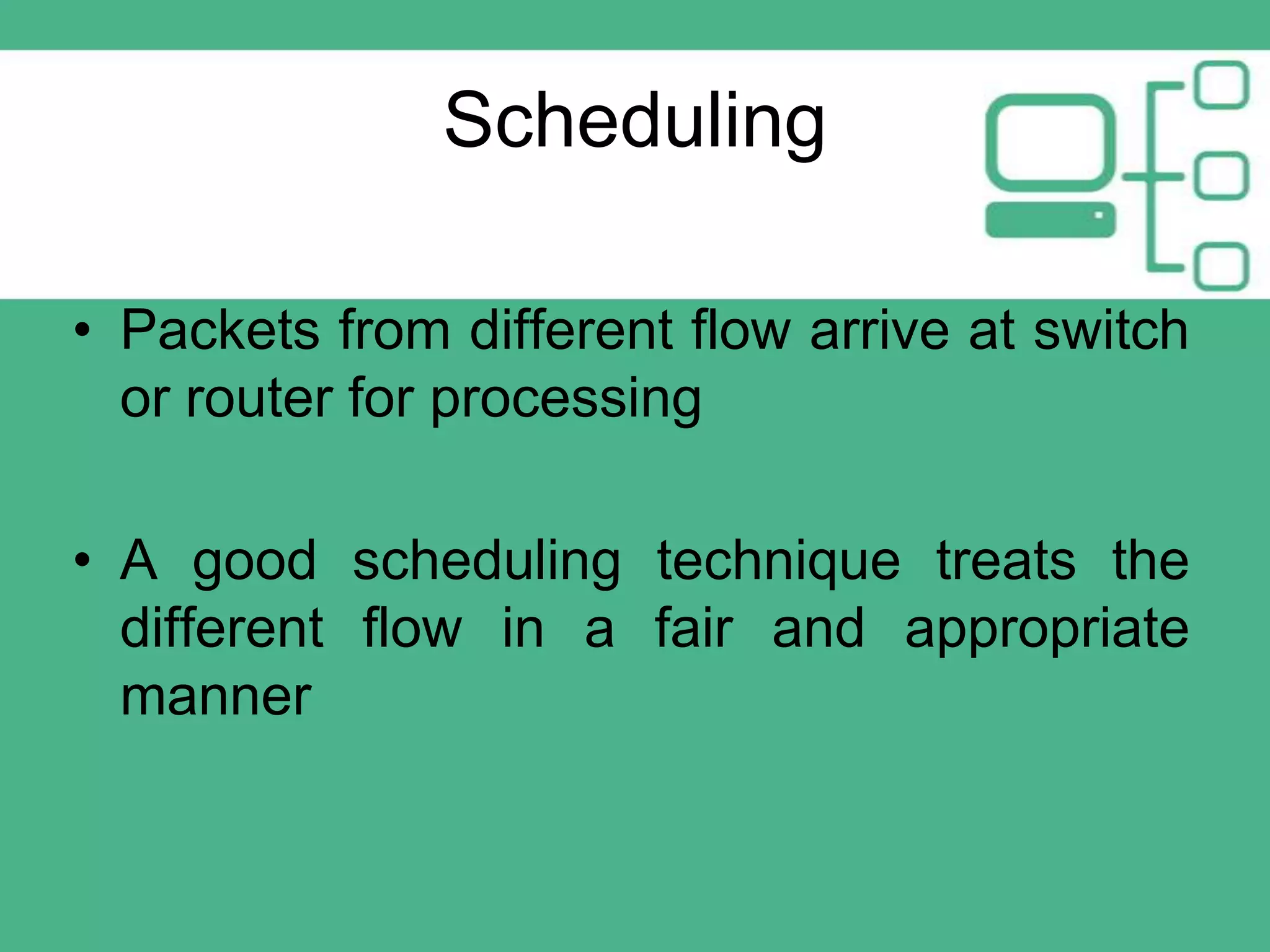
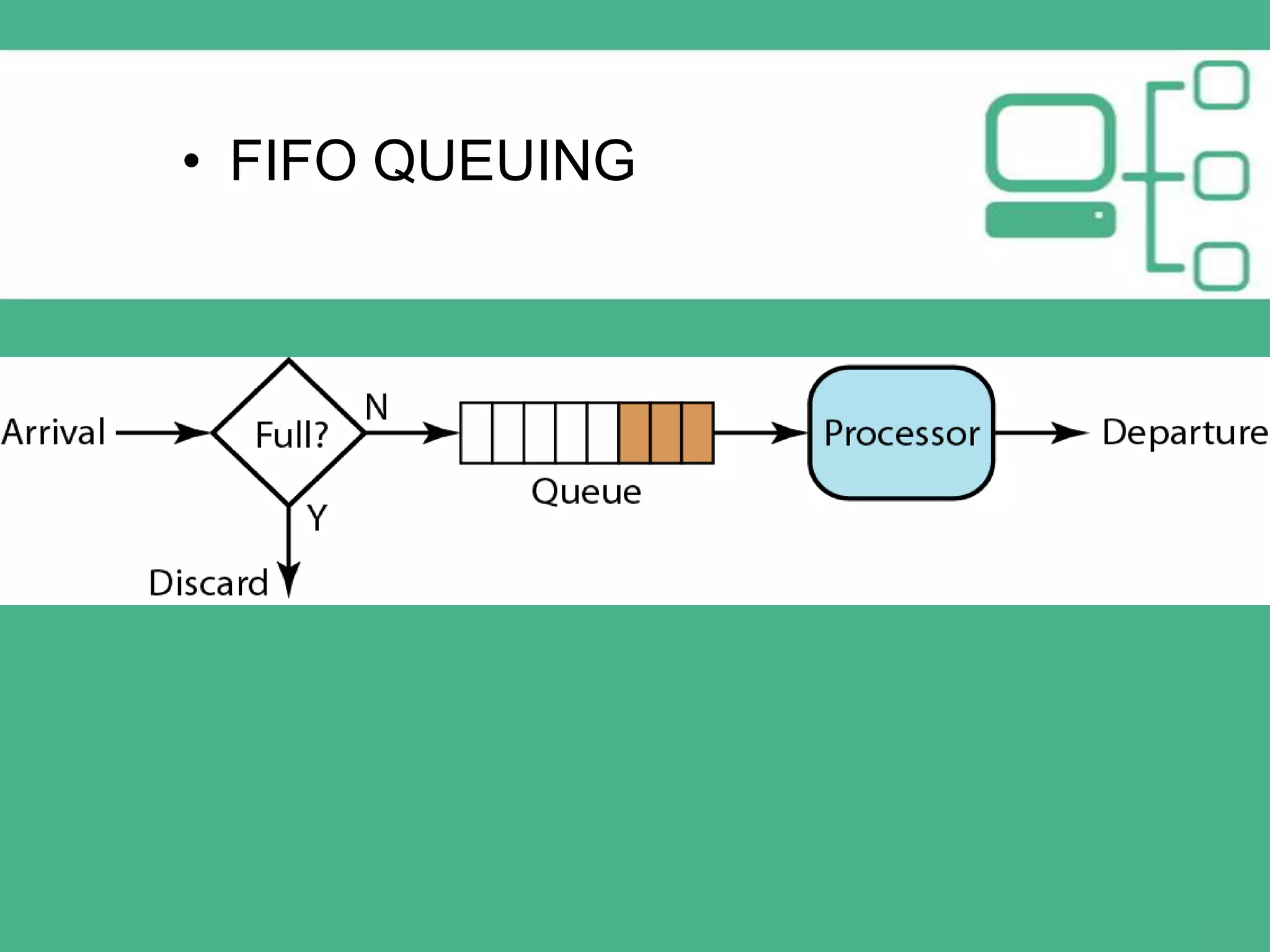
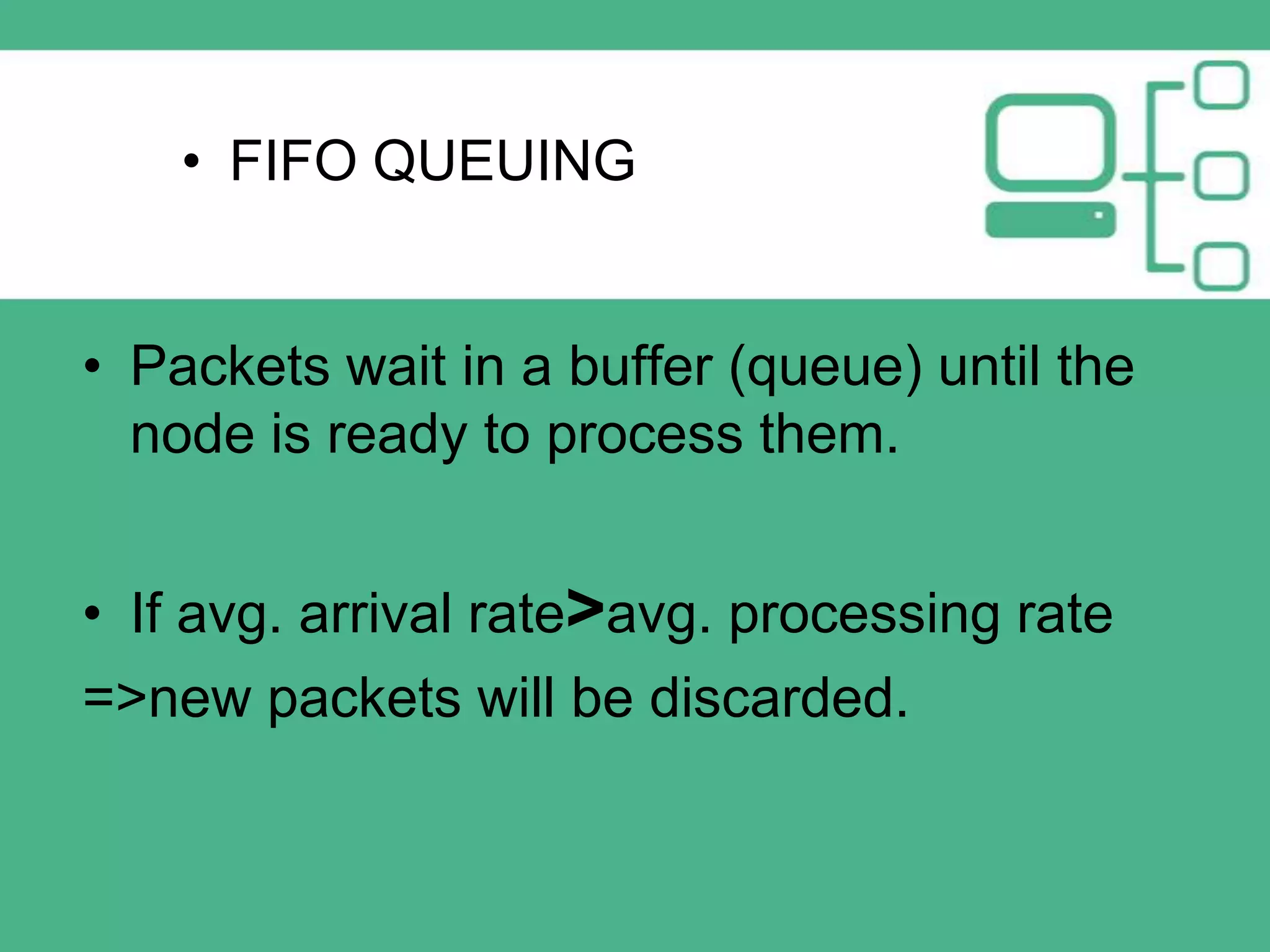
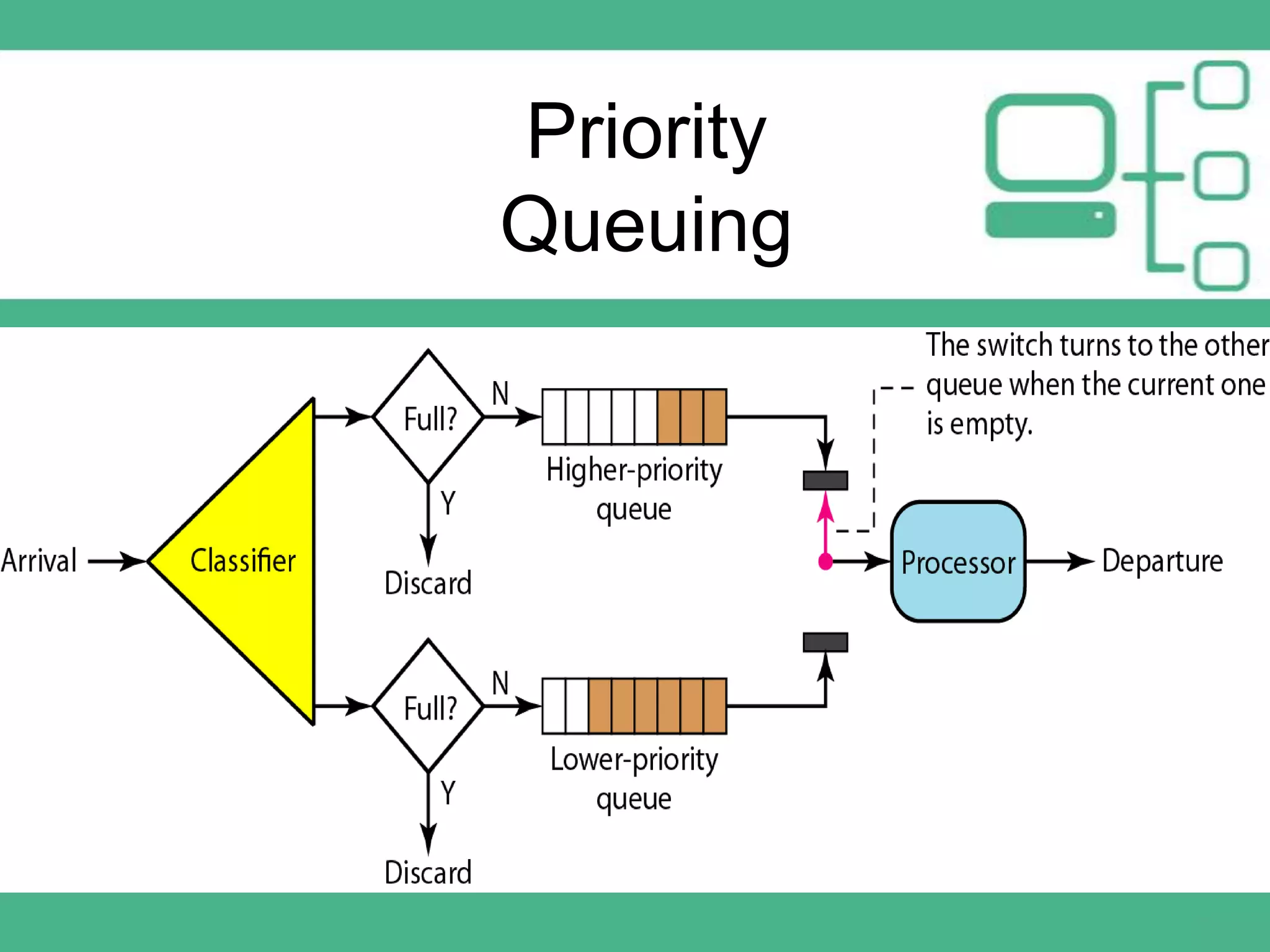
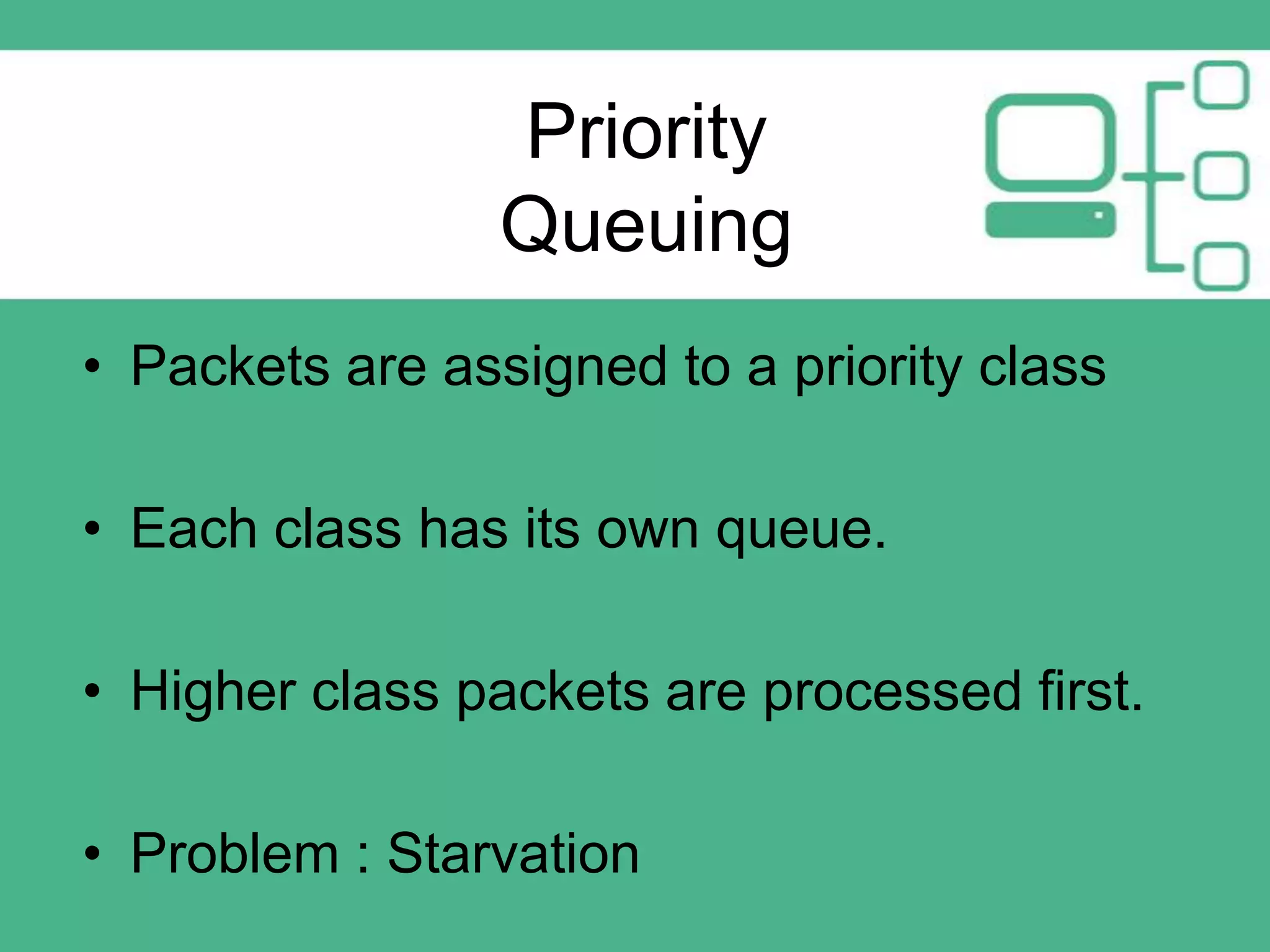
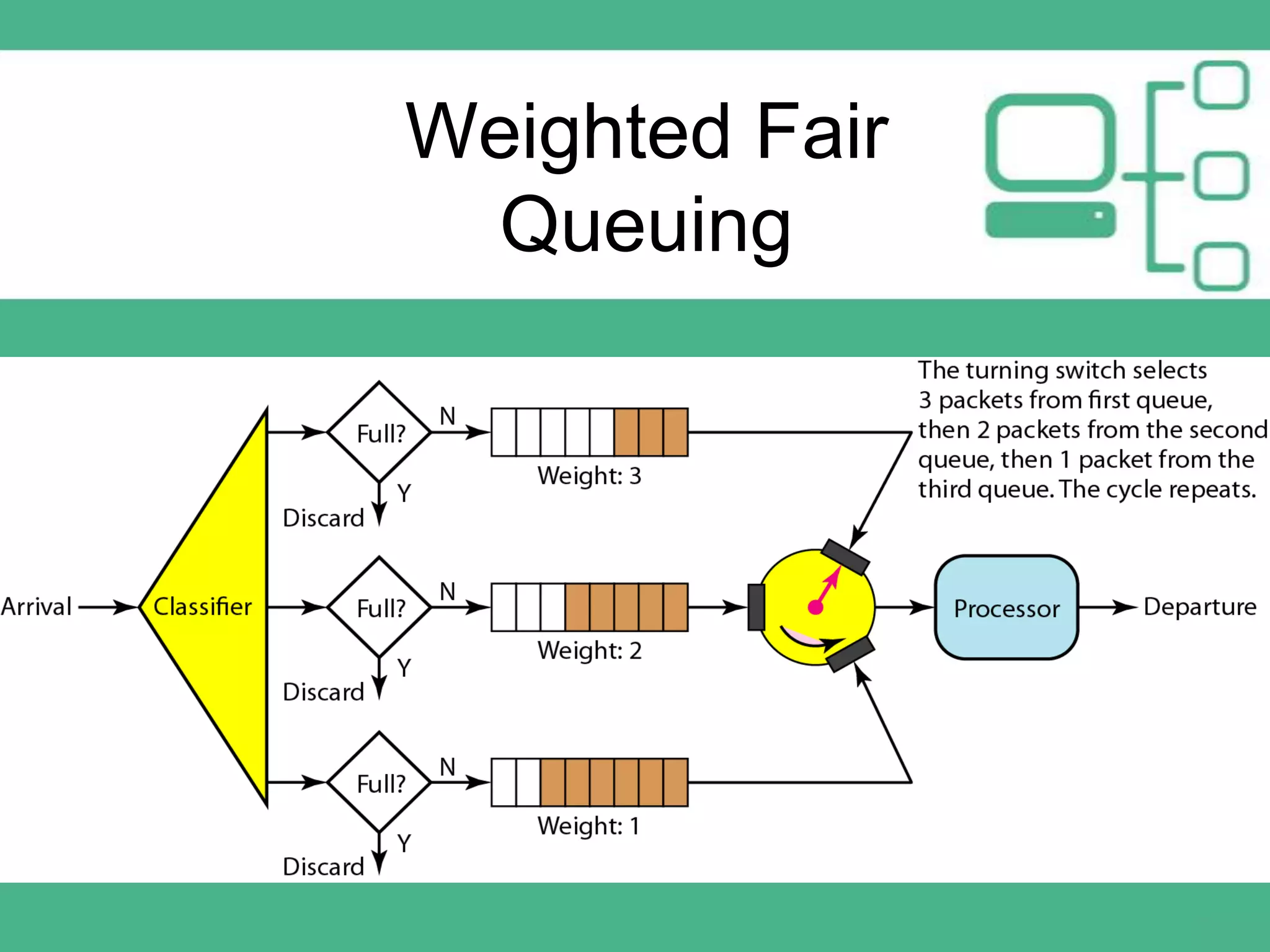
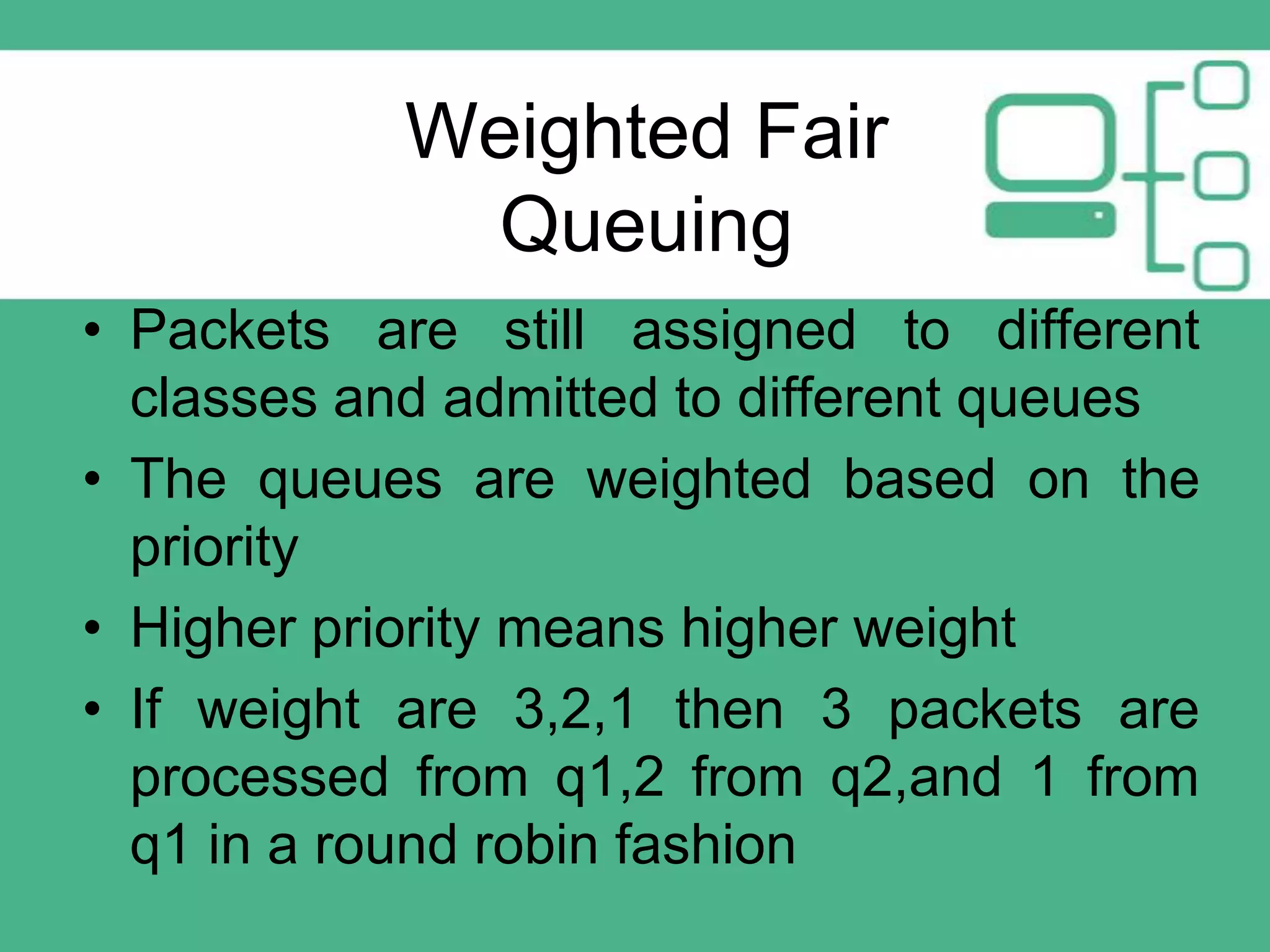
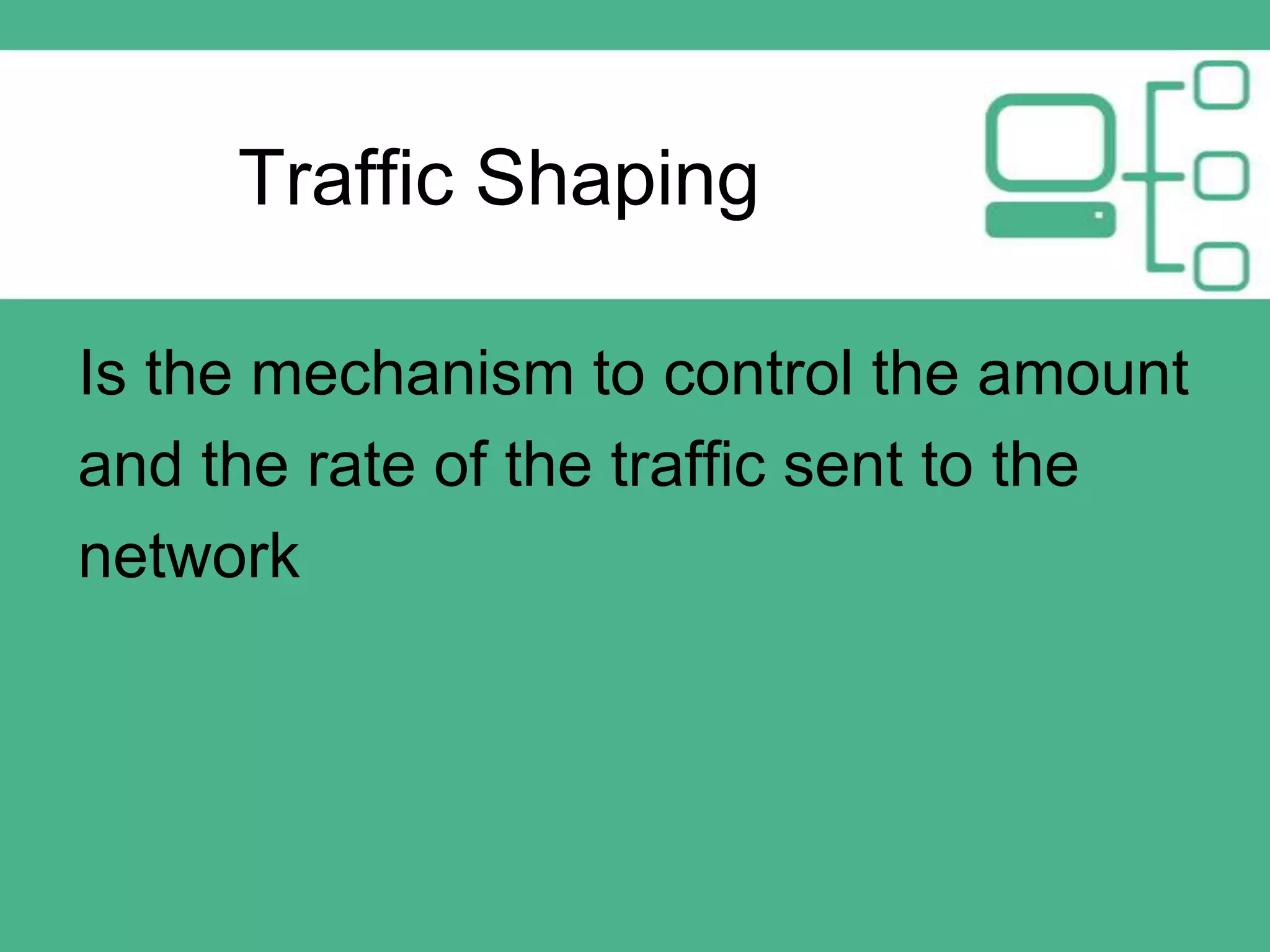
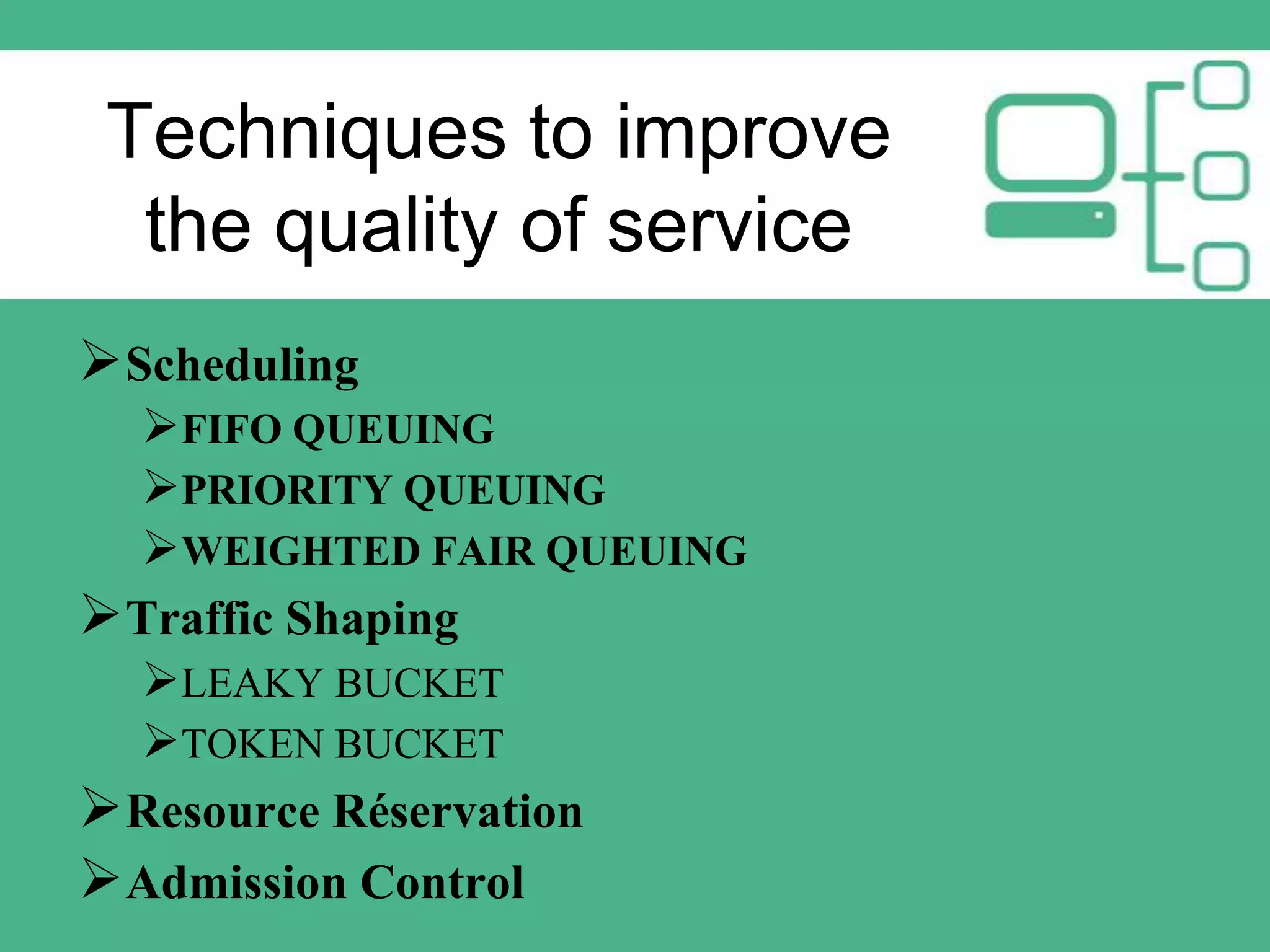
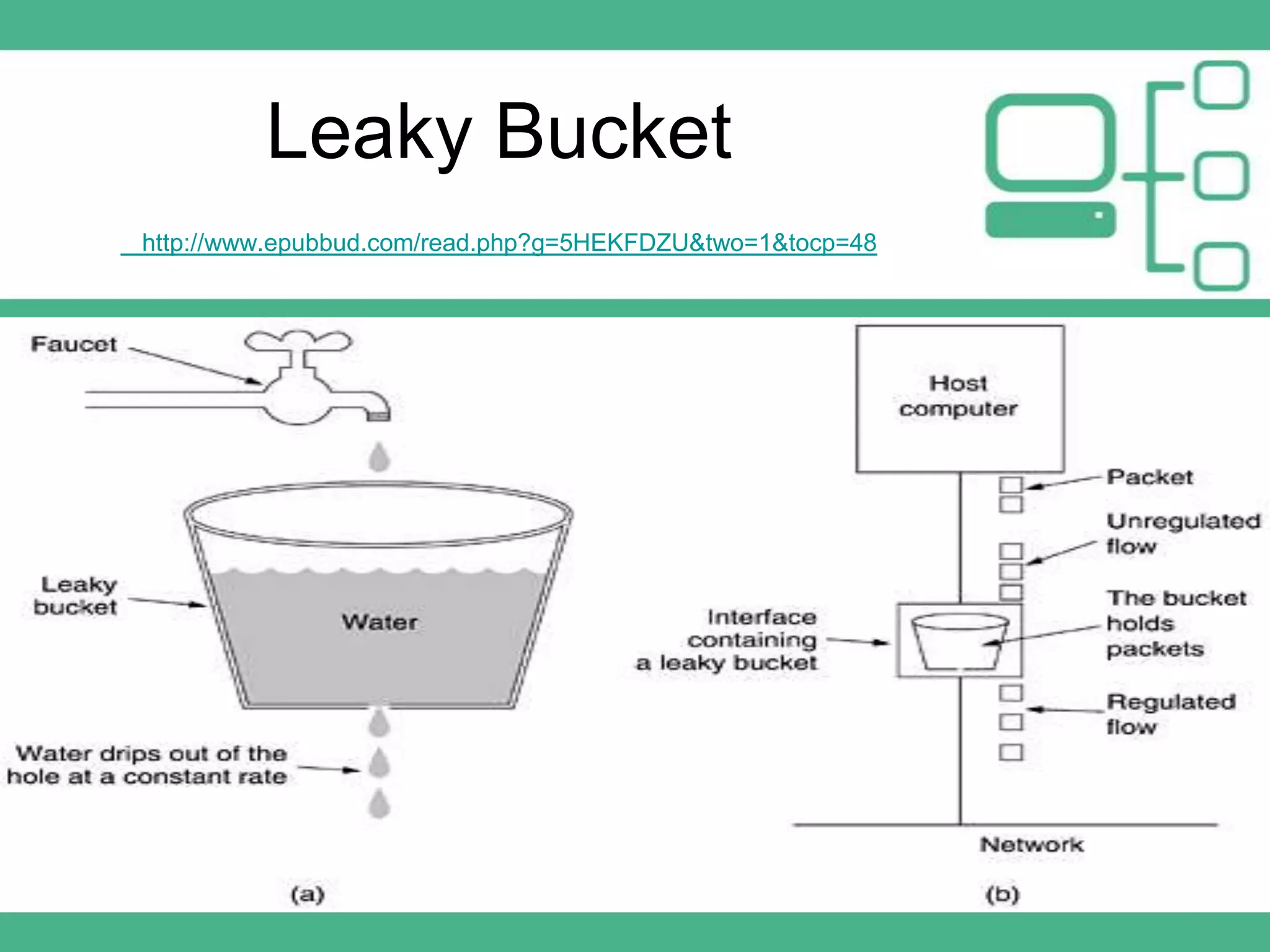
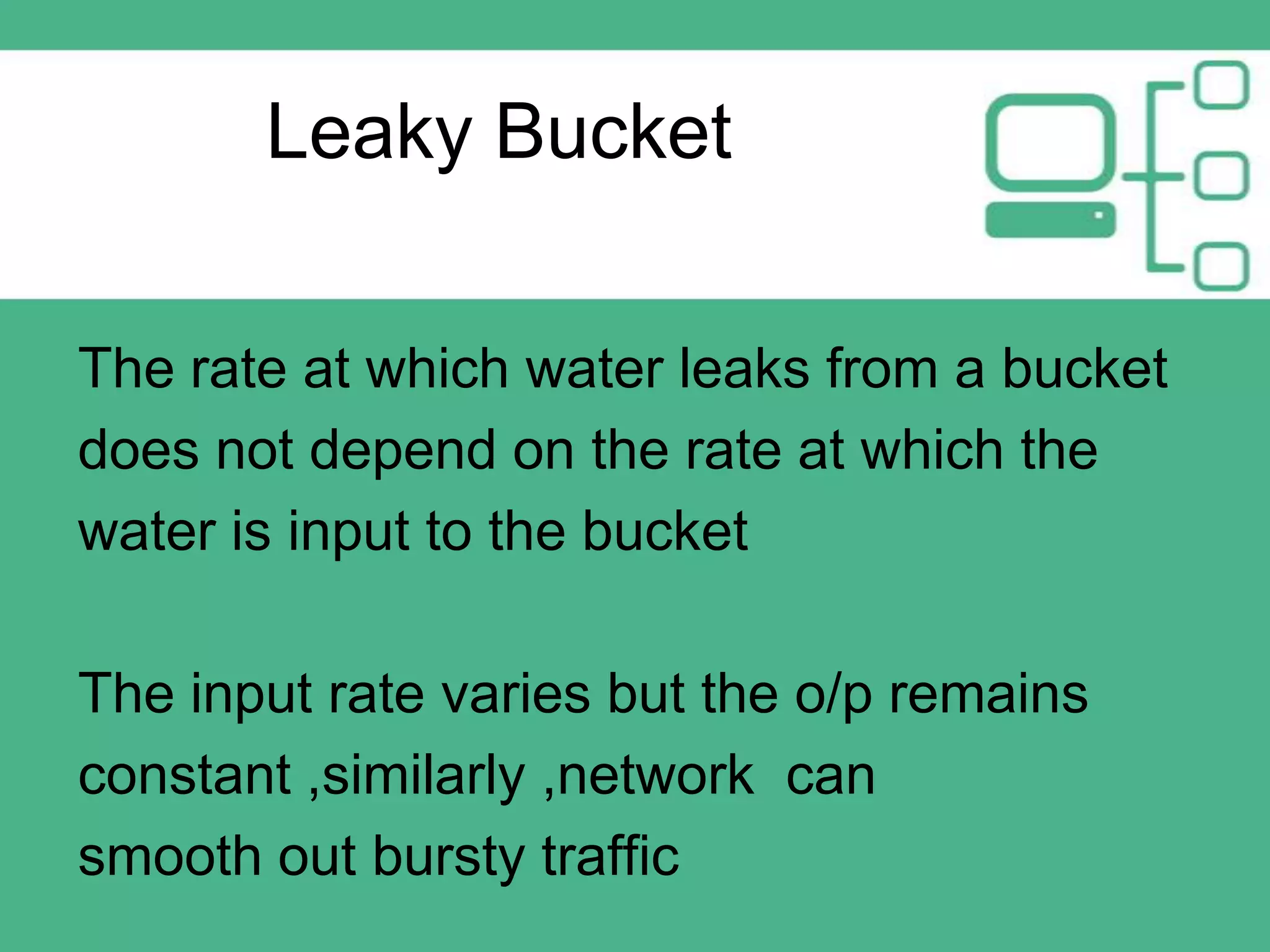
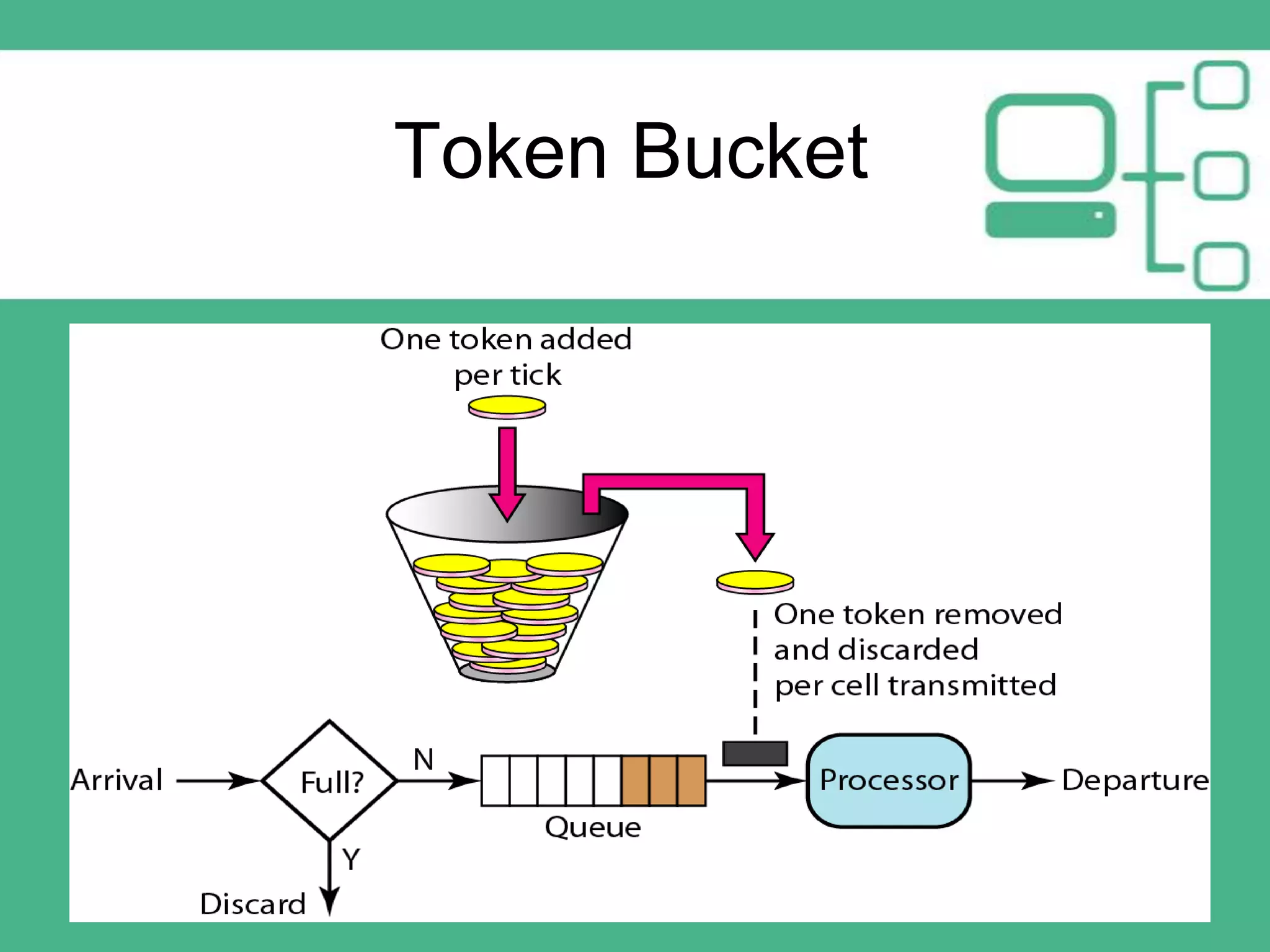
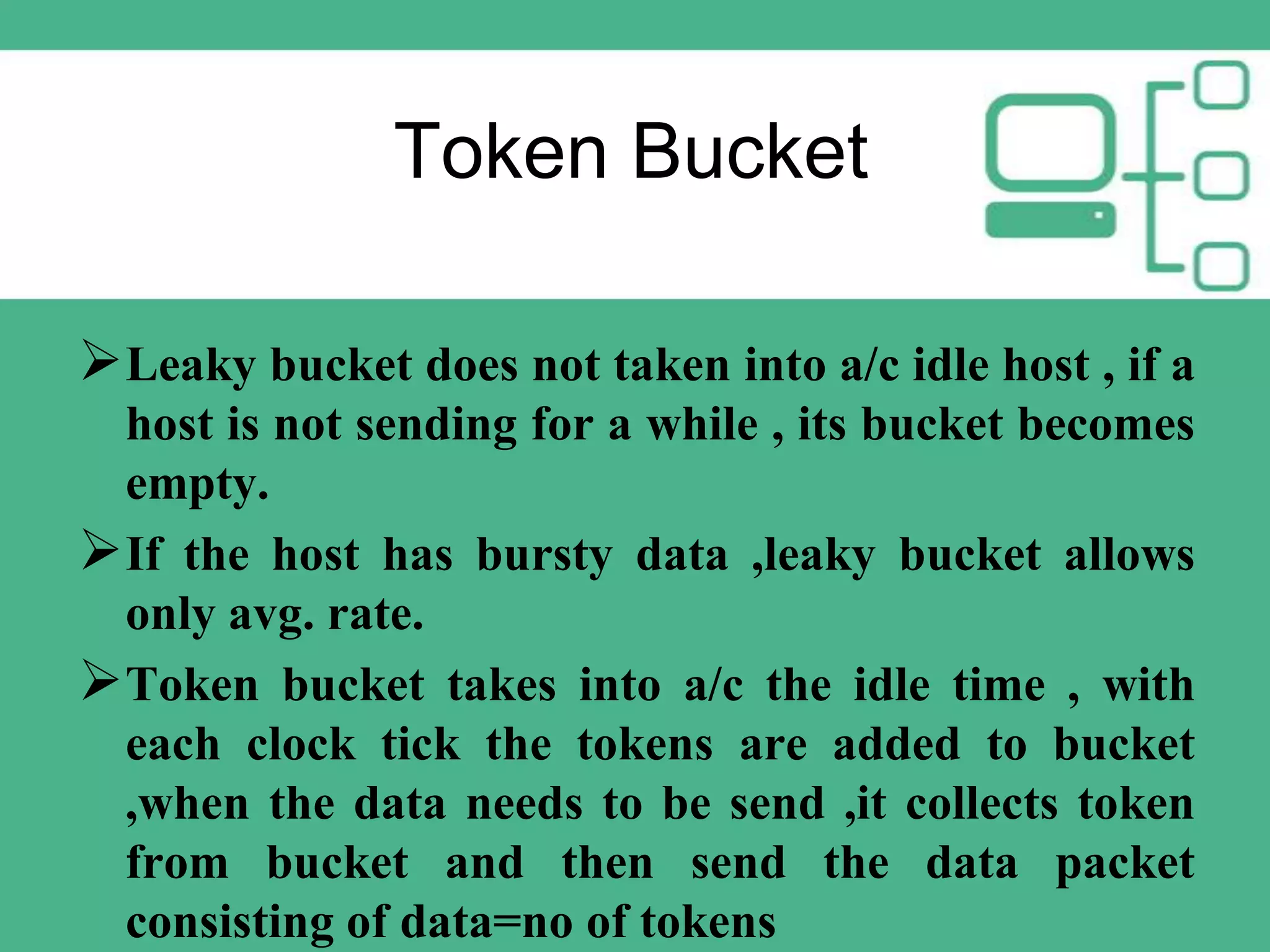
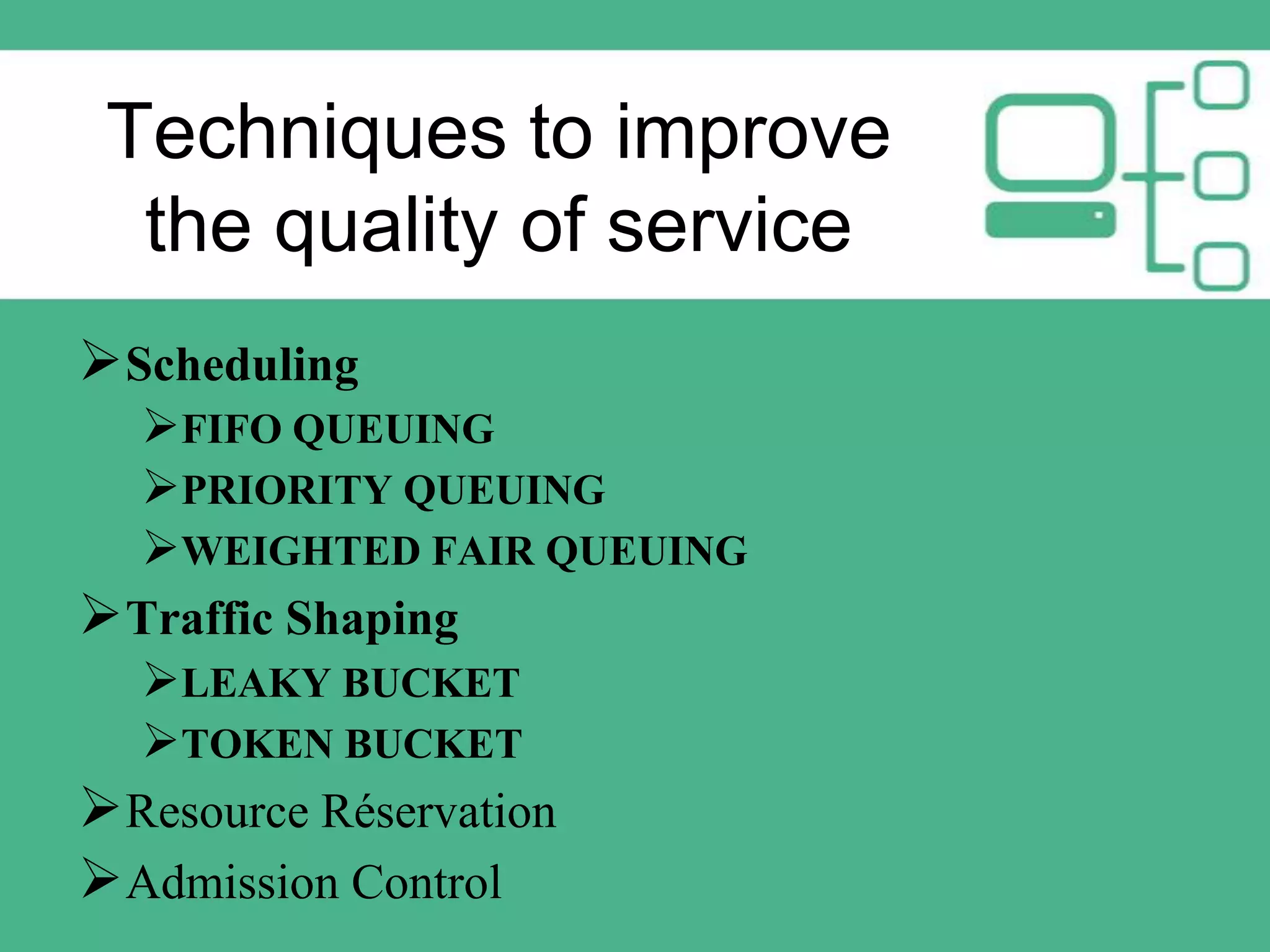
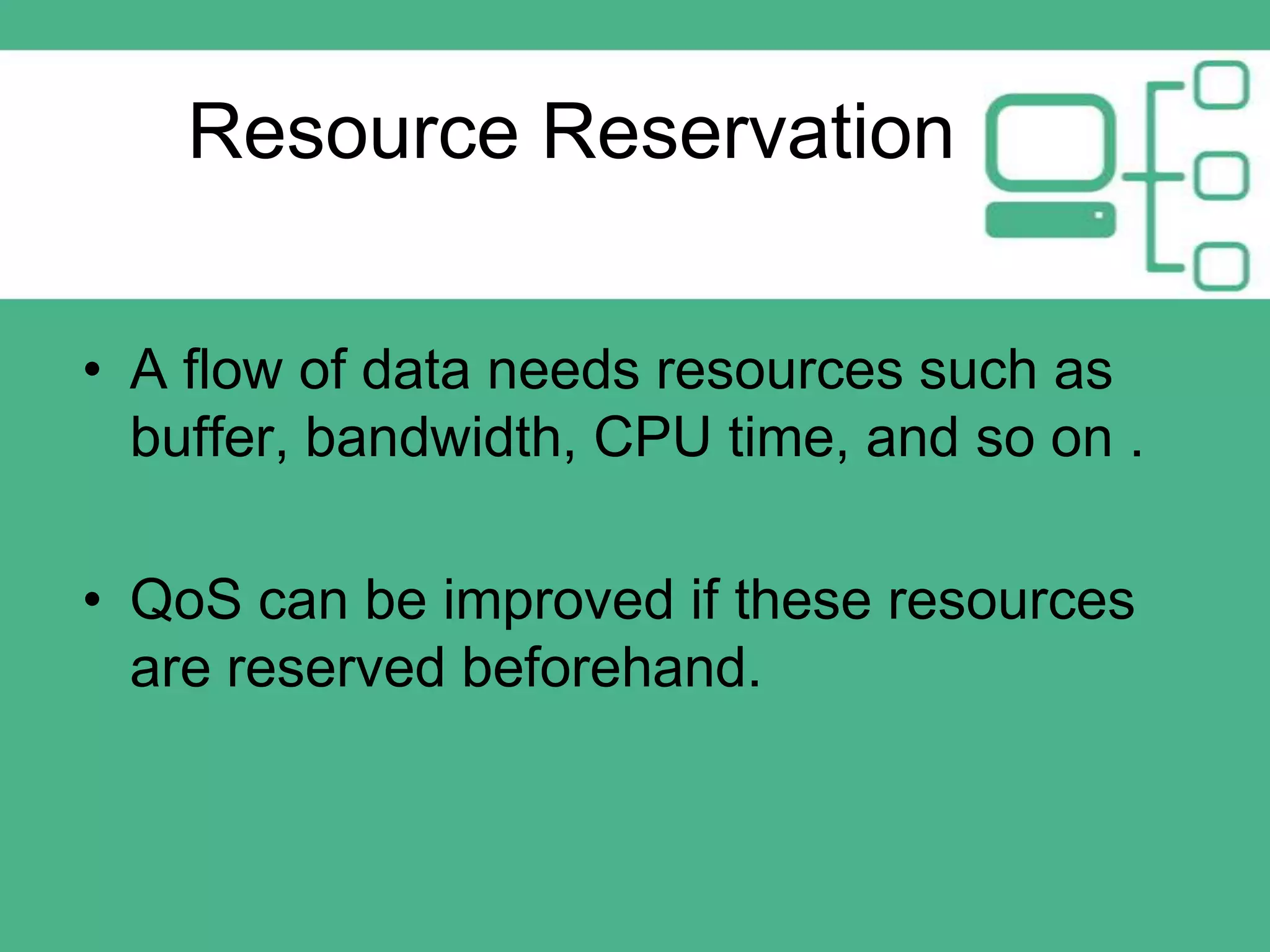
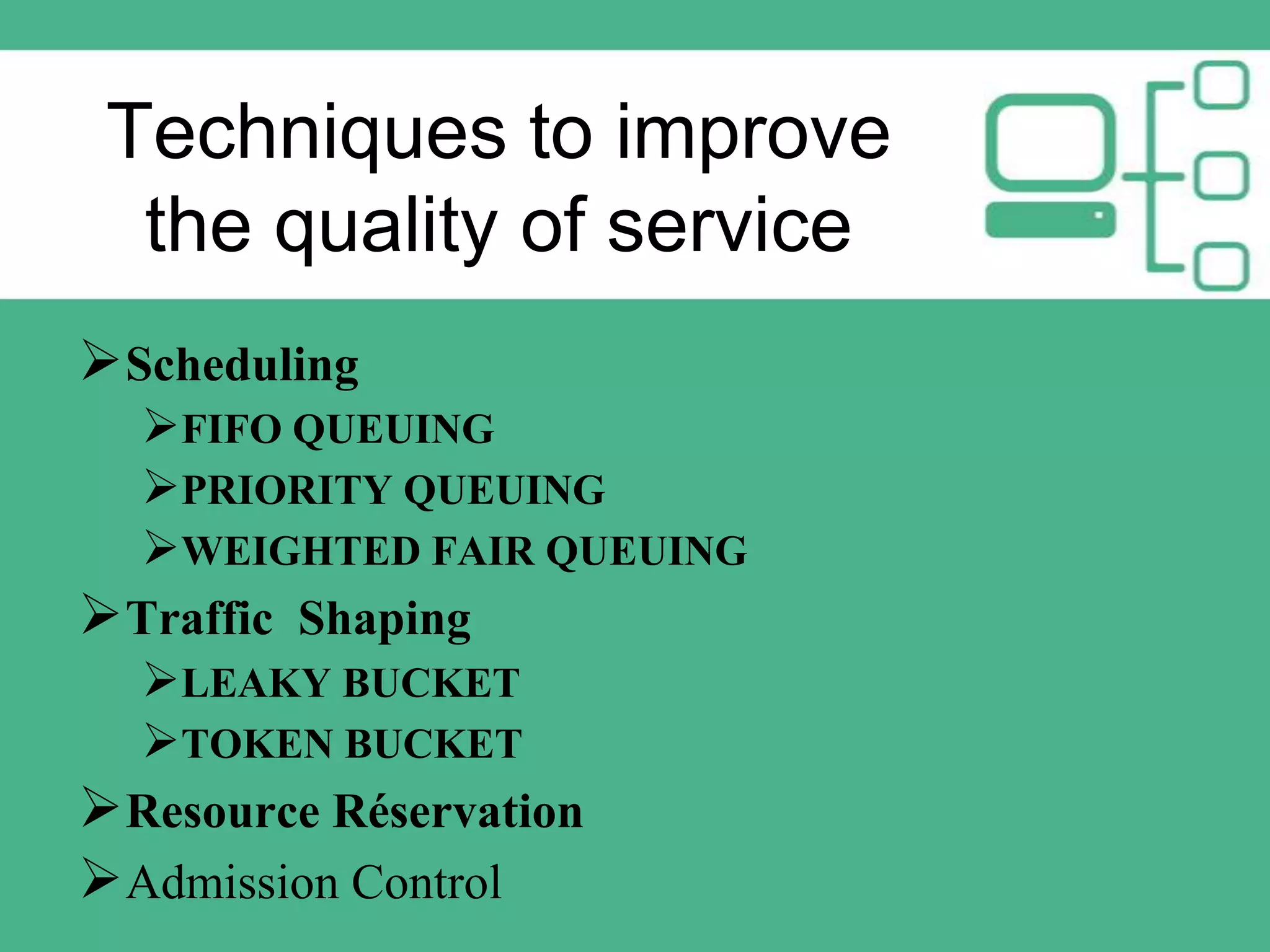
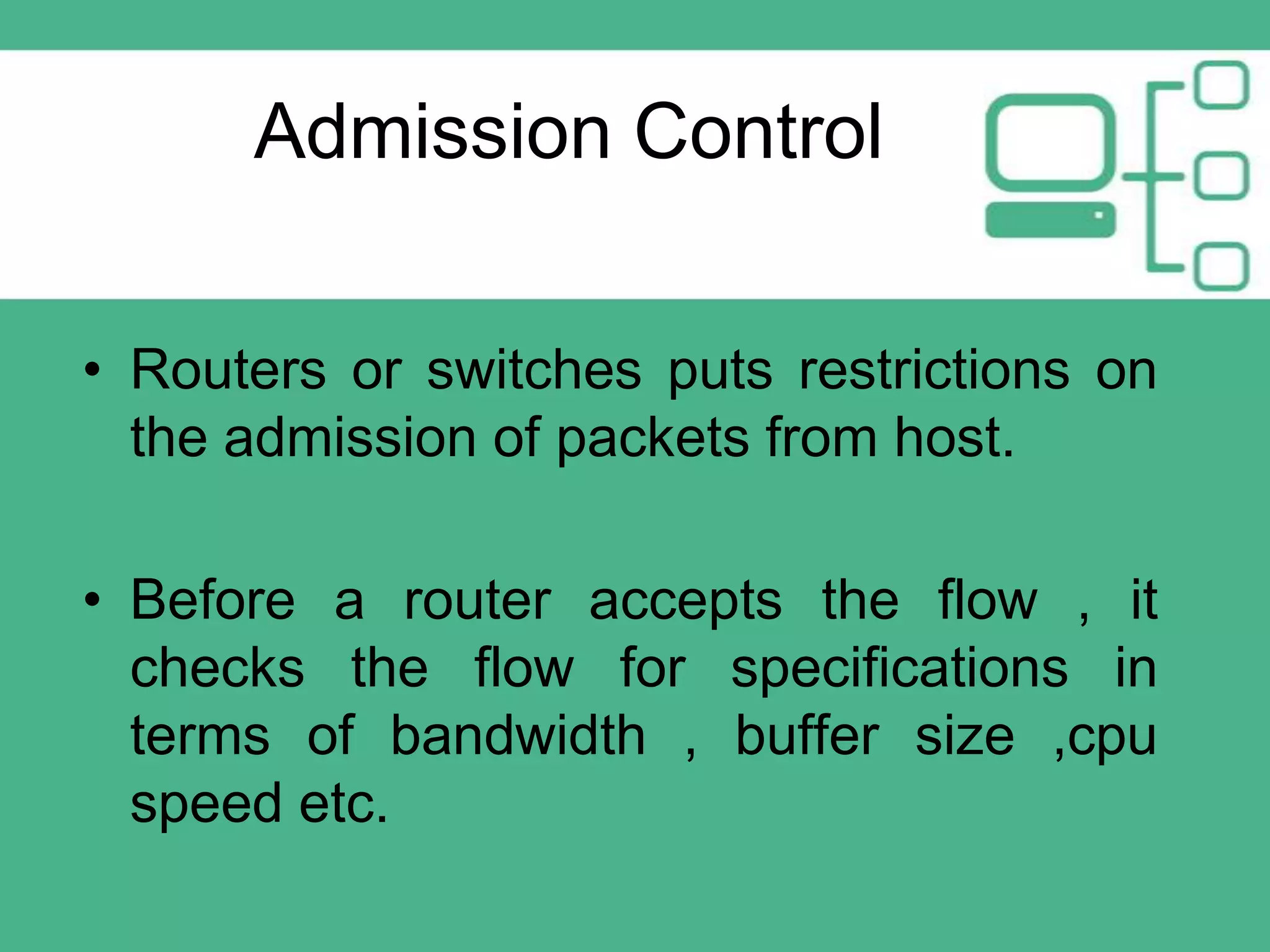
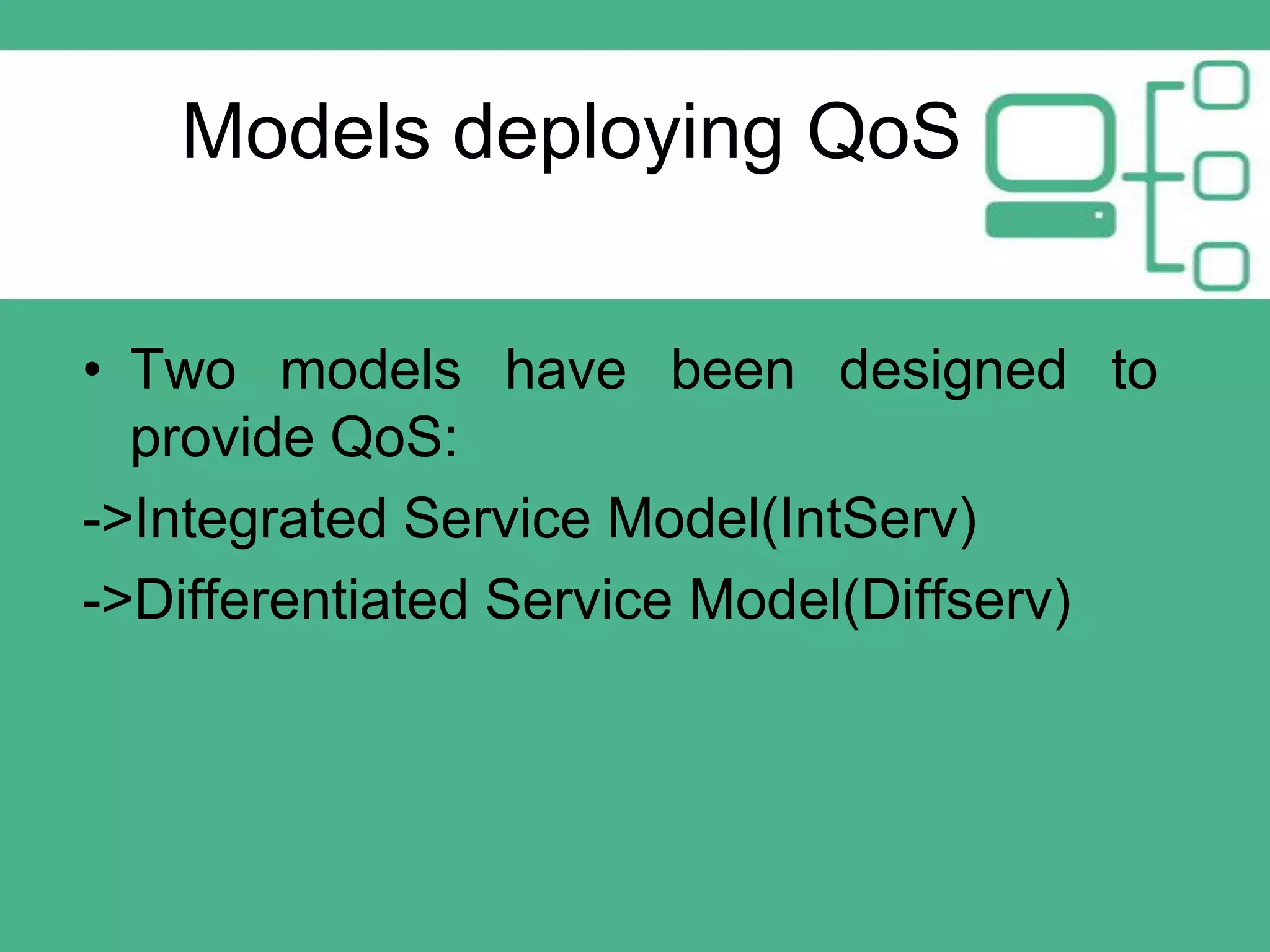
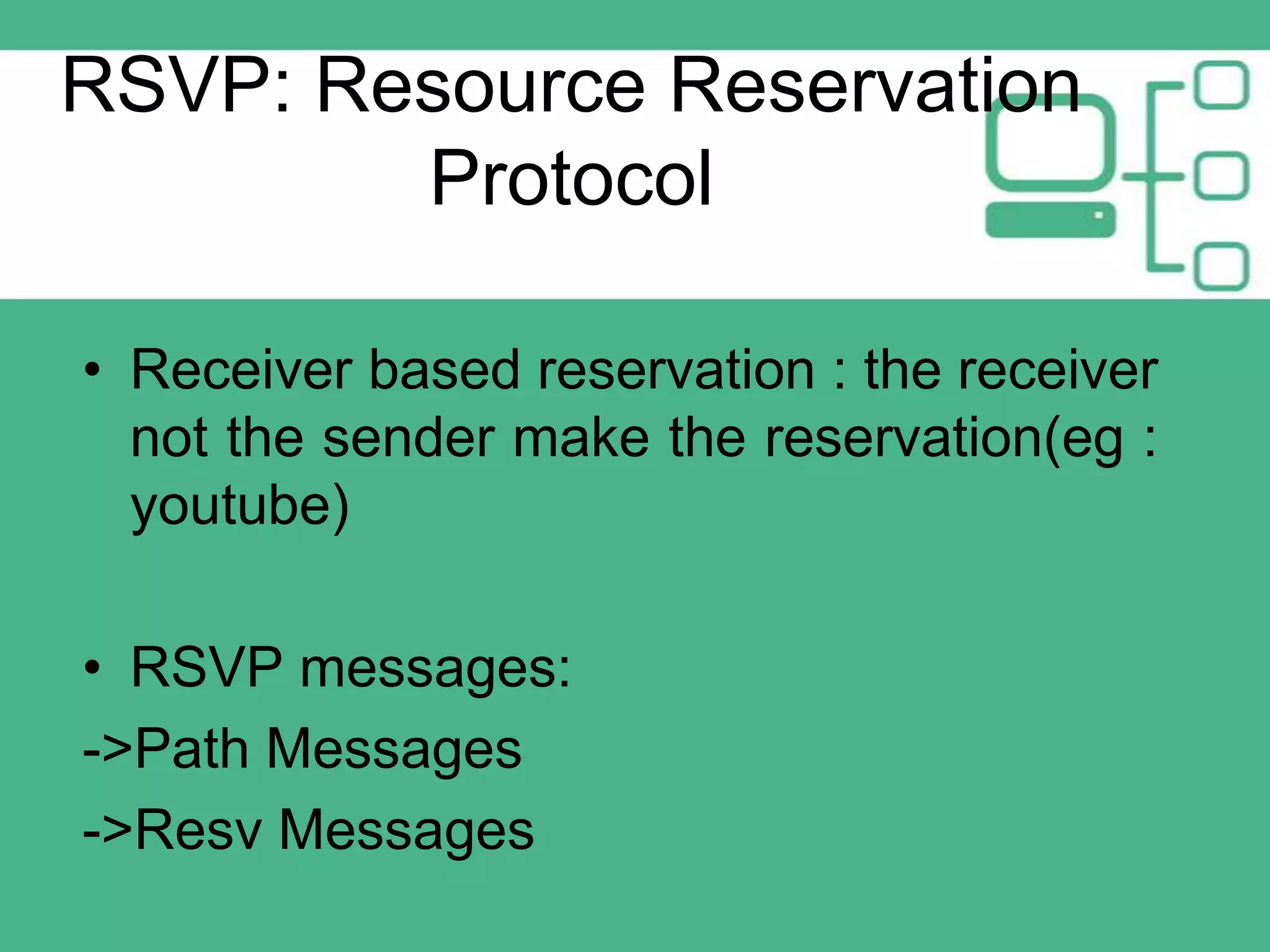
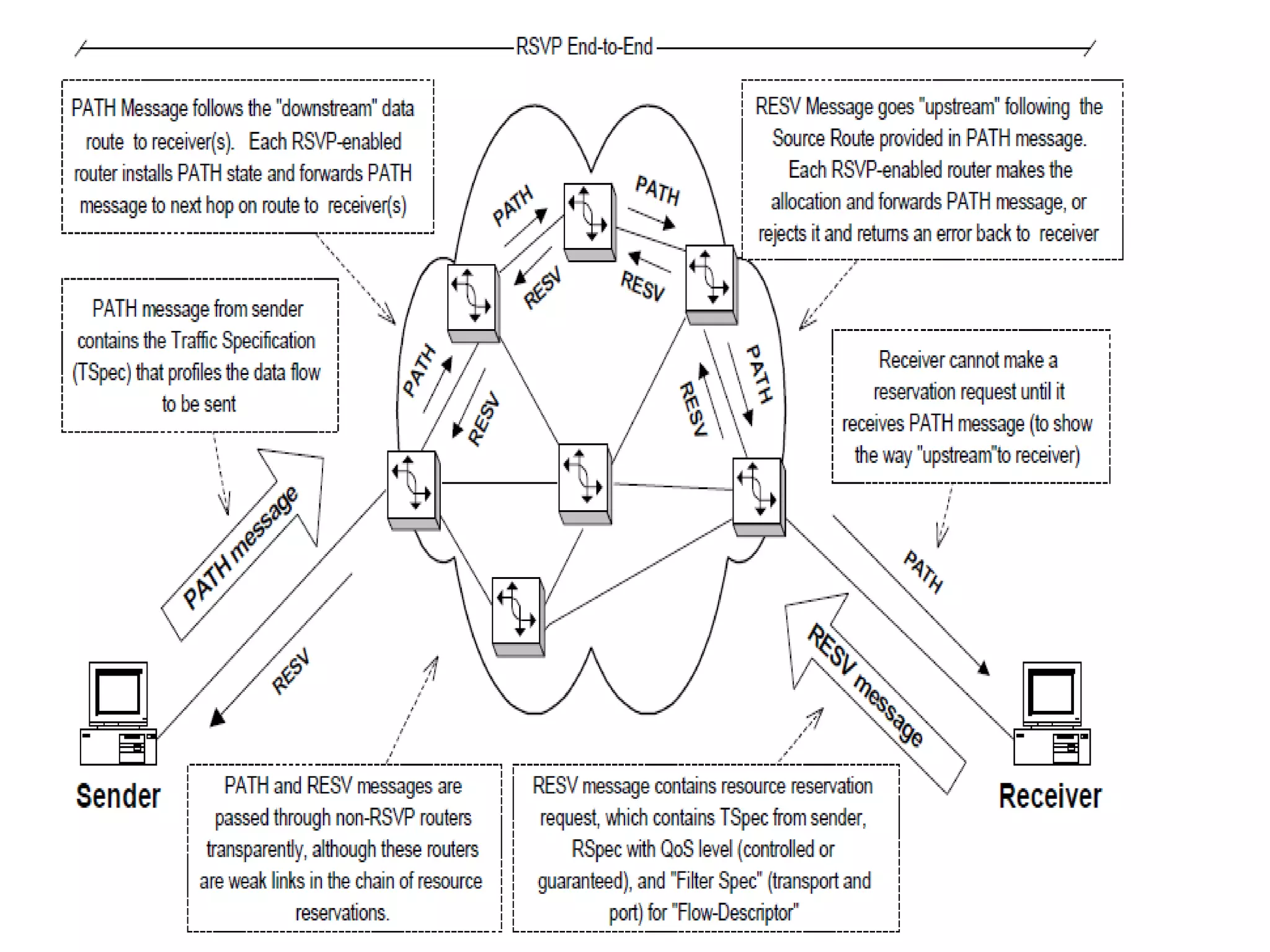
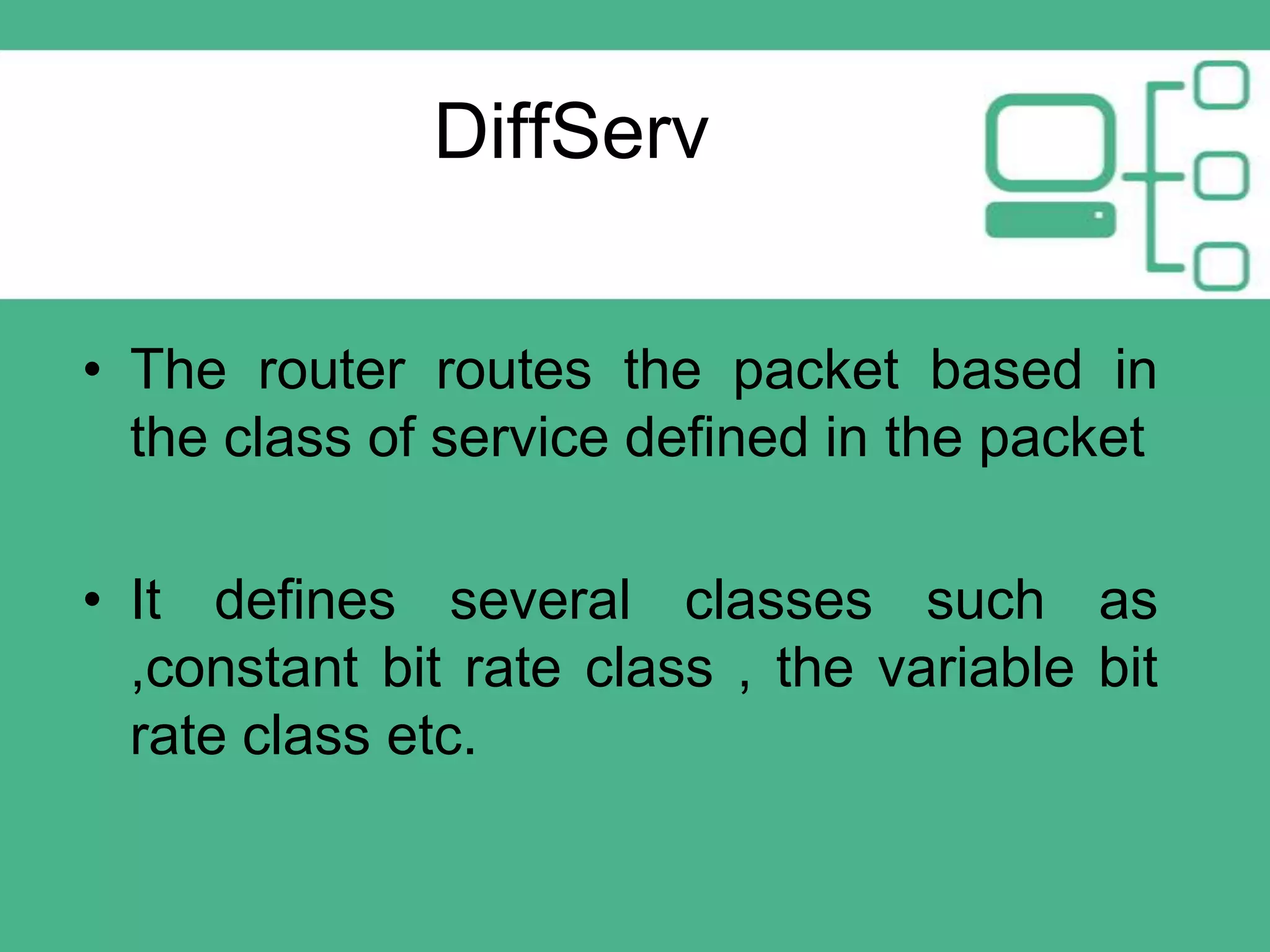
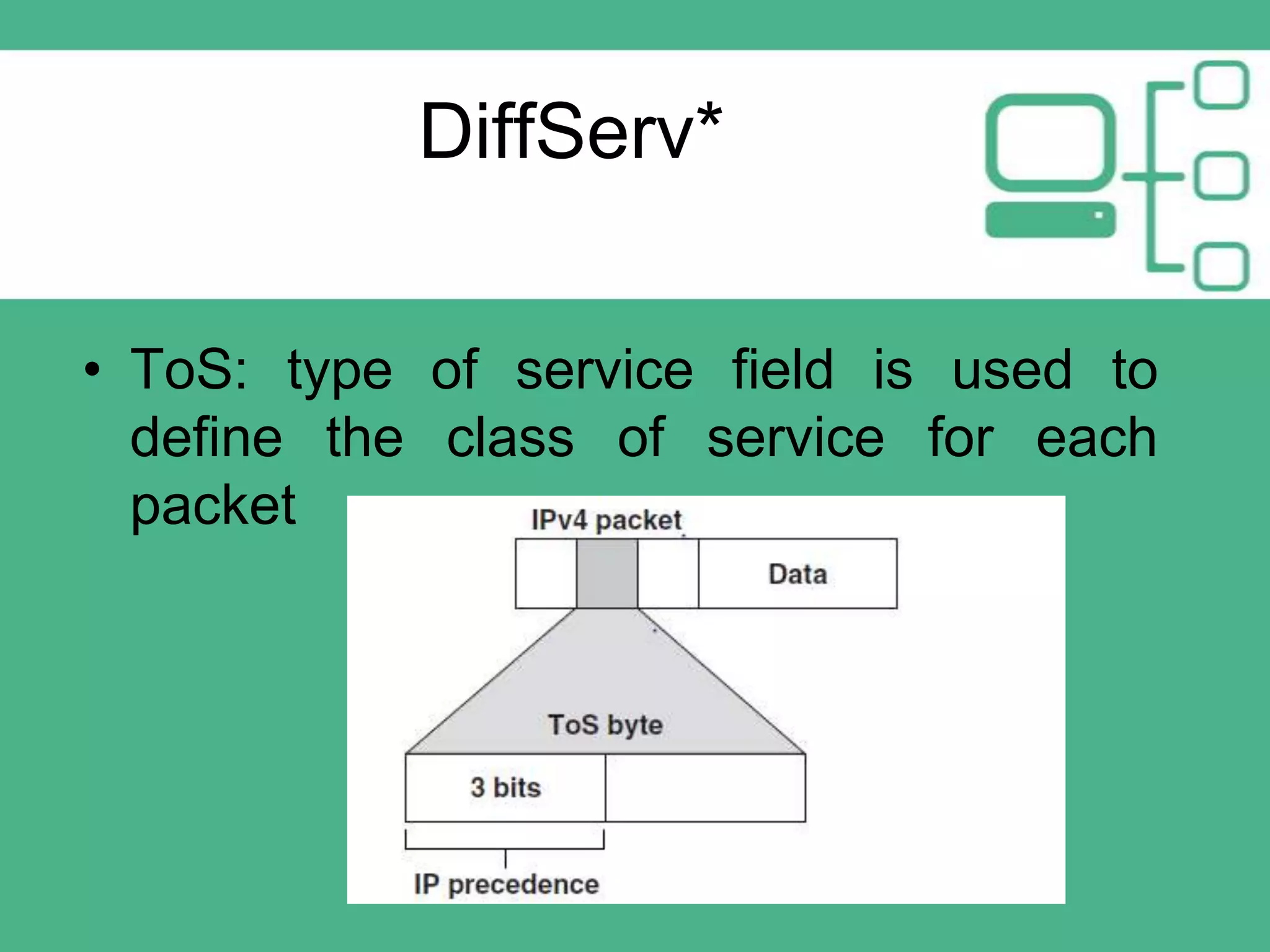
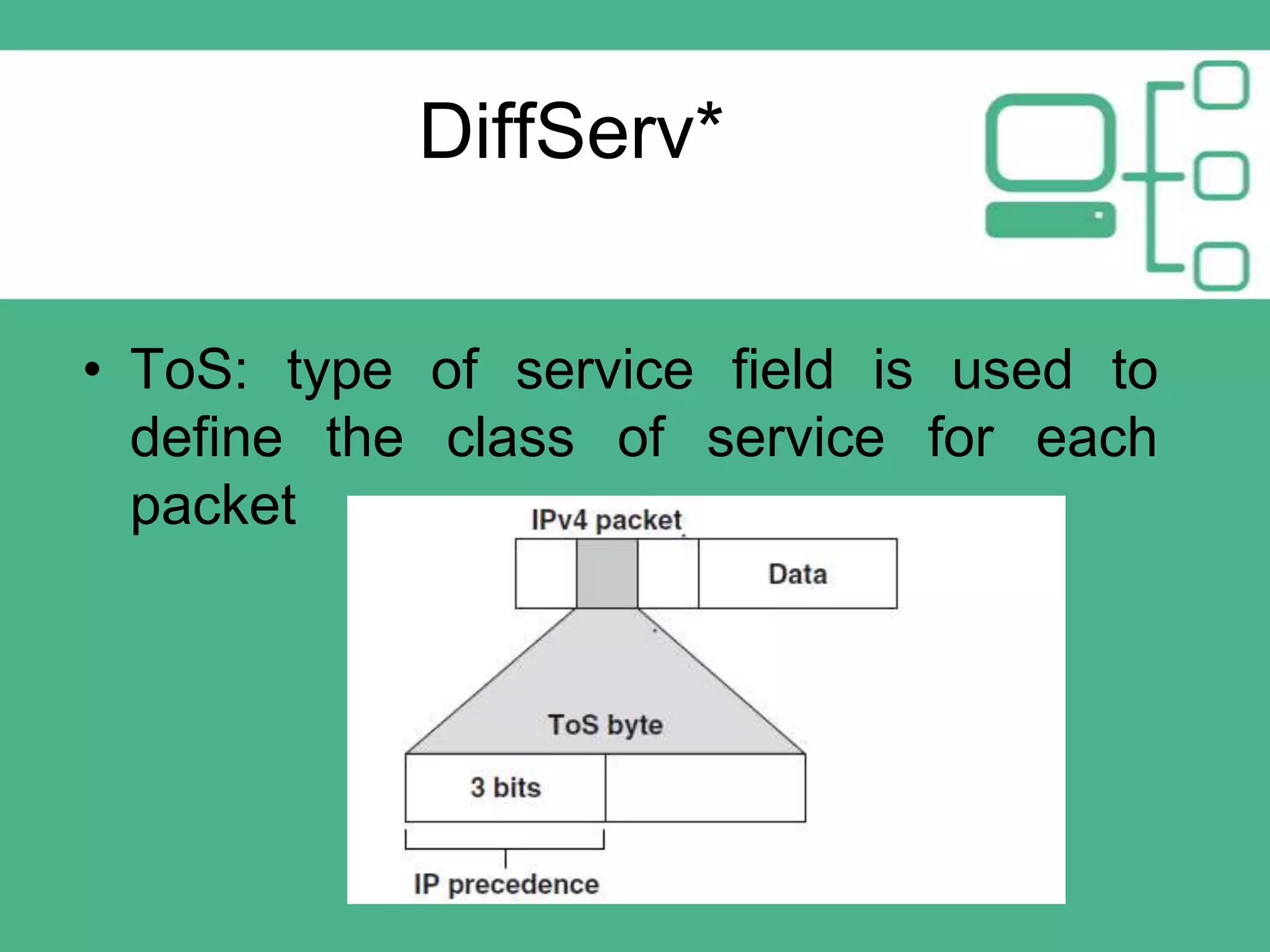
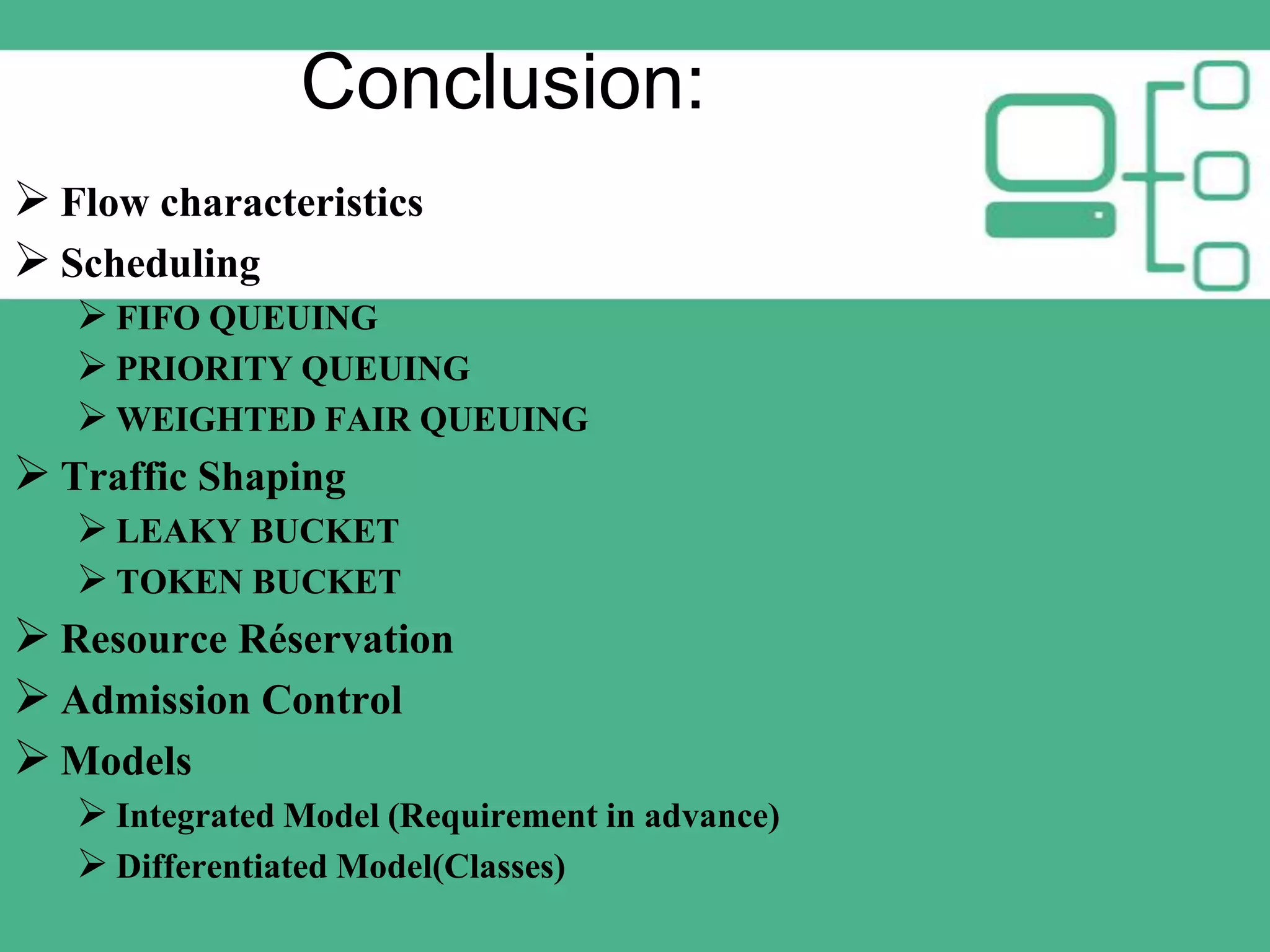


Quality of service aims to provide different levels of priority to different applications, users, or data flows. It is achieved through techniques like scheduling, traffic shaping, resource reservation, and admission control. Scheduling methods include FIFO queuing, priority queuing, and weighted fair queuing. Traffic shaping uses leaky bucket and token bucket algorithms. Resource reservation reserves buffer space, bandwidth, and other resources beforehand. Admission control restricts packet admission based on specifications. Models for QoS include the Integrated Services Model, which requires resource reservation in advance using RSVP, and the Differentiated Services Model, which differentiates traffic into classes.


![QOSPPT.2019122-2020131[1].pptx](https://cdn.slidesharecdn.com/ss_thumbnails/qosppt-240123164702-1863a4e6-thumbnail.jpg?width=640&height=640&fit=bounds)


![02._Quality_of_Service in Network Computing[1].pptx](https://cdn.slidesharecdn.com/ss_thumbnails/02-251105074214-fe1be592-thumbnail.jpg?width=640&height=640&fit=bounds)


