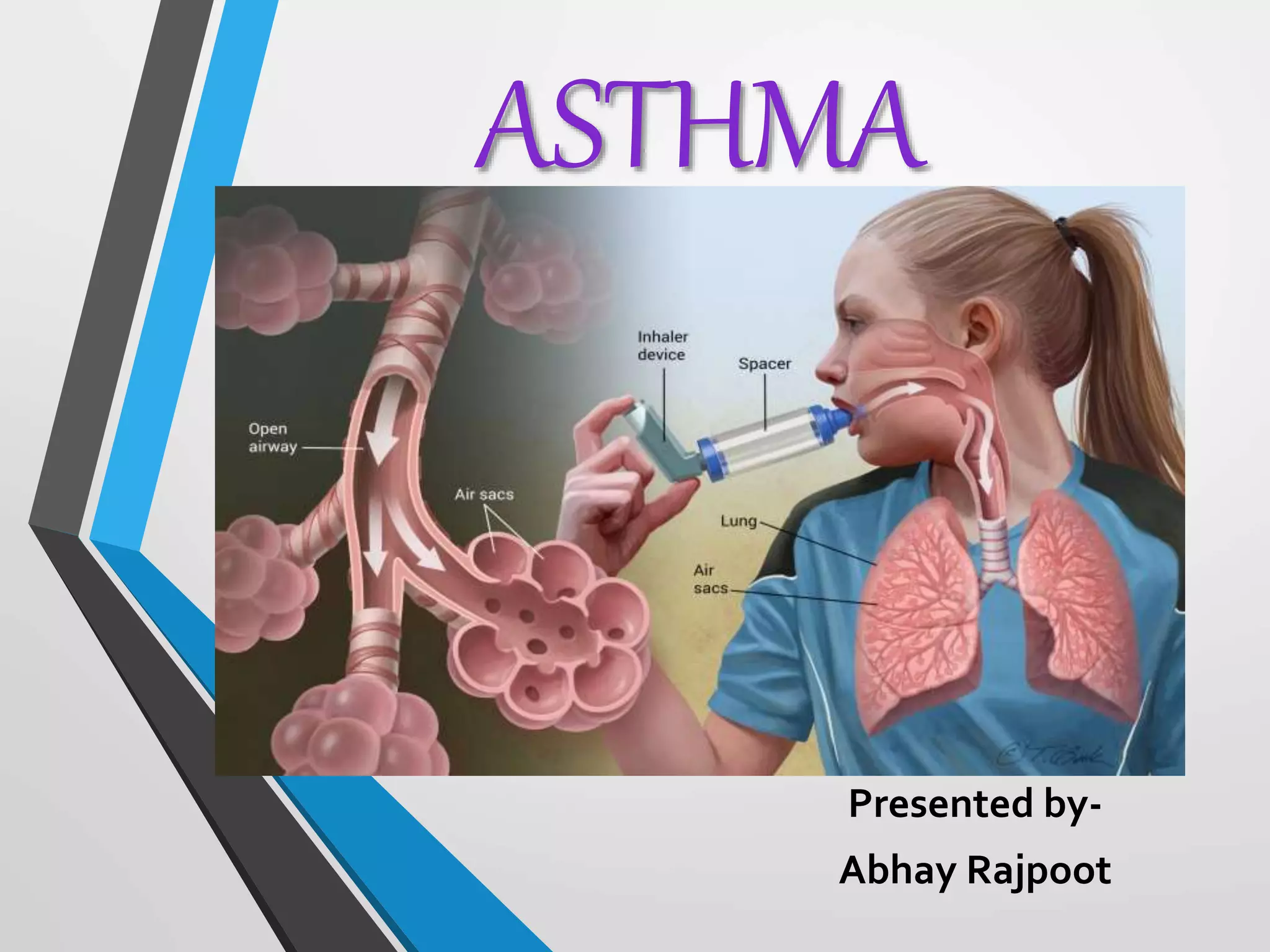






ASTHMA
Presented by-
Abhay Rajpoot
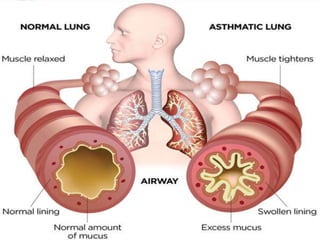
DEFINITION:
Asthma is a chronic inflammatory disorder of the
airways. The chronic inflammation causes an
increase in the airway hyper-responsiveness that
leads to recurrent episodes of wheezing,
breathlessness, chest tightness and cough,
particularly at night or early in morning.
INCIDENCE:
• Asthma affects an estimated 25,00,000 Indians every
year and this number is likely to increase by 50% by the
year 2016.
• Among adults women have a 30% greater prevalence of
asthma than men.
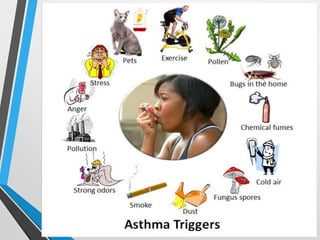
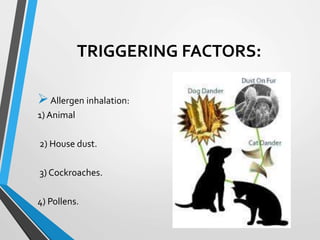
TRIGGERING FACTORS:
Allergen inhalation:
1) Animal
2) House dust.
3) Cockroaches.
4) Pollens.
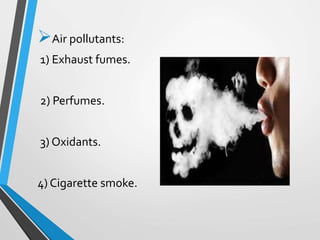
Air pollutants:
1) Exhaust fumes.
2) Perfumes.
3) Oxidants.
4) Cigarette smoke.
Viral upper respiratory infection.
Sinusitis.
Exercise and cold dry air.
Stress.
Drugs : 1) Aspirin.
2) NSAIDs.
3) β- adrenergic blockers.
Occupational exposures:
1) Metal salts.
2)Wood and vegetable dusts.
3) Industrial chemicals and plastics.
Food addictives.
Gastroesophageal reflux disease.
TYPES OF ASTHMA:
• ALLERGIC ASTHMA(extrinsic asthma): When the
symptoms are induced by a hyperimmune response to
the inhalation of specific allergen.
• Type I (Immediate) hypersensitivity reaction is the basis
of the IgE.
• NON-ALLERGGIC ASTHMA (Intrinsic asthma) : This
type of asthma is triggered by the presence of irritants in
the air that are not related to allergies.
• This irritants stimulate parasympathetic nerve fibers in
the airways causing broncho-constriction and
inflammation.
• MIXED ASTHMA: Mixed asthma is the combination of
both allergic and non-allergic asthma.This is the most
common form of asthma.
• COUGH- VARIANT ASTHMA: This does not have the
classic symptoms of asthma- such as wheezing and
shortness of breath. Instead It is characterized by one
symptom, a persistent dry cough
• EXERCISE INDUCED ASTHMA: Affects the person
during or after physical activity.
• NOCTURNAL ASTHMA: Characterized by symptoms
that gets worsen at night. Those who suffer from
nocturnal asthma can also experience symptoms any
time of day.
• OCCUPATIONAL ASTHMA: Induced by triggers that
exists in person’s workplace including textiles, farming
and wood working.
CLINICAL MANIFESTATIONS:
• Wheezing.
• Dyspnoea.
• Cough.
• Chest tightness.
• Expiration may be prolonged.
• Secretions may be white, thick, tenacious, gelatinous
mucus.
DIAGNOSTIC STUDIES:
• History.
• Physical examination.
• PFT.
• Peak expiratory flow rate.
• Chest X-ray.
• ABG or oximetry.
• Allergy skin testing.
• Blood level of eosinophils
and IgE.
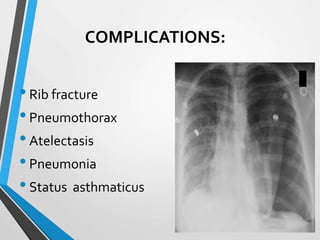
COMPLICATIONS:
•Rib fracture
•Pneumothorax
•Atelectasis
•Pneumonia
•Status asthmaticus
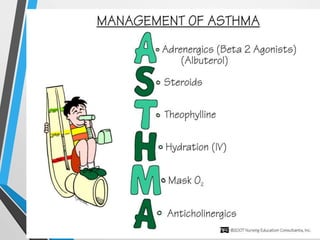
DRUGTHERAPY:
•Long term control medicines to achieve
and maintain control of persistent asthma.
Anti-inflammatory drugs
Corticosteroids
Bronchodilators
Long acting β2 – adrenergic agonists
Theophylline
•Quick relief medicines to treat symptoms and
exacerbations.
Bronchodilators.
Short acting inhaled β2 – adrenergic
agonists.
Anticholinergics
Corticosteroids.
PATIENTTEACHING RELATEDTO
DRUGTHERAPY:
•Should include the name, dosage, method of
administration and schedule, taking into
consideration meal times and activities of daily
living.
•Include purpose, side effects, appropriate action
if side effects occur, consequences of improper
use, and the importance of refilling the
prescription before the medicines runs out.
NON-PRESCRIPTION COMBINATION
DRUGS:
•Several non prescription combination drugs
are availableOTC.
•They are usually combination of a
bronchodilator and an expectorant.
Ex.: Epinephrine.
NURSING DIAGNOSIS:
• Ineffective airway clearance related to expiratory airflow
obstruction, ineffective cough, decreased airway humidity
and infection in airway as evidenced by absence or decreased
breath sound.
• Imbalanced nutrition less than body requirement related to
poor appetite, lowered energy level, shortness of breath as
evidenced by weight loss.
• Disturbed sleeping pattern related to anxiety, dyspnoea
as evidenced by frequent awakening, prolonged onset of
sleep, lethargy, fatigue, irritability.
• Risk for infection related to decreased pulmonary
function, possible corticosteroid therapy and lack of
knowledge regarding signs and symptoms of infection
and preventive measures.
RESEARCH STUDY
• The study was published in the Journal of Allergy and
Clinical Immunology. vitamin D was a molecule that
may influence asthma by impacting antioxidant or
immune-related pathways. Having low blood
vitamin D levels was found to be associated with
harmful respiratory effects of indoor air pollution
from sources such as cigarette smoke, cooking,
burning of candles, and incense, among children
with asthma. Interestingly, in homes that had the
highest indoor air pollution, those who happened to
have higher blood vitamin D levels were associated
with fewer asthma symptoms
SUMMARY
CONCLUSION
• Eating fish oil, rich in omega 3 fatty acids, could help
reduce the risk by nearly 70 per cent. Fish oil is dubbed as
one of the healthiest foods you can add to your diet. It is
enriched with polyunsaturated fatty acids (PUFAs) or n-3
and contains omega fatty acids 3 and 6, which is known
to play a crucial role in brain development and facilitate
functioning of central nervous system.
ASSIGNMENT
• Pulmonary FunctionTest
BIBLIOGRAPHY:
• 1. Bare, Brenda.G. Smeltzer, Suzanne.C. Brunner and
Suddarth’s Textbook of Medical Surgical Nursing. Edition -10.
Philadelphia: Lippincott Williams and Wilkins Publication;
2004. P- 602-605.
• 2.Black ,Joyce.M. Hawks , Jane. Hokanson. Medical Surgical
Nursing. Edition -7. Philadelphia: Saunders Company; 2007. P-
• 3. Lewis. Heitkemper . Dirksen. O, Brien. Bucher . Medical
Surgical Nursing . Edition -7. Singapore: Elservier Publisher. P –
• 4.Rowbotham D Asthma prescribers journal 2002 ; 33:237-43.
• www.healthrisk.com/...http./asthmacare
• www.mysciencework.com/asthma
•

Asthma

  • 1.
  • 2.
    DEFINITION: Asthma is achronic inflammatory disorder of the airways. The chronic inflammation causes an increase in the airway hyper-responsiveness that leads to recurrent episodes of wheezing, breathlessness, chest tightness and cough, particularly at night or early in morning.
  • 5.
    INCIDENCE: • Asthma affectsan estimated 25,00,000 Indians every year and this number is likely to increase by 50% by the year 2016. • Among adults women have a 30% greater prevalence of asthma than men.
  • 7.
    TRIGGERING FACTORS: Allergen inhalation: 1)Animal 2) House dust. 3) Cockroaches. 4) Pollens.
  • 8.
    Air pollutants: 1) Exhaustfumes. 2) Perfumes. 3) Oxidants. 4) Cigarette smoke.
  • 9.
    Viral upper respiratoryinfection. Sinusitis. Exercise and cold dry air. Stress. Drugs : 1) Aspirin. 2) NSAIDs. 3) β- adrenergic blockers.
  • 10.
    Occupational exposures: 1) Metalsalts. 2)Wood and vegetable dusts. 3) Industrial chemicals and plastics. Food addictives. Gastroesophageal reflux disease.
  • 11.
    TYPES OF ASTHMA: •ALLERGIC ASTHMA(extrinsic asthma): When the symptoms are induced by a hyperimmune response to the inhalation of specific allergen. • Type I (Immediate) hypersensitivity reaction is the basis of the IgE.
  • 12.
    • NON-ALLERGGIC ASTHMA(Intrinsic asthma) : This type of asthma is triggered by the presence of irritants in the air that are not related to allergies. • This irritants stimulate parasympathetic nerve fibers in the airways causing broncho-constriction and inflammation.
  • 13.
    • MIXED ASTHMA:Mixed asthma is the combination of both allergic and non-allergic asthma.This is the most common form of asthma.
  • 14.
    • COUGH- VARIANTASTHMA: This does not have the classic symptoms of asthma- such as wheezing and shortness of breath. Instead It is characterized by one symptom, a persistent dry cough • EXERCISE INDUCED ASTHMA: Affects the person during or after physical activity.
  • 15.
    • NOCTURNAL ASTHMA:Characterized by symptoms that gets worsen at night. Those who suffer from nocturnal asthma can also experience symptoms any time of day. • OCCUPATIONAL ASTHMA: Induced by triggers that exists in person’s workplace including textiles, farming and wood working.
  • 16.
    CLINICAL MANIFESTATIONS: • Wheezing. •Dyspnoea. • Cough. • Chest tightness. • Expiration may be prolonged. • Secretions may be white, thick, tenacious, gelatinous mucus.
  • 17.
    DIAGNOSTIC STUDIES: • History. •Physical examination. • PFT. • Peak expiratory flow rate. • Chest X-ray. • ABG or oximetry. • Allergy skin testing. • Blood level of eosinophils and IgE.
  • 18.
  • 20.
    DRUGTHERAPY: •Long term controlmedicines to achieve and maintain control of persistent asthma. Anti-inflammatory drugs Corticosteroids Bronchodilators Long acting β2 – adrenergic agonists Theophylline
  • 21.
    •Quick relief medicinesto treat symptoms and exacerbations. Bronchodilators. Short acting inhaled β2 – adrenergic agonists. Anticholinergics Corticosteroids.
  • 22.
    PATIENTTEACHING RELATEDTO DRUGTHERAPY: •Should includethe name, dosage, method of administration and schedule, taking into consideration meal times and activities of daily living. •Include purpose, side effects, appropriate action if side effects occur, consequences of improper use, and the importance of refilling the prescription before the medicines runs out.
  • 23.
    NON-PRESCRIPTION COMBINATION DRUGS: •Several nonprescription combination drugs are availableOTC. •They are usually combination of a bronchodilator and an expectorant. Ex.: Epinephrine.
  • 24.
    NURSING DIAGNOSIS: • Ineffectiveairway clearance related to expiratory airflow obstruction, ineffective cough, decreased airway humidity and infection in airway as evidenced by absence or decreased breath sound. • Imbalanced nutrition less than body requirement related to poor appetite, lowered energy level, shortness of breath as evidenced by weight loss.
  • 25.
    • Disturbed sleepingpattern related to anxiety, dyspnoea as evidenced by frequent awakening, prolonged onset of sleep, lethargy, fatigue, irritability. • Risk for infection related to decreased pulmonary function, possible corticosteroid therapy and lack of knowledge regarding signs and symptoms of infection and preventive measures.
  • 26.
    RESEARCH STUDY • Thestudy was published in the Journal of Allergy and Clinical Immunology. vitamin D was a molecule that may influence asthma by impacting antioxidant or immune-related pathways. Having low blood vitamin D levels was found to be associated with harmful respiratory effects of indoor air pollution from sources such as cigarette smoke, cooking, burning of candles, and incense, among children with asthma. Interestingly, in homes that had the highest indoor air pollution, those who happened to have higher blood vitamin D levels were associated with fewer asthma symptoms
  • 27.
  • 28.
    CONCLUSION • Eating fishoil, rich in omega 3 fatty acids, could help reduce the risk by nearly 70 per cent. Fish oil is dubbed as one of the healthiest foods you can add to your diet. It is enriched with polyunsaturated fatty acids (PUFAs) or n-3 and contains omega fatty acids 3 and 6, which is known to play a crucial role in brain development and facilitate functioning of central nervous system.
  • 29.
  • 30.
    BIBLIOGRAPHY: • 1. Bare,Brenda.G. Smeltzer, Suzanne.C. Brunner and Suddarth’s Textbook of Medical Surgical Nursing. Edition -10. Philadelphia: Lippincott Williams and Wilkins Publication; 2004. P- 602-605. • 2.Black ,Joyce.M. Hawks , Jane. Hokanson. Medical Surgical Nursing. Edition -7. Philadelphia: Saunders Company; 2007. P- • 3. Lewis. Heitkemper . Dirksen. O, Brien. Bucher . Medical Surgical Nursing . Edition -7. Singapore: Elservier Publisher. P – • 4.Rowbotham D Asthma prescribers journal 2002 ; 33:237-43. • www.healthrisk.com/...http./asthmacare • www.mysciencework.com/asthma •