PRESENTATION
ON
ASTHMA
Prepared By,
Mr. Akash N. Bhagwat
Lecturer,
M.M.N.S. Of Nursing College, Yavatmal
ASTHMA
INTRODUCTION :
ASTHMA ATTACKS ALL AGE GROUPS BUT OFTEN STARTS
IN CHILDHOOD. IT IS A DISEASE CHARACTERIZED BY
RECURRENT ATTACKS OF BREATHLESSNESS AND
WHEEZING, WHICH VARY IN SEVERITY AND FREQUENCY
FROM PERSON TO PERSON. IN AN INDIVIDUAL, THEY MAY
OCCUR FROM HOUR TO HOUR AND DAY TO DAY.
DEFINITION OF ASTHMA
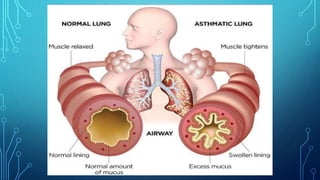
Asthma: A common lung disorder in which
inflammation causes the bronchi to swell and narrow
the airways, creating breathing difficulties that may
range from mild to life-threatening. Symptoms
include shortness of breath, cough, wheezing, and
chest tightness.
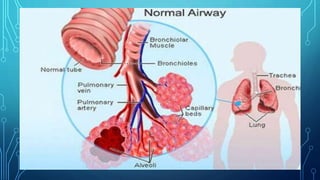
This condition is due to inflammation of the air passages in
the lungs and affects the sensitivity of the nerve endings in
the airways so they become easily irritated. In an attack, the
lining of the passages swell causing the airways to narrow
and reducing the flow of air in and out of the lungs.
CAUSES OF ASTHMA
• Asthma Causes and Triggers
• When you have asthma, your airways react to many different things in
the environment called asthma triggers. Contact with these triggers
cause asthma symptoms to start or worsen. Common asthma triggers
include:
• Infections like sinusitis, colds, and flu
• Allergens such as pollens, mold, pet dander, and dust mites
• Irritants like strong odors from perfumes or cleaning solutions
• Air pollution
• Tobacco smoke
• Exercise
• Cold air or changes to the weather, such as changes in temperature or
humidity
• Strong emotions such as anxiety, laughter, crying, or stress
• Medications such as aspirin
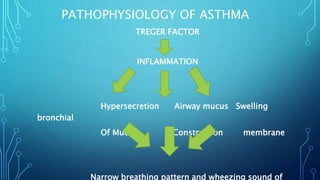
PATHOPHYSIOLOGY OF ASTHMA
TREGER FACTOR
INFLAMMATION
Hypersecretion Airway mucus Swelling
bronchial
Of Mucus Construction membrane
Narrow breathing pattern and wheezing sound of
CLINICAL FEATURES OF ASTHMA
• Airway obstruction. When you breathe normally, the
bands of muscle that surround your airways are
moves freely. But when you have asthma, those bands
tighten. Air can’t move freely. When there’s less air in
you feel short of breath. The air moving out through
tightened airways causes wheezing.
• Inflammation . People with asthma have red and
swollen bronchial tubes. This inflammation can
the lungs. Treating this inflammation is key
asthma in the long run.
CONTINUING.....
• Signs of a severe asthma attack include:
• wheezing, coughing and chest tightness becoming severe
and constant
• being too breathless to eat, speak or sleep
• breathing faster
• a fast heartbeat
• drowsiness, confusion, exhaustion or dizziness
• blue lips or fingers
• Fainting
TYPE OF ASTHMA
• Types of asthma
• The most common type of asthma is bronchial asthma, which affects the bronchi in the
lungs.
• Additional forms of asthma include childhood asthma and adult-onset asthma. In adult-
onset asthma, symptoms don’t appear until at least age 20.
• Other types of asthma are described below.
• Allergic asthma (extrinsic asthma)
• Allergens trigger this type of asthma. These might include:
• pet dander from animals like cats and dogs
• food
• mold
• pollen
• dust
• Allergic asthma is more likely to be seasonal because it often goes hand-in-hand
with seasonal allergies.
CONTINUING.....
• Nonallergic asthma (intrinsic asthma)
• Irritants in the air not related to allergies trigger this type of asthma. Irritants might include:
• burning wood and cigarette smoke
• cold air
• air pollution
• viral illnesses
• air fresheners
• household cleaning products
• perfumes
• Occupational asthma
• Occupational asthma is a type of asthma induced by triggers in the workplace. These include:
• dust
• dyes
• gases and fumes
• industrial chemicals
• animal proteins
• rubber latex
• These irritants can exist in a wide range of industries, including farming, textiles, woodworking, and manufacturing.
CONTINUING...
• Exercise-induced bronchoconstriction (EIB)
• Exercise-induced bronchoconstriction (EIB) usually affects people within a few minutes of
starting exercise and up to 10–15 minutes after physical activity. This condition was
previously known as exercise-induced asthma (EIA).
• Up to 90 percent of people with asthma also experience EIB, but not everyone with EIB will
have other types of asthma.
• Nocturnal asthma
• In this type of asthma, symptoms worsen at night.
• Triggers that are thought to bring on symptoms at night include heartburn, pet dander, and
dust mites. The body’s natural sleep cycle may also trigger nocturnal asthma.
• Cough-variant asthma (CVA)
• Cough-variant asthma doesn’t have classic asthma symptoms of wheezing and shortness of
breath. CVA is characterized by a persistent, dry cough.
• Cough-variant asthma can lead to full-blown asthma flares that include the other more
common symptoms. Find out how to identify an asthma cough here.
DIAGNOSTIC EVALUATION OF ASTHMA
• Asthma diagnostic evaluation :
• There’s no single test or exam that will determine if you or your child has
asthma. Instead, your doctor will use a variety of criteria to determine if
symptoms are the result of asthma.
• The following can help diagnose asthma:
• Health history. If you have family members with the breathing disorder, your
risk is higher. Alert your doctor to this genetic connection.
• Physical exam. Your doctor will listen to your breathing with a stethoscope.
They may also conduct a skin test, looking for signs of an allergic
reaction such as hives or eczema. Allergies increase your risk for asthma.
• Breathing tests. Your doctor may use pulmonary function tests (PFTs) to
measure airflow into and out of your lungs. The most common
test, spirometry, requires you to blow into a device that can measure the
speed of the air.
COMPLICATIONS OF ASTHMA
• What are the complications of asthma?
• Asthma which is not carefully managed can lead to:
• constant fatigue
• frequent leave from work or school due to constant asthma flare-ups
• pneumonia
• increased mucus production
• thickening and narrowing of bronchial tubes which can become
permanent leading to respiratory failure
• respiratory failure
• severe chest pain
MANAGEMENT OF ASTHMA
• Medical treatments
• To treat asthma effectively, an asthma action plan will help. That includes identifying and
avoiding asthma triggers, identifying your level of asthma toleration, using drug therapies, and
having an emergency action plan ready in case of severe attacks. You will need to proactively
work with your doctor to find out which course of treatment works best for you.
• Each case of asthma is different, therefore depending on your condition, your doctor will
create an asthma treatment plan exclusively for you. The treatment plan will have directions
on how to take your medicines as well as information about the specific asthma triggers you
need to avoid. The initial asthma treatment provided will depend upon the severity of your
condition. The follow-up treatment will depend upon your response to the initial treatment.
•
• The severity of the asthma attacks will differ in different environments, and also over time.The
dosages of your medicines will also be changed accordingly by the doctor.If you are able to
control your symptoms efficiently, the doctor will reduce the dosage of your medicines.
CONTINUING..
• Asthma is treated with two types of medicines -
• Long-term control medicines - which helps to reduce inflammation of the airway
passages, thereby reducing the asthma symptoms.
• Quick-relief medicines - which as the name suggests are emergency medicines to
be taken during an asthma attack.
The asthma medicines can be taken in pill form, or by breathing them in using a
nebulizer or an inhaler. An inhaler allows the medicine to go directly into the lungs.
• Your level of asthma control can vary over time and with changes in your home,
school, or work environments. These changes can alter how often you're exposed to
the factors that can worsen your asthma.
• Asthma treatment will vary for different groups of people. For example, the treatment
for people suffering from allergic asthma will be different from those in whom
exercise brings on asthma symptoms. Similarly, treatment for children will be
different from the treatment given to pregnant women.
NURSING MANAGEMENT OF ASTHMA
NURSING DIAGNOSIS:
• Breathing deficulty
• Ineffective Breathing Pattern Related To Swelling and
spasm of the bronchial tubes in response to inhaled
irritants, infection, drugs, allergies or infection.
Coughing
• Ineffective Airway Clearance Related to Excessive
production of mucus.
•Weakness
• Activity Intolerance Related to Loss of appetite
PREVENTION OF ASTHMA
• Identify Asthma Triggers. ...
• Avoid Away From Allergens. ...
• Avoid Smoke of Any Type. ...
• Prevent Colds. ...
• Allergy-Proof Your Home.
• Get Your Vaccinations. ...
• Consider Immunotherapy Allergy Shots. ...
• Take Asthma Medications as Prescribed
THANK YOU...

Presentation of Asthma

  • 1.
    PRESENTATION ON ASTHMA Prepared By, Mr. AkashN. Bhagwat Lecturer, M.M.N.S. Of Nursing College, Yavatmal
  • 2.
    ASTHMA INTRODUCTION : ASTHMA ATTACKSALL AGE GROUPS BUT OFTEN STARTS IN CHILDHOOD. IT IS A DISEASE CHARACTERIZED BY RECURRENT ATTACKS OF BREATHLESSNESS AND WHEEZING, WHICH VARY IN SEVERITY AND FREQUENCY FROM PERSON TO PERSON. IN AN INDIVIDUAL, THEY MAY OCCUR FROM HOUR TO HOUR AND DAY TO DAY.
  • 3.
    DEFINITION OF ASTHMA Asthma:A common lung disorder in which inflammation causes the bronchi to swell and narrow the airways, creating breathing difficulties that may range from mild to life-threatening. Symptoms include shortness of breath, cough, wheezing, and chest tightness. This condition is due to inflammation of the air passages in the lungs and affects the sensitivity of the nerve endings in the airways so they become easily irritated. In an attack, the lining of the passages swell causing the airways to narrow and reducing the flow of air in and out of the lungs.
  • 6.
    CAUSES OF ASTHMA •Asthma Causes and Triggers • When you have asthma, your airways react to many different things in the environment called asthma triggers. Contact with these triggers cause asthma symptoms to start or worsen. Common asthma triggers include: • Infections like sinusitis, colds, and flu • Allergens such as pollens, mold, pet dander, and dust mites • Irritants like strong odors from perfumes or cleaning solutions • Air pollution • Tobacco smoke • Exercise • Cold air or changes to the weather, such as changes in temperature or humidity • Strong emotions such as anxiety, laughter, crying, or stress • Medications such as aspirin
  • 7.
    PATHOPHYSIOLOGY OF ASTHMA TREGERFACTOR INFLAMMATION Hypersecretion Airway mucus Swelling bronchial Of Mucus Construction membrane Narrow breathing pattern and wheezing sound of
  • 8.
    CLINICAL FEATURES OFASTHMA • Airway obstruction. When you breathe normally, the bands of muscle that surround your airways are moves freely. But when you have asthma, those bands tighten. Air can’t move freely. When there’s less air in you feel short of breath. The air moving out through tightened airways causes wheezing. • Inflammation . People with asthma have red and swollen bronchial tubes. This inflammation can the lungs. Treating this inflammation is key asthma in the long run.
  • 9.
    CONTINUING..... • Signs ofa severe asthma attack include: • wheezing, coughing and chest tightness becoming severe and constant • being too breathless to eat, speak or sleep • breathing faster • a fast heartbeat • drowsiness, confusion, exhaustion or dizziness • blue lips or fingers • Fainting
  • 10.
    TYPE OF ASTHMA •Types of asthma • The most common type of asthma is bronchial asthma, which affects the bronchi in the lungs. • Additional forms of asthma include childhood asthma and adult-onset asthma. In adult- onset asthma, symptoms don’t appear until at least age 20. • Other types of asthma are described below. • Allergic asthma (extrinsic asthma) • Allergens trigger this type of asthma. These might include: • pet dander from animals like cats and dogs • food • mold • pollen • dust • Allergic asthma is more likely to be seasonal because it often goes hand-in-hand with seasonal allergies.
  • 11.
    CONTINUING..... • Nonallergic asthma(intrinsic asthma) • Irritants in the air not related to allergies trigger this type of asthma. Irritants might include: • burning wood and cigarette smoke • cold air • air pollution • viral illnesses • air fresheners • household cleaning products • perfumes • Occupational asthma • Occupational asthma is a type of asthma induced by triggers in the workplace. These include: • dust • dyes • gases and fumes • industrial chemicals • animal proteins • rubber latex • These irritants can exist in a wide range of industries, including farming, textiles, woodworking, and manufacturing.
  • 12.
    CONTINUING... • Exercise-induced bronchoconstriction(EIB) • Exercise-induced bronchoconstriction (EIB) usually affects people within a few minutes of starting exercise and up to 10–15 minutes after physical activity. This condition was previously known as exercise-induced asthma (EIA). • Up to 90 percent of people with asthma also experience EIB, but not everyone with EIB will have other types of asthma. • Nocturnal asthma • In this type of asthma, symptoms worsen at night. • Triggers that are thought to bring on symptoms at night include heartburn, pet dander, and dust mites. The body’s natural sleep cycle may also trigger nocturnal asthma. • Cough-variant asthma (CVA) • Cough-variant asthma doesn’t have classic asthma symptoms of wheezing and shortness of breath. CVA is characterized by a persistent, dry cough. • Cough-variant asthma can lead to full-blown asthma flares that include the other more common symptoms. Find out how to identify an asthma cough here.
  • 13.
    DIAGNOSTIC EVALUATION OFASTHMA • Asthma diagnostic evaluation : • There’s no single test or exam that will determine if you or your child has asthma. Instead, your doctor will use a variety of criteria to determine if symptoms are the result of asthma. • The following can help diagnose asthma: • Health history. If you have family members with the breathing disorder, your risk is higher. Alert your doctor to this genetic connection. • Physical exam. Your doctor will listen to your breathing with a stethoscope. They may also conduct a skin test, looking for signs of an allergic reaction such as hives or eczema. Allergies increase your risk for asthma. • Breathing tests. Your doctor may use pulmonary function tests (PFTs) to measure airflow into and out of your lungs. The most common test, spirometry, requires you to blow into a device that can measure the speed of the air.
  • 14.
    COMPLICATIONS OF ASTHMA •What are the complications of asthma? • Asthma which is not carefully managed can lead to: • constant fatigue • frequent leave from work or school due to constant asthma flare-ups • pneumonia • increased mucus production • thickening and narrowing of bronchial tubes which can become permanent leading to respiratory failure • respiratory failure • severe chest pain
  • 15.
    MANAGEMENT OF ASTHMA •Medical treatments • To treat asthma effectively, an asthma action plan will help. That includes identifying and avoiding asthma triggers, identifying your level of asthma toleration, using drug therapies, and having an emergency action plan ready in case of severe attacks. You will need to proactively work with your doctor to find out which course of treatment works best for you. • Each case of asthma is different, therefore depending on your condition, your doctor will create an asthma treatment plan exclusively for you. The treatment plan will have directions on how to take your medicines as well as information about the specific asthma triggers you need to avoid. The initial asthma treatment provided will depend upon the severity of your condition. The follow-up treatment will depend upon your response to the initial treatment. • • The severity of the asthma attacks will differ in different environments, and also over time.The dosages of your medicines will also be changed accordingly by the doctor.If you are able to control your symptoms efficiently, the doctor will reduce the dosage of your medicines.
  • 16.
    CONTINUING.. • Asthma istreated with two types of medicines - • Long-term control medicines - which helps to reduce inflammation of the airway passages, thereby reducing the asthma symptoms. • Quick-relief medicines - which as the name suggests are emergency medicines to be taken during an asthma attack. The asthma medicines can be taken in pill form, or by breathing them in using a nebulizer or an inhaler. An inhaler allows the medicine to go directly into the lungs. • Your level of asthma control can vary over time and with changes in your home, school, or work environments. These changes can alter how often you're exposed to the factors that can worsen your asthma. • Asthma treatment will vary for different groups of people. For example, the treatment for people suffering from allergic asthma will be different from those in whom exercise brings on asthma symptoms. Similarly, treatment for children will be different from the treatment given to pregnant women.
  • 17.
    NURSING MANAGEMENT OFASTHMA NURSING DIAGNOSIS: • Breathing deficulty • Ineffective Breathing Pattern Related To Swelling and spasm of the bronchial tubes in response to inhaled irritants, infection, drugs, allergies or infection. Coughing • Ineffective Airway Clearance Related to Excessive production of mucus. •Weakness • Activity Intolerance Related to Loss of appetite
  • 18.
    PREVENTION OF ASTHMA •Identify Asthma Triggers. ... • Avoid Away From Allergens. ... • Avoid Smoke of Any Type. ... • Prevent Colds. ... • Allergy-Proof Your Home. • Get Your Vaccinations. ... • Consider Immunotherapy Allergy Shots. ... • Take Asthma Medications as Prescribed
  • 19.