
Members:
Clara Nusaca Novitri Z 131214094
Maria Dian Fajar R 131214100
Dicky Wisnu Pradikta 131214101
Yansen Alvindoris R 131214105
Yustina Rostyaningtyas 131214113
What is real objects?
Benefits in using real objects
Examples
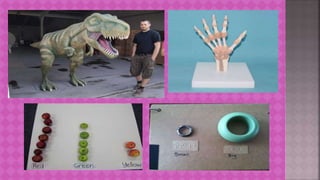
Real object is things that can be seen, touched,
smelled, and heard.
Model is things that is made similarly with the real
object.
Examples: dog, desk, television, bicycle.
These real objects share two characteristics: they all
have state and they all have behavior.
 For example:
 Dogs
State  name, color, breed
Behavior  barking, fetching
 Bicycles
State  pedal, two wheels, gears
Behavior  braking, accelerating, changing
gears
 Provide a direct link with a topic
 Enhance students interest and understanding of a
topic/subject.
 Encourage students to use all their senses –
especially touch, sight and smell.
 Help to develop the important skill of drawing
conclusions based on an examination of evidence.
 They are ideal for generating group and class
discussion.
THANK YOU 

Assignment3_Teaching Using Real Objects or Models

  • 1.
    Members: Clara Nusaca NovitriZ 131214094 Maria Dian Fajar R 131214100 Dicky Wisnu Pradikta 131214101 Yansen Alvindoris R 131214105 Yustina Rostyaningtyas 131214113
  • 2.
    What is realobjects? Benefits in using real objects Examples
  • 3.
    Real object isthings that can be seen, touched, smelled, and heard. Model is things that is made similarly with the real object. Examples: dog, desk, television, bicycle. These real objects share two characteristics: they all have state and they all have behavior.
  • 4.
     For example: Dogs State  name, color, breed Behavior  barking, fetching  Bicycles State  pedal, two wheels, gears Behavior  braking, accelerating, changing gears
  • 5.
     Provide adirect link with a topic  Enhance students interest and understanding of a topic/subject.  Encourage students to use all their senses – especially touch, sight and smell.  Help to develop the important skill of drawing conclusions based on an examination of evidence.  They are ideal for generating group and class discussion.
  • 7.