IMMUNOTHERAPY
Immunotherapy is the treatment of disease by influencing
the immune response given by the immune system.
TYPES
Active immunotherapy
Passive immunotherapy
IMMUNOTHERAPY
Active immunotherapy
It is the type of immunotherapy that attempts to stimulate the host intrinsic
immune response to a disease.
• Specific active immunotherapy
• Non specific active immunotherapy
CONTINUED….
Specific active immunotherapy
The generation of cell mediated and antibody immune responses focused on
specific antigen.
E.g. cancer vaccines
• Cellular therapies
• adjuvants
CONTINUED…
• Cancer vaccines
cancer vaccines are active immunotherapy because they meant to trigger the
patient immune system to respond.
cancer vaccines may contain cancer cells ,part of the cell , or purified tumor
specific antigen.
CONTINUED…
Two categories of cancer vaccine
• cell based
in which the patient cancer cell is cultured with patients own immune
system cells and derived back to the same patient.
• Vector based
in which the engineered virus or other vector is used to introduce cancer
specific proteins and other molecule in order to stimulate the patient immune
system to recognize the tumor cells to fight the cancer.
CONTINUED…
Examples
• Tumor cell vaccines-kidney , ovarian breast cancer
• Antigen vaccines-prostate , colorectal cancer.
• Dendritic cell vaccine
• DNA vaccines
• Vector based vaccines
CONTINUED…
• Cellular therapies
These are single type agent derived from the cancer patients which are
modified in the lab. to become more adapt at recognizing and killing the tumor
cells
this type of immunotherapy is designed to boost specific part of immune system
to cause tumor cell death
Vaccines in contrast attempts to get the body immune system react to specific
antigen
E.g. lymphocyte activated killer cell therapy
CONTINUED…
• Adjuvant immunotherapy
an adjuvant is an any material which when injected together with an antigenic
protein or other substance like monoclonal antibodies , cancer vaccines increases
or boost the immune response to the particular system.
E.g. BCG vaccine
CONTINUED…
Non specific immunotherapy
the generation of general immune system response using cytokines
Non specific active immunotherapy
• Cytokines
destruction of tumor cell by two mechanism
• direct antitumor
e.g. TNF alpha,IL-6
• Indirect enhancement of antitumor response
Eg;IL2 promote T-cell and NK cell growth
PASSIVE IMMUNOTHERAPY
Passive immunotherapy
This comprised of antibodies and other immune system component that are
made outside the body and administered to the patient to provide immunity
against the disease.
It do not stimulate a patient immune system to actively respond to a disease in
the way vaccines does.
CONTINUED…
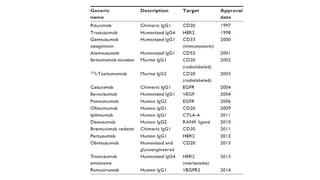
• Monoclonal antibodies therapy
• Cytokine inhibitors
• Tolerance induction
• IV immunoglobulin
• Haemopoitic stem cell transplantation
CONTINUED…
• monoclonal antibody therapy
• Types
Naked monoclonal antibodies,
e.g. Cetuximab, trastuzumab
Conjugated monoclonal antibodies
antibodies contain immunotoxin eg.gemtuzumab
Radiolabelled antibodies eg;tositumomab
Chemolabelled antibodies eg;brentuximab
CONTINUED…
• CYTOKINES INHIBITOR
These are cytokine specific substance that inhibit the biological activities of
specific cytokines in a number of different ways
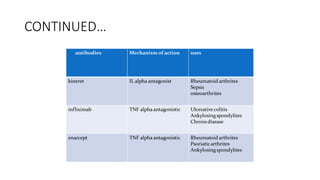
• Production can be blocked e.g. etanercept
• Intracellular process which produce the active protein can be inhibited
• Cytokines can be neutralized in the circulation e.g. infliximab
• Specific receptor can be blocked e .g. kineret
CONTINUED…
CONTINUED….
IV immunoglobulins
• It contains the pooled IgG extracted from the plasma of over one
thousand blood donors.
• IVIG's effects last between 2 weeks and 3 months.
It is mainly used as treatment in three major categories:
• Immune deficiencies .
• Autoimmune diseases e.g. Immune thrombocytopenia
• Acute infections.
CONTINUED…
• IVIG dose
• Dosage of IVIG is dependent on indication.
• For primary immune dysfunction 100 to 400 mg/kg of body weight
every 3 to 4 weeks is implemented.
• For neurological and autoimmune diseases 2 grams per kilogram of
body weight is implemented for three to six months over a five day
course once a month. Then maintenance therapy of 100 to
400 mg/kg of body weight every 3 to 4 weeks follows.
IMMUNOMODULATOR
Immunomodulatory are drugs that either suppress or stimulate the
immune system.
• Immunostimulants
that stimulates the immune system.
• Immunosuppressant
that suppress the immune system
Mechanisms of immunomodulation
Drugs may modulate immune mechanism by either suppressing or by
stimulating one or more of the following steps:
• Antigen recognition & phagocytosis
• Lymphocyte proliferation/differentiation
• Synthesis of antibodies
• Ag –Ab interaction
• Release of mediators due to immune response
• Modification of target tissue response
CONTINUED…
• The importance of immune system in protecting the body against
harmful molecules is well recognized
• However, in some instances, this protection can result in serious
problems
• E.g, the introduction of allograft can elicit a damaging immune
response causing rejection of the transplanted tissue
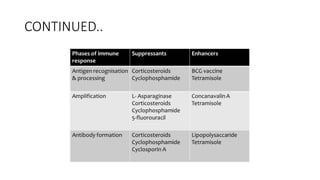
CONTINUED..
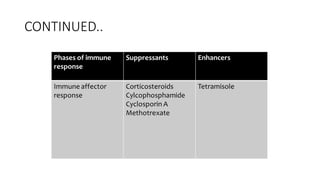
CONTINUED..
Characteristics of an ideal immunomodulator
Should be
• Stimulate both specific and non specific immune response
• Act as an adjuvant along with vaccine
• Active through oral route
• Compatible with other drugs
• Short withdrawal period with low tissue residues
• Defined chemical composition and biological activity
• Inexpensive
IMMUNOMODULATORS
……Should not be
• Toxic
• Antigenic
• Pyrogenic
• Long side effects in the body
IMMUNOSTIMULANTS
• Immunostimulants are substances that stimulate the
immune system by inducing activation and increasing
activity of any of its components.
• They are used in disorders includes immunodeficiency
diseases, cancer, viral, fungal and certain autoimmune
disorders
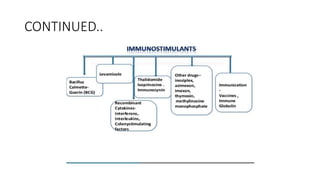
CONTINUED..
BACILLUS CALMETTE GEURIN(BCG)
Live, attenuated culture of BCG strain of Mycobacterium Bovis
Mechanism of action:
BCG and its methanol extracted residue contain muramyl dipeptide as an active
immunostimulant ingredient.
It causes activation of macrophages to make them more effective killer cells.
It induces the production of lymphocyte activity factor resulting of phase 1 of
immune response.
Therapeutic uses:
Treatment and prophylaxis of Bladder Carcinoma and acute lympholytic
leukaemia
Adverse Reactions:
Hypersensitivity
shock
chills
LEVAMISOLE
• Levamisole was synthesized originally as an anthelmintic.
• It is orally active levo isomer of tetramisole,restores depressed T-cell
function
• Mainly act by raising c-GMP levels through interaction with thymopoietin
receptor sites
• Lead to decrease in metabolic inactivation of c-GMP accompanied with increased
breakdown of c-AMP
• Increase in c-GMP level induces lymphocyte proliferation & augmentation of
chemotactic responses
• This reflects into increased antibody production lymphocyte production,
increased phagocytosis.
CONTINUED..
Therapeutic uses:
• Adjuvant therapy with 5- fluorouracil colon
cancer, Used to treat
immunodeficiency associated with Hodgkin
disease,Rheumatoid arthritis
Adverse Reactions:
• Flu like symptoms, allergic manifestation,
• nausea and muscle pain
Recombinant cytokines
These are now use by rDNA technology
Application in treatment of viral infection, autoimmune and neoplastic diseases.
INTERFERONS: Interferon alpha-2b,Interleukin 2
Mechanism of action:
Low molecular weight glycoprotein cytokines produced by host cells in response to viral infections &
suppresses cell proliferation; although the exact mechanism of action is not known
Bind to cell surface receptors and initiates intracellular events like
• Enzyme induction
• Inhibition of cell proliferation
• Enhancement of immune activities
• Increased phagocytosis
• Affect viral replication
CONTINUED…
Therapeutic uses
Hairy cell leukemia
Malignant melanoma
Hepatitis B
Adverse Rections:
Flu like symptoms – Fever, chills, headache
CVS – Hypotension, Arrhythmia
CNS- Depression, Confusion
INTERLEUKIN
It is a protein that regulates the activities of white blood cells (leukocytes,
often lymphocytes) that are responsible for immunity. IL-2 is part of the
body's natural response to microbial infection, and in discriminating
between foreign ("non-self") and "self". IL-2 mediates its effects by
binding to IL-2 receptors, which are expressed by lymphocytes.
Therapeutic uses:
Metastatic renal cell carcinoma
Melanoma
Toxicity
Hypotension
ISOPRINOSINE
Leads the production of cytokines such as IL-1, IL-2, and IFN- 𝝲𝝲,
increase proliferation of lymphocytes in response to mitogenic or
antigenic stimuli
Therapeutic uses:
Herpes simplex infection, Measles viruses
Adverse reactions:
Rise in uric acid in serum and urine, Nausea
ACTIVE IMMUNIZATION
• Vaccines
•  Administration of antigen as a whole, killed
• organism, or a specific protein or peptide
• constituent of an organism
•  Booster doses
•  Anticancer vaccines
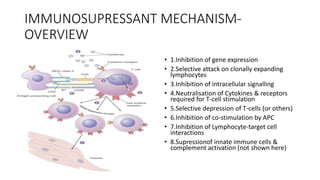
IMMUNOSUPRESSANT MECHANISM-
OVERVIEW
• 1.Inhibition of gene expression
• 2.Selective attack on clonally expanding
lymphocytes
• 3.Inhibition of intracellular signalling
• 4.Neutralisation of Cytokines & receptors
required for T-cell stimulation
• 5.Selective depression of T-cells (or others)
• 6.Inhibition of co-stimulation by APC
• 7.Inhibition of Lymphocyte-target cell
interactions
• 8.Supressionof innate immune cells &
complement activation (not shown here)
CLASSIFICATION-IMMUNOSUPRESSANT
• Immunosupressants
• Glucocorticoids
• Calcineurin Inhibitors
• Antiproliferative/Antimetabolites
• Biologicals(Antibodies)
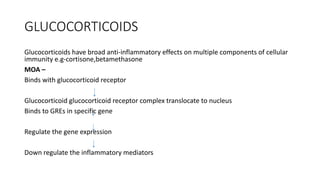
GLUCOCORTICOIDS
Glucocorticoids have broad anti-inflammatory effects on multiple components of cellular
immunity e.g-cortisone,betamethasone
MOA –
Binds with glucocorticoid receptor
Glucocorticoid glucocorticoid receptor complex translocate to nucleus
Binds to GREs in specific gene
Regulate the gene expression
Down regulate the inflammatory mediators
GLUCOCORTICOIDS-uses
• combined with other immunosuppressive agents to prevent and treat
transplant rejection.
• graft-versus-host disease in bone-marrow transplantation.
• Glucocorticoids are routinely used to treat auto-immune disorders such as
RA, psoriasis
Asthma and other allergic disorders,
inflammatory bowel disease
acute exacerbations of MS (see "Multiple Sclerosis").
• to block first-dose cytokine storm caused by treatment with muromonab-
CD3 and to a lesser extent ATG
GLUCOCORTICOIDS-toxicities
• Growth retardation in children,
• Avascular necrosis of bone, osteopenia
• Increased risk of infection
• Poor wound healing
• Cataracts
• Hyperglycemia
• Hypertension
CALCENEURIN INHIBITORS
• The most effective immunosuppressive drugs in routine use
• They target intracellular signaling pathways induced as a consequence of T cell–
receptor activation
DRUGS-Tacrolimus,Cyclosporine
Both drugs are functionally same but cyclosporine binds to cyclophilin-binding
protein&tacrolimus binds to FKBP-FK binding protein
Activated T-cells produces IL2 via dephosphorylation of NAFT(nuclear factor
activated T cell)
Calceneurin is needed for dephosphorylation
Translocate to nucleus
Transcription of IL2 gene(helps in further proliferation of T-cells)
CONTINUED..
USE -
• prophylaxis of solid-organ allograft rejection
• Clinical indications for cyclosporine are kidney, liver, heart, and other organ
transplantation
• Rheumatoid arthritis and psoriasis.
ADR-
• Nephrotoxicity,
• GI complaints,
• hypertension,
• tremor,
• hirsutism,
• hyperlipidemia,
SIROLIMUS
• Sirolimus is a macrocycliclactone produced by Streptomyces
hygroscopicus
PK-
•Systemic availability is 15%
•A loading dose of three times the maintenance dose will provide nearly
steady-state
•CYP3A4
USE –
•Prophylaxis of organ transplant rejection usually in combination
•At risk of calcineurin inhibitor–associated nephrotoxicity
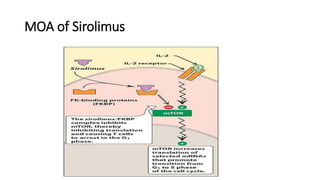
MOA of Sirolimus
AZATHIOPRINE
• It is an imidazolylderivative of 6-mercaptopurine
• MOA –
• cleaved to 6-mercaptopurine (via Glutathione),
• A fraudulent nucleotide, 6-thio-IMP, is converted to 6-thio-GMPand finally to 6-
thio-GTP, which is incorporated into DNA.
• converted to additional metabolites that inhibit de novopurine synthesis
• Cell proliferation thereby is inhibited, impairing a variety of lymphocyte
functions.
AZATHIOPRINE
USE-
• adjunct for prevention of organ transplant rejection
• Severe RA
ADR –
• The major side effect of azathioprine is bone marrow suppression
• increased susceptibility to infections (HSV),
• hepatotoxicity, alopecia, GI toxicity, pancreatitis,
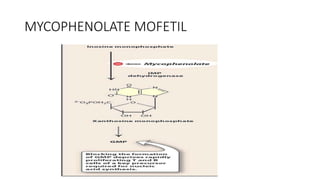
MYCOPHENOLATE MOFTEIL
• It is an ester of mycophenolic acid (MPA).
MOA –
• MMF is a prodrug that is rapidly hydrolyzed to the active drug, MPA
• MPA -a selective, noncompetitive, reversible inhibitor of inosine monophosphate
dehydrogenase (IMPDH),
• IMPDH is an enzyme @ de novo pathway of guanine nucleotide synthesis
• B and T lymphocytes are highly dependent on this pathway for cell proliferation
(others-salvage pathway)
MYCOPHENOLATE MOFETIL
CONTINUED..
USE-
• MMF is indicated for prophylaxis of transplant rejection, and it typically is used in
combination (Glucocorticoid/Calcineurin)
• off label -SLE
ADR –
• Gut -
• Hematologic –PRCA, leucopenia
• Congenital anomaly
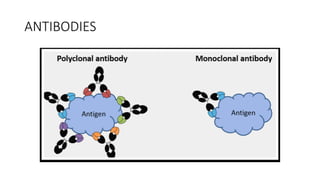
ANTIBODIES
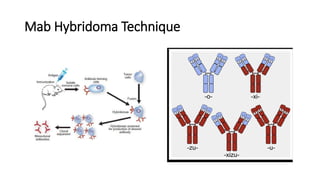
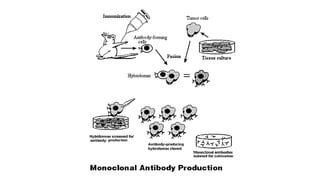
Mab Hybridoma Technique
ANTI IgE MONOCLONAL ANTIBODIES
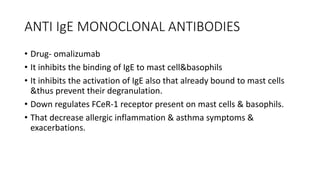
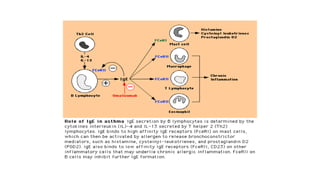
• Drug- omalizumab
• It inhibits the binding of IgE to mast cell&basophils
• It inhibits the activation of IgE also that already bound to mast cells
&thus prevent their degranulation.
• Down regulates FCeR-1 receptor present on mast cells & basophils.
• That decrease allergic inflammation & asthma symptoms &
exacerbations.
HUMANISED ANTIBODY THERAPY
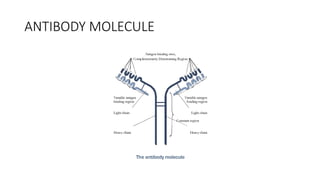
• What are antibodies?
An antibody is a protein used by the immune system to identify and neutralize
foreign objects like bacteria and viruses. Each antibody recognizes a specific
antigen unique to its target.
Monoclonal antibodies (mAb) are antibodies that are identical because they were
produced by one type of immune cell, all clones of a single parent cell.
• Polyclonal antibodies are antibodies that are derived from different cell lines.
They differ in amino acid sequence.
Practical steps in monoclonal antibody production:
1) Immunize animal
2) Isolate spleen cells (containing antibody-producing B cells)
3) Fuse spleen cells with myeloma cells (e.g. using PEG -
polyethylene glycol)
4) Allow unfused B cells to die
5) Add aminopterin to culture to kill unfused myeloma cells
6) Clone remaining cells (place 1 cell/well and allow each cell to
grow into a clone of cells)
7) Screen supernatant of each clone for presence of the desired
antibody.
8) Grow the chosen clone of cells in tissue culture indefinitely.
9) Harvest antibody from the culture supernatant.
10) (If you’re a biotech company) charge about $1,000-$2,000
per mg.
ANTIBODY MOLECULE
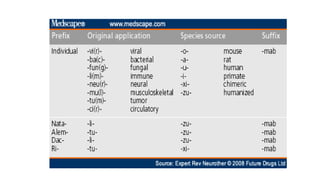
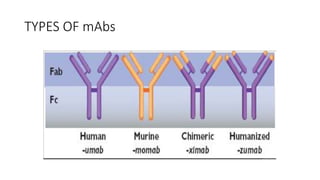
TYPES OF mAbs
WHY mAbs
Proven effective for a broad range of indications
Immunosuppression, inflammatory disease, infections and cancer
Have excellent safety profiles: highly specific
• Early decision by tissue cross-reactivity test (fast & clear
development path)
 Relatively short development cycle: 7 years vs 10-12 years
• Remarkably free of adverse effects and synergistic therapeutic
responses
Commercially successful
• High success rates and phase transition probabilities
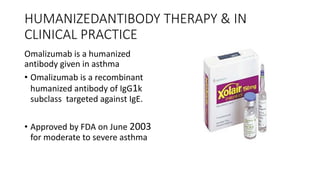
HUMANIZEDANTIBODY THERAPY & IN
CLINICAL PRACTICE
Omalizumab is a humanized
antibody given in asthma
• Omalizumab is a recombinant
humanized antibody of IgG1k
subclass targeted against IgE.
• Approved by FDA on June 2003
for moderate to severe asthma
Omalizumab
• MOA
• 1) inhibits the binding of IgE to mast cells and basophils.
• 2) inhibits the activation of IgE already bound to mast cells and thus
prevent their degranulation.
• 3) down-regulates Fc€R-1 receptor present on mast cells and
basophils.
CONTINUED…
• Slowly absorbed, Bioavailability = 60 %
• Peak serum concentration is reached in 7 to 8 days
• Volume of Distribution = 78 +/- 32ml/kg
• Elimination of Omalizumab - IgE complexes occur in liver and reticuloendothelial
system and primarily excreted via hepatic degradation.
• Elimination half-life is 26 days
• A/E – Injection site reactions, headache, URTI, parasitosis,anaphylaxis, malignancy
OTHER ANTIBODIES IN TRIAL FOR ASTHMA
• MEPHOLIZUMAB-Phase 3 trial
• Reduced eosinophil entry in airways
• Dec. asthma exacerbation
• RESLIZUMAB-Phase 2 trial
• Pronuced in a subgroup of patients with highest blood and septum
eosinophils
• LEBRIKIZUMAB- Phase 3 trial
• Improvement of lung function in patients with moderate to severe
asthma
RHEUMATOID ARTHRITIS
• Systemic autoimmune inflammatory disease
• Chronic inflammation of synovial tissue lining of joint capsule
• Signs
• Tenderness with warmth and swelling over joints
• Symmetrical joint involvement
• Rheumatoid nodules
• Symptoms
• Joint pain/stiffness
• Muscle pain, fatigue, fever, loss of appetite
• Joint deformity
TOCILIZUMAB
First interleukin-6 receptor inhibitor FDA approved to treat adults with:
Moderate to severe active RA who have had an inadequate response to one or more TNF
antagonist therapies
4 mg/kg IV infusion over 1 hour q 4 weeks
Increase to 8 mg/kg based on clinical response
MOA
Human monoclonal antibody
Binds specifically to both soluble and membrane bound IL-6 receptors
Elevated IL-6 is an important mediator of articular inflammation:
Proinflammatory cytokine
Involved in physiological processes
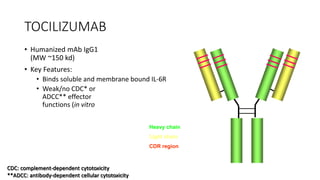
TOCILIZUMAB
• Humanized mAb IgG1
(MW ~150 kd)
• Key Features:
• Binds soluble and membrane bound IL-6R
• Weak/no CDC* or
ADCC** effector
functions (in vitro
Heavy chain
Light chain
CDR region
CDC: complement-dependent cytotoxicity
**ADCC: antibody-dependent cellular cytotoxicity
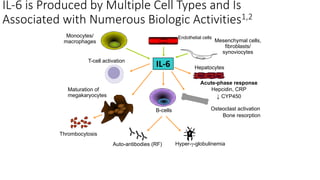
IL-6 is Produced by Multiple Cell Types and Is
Associated with Numerous Biologic Activities1,2
Endothelial cellsMonocytes/
macrophages
T-cell activation
Hepatocytes
Acute-phase response
Hepcidin, CRP
↓ CYP450
Maturation of
megakaryocytes
Thrombocytosis
Osteoclast activation
Bone resorption
B-cells
Hyper-γ-globulinemiaAuto-antibodies (RF)
IL-6
Mesenchymal cells,
fibroblasts/
synoviocytes
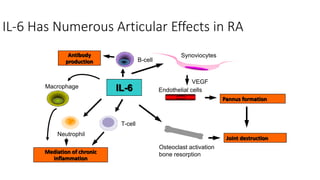
IL-6 Has Numerous Articular Effects in RA
Synoviocytes
Osteoclast activation
bone resorption
Endothelial cells
VEGF
Pannus formation
Joint destruction
Mediation of chronic
inflammation
IL-6Macrophage
T-cell
B-cell
Neutrophil
Antibody
production
TOCILIZUMAB-side effects
• severe stomach pain with constipation,
• bloody or tarry stools,
• coughing up blood or vomit that looks like coffee grounds,
• painful blistering skin rash with burning/itching/tingly feeling,
• upper stomach pain,
• vomiting,
• runny or stuffy nose,
• sinus pain,
• sore throat,
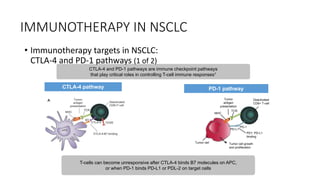
IMMUNOTHERAPY IN NSCLC
• Immunotherapy targets in NSCLC:
CTLA-4 and PD-1 pathways (1 of 2)
CTLA-4 and PD-1 pathways are immune checkpoint pathways
that play critical roles in controlling T-cell immune responses1
Deactivated
CD8+ T-cell
Tumor
antigen
presentation
TCR
MHC
Tumor cell
PD1: PD-L1
binding
PD-L1
PD-1
Tumor cell growth
and proliferation
CTLA-4 pathway PD-1 pathway
T-cells can become unresponsive after CTLA-4 binds B7 molecules on APC,
or when PD-1 binds PD-L1 or PDL-2 on target cells
CONTINUED….
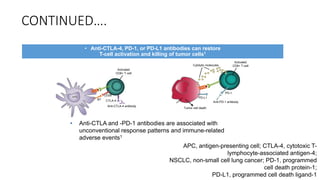
• Anti-CTLA-4, PD-1, or PD-L1 antibodies can restore
T-cell activation and killing of tumor cells1
Activated
CD8+ T-cell
Anti-CTLA-4 antibody
CTLA-4
CD28
B7
Tumor cell death
PD-L1
Cytolytic molecules
Activated
CD8+ T-cell
PD-1
Anti-PD-1 antibody
• Anti-CTLA and -PD-1 antibodies are associated with
unconventional response patterns and immune-related
adverse events1
APC, antigen-presenting cell; CTLA-4, cytotoxic T-
lymphocyte-associated antigen-4;
NSCLC, non-small cell lung cancer; PD-1, programmed
cell death protein-1;
PD-L1, programmed cell death ligand-1
REFERENCES
• Golan D.E, Tajshjian A.H, Armstrong E.J, Armstrong A.W, Principles of
pharmacology The pathophysiologic basis of drug therapy,3rd Edition, Lippincott
Wlliams & Wilkins,2012,790-806.
Brunton LL, Lazo JS, Parker LK, Goodman & Gilman's The Pharmacological Basis
Of Therapeutics, 11th Ed., McGraw-Hill, 2006,1291-1306
• Bousquet J,et al. Expert Opin Biol Ther 2012;8(12):1921- 8
• Patil U.S, Jaydeokar A.V, Bandawane D.D, immunomodulators : a
pharmacological review, international journal of pharmacy & pharmaceutical
sciences, vol 4, suppl 1, 2012

Assignment on Immunotherapy

  • 1.
    IMMUNOTHERAPY Immunotherapy is thetreatment of disease by influencing the immune response given by the immune system. TYPES Active immunotherapy Passive immunotherapy
  • 2.
    IMMUNOTHERAPY Active immunotherapy It isthe type of immunotherapy that attempts to stimulate the host intrinsic immune response to a disease. • Specific active immunotherapy • Non specific active immunotherapy
  • 3.
    CONTINUED…. Specific active immunotherapy Thegeneration of cell mediated and antibody immune responses focused on specific antigen. E.g. cancer vaccines • Cellular therapies • adjuvants
  • 4.
    CONTINUED… • Cancer vaccines cancervaccines are active immunotherapy because they meant to trigger the patient immune system to respond. cancer vaccines may contain cancer cells ,part of the cell , or purified tumor specific antigen.
  • 5.
    CONTINUED… Two categories ofcancer vaccine • cell based in which the patient cancer cell is cultured with patients own immune system cells and derived back to the same patient. • Vector based in which the engineered virus or other vector is used to introduce cancer specific proteins and other molecule in order to stimulate the patient immune system to recognize the tumor cells to fight the cancer.
  • 6.
    CONTINUED… Examples • Tumor cellvaccines-kidney , ovarian breast cancer • Antigen vaccines-prostate , colorectal cancer. • Dendritic cell vaccine • DNA vaccines • Vector based vaccines
  • 7.
    CONTINUED… • Cellular therapies Theseare single type agent derived from the cancer patients which are modified in the lab. to become more adapt at recognizing and killing the tumor cells this type of immunotherapy is designed to boost specific part of immune system to cause tumor cell death Vaccines in contrast attempts to get the body immune system react to specific antigen E.g. lymphocyte activated killer cell therapy
  • 8.
    CONTINUED… • Adjuvant immunotherapy anadjuvant is an any material which when injected together with an antigenic protein or other substance like monoclonal antibodies , cancer vaccines increases or boost the immune response to the particular system. E.g. BCG vaccine
  • 9.
    CONTINUED… Non specific immunotherapy thegeneration of general immune system response using cytokines Non specific active immunotherapy • Cytokines destruction of tumor cell by two mechanism • direct antitumor e.g. TNF alpha,IL-6 • Indirect enhancement of antitumor response Eg;IL2 promote T-cell and NK cell growth
  • 10.
    PASSIVE IMMUNOTHERAPY Passive immunotherapy Thiscomprised of antibodies and other immune system component that are made outside the body and administered to the patient to provide immunity against the disease. It do not stimulate a patient immune system to actively respond to a disease in the way vaccines does.
  • 11.
    CONTINUED… • Monoclonal antibodiestherapy • Cytokine inhibitors • Tolerance induction • IV immunoglobulin • Haemopoitic stem cell transplantation
  • 12.
    CONTINUED… • monoclonal antibodytherapy • Types Naked monoclonal antibodies, e.g. Cetuximab, trastuzumab Conjugated monoclonal antibodies antibodies contain immunotoxin eg.gemtuzumab Radiolabelled antibodies eg;tositumomab Chemolabelled antibodies eg;brentuximab
  • 13.
    CONTINUED… • CYTOKINES INHIBITOR Theseare cytokine specific substance that inhibit the biological activities of specific cytokines in a number of different ways • Production can be blocked e.g. etanercept • Intracellular process which produce the active protein can be inhibited • Cytokines can be neutralized in the circulation e.g. infliximab • Specific receptor can be blocked e .g. kineret
  • 14.
  • 15.
    CONTINUED…. IV immunoglobulins • Itcontains the pooled IgG extracted from the plasma of over one thousand blood donors. • IVIG's effects last between 2 weeks and 3 months. It is mainly used as treatment in three major categories: • Immune deficiencies . • Autoimmune diseases e.g. Immune thrombocytopenia • Acute infections.
  • 16.
    CONTINUED… • IVIG dose •Dosage of IVIG is dependent on indication. • For primary immune dysfunction 100 to 400 mg/kg of body weight every 3 to 4 weeks is implemented. • For neurological and autoimmune diseases 2 grams per kilogram of body weight is implemented for three to six months over a five day course once a month. Then maintenance therapy of 100 to 400 mg/kg of body weight every 3 to 4 weeks follows.
  • 17.
    IMMUNOMODULATOR Immunomodulatory are drugsthat either suppress or stimulate the immune system. • Immunostimulants that stimulates the immune system. • Immunosuppressant that suppress the immune system
  • 19.
    Mechanisms of immunomodulation Drugsmay modulate immune mechanism by either suppressing or by stimulating one or more of the following steps: • Antigen recognition & phagocytosis • Lymphocyte proliferation/differentiation • Synthesis of antibodies • Ag –Ab interaction • Release of mediators due to immune response • Modification of target tissue response
  • 20.
    CONTINUED… • The importanceof immune system in protecting the body against harmful molecules is well recognized • However, in some instances, this protection can result in serious problems • E.g, the introduction of allograft can elicit a damaging immune response causing rejection of the transplanted tissue
  • 21.
  • 22.
  • 23.
    Characteristics of anideal immunomodulator Should be • Stimulate both specific and non specific immune response • Act as an adjuvant along with vaccine • Active through oral route • Compatible with other drugs • Short withdrawal period with low tissue residues • Defined chemical composition and biological activity • Inexpensive
  • 24.
    IMMUNOMODULATORS ……Should not be •Toxic • Antigenic • Pyrogenic • Long side effects in the body
  • 25.
    IMMUNOSTIMULANTS • Immunostimulants aresubstances that stimulate the immune system by inducing activation and increasing activity of any of its components. • They are used in disorders includes immunodeficiency diseases, cancer, viral, fungal and certain autoimmune disorders
  • 26.
  • 27.
    BACILLUS CALMETTE GEURIN(BCG) Live,attenuated culture of BCG strain of Mycobacterium Bovis Mechanism of action: BCG and its methanol extracted residue contain muramyl dipeptide as an active immunostimulant ingredient. It causes activation of macrophages to make them more effective killer cells. It induces the production of lymphocyte activity factor resulting of phase 1 of immune response. Therapeutic uses: Treatment and prophylaxis of Bladder Carcinoma and acute lympholytic leukaemia Adverse Reactions: Hypersensitivity shock chills
  • 28.
    LEVAMISOLE • Levamisole wassynthesized originally as an anthelmintic. • It is orally active levo isomer of tetramisole,restores depressed T-cell function • Mainly act by raising c-GMP levels through interaction with thymopoietin receptor sites • Lead to decrease in metabolic inactivation of c-GMP accompanied with increased breakdown of c-AMP • Increase in c-GMP level induces lymphocyte proliferation & augmentation of chemotactic responses • This reflects into increased antibody production lymphocyte production, increased phagocytosis.
  • 29.
    CONTINUED.. Therapeutic uses: • Adjuvanttherapy with 5- fluorouracil colon cancer, Used to treat immunodeficiency associated with Hodgkin disease,Rheumatoid arthritis Adverse Reactions: • Flu like symptoms, allergic manifestation, • nausea and muscle pain
  • 30.
    Recombinant cytokines These arenow use by rDNA technology Application in treatment of viral infection, autoimmune and neoplastic diseases. INTERFERONS: Interferon alpha-2b,Interleukin 2 Mechanism of action: Low molecular weight glycoprotein cytokines produced by host cells in response to viral infections & suppresses cell proliferation; although the exact mechanism of action is not known Bind to cell surface receptors and initiates intracellular events like • Enzyme induction • Inhibition of cell proliferation • Enhancement of immune activities • Increased phagocytosis • Affect viral replication
  • 31.
    CONTINUED… Therapeutic uses Hairy cellleukemia Malignant melanoma Hepatitis B Adverse Rections: Flu like symptoms – Fever, chills, headache CVS – Hypotension, Arrhythmia CNS- Depression, Confusion
  • 32.
    INTERLEUKIN It is aprotein that regulates the activities of white blood cells (leukocytes, often lymphocytes) that are responsible for immunity. IL-2 is part of the body's natural response to microbial infection, and in discriminating between foreign ("non-self") and "self". IL-2 mediates its effects by binding to IL-2 receptors, which are expressed by lymphocytes. Therapeutic uses: Metastatic renal cell carcinoma Melanoma Toxicity Hypotension
  • 33.
    ISOPRINOSINE Leads the productionof cytokines such as IL-1, IL-2, and IFN- 𝝲𝝲, increase proliferation of lymphocytes in response to mitogenic or antigenic stimuli Therapeutic uses: Herpes simplex infection, Measles viruses Adverse reactions: Rise in uric acid in serum and urine, Nausea
  • 34.
    ACTIVE IMMUNIZATION • Vaccines • Administration of antigen as a whole, killed • organism, or a specific protein or peptide • constituent of an organism •  Booster doses •  Anticancer vaccines
  • 35.
    IMMUNOSUPRESSANT MECHANISM- OVERVIEW • 1.Inhibitionof gene expression • 2.Selective attack on clonally expanding lymphocytes • 3.Inhibition of intracellular signalling • 4.Neutralisation of Cytokines & receptors required for T-cell stimulation • 5.Selective depression of T-cells (or others) • 6.Inhibition of co-stimulation by APC • 7.Inhibition of Lymphocyte-target cell interactions • 8.Supressionof innate immune cells & complement activation (not shown here)
  • 36.
    CLASSIFICATION-IMMUNOSUPRESSANT • Immunosupressants • Glucocorticoids •Calcineurin Inhibitors • Antiproliferative/Antimetabolites • Biologicals(Antibodies)
  • 37.
    GLUCOCORTICOIDS Glucocorticoids have broadanti-inflammatory effects on multiple components of cellular immunity e.g-cortisone,betamethasone MOA – Binds with glucocorticoid receptor Glucocorticoid glucocorticoid receptor complex translocate to nucleus Binds to GREs in specific gene Regulate the gene expression Down regulate the inflammatory mediators
  • 38.
    GLUCOCORTICOIDS-uses • combined withother immunosuppressive agents to prevent and treat transplant rejection. • graft-versus-host disease in bone-marrow transplantation. • Glucocorticoids are routinely used to treat auto-immune disorders such as RA, psoriasis Asthma and other allergic disorders, inflammatory bowel disease acute exacerbations of MS (see "Multiple Sclerosis"). • to block first-dose cytokine storm caused by treatment with muromonab- CD3 and to a lesser extent ATG
  • 39.
    GLUCOCORTICOIDS-toxicities • Growth retardationin children, • Avascular necrosis of bone, osteopenia • Increased risk of infection • Poor wound healing • Cataracts • Hyperglycemia • Hypertension
  • 40.
    CALCENEURIN INHIBITORS • Themost effective immunosuppressive drugs in routine use • They target intracellular signaling pathways induced as a consequence of T cell– receptor activation DRUGS-Tacrolimus,Cyclosporine Both drugs are functionally same but cyclosporine binds to cyclophilin-binding protein&tacrolimus binds to FKBP-FK binding protein Activated T-cells produces IL2 via dephosphorylation of NAFT(nuclear factor activated T cell) Calceneurin is needed for dephosphorylation Translocate to nucleus Transcription of IL2 gene(helps in further proliferation of T-cells)
  • 41.
    CONTINUED.. USE - • prophylaxisof solid-organ allograft rejection • Clinical indications for cyclosporine are kidney, liver, heart, and other organ transplantation • Rheumatoid arthritis and psoriasis. ADR- • Nephrotoxicity, • GI complaints, • hypertension, • tremor, • hirsutism, • hyperlipidemia,
  • 42.
    SIROLIMUS • Sirolimus isa macrocycliclactone produced by Streptomyces hygroscopicus PK- •Systemic availability is 15% •A loading dose of three times the maintenance dose will provide nearly steady-state •CYP3A4 USE – •Prophylaxis of organ transplant rejection usually in combination •At risk of calcineurin inhibitor–associated nephrotoxicity
  • 43.
  • 44.
    AZATHIOPRINE • It isan imidazolylderivative of 6-mercaptopurine • MOA – • cleaved to 6-mercaptopurine (via Glutathione), • A fraudulent nucleotide, 6-thio-IMP, is converted to 6-thio-GMPand finally to 6- thio-GTP, which is incorporated into DNA. • converted to additional metabolites that inhibit de novopurine synthesis • Cell proliferation thereby is inhibited, impairing a variety of lymphocyte functions.
  • 45.
    AZATHIOPRINE USE- • adjunct forprevention of organ transplant rejection • Severe RA ADR – • The major side effect of azathioprine is bone marrow suppression • increased susceptibility to infections (HSV), • hepatotoxicity, alopecia, GI toxicity, pancreatitis,
  • 46.
    MYCOPHENOLATE MOFTEIL • Itis an ester of mycophenolic acid (MPA). MOA – • MMF is a prodrug that is rapidly hydrolyzed to the active drug, MPA • MPA -a selective, noncompetitive, reversible inhibitor of inosine monophosphate dehydrogenase (IMPDH), • IMPDH is an enzyme @ de novo pathway of guanine nucleotide synthesis • B and T lymphocytes are highly dependent on this pathway for cell proliferation (others-salvage pathway)
  • 47.
  • 48.
    CONTINUED.. USE- • MMF isindicated for prophylaxis of transplant rejection, and it typically is used in combination (Glucocorticoid/Calcineurin) • off label -SLE ADR – • Gut - • Hematologic –PRCA, leucopenia • Congenital anomaly
  • 49.
  • 50.
  • 53.
    ANTI IgE MONOCLONALANTIBODIES • Drug- omalizumab • It inhibits the binding of IgE to mast cell&basophils • It inhibits the activation of IgE also that already bound to mast cells &thus prevent their degranulation. • Down regulates FCeR-1 receptor present on mast cells & basophils. • That decrease allergic inflammation & asthma symptoms & exacerbations.
  • 54.
    HUMANISED ANTIBODY THERAPY •What are antibodies? An antibody is a protein used by the immune system to identify and neutralize foreign objects like bacteria and viruses. Each antibody recognizes a specific antigen unique to its target. Monoclonal antibodies (mAb) are antibodies that are identical because they were produced by one type of immune cell, all clones of a single parent cell. • Polyclonal antibodies are antibodies that are derived from different cell lines. They differ in amino acid sequence.
  • 56.
    Practical steps inmonoclonal antibody production: 1) Immunize animal 2) Isolate spleen cells (containing antibody-producing B cells) 3) Fuse spleen cells with myeloma cells (e.g. using PEG - polyethylene glycol) 4) Allow unfused B cells to die 5) Add aminopterin to culture to kill unfused myeloma cells 6) Clone remaining cells (place 1 cell/well and allow each cell to grow into a clone of cells) 7) Screen supernatant of each clone for presence of the desired antibody. 8) Grow the chosen clone of cells in tissue culture indefinitely. 9) Harvest antibody from the culture supernatant. 10) (If you’re a biotech company) charge about $1,000-$2,000 per mg.
  • 57.
  • 58.
  • 59.
    WHY mAbs Proven effectivefor a broad range of indications Immunosuppression, inflammatory disease, infections and cancer Have excellent safety profiles: highly specific • Early decision by tissue cross-reactivity test (fast & clear development path)  Relatively short development cycle: 7 years vs 10-12 years • Remarkably free of adverse effects and synergistic therapeutic responses Commercially successful • High success rates and phase transition probabilities
  • 60.
    HUMANIZEDANTIBODY THERAPY &IN CLINICAL PRACTICE Omalizumab is a humanized antibody given in asthma • Omalizumab is a recombinant humanized antibody of IgG1k subclass targeted against IgE. • Approved by FDA on June 2003 for moderate to severe asthma
  • 62.
    Omalizumab • MOA • 1)inhibits the binding of IgE to mast cells and basophils. • 2) inhibits the activation of IgE already bound to mast cells and thus prevent their degranulation. • 3) down-regulates Fc€R-1 receptor present on mast cells and basophils.
  • 63.
    CONTINUED… • Slowly absorbed,Bioavailability = 60 % • Peak serum concentration is reached in 7 to 8 days • Volume of Distribution = 78 +/- 32ml/kg • Elimination of Omalizumab - IgE complexes occur in liver and reticuloendothelial system and primarily excreted via hepatic degradation. • Elimination half-life is 26 days • A/E – Injection site reactions, headache, URTI, parasitosis,anaphylaxis, malignancy
  • 64.
    OTHER ANTIBODIES INTRIAL FOR ASTHMA • MEPHOLIZUMAB-Phase 3 trial • Reduced eosinophil entry in airways • Dec. asthma exacerbation • RESLIZUMAB-Phase 2 trial • Pronuced in a subgroup of patients with highest blood and septum eosinophils • LEBRIKIZUMAB- Phase 3 trial • Improvement of lung function in patients with moderate to severe asthma
  • 65.
    RHEUMATOID ARTHRITIS • Systemicautoimmune inflammatory disease • Chronic inflammation of synovial tissue lining of joint capsule • Signs • Tenderness with warmth and swelling over joints • Symmetrical joint involvement • Rheumatoid nodules • Symptoms • Joint pain/stiffness • Muscle pain, fatigue, fever, loss of appetite • Joint deformity
  • 66.
    TOCILIZUMAB First interleukin-6 receptorinhibitor FDA approved to treat adults with: Moderate to severe active RA who have had an inadequate response to one or more TNF antagonist therapies 4 mg/kg IV infusion over 1 hour q 4 weeks Increase to 8 mg/kg based on clinical response MOA Human monoclonal antibody Binds specifically to both soluble and membrane bound IL-6 receptors Elevated IL-6 is an important mediator of articular inflammation: Proinflammatory cytokine Involved in physiological processes
  • 67.
    TOCILIZUMAB • Humanized mAbIgG1 (MW ~150 kd) • Key Features: • Binds soluble and membrane bound IL-6R • Weak/no CDC* or ADCC** effector functions (in vitro Heavy chain Light chain CDR region CDC: complement-dependent cytotoxicity **ADCC: antibody-dependent cellular cytotoxicity
  • 68.
    IL-6 is Producedby Multiple Cell Types and Is Associated with Numerous Biologic Activities1,2 Endothelial cellsMonocytes/ macrophages T-cell activation Hepatocytes Acute-phase response Hepcidin, CRP ↓ CYP450 Maturation of megakaryocytes Thrombocytosis Osteoclast activation Bone resorption B-cells Hyper-γ-globulinemiaAuto-antibodies (RF) IL-6 Mesenchymal cells, fibroblasts/ synoviocytes
  • 69.
    IL-6 Has NumerousArticular Effects in RA Synoviocytes Osteoclast activation bone resorption Endothelial cells VEGF Pannus formation Joint destruction Mediation of chronic inflammation IL-6Macrophage T-cell B-cell Neutrophil Antibody production
  • 70.
    TOCILIZUMAB-side effects • severestomach pain with constipation, • bloody or tarry stools, • coughing up blood or vomit that looks like coffee grounds, • painful blistering skin rash with burning/itching/tingly feeling, • upper stomach pain, • vomiting, • runny or stuffy nose, • sinus pain, • sore throat,
  • 71.
    IMMUNOTHERAPY IN NSCLC •Immunotherapy targets in NSCLC: CTLA-4 and PD-1 pathways (1 of 2) CTLA-4 and PD-1 pathways are immune checkpoint pathways that play critical roles in controlling T-cell immune responses1 Deactivated CD8+ T-cell Tumor antigen presentation TCR MHC Tumor cell PD1: PD-L1 binding PD-L1 PD-1 Tumor cell growth and proliferation CTLA-4 pathway PD-1 pathway T-cells can become unresponsive after CTLA-4 binds B7 molecules on APC, or when PD-1 binds PD-L1 or PDL-2 on target cells
  • 72.
    CONTINUED…. • Anti-CTLA-4, PD-1,or PD-L1 antibodies can restore T-cell activation and killing of tumor cells1 Activated CD8+ T-cell Anti-CTLA-4 antibody CTLA-4 CD28 B7 Tumor cell death PD-L1 Cytolytic molecules Activated CD8+ T-cell PD-1 Anti-PD-1 antibody • Anti-CTLA and -PD-1 antibodies are associated with unconventional response patterns and immune-related adverse events1 APC, antigen-presenting cell; CTLA-4, cytotoxic T- lymphocyte-associated antigen-4; NSCLC, non-small cell lung cancer; PD-1, programmed cell death protein-1; PD-L1, programmed cell death ligand-1
  • 73.
    REFERENCES • Golan D.E,Tajshjian A.H, Armstrong E.J, Armstrong A.W, Principles of pharmacology The pathophysiologic basis of drug therapy,3rd Edition, Lippincott Wlliams & Wilkins,2012,790-806. Brunton LL, Lazo JS, Parker LK, Goodman & Gilman's The Pharmacological Basis Of Therapeutics, 11th Ed., McGraw-Hill, 2006,1291-1306 • Bousquet J,et al. Expert Opin Biol Ther 2012;8(12):1921- 8 • Patil U.S, Jaydeokar A.V, Bandawane D.D, immunomodulators : a pharmacological review, international journal of pharmacy & pharmaceutical sciences, vol 4, suppl 1, 2012