Introduction to
Immunotherapy
Submittedby, Submittedto,
Mohd Sufiyan Dr. Poonam Kushwaha
M.Pharm (Pharmaceutics)
Content
• Immunotherapy
• How does immunotherapy work against cancer?
• What are the types of immunotherapy?
• What is the current research in immunotherapy?
• Reference
Immunotherapy
 Immunotherapy is a type of cancer treatment that
helps immune system to fight cancer. The immune system
helps body to fight infections and other diseases. It is made
up of white blood cells and organs and tissues of
the lymph system.
 Immunotherapy is a type of biological therapy.
 Biological therapy is a type of treatment that uses
substances made from living organisms to treat cancer.
How does immunotherapy work against
cancer?
 As part of its normal function, the immune system detects and
destroys abnormal cells and most likely prevents or curbs the
growth of many cancers.
 For instance, immune cells are sometimes found in and around
tumors. These cells, called tumor-infiltrating lymphocytes or
TILs, are a sign that the immune system is responding to the
tumor.
 People whose tumors contain TILs often do better than people
whose tumors don’t contain them.
 Even though the immune system can prevent or slow cancer
growth, cancer cells have ways to avoid destruction by the
immune system. For example, cancer cells may:
• Have genetic changes that make them less visible to the
immune system.
• Have proteins on their surface that turn off immune cells.
• Change the normal cells around the tumor so they interfere
with how the immune system responds to the cancer cells.
 Immunotherapy helps the immune system to better act against
cancer.
What are the types of
immunotherapy?
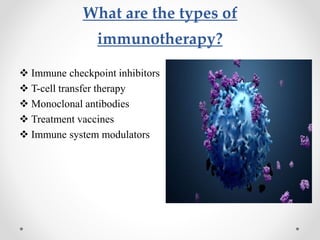
 Immune checkpoint inhibitors
 T-cell transfer therapy
 Monoclonal antibodies
 Treatment vaccines
 Immune system modulators
• Immune checkpoint inhibitors, which are drugs that block
immune checkpoints. These checkpoints are a normal part of
the immune system and keep immune responses from being
too strong. By blocking them, these drugs allow immune cells
to respond more strongly to cancer.
• T-cell transfer therapy, which is a treatment that boosts the
natural ability of your T cells to fight cancer. In this treatment,
immune cells are taken from your tumor. Those that are most
active against your cancer are selected or changed in the lab to
better attack your cancer cells, grown in large batches, and put
back into your body through a needle in a vein.
• Monoclonal antibodies, which are immune system proteins
created in the lab that are designed to bind to specific targets
on cancer cells. Some monoclonal antibodies mark cancer cells
so that they will be better seen and destroyed by the immune
system. Such monoclonal antibodies are a type of
immunotherapy.
• Treatment vaccines, which work against cancer by boosting
your immune system’s response to cancer cells. Treatment
vaccines are different from the ones that help prevent disease.
• Immune system modulators, which enhance the
body’s immune response against cancer. Some of these agents
affect specific parts of the immune system, whereas others
affect the immune system in a more general way.
What is the current research in
immunotherapy?
• Finding solutions for resistance.
• Finding ways to predict responses to immunotherapy.
• Learning more about how cancer cells evade or suppress
immune responses against them.
Reference
• https://www.cancer.gov/about-
cancer/treatment/types/immunotherapy
Thank You….

Introduction to Immunotherapy.pptx

  • 1.
    Introduction to Immunotherapy Submittedby, Submittedto, MohdSufiyan Dr. Poonam Kushwaha M.Pharm (Pharmaceutics)
  • 2.
    Content • Immunotherapy • Howdoes immunotherapy work against cancer? • What are the types of immunotherapy? • What is the current research in immunotherapy? • Reference
  • 3.
    Immunotherapy  Immunotherapy isa type of cancer treatment that helps immune system to fight cancer. The immune system helps body to fight infections and other diseases. It is made up of white blood cells and organs and tissues of the lymph system.  Immunotherapy is a type of biological therapy.  Biological therapy is a type of treatment that uses substances made from living organisms to treat cancer.
  • 5.
    How does immunotherapywork against cancer?  As part of its normal function, the immune system detects and destroys abnormal cells and most likely prevents or curbs the growth of many cancers.  For instance, immune cells are sometimes found in and around tumors. These cells, called tumor-infiltrating lymphocytes or TILs, are a sign that the immune system is responding to the tumor.  People whose tumors contain TILs often do better than people whose tumors don’t contain them.
  • 6.
     Even thoughthe immune system can prevent or slow cancer growth, cancer cells have ways to avoid destruction by the immune system. For example, cancer cells may: • Have genetic changes that make them less visible to the immune system. • Have proteins on their surface that turn off immune cells. • Change the normal cells around the tumor so they interfere with how the immune system responds to the cancer cells.  Immunotherapy helps the immune system to better act against cancer.
  • 8.
    What are thetypes of immunotherapy?  Immune checkpoint inhibitors  T-cell transfer therapy  Monoclonal antibodies  Treatment vaccines  Immune system modulators
  • 9.
    • Immune checkpointinhibitors, which are drugs that block immune checkpoints. These checkpoints are a normal part of the immune system and keep immune responses from being too strong. By blocking them, these drugs allow immune cells to respond more strongly to cancer. • T-cell transfer therapy, which is a treatment that boosts the natural ability of your T cells to fight cancer. In this treatment, immune cells are taken from your tumor. Those that are most active against your cancer are selected or changed in the lab to better attack your cancer cells, grown in large batches, and put back into your body through a needle in a vein.
  • 10.
    • Monoclonal antibodies,which are immune system proteins created in the lab that are designed to bind to specific targets on cancer cells. Some monoclonal antibodies mark cancer cells so that they will be better seen and destroyed by the immune system. Such monoclonal antibodies are a type of immunotherapy. • Treatment vaccines, which work against cancer by boosting your immune system’s response to cancer cells. Treatment vaccines are different from the ones that help prevent disease. • Immune system modulators, which enhance the body’s immune response against cancer. Some of these agents affect specific parts of the immune system, whereas others affect the immune system in a more general way.
  • 11.
    What is thecurrent research in immunotherapy? • Finding solutions for resistance. • Finding ways to predict responses to immunotherapy. • Learning more about how cancer cells evade or suppress immune responses against them.
  • 12.
  • 13.