1
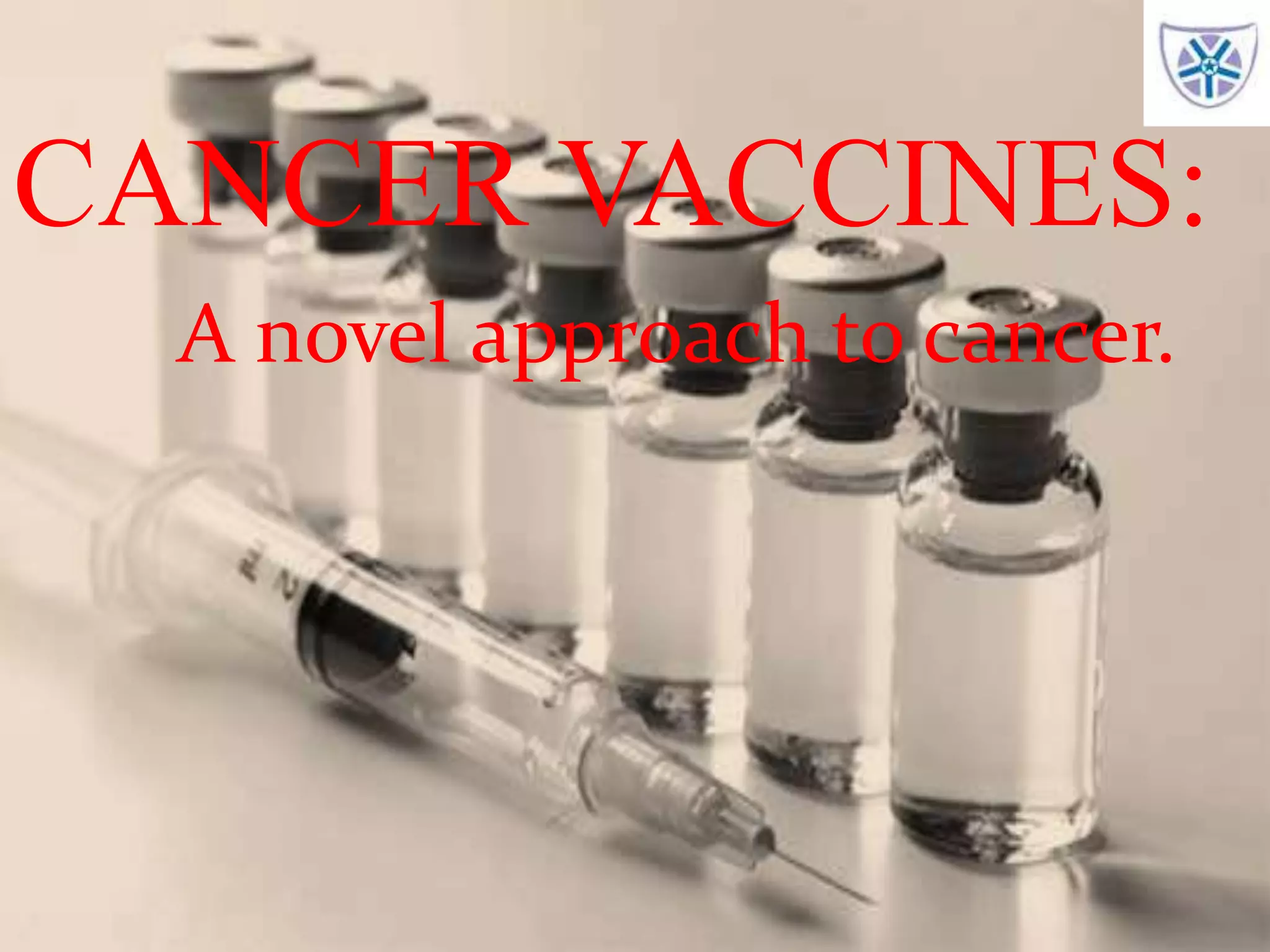
CANCER VACCINES:
A novel approach to cancer.
TOPICS OF THE DAY:
Introduction
Cancer statistics
Immunotherapy
Cancer vaccines
Types of cancer vaccines
Conclusion
2
33
A cancer vaccine is a vaccine that treats
existing cancer or prevents the development of cancer
in certain high-risk individuals. Vaccines that treat
existing cancer are known as therapeutic cancer
vaccines.
Some types of cancer, such as cervical cancer and
some liver cancers, are caused by oncoviruses.
Scientists have also been trying to develop vaccines
against existing cancers.
INTRODUCTION:
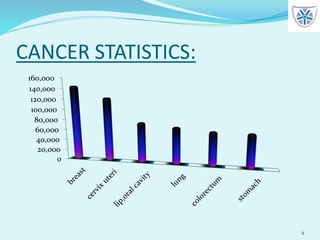
CANCER STATISTICS:
0
20,000
40,000
60,000
80,000
100,000
120,000
140,000
160,000
4
IMMUNOTHERAPY:
5
Immunotherapy is treatment that uses your body's
own immune system to help fight cancer.
Considered by many to be the “fourth modality of
cancer treatment” after chemotherapy, radiation,
and surgery.
Based on utilizing the patient’s immune system to
fight the cancer.
Cancer vaccines fall under this category of treatment.
CANCER VACCINES:
6
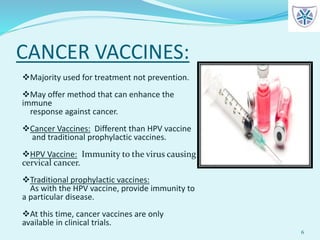
Majority used for treatment not prevention.
May offer method that can enhance the
immune
response against cancer.
Cancer Vaccines: Different than HPV vaccine
and traditional prophylactic vaccines.
HPV Vaccine: Immunity to the virus causing
cervical cancer.
Traditional prophylactic vaccines:
As with the HPV vaccine, provide immunity to
a particular disease.
At this time, cancer vaccines are only
available in clinical trials.
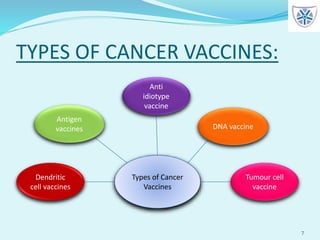
TYPES OF CANCER VACCINES:
7
Types of Cancer
Vaccines
Dendritic
cell vaccines
Antigen
vaccines
Tumour cell
vaccine
DNA vaccine
Anti
idiotype
vaccine
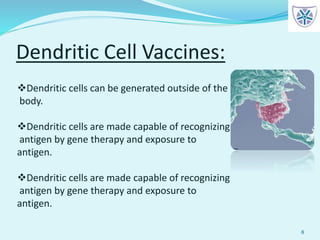
Dendritic Cell Vaccines:
8
Dendritic cells can be generated outside of the
body.
Dendritic cells are made capable of recognizing
antigen by gene therapy and exposure to
antigen.
Dendritic cells are made capable of recognizing
antigen by gene therapy and exposure to
antigen.
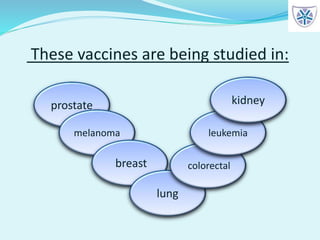
These vaccines are being studied in:
prostate
melanoma
breast
lung
colorectal
leukemia
kidney
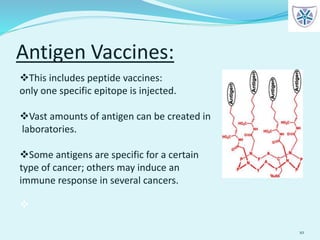
Antigen Vaccines:
10
This includes peptide vaccines:
only one specific epitope is injected.
Vast amounts of antigen can be created in
laboratories.
Some antigens are specific for a certain
type of cancer; others may induce an
immune response in several cancers.

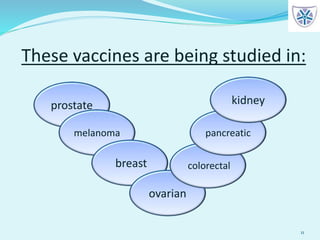
These vaccines are being studied in:
11
prostate
melanoma
breast
ovarian
colorectal
pancreatic
kidney
Anti-Idiotype Vaccines:
12
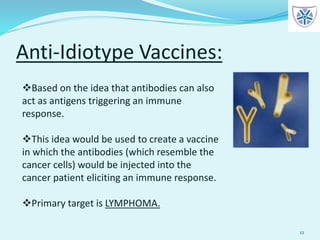
Based on the idea that antibodies can also
act as antigens triggering an immune
response.
This idea would be used to create a vaccine
in which the antibodies (which resemble the
cancer cells) would be injected into the
cancer patient eliciting an immune response.
Primary target is LYMPHOMA.
DNA Vaccine:
13
Introduction of tumor genes instead of
tumor antigen itself.
Cells in the body take up the injected
DNA. Specific antigens would then be
made on a continuous basis.
The idea of these vaccines is that the
body would be provided with a constant
supply of antigens to allow the immune
response to continue against the cancer.
14
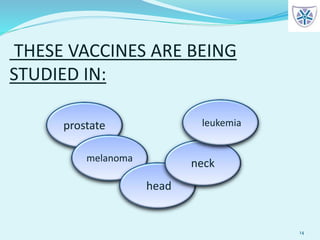
prostate
melanoma
head
neck
leukemia
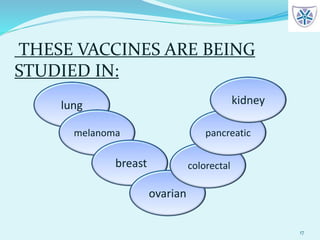
THESE VACCINES ARE BEING
STUDIED IN:
TUMOR CELL VACCINES:
15
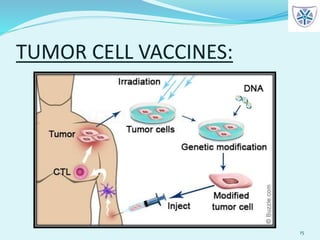
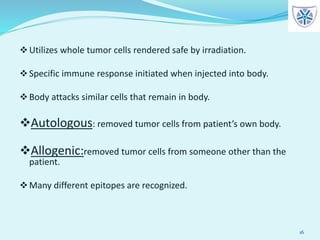
Utilizes whole tumor cells rendered safe by irradiation.
Specific immune response initiated when injected into body.
Body attacks similar cells that remain in body.
Autologous: removed tumor cells from patient’s own body.
Allogenic:removed tumor cells from someone other than the
patient.
Many different epitopes are recognized.
16
17
lung
melanoma
breast
ovarian
colorectal
pancreatic
kidney
THESE VACCINES ARE BEING
STUDIED IN:
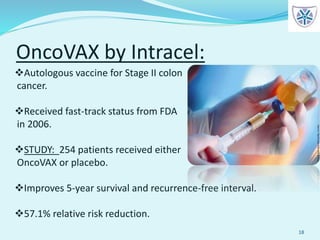
OncoVAX by Intracel:
18
Autologous vaccine for Stage II colon
cancer.
Received fast-track status from FDA
in 2006.
STUDY: 254 patients received either
OncoVAX or placebo.
Improves 5-year survival and recurrence-free interval.
57.1% relative risk reduction.
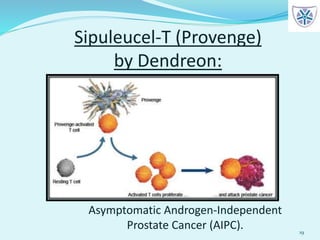
Sipuleucel-T (Provenge)
by Dendreon:
19
Asymptomatic Androgen-Independent
Prostate Cancer (AIPC).
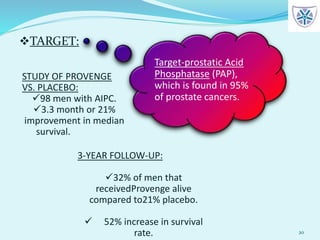
TARGET:
20
Target-prostatic Acid
Phosphatase (PAP),
which is found in 95%
of prostate cancers.
STUDY OF PROVENGE
VS. PLACEBO:
98 men with AIPC.
3.3 month or 21%
improvement in median
survival.
3-YEAR FOLLOW-UP:
32% of men that
receivedProvenge alive
compared to21% placebo.
 52% increase in survival
rate.
Lung Cancer Vaccine at UK:
21
Dendritic cell vaccine.
Study: Patients with Stage
IA to IIIB were given
vaccine.Patients treated
prior with surgery,
chemoradiation.
CONCLUSION:
May be more effective in cancers that are not advanced.
Clinically not yet at our fingertips.
Much progress has been made in this area of research.
More research still needs to be done including larger studies.
Researchers are actively trying to overcome hurdles in the making of
these vaccines.
Could make a big impact on our approach to cancer.
Most importantly these vaccines could mean better quality of life
and longer survival for our patients!!
22
BOTTOM LINE:
“A whole new front,
in the war of cancer.’’
23
24
25

Cancer vaccine

  • 1.
    1 CANCER VACCINES: A novelapproach to cancer.
  • 2.
    TOPICS OF THEDAY: Introduction Cancer statistics Immunotherapy Cancer vaccines Types of cancer vaccines Conclusion 2
  • 3.
    33 A cancer vaccineis a vaccine that treats existing cancer or prevents the development of cancer in certain high-risk individuals. Vaccines that treat existing cancer are known as therapeutic cancer vaccines. Some types of cancer, such as cervical cancer and some liver cancers, are caused by oncoviruses. Scientists have also been trying to develop vaccines against existing cancers. INTRODUCTION:
  • 4.
  • 5.
    IMMUNOTHERAPY: 5 Immunotherapy is treatmentthat uses your body's own immune system to help fight cancer. Considered by many to be the “fourth modality of cancer treatment” after chemotherapy, radiation, and surgery. Based on utilizing the patient’s immune system to fight the cancer. Cancer vaccines fall under this category of treatment.
  • 6.
    CANCER VACCINES: 6 Majority usedfor treatment not prevention. May offer method that can enhance the immune response against cancer. Cancer Vaccines: Different than HPV vaccine and traditional prophylactic vaccines. HPV Vaccine: Immunity to the virus causing cervical cancer. Traditional prophylactic vaccines: As with the HPV vaccine, provide immunity to a particular disease. At this time, cancer vaccines are only available in clinical trials.
  • 7.
    TYPES OF CANCERVACCINES: 7 Types of Cancer Vaccines Dendritic cell vaccines Antigen vaccines Tumour cell vaccine DNA vaccine Anti idiotype vaccine
  • 8.
    Dendritic Cell Vaccines: 8 Dendriticcells can be generated outside of the body. Dendritic cells are made capable of recognizing antigen by gene therapy and exposure to antigen. Dendritic cells are made capable of recognizing antigen by gene therapy and exposure to antigen.
  • 9.
    These vaccines arebeing studied in: prostate melanoma breast lung colorectal leukemia kidney
  • 10.
    Antigen Vaccines: 10 This includespeptide vaccines: only one specific epitope is injected. Vast amounts of antigen can be created in laboratories. Some antigens are specific for a certain type of cancer; others may induce an immune response in several cancers. 
  • 11.
    These vaccines arebeing studied in: 11 prostate melanoma breast ovarian colorectal pancreatic kidney
  • 12.
    Anti-Idiotype Vaccines: 12 Based onthe idea that antibodies can also act as antigens triggering an immune response. This idea would be used to create a vaccine in which the antibodies (which resemble the cancer cells) would be injected into the cancer patient eliciting an immune response. Primary target is LYMPHOMA.
  • 13.
    DNA Vaccine: 13 Introduction oftumor genes instead of tumor antigen itself. Cells in the body take up the injected DNA. Specific antigens would then be made on a continuous basis. The idea of these vaccines is that the body would be provided with a constant supply of antigens to allow the immune response to continue against the cancer.
  • 14.
  • 15.
  • 16.
    Utilizes whole tumorcells rendered safe by irradiation. Specific immune response initiated when injected into body. Body attacks similar cells that remain in body. Autologous: removed tumor cells from patient’s own body. Allogenic:removed tumor cells from someone other than the patient. Many different epitopes are recognized. 16
  • 17.
  • 18.
    OncoVAX by Intracel: 18 Autologousvaccine for Stage II colon cancer. Received fast-track status from FDA in 2006. STUDY: 254 patients received either OncoVAX or placebo. Improves 5-year survival and recurrence-free interval. 57.1% relative risk reduction.
  • 19.
    Sipuleucel-T (Provenge) by Dendreon: 19 AsymptomaticAndrogen-Independent Prostate Cancer (AIPC).
  • 20.
    TARGET: 20 Target-prostatic Acid Phosphatase (PAP), whichis found in 95% of prostate cancers. STUDY OF PROVENGE VS. PLACEBO: 98 men with AIPC. 3.3 month or 21% improvement in median survival. 3-YEAR FOLLOW-UP: 32% of men that receivedProvenge alive compared to21% placebo.  52% increase in survival rate.
  • 21.
    Lung Cancer Vaccineat UK: 21 Dendritic cell vaccine. Study: Patients with Stage IA to IIIB were given vaccine.Patients treated prior with surgery, chemoradiation.
  • 22.
    CONCLUSION: May be moreeffective in cancers that are not advanced. Clinically not yet at our fingertips. Much progress has been made in this area of research. More research still needs to be done including larger studies. Researchers are actively trying to overcome hurdles in the making of these vaccines. Could make a big impact on our approach to cancer. Most importantly these vaccines could mean better quality of life and longer survival for our patients!! 22
  • 23.
    BOTTOM LINE: “A wholenew front, in the war of cancer.’’ 23
  • 24.
  • 25.