Immune& Assay
 Immuno refers to an immune response that
causes the body to generate antibodies.
 Assay refers to a test.
 Thus immunoassay is a test that utilizes
immunocomplexing when antibodies and
antigens are brought together.
INTRODUCTION OF
IMMUNOASSAY
 Immunoassay are analytical methods based
on the specific immuno-reaction between
antibody(Ab) and antigen(Ag) for the
determination of amount of either reactant
in the solution. An antigen antibody complex
is known as an immuno-complex.
 An immunoassay is a test that uses antibody
and antigen complexes as a mean of
generating a measurable result.
PRINCIPLE
 Immunoassay methods are based on a
competitive binding between a fixed
amount of labelled form of an analyte
and a variable amount of unlabelled
sample analyte for a limited amount of
binding sites on a highly specific anti-
analyte antibody
REAGENTSTS REQUIRED
IMMUNOASSAY
DEVELOPMENT
 These reagents are the
antibodies,antigen,signal-generating labels
and separation matrice.
ANTIBODIES
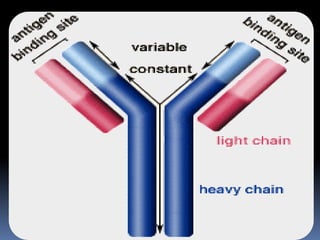
 Antibody is a protein that is produced by body in
response to an invading (foreign) substance.
 These are the key reagents on which the
success of any immunoassay depends .The
antibodies can be either polyclonal or
monoclonal.
 For immunoassay development ,monoclonal
antibodies are more advantageous than
polyclonal ones because they differ from
polyclonal antibodies in that they are highly
specific for a single epitope on a monovalent
antigen.
…continued
 Polyclonal antibodies- antiserum contains a mixture
of antibodies that recognise and bind to the same
antigen , but they may attach to different epitopes.
An antigen that has multiple sites for antibodies to
bind is called a multivalent antigen.These types of
antibodies, present as a diverse mixture, are called
polyclonal antibodies.
 But many successful immunoassays were developed
using polyclonal antibodies because it was possible
to generate the antibodies with high affinity to the
analyte.
…continued
 Antibodies posses high
1. Specificity
2. Affinity
For a specific antigen.It is the specific binging
of an antibody to an antigen that allows the
detection of analytes by a variety of
immunoassay methods.
ANTIGEN
 Antigen is a substance capable of
causing an immune response leading
to the production of antibodies and
are also the targets to which
antibodies will bind.
 The area on an antigen to which the
antibody binds is called an epitope.
 Antibodies are antigen specific and
only bind to the antigen that initiated
their production.
SIGNAL GENRATING
LABELS
 A label is a molecule that will react as part of
assay ,so a change in signal can be measured in
the blood: reagent solution.
 All immunoassay require the use of labeled
material in order to measure the amount of
antigen or antibody present.
…continued
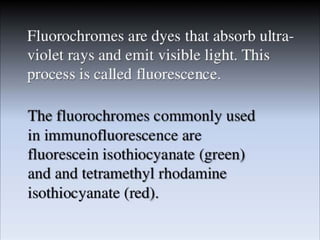
 Ex. Of label include a radioactive
compound that produce radiations, an
enzyme that causes a change of color in
solution, or a substance that produces
light.
 The label can be applied during the
manufacture of reagent to either the
antibody or antigen.
SEPARATION MATRICES
 They are used for separation of the immune
complexes that formed as a result of immuno
analytical reactions include polyethylene,
glycol, charcoal, second
antibody,microbeads or the most useful 96-
well microwell plate;each well of the plate
serves as a separate reactiontube.
 One component of the reaction(antibody or
analyte) is coated onto the surface of the
bottom of the plate wells and the immune
complex is formed on the surface of the
wells.
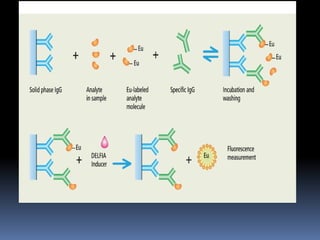
GENERAL PROCEDURE
FOR IMMUNOASSAY
 When these immunoanalytical reagents
are mixed and incubated,the analyte is
bound to the antibody forming an immune
complex.
 This complex is separated from the
unbound reagent fraction by physical or
chemical separation technique.
 Analysis is achieved by measuring the
label activity (e.g. radiation,fluorescence
or enzyme) in either bound or free
fraction.
CLASSIFICATIONS OF
IMMUNOASSAY
 COMPETITIVE IMMUNOASSAY
HOMOGENEOUS
HETEROGENEOUS
 NON – COMPETITIVE IMMUNOASSAY
COMPETITIVE
IMMUNOASSAY
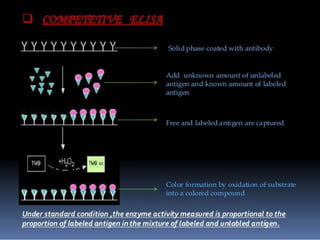
 These are reagent (Ag) excess
immunoassay
 In this assay a fixed amount antibody and
fixed amount labelled antigen and
unlabelled antigen variable amount was
taken.
 Here labelled and unlabelled antigen both
competes with each other for binding to a
fixed amount antibody.
HOMOGENEOUS
COMPETITIVE
IMMUNOASSAY
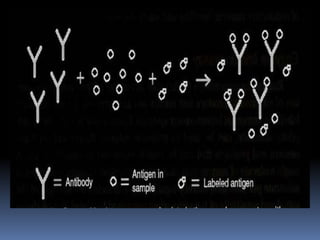
 In this , unlabelled analyte in a sample
competes with labelled analyte to bind an
antibody
 The amount of labelled unbound analyte then
measured.
 The amount of labelled unbound analyte is
proportional to the amount of analyte in the
sample.
HETEROGENEOUS
COMPETITIVE
IMMUNOASSAY
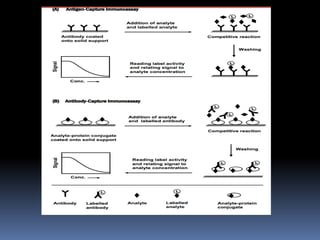
 In this assay,unlabelled analyte in a
sample competes with labelled analyte
to bind an antibody.
 The unbound analyte is separated or
washed away,and the remaining
labelled,bound analyte is measured.
NON-COMPETITIVE
IMMUNOASSAY
 These are antibody excess
immunoassay.
 In this , fixed amount of antigen and a
variable amount of unlabelled
antibody and fixed amount of labelled
antibody was taken.
NONCOMPETITIVE
IMMUNOASSAY
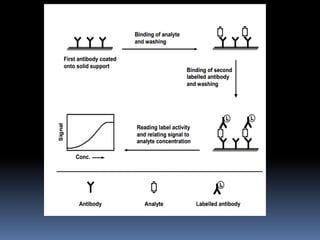
 The unknown analyte in the sample
binds with labelled antibodies.
 The unbound, labelled antibodies are
washed away and the bound labelled
antibodies are measured.
 The intensity of the signal is directly
proportional to the amount of
unknown analyte.
…continued
 The amount of labelled antibody on the
site is then measured.
 It will be directly proportional to the
concentration of the analyte because
labelled antibody will not bind if
analyte is not present in the unknown
sample.
Advantages of
Immunoassays
 High sensitivity-Low detection limit
 High specificity –Detect specific
compound
 Safe and simple
 Fast Tests (between 5 minutes and 1hour)
 Cost effective
 Tests can yield quantitative or qualitative
data
Disadvantage of
Immunoassays
 Negative results don’t always rule out
the presence of a drug
 May not be sensitive to be certain
compounds
 Some chemists are reluctant to use
immunoassay due to its biological
basis and their unfamiliarity with it
USES OF IMMUNOASSAY
 These measures the presence or
concentration of macromolecule or a
small molecule in a solution through
the use of an antibody or an antigen.
For ex. in analyte fluids urine and
serum.
 These are used in sports anti-doping
laboratories to test athletes, blood
samples for prohibited recombinant
human growth hormone.
…continued
 These are used in analysis of metabolites
or biomarkers which indicate disease
diagnosis.
 Used in measurements of very low
concentrations of low molecular weight
drugs.
 Used in therapeutic drug monitoring.
 In clinical pharmacokinetic.
 Used in bioequivalence studies in drug
discovery and pharmaceutical industries.
TECHNIQUES OF
IMMUNOASSAY
• ELISA
• RIA
• FIA
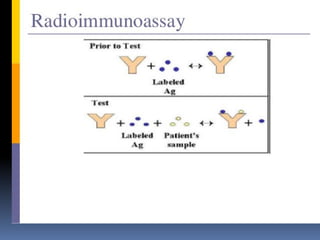
RADIOIMMUNOASSAY
• Involves the separation of a protein using
the specificity of antibody-antigen binding
and quantify it using radioactivity
• The technique was introduced by Berson
and Yalow as an assay for the conc. Of
insulin in plasma
• Here radioactive materials are not
administered to the individual but are used
as reagents
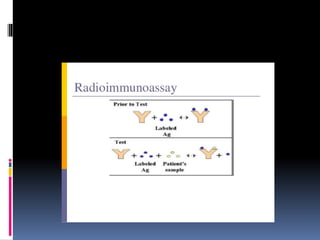
PRINCIPLE OF
RADIOIMMUNOASSAY
 Uses an immune reaction [Antigen-Antibody
reaction] to estimate a ligand
 Ag+Ag*+Ab=AgAb +Ag*Ab + Ag +Ab*
 Unbound Ag* and Ag washed out
 Radioactivity of bound residue measured
 Ligand conc is inversely related to
radioactivity
 [Ag: ligand to be measured ; Ag*:
radiolabelled ligand
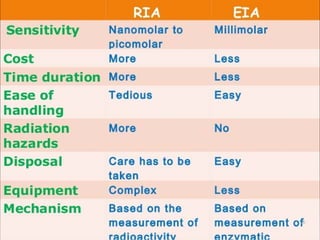
ADVANTAGES OF RIA
 Highly specific
 Highly sensitivity
 Possible to detect picograms of Ag
 Sepharose beads used in RIA are reuseable
DISADVANTAGE OF RIA
 Radiation hazards : uses radiolabelled
reagents
 Requires specially trained persons
 Labs require special license to handle
radioactive material
 Requires special arrangements for
 Requistion
 Storage of radioactive material
 Radioactive waste disposal
APPLICATIONS OF RIA
 Analysis of hormones,
vitamins,metabolites,diagnostic markers
 ACTH,FSH,T3,T4,Glucagon,insulin,testostero-
ne,vitamin ,prostaglandins,glucocorticoids
 Therapeutic drug monitoring:
• Barbiturates,morphine,digoxin
 Diagnostic procedures for detecting infection
• HIV,Hepatitis A,B
 Diagnosis of allergy
IMMUNOASSAY FOR INSULIN
 Radioimmunoassay for insulin
Purpose and Rationale :
 Insulin activity is important laboratory
parameter in the clinical evaluation of
several diseases such as diabetes mellitus
types ,states of impaired glucose tolerance
and insulin-producing tumors,where the
insulin secretion released from pancreas
beta-cells is altered
... continued
 The first description of an immunoassay of
endogenous plasma insulin in man has
been given byYalow and Berson
PROCEDURE
 Semisynthetic or biosynthetic human insulin is
used as immunogen and as standard
 Guinea pigs weighing 350-450g are injected
subcutaneously with 0.4ml of an emulsion of
5mg human insulin dissolved in 1ml and 0.01 N
HCL and 0.3 ml complete Freundtin’s adjuvant
 For boostering, 0.2ml of an identically prepared
emulsion is injected in monthly intervals
... continued
 Fourteen days after the third booster
injection, the animals are slightly
anesthetized and 8-10 ml blood are
withdrawn by cardiac puncture
 The optimal antiserum titer for use in the
radioimmunoassay is determined using
conditions identical to those employed in
routine immunoassays
 The percentage binding of insulin is
determined for dilutions of antisera
... continued
 The steepness of the antisera dilution
curve is a measure of the affinity of the
antiserum and therefore the potential
sensitivity of the radioimmunoassay
 A reduction in the percent I-125 insulin
bound to antibody from 50% ( in the
absence of unlabelled insulin) to 45% ( in
the presence of unlabelled insulin) is a
reasonable measure of assay sensitivity
ASSAY
 Buffer is prepared from a solution of 8.25 g
boric acid and 2.7 g NaoH dissolved in water
 After dissolving 5 g of purified bovine serum
albumin added
 Ph is adjusted with concentrated HCL to 8
 100 microL guinea pig anti-insulin
antiserum diluted in assay buffer
 The mixture is incubated at 4 for 72 h
EVALUATION
 Counts in the nonspecific binding tubes are
subtracted from counts in all tubes
 The range of bound to unbound between
0.4 to 0.9 is most suitable for determination
of insulin concentration in plasma
IMMUNOASSAY OF DIGOXIN
 PURPOSE
 Digoxin makes heart beat stronger and
with a more reqular rhythm
 Digoxin is use as cardiac glycosides
 Hence assay of digoxin is done for the
evaluation of cardiac tonic agents
METHODOLOGY
 The enzyme in the Digoxin assay is
manufactured using recombinant DNA
technology
 The assay is compititive homogeneous
enzyme immunoassay used for analysis of
digoxin
 The assay is based on competition between
drug in the sample and drug labeled with
recombinant glucose-6-phosphate
dehydrogenase ( rG6PDH) for Ag binding
... continued
 Enzyme activity decreases upon binding to
the antibody, so the drug concentration in
the sample can be measured in terms of
enzyme activity
 Active enzyme converts oxidised
nicotinamide adenine dinucleotide (NAD)
to NADH, resulting in an absorbance
change that is measured
spectrophotometrically
... continued
 Endogenous serum G6PDH does not
interfere because the coenzyme functions
only with the recombinant variant of the
bacterial enzyme employed in the assay
 Sample volume is instrument dependent
 Use fresh samples. If samples are to be
tested with in 8h of collection, they may be
stored at room temperature (20-25 C)
 For transporting maintain the samples
temperature 2-8 C
... continued
 Samples can be stored refrigerated at 2-8 C
for up to 7 days or frozen stored (-20C) for up
to 6 months
 Pharmacokinetic factors influence the correct
time of sample collection after the last drug
dose,such as dosage form ,mode of
administration etc
 For reliable interpretation of results,collects
samples either after the drug distribution phase
and before next dose ( at least 6 h interval )
REAGENTS
 Rabbit antibodies reactive to digoxin (0.01
micro gram /ml )
 Glucose 6 phosphate ( 9.6 mM )
 Nicotinamide adenine dinucleotide (5.6 )
 Bovine serum albumin
 Digoxin labeled with recombinant glucose 6
phosphate
dehydrogenase,buffer,preservatives
andstabilizers
RESULT
 Studies shows a relationship between
digoxin conc and clinical signs of toxicity
 Digoxin has a narrow range of safe and
effective concentrations in serum
 Although the therapeutic and toxic conc
overlap, measurements of digoxin levels
help to maintain effective conc and to
diagnose and prevent overdose
REFRENCE
 R.Keller,J.M.Mermet,Analytical
Chemistry,1998,pp.405-429
 W.C.Smith, J.W. Lee,J.Pharma.Biomed.Anal.21
(2000), pp. 1249-1273
 Internet
 A.F.Davidson, H.L.Walton, D. J. Pinto,
R.E.Immunoassay,NewYork ,1988, pp.60.
THANK
YOU…

Assignment on General principles of Immunoassay

  • 1.
    Immune& Assay  Immunorefers to an immune response that causes the body to generate antibodies.  Assay refers to a test.  Thus immunoassay is a test that utilizes immunocomplexing when antibodies and antigens are brought together.
  • 2.
    INTRODUCTION OF IMMUNOASSAY  Immunoassayare analytical methods based on the specific immuno-reaction between antibody(Ab) and antigen(Ag) for the determination of amount of either reactant in the solution. An antigen antibody complex is known as an immuno-complex.  An immunoassay is a test that uses antibody and antigen complexes as a mean of generating a measurable result.
  • 3.
    PRINCIPLE  Immunoassay methodsare based on a competitive binding between a fixed amount of labelled form of an analyte and a variable amount of unlabelled sample analyte for a limited amount of binding sites on a highly specific anti- analyte antibody
  • 4.
    REAGENTSTS REQUIRED IMMUNOASSAY DEVELOPMENT  Thesereagents are the antibodies,antigen,signal-generating labels and separation matrice.
  • 5.
    ANTIBODIES  Antibody isa protein that is produced by body in response to an invading (foreign) substance.  These are the key reagents on which the success of any immunoassay depends .The antibodies can be either polyclonal or monoclonal.  For immunoassay development ,monoclonal antibodies are more advantageous than polyclonal ones because they differ from polyclonal antibodies in that they are highly specific for a single epitope on a monovalent antigen.
  • 7.
    …continued  Polyclonal antibodies-antiserum contains a mixture of antibodies that recognise and bind to the same antigen , but they may attach to different epitopes. An antigen that has multiple sites for antibodies to bind is called a multivalent antigen.These types of antibodies, present as a diverse mixture, are called polyclonal antibodies.  But many successful immunoassays were developed using polyclonal antibodies because it was possible to generate the antibodies with high affinity to the analyte.
  • 8.
    …continued  Antibodies posseshigh 1. Specificity 2. Affinity For a specific antigen.It is the specific binging of an antibody to an antigen that allows the detection of analytes by a variety of immunoassay methods.
  • 9.
    ANTIGEN  Antigen isa substance capable of causing an immune response leading to the production of antibodies and are also the targets to which antibodies will bind.  The area on an antigen to which the antibody binds is called an epitope.  Antibodies are antigen specific and only bind to the antigen that initiated their production.
  • 10.
    SIGNAL GENRATING LABELS  Alabel is a molecule that will react as part of assay ,so a change in signal can be measured in the blood: reagent solution.  All immunoassay require the use of labeled material in order to measure the amount of antigen or antibody present.
  • 11.
    …continued  Ex. Oflabel include a radioactive compound that produce radiations, an enzyme that causes a change of color in solution, or a substance that produces light.  The label can be applied during the manufacture of reagent to either the antibody or antigen.
  • 12.
    SEPARATION MATRICES  Theyare used for separation of the immune complexes that formed as a result of immuno analytical reactions include polyethylene, glycol, charcoal, second antibody,microbeads or the most useful 96- well microwell plate;each well of the plate serves as a separate reactiontube.  One component of the reaction(antibody or analyte) is coated onto the surface of the bottom of the plate wells and the immune complex is formed on the surface of the wells.
  • 14.
    GENERAL PROCEDURE FOR IMMUNOASSAY When these immunoanalytical reagents are mixed and incubated,the analyte is bound to the antibody forming an immune complex.  This complex is separated from the unbound reagent fraction by physical or chemical separation technique.  Analysis is achieved by measuring the label activity (e.g. radiation,fluorescence or enzyme) in either bound or free fraction.
  • 15.
    CLASSIFICATIONS OF IMMUNOASSAY  COMPETITIVEIMMUNOASSAY HOMOGENEOUS HETEROGENEOUS  NON – COMPETITIVE IMMUNOASSAY
  • 16.
    COMPETITIVE IMMUNOASSAY  These arereagent (Ag) excess immunoassay  In this assay a fixed amount antibody and fixed amount labelled antigen and unlabelled antigen variable amount was taken.  Here labelled and unlabelled antigen both competes with each other for binding to a fixed amount antibody.
  • 17.
    HOMOGENEOUS COMPETITIVE IMMUNOASSAY  In this, unlabelled analyte in a sample competes with labelled analyte to bind an antibody  The amount of labelled unbound analyte then measured.  The amount of labelled unbound analyte is proportional to the amount of analyte in the sample.
  • 19.
    HETEROGENEOUS COMPETITIVE IMMUNOASSAY  In thisassay,unlabelled analyte in a sample competes with labelled analyte to bind an antibody.  The unbound analyte is separated or washed away,and the remaining labelled,bound analyte is measured.
  • 21.
    NON-COMPETITIVE IMMUNOASSAY  These areantibody excess immunoassay.  In this , fixed amount of antigen and a variable amount of unlabelled antibody and fixed amount of labelled antibody was taken.
  • 23.
    NONCOMPETITIVE IMMUNOASSAY  The unknownanalyte in the sample binds with labelled antibodies.  The unbound, labelled antibodies are washed away and the bound labelled antibodies are measured.  The intensity of the signal is directly proportional to the amount of unknown analyte.
  • 24.
    …continued  The amountof labelled antibody on the site is then measured.  It will be directly proportional to the concentration of the analyte because labelled antibody will not bind if analyte is not present in the unknown sample.
  • 25.
    Advantages of Immunoassays  Highsensitivity-Low detection limit  High specificity –Detect specific compound  Safe and simple  Fast Tests (between 5 minutes and 1hour)  Cost effective  Tests can yield quantitative or qualitative data
  • 26.
    Disadvantage of Immunoassays  Negativeresults don’t always rule out the presence of a drug  May not be sensitive to be certain compounds  Some chemists are reluctant to use immunoassay due to its biological basis and their unfamiliarity with it
  • 27.
    USES OF IMMUNOASSAY These measures the presence or concentration of macromolecule or a small molecule in a solution through the use of an antibody or an antigen. For ex. in analyte fluids urine and serum.  These are used in sports anti-doping laboratories to test athletes, blood samples for prohibited recombinant human growth hormone.
  • 28.
    …continued  These areused in analysis of metabolites or biomarkers which indicate disease diagnosis.  Used in measurements of very low concentrations of low molecular weight drugs.  Used in therapeutic drug monitoring.  In clinical pharmacokinetic.  Used in bioequivalence studies in drug discovery and pharmaceutical industries.
  • 29.
  • 30.
    RADIOIMMUNOASSAY • Involves theseparation of a protein using the specificity of antibody-antigen binding and quantify it using radioactivity • The technique was introduced by Berson and Yalow as an assay for the conc. Of insulin in plasma • Here radioactive materials are not administered to the individual but are used as reagents
  • 31.
    PRINCIPLE OF RADIOIMMUNOASSAY  Usesan immune reaction [Antigen-Antibody reaction] to estimate a ligand  Ag+Ag*+Ab=AgAb +Ag*Ab + Ag +Ab*  Unbound Ag* and Ag washed out  Radioactivity of bound residue measured  Ligand conc is inversely related to radioactivity  [Ag: ligand to be measured ; Ag*: radiolabelled ligand
  • 33.
    ADVANTAGES OF RIA Highly specific  Highly sensitivity  Possible to detect picograms of Ag  Sepharose beads used in RIA are reuseable
  • 34.
    DISADVANTAGE OF RIA Radiation hazards : uses radiolabelled reagents  Requires specially trained persons  Labs require special license to handle radioactive material  Requires special arrangements for  Requistion  Storage of radioactive material  Radioactive waste disposal
  • 35.
    APPLICATIONS OF RIA Analysis of hormones, vitamins,metabolites,diagnostic markers  ACTH,FSH,T3,T4,Glucagon,insulin,testostero- ne,vitamin ,prostaglandins,glucocorticoids  Therapeutic drug monitoring: • Barbiturates,morphine,digoxin  Diagnostic procedures for detecting infection • HIV,Hepatitis A,B  Diagnosis of allergy
  • 71.
    IMMUNOASSAY FOR INSULIN Radioimmunoassay for insulin Purpose and Rationale :  Insulin activity is important laboratory parameter in the clinical evaluation of several diseases such as diabetes mellitus types ,states of impaired glucose tolerance and insulin-producing tumors,where the insulin secretion released from pancreas beta-cells is altered
  • 72.
    ... continued  Thefirst description of an immunoassay of endogenous plasma insulin in man has been given byYalow and Berson
  • 73.
    PROCEDURE  Semisynthetic orbiosynthetic human insulin is used as immunogen and as standard  Guinea pigs weighing 350-450g are injected subcutaneously with 0.4ml of an emulsion of 5mg human insulin dissolved in 1ml and 0.01 N HCL and 0.3 ml complete Freundtin’s adjuvant  For boostering, 0.2ml of an identically prepared emulsion is injected in monthly intervals
  • 74.
    ... continued  Fourteendays after the third booster injection, the animals are slightly anesthetized and 8-10 ml blood are withdrawn by cardiac puncture  The optimal antiserum titer for use in the radioimmunoassay is determined using conditions identical to those employed in routine immunoassays  The percentage binding of insulin is determined for dilutions of antisera
  • 75.
    ... continued  Thesteepness of the antisera dilution curve is a measure of the affinity of the antiserum and therefore the potential sensitivity of the radioimmunoassay  A reduction in the percent I-125 insulin bound to antibody from 50% ( in the absence of unlabelled insulin) to 45% ( in the presence of unlabelled insulin) is a reasonable measure of assay sensitivity
  • 76.
    ASSAY  Buffer isprepared from a solution of 8.25 g boric acid and 2.7 g NaoH dissolved in water  After dissolving 5 g of purified bovine serum albumin added  Ph is adjusted with concentrated HCL to 8  100 microL guinea pig anti-insulin antiserum diluted in assay buffer  The mixture is incubated at 4 for 72 h
  • 77.
    EVALUATION  Counts inthe nonspecific binding tubes are subtracted from counts in all tubes  The range of bound to unbound between 0.4 to 0.9 is most suitable for determination of insulin concentration in plasma
  • 78.
    IMMUNOASSAY OF DIGOXIN PURPOSE  Digoxin makes heart beat stronger and with a more reqular rhythm  Digoxin is use as cardiac glycosides  Hence assay of digoxin is done for the evaluation of cardiac tonic agents
  • 79.
    METHODOLOGY  The enzymein the Digoxin assay is manufactured using recombinant DNA technology  The assay is compititive homogeneous enzyme immunoassay used for analysis of digoxin  The assay is based on competition between drug in the sample and drug labeled with recombinant glucose-6-phosphate dehydrogenase ( rG6PDH) for Ag binding
  • 80.
    ... continued  Enzymeactivity decreases upon binding to the antibody, so the drug concentration in the sample can be measured in terms of enzyme activity  Active enzyme converts oxidised nicotinamide adenine dinucleotide (NAD) to NADH, resulting in an absorbance change that is measured spectrophotometrically
  • 81.
    ... continued  Endogenousserum G6PDH does not interfere because the coenzyme functions only with the recombinant variant of the bacterial enzyme employed in the assay  Sample volume is instrument dependent  Use fresh samples. If samples are to be tested with in 8h of collection, they may be stored at room temperature (20-25 C)  For transporting maintain the samples temperature 2-8 C
  • 82.
    ... continued  Samplescan be stored refrigerated at 2-8 C for up to 7 days or frozen stored (-20C) for up to 6 months  Pharmacokinetic factors influence the correct time of sample collection after the last drug dose,such as dosage form ,mode of administration etc  For reliable interpretation of results,collects samples either after the drug distribution phase and before next dose ( at least 6 h interval )
  • 83.
    REAGENTS  Rabbit antibodiesreactive to digoxin (0.01 micro gram /ml )  Glucose 6 phosphate ( 9.6 mM )  Nicotinamide adenine dinucleotide (5.6 )  Bovine serum albumin  Digoxin labeled with recombinant glucose 6 phosphate dehydrogenase,buffer,preservatives andstabilizers
  • 84.
    RESULT  Studies showsa relationship between digoxin conc and clinical signs of toxicity  Digoxin has a narrow range of safe and effective concentrations in serum  Although the therapeutic and toxic conc overlap, measurements of digoxin levels help to maintain effective conc and to diagnose and prevent overdose
  • 85.
    REFRENCE  R.Keller,J.M.Mermet,Analytical Chemistry,1998,pp.405-429  W.C.Smith,J.W. Lee,J.Pharma.Biomed.Anal.21 (2000), pp. 1249-1273  Internet  A.F.Davidson, H.L.Walton, D. J. Pinto, R.E.Immunoassay,NewYork ,1988, pp.60.
  • 86.