ASSESSIN
   G
SPEAKING
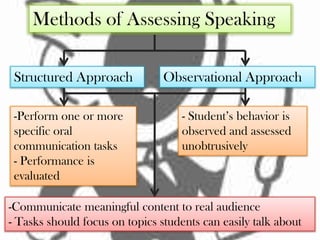
Methods of Assessing Speaking

 Structured Approach            Observational Approach

 -Perform one or more               - Student’s behavior is
 specific oral                      observed and assessed
 communication tasks                unobtrusively
 - Performance is
 evaluated

-Communicate meaningful content to real audience
- Tasks should focus on topics students can easily talk about
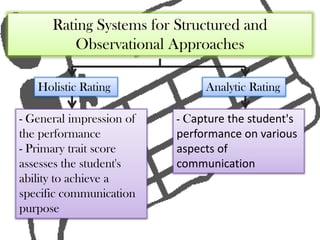
Rating Systems for Structured and
         Observational Approaches

   Holistic Rating             Analytic Rating

- General impression of   - Capture the student's
the performance           performance on various
- Primary trait score     aspects of
assesses the student's    communication
ability to achieve a
specific communication
purpose
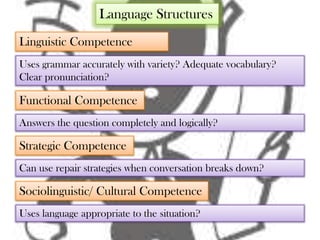
Language Structures
Linguistic Competence
Uses grammar accurately with variety? Adequate vocabulary?
Clear pronunciation?

Functional Competence
Answers the question completely and logically?

Strategic Competence
Can use repair strategies when conversation breaks down?

Sociolinguistic/ Cultural Competence
Uses language appropriate to the situation?
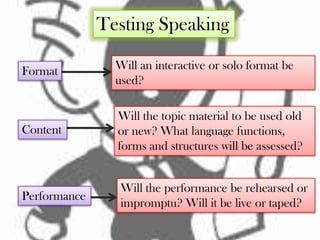
Testing Speaking

Format          Will an interactive or solo format be
                used?

                Will the topic material to be used old
Content         or new? What language functions,
                forms and structures will be assessed?


                 Will the performance be rehearsed or
Performance
                 impromptu? Will it be live or taped?
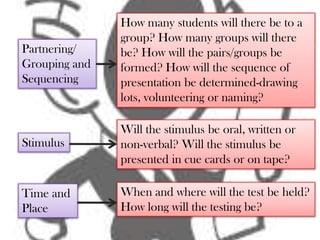
How many students will there be to a
               group? How many groups will there
Partnering/    be? How will the pairs/groups be
Grouping and   formed? How will the sequence of
Sequencing     presentation be determined-drawing
               lots, volunteering or naming?

               Will the stimulus be oral, written or
Stimulus       non-verbal? Will the stimulus be
               presented in cue cards or on tape?

Time and       When and where will the test be held?
Place          How long will the testing be?
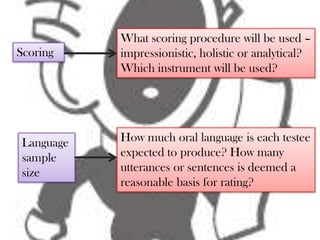
What scoring procedure will be used –
Scoring     impressionistic, holistic or analytical?
            Which instrument will be used?


 Language   How much oral language is each testee
 sample     expected to produce? How many
 size       utterances or sentences is deemed a
            reasonable basis for rating?
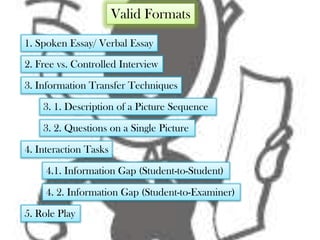
Valid Formats
1. Spoken Essay/ Verbal Essay
2. Free vs. Controlled Interview
3. Information Transfer Techniques

    3. 1. Description of a Picture Sequence

    3. 2. Questions on a Single Picture

4. Interaction Tasks

     4.1. Information Gap (Student-to-Student)

     4. 2. Information Gap (Student-to-Examiner)
5. Role Play
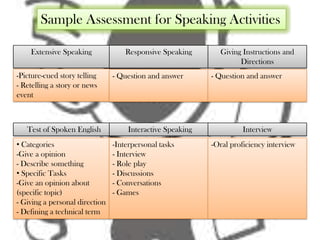
Sample Assessment for Speaking Activities

    Extensive Speaking              Responsive Speaking       Giving Instructions and
                                                                    Directions
-Picture-cued story telling     - Question and answer       - Question and answer
- Retelling a story or news
event


   Test of Spoken English            Interactive Speaking             Interview
• Categories                    -Interpersonal tasks        -Oral proficiency interview
-Give a opinion                 - Interview
- Describe something            - Role play
• Specific Tasks                - Discussions
-Give an opinion about          - Conversations
(specific topic)                - Games
- Giving a personal direction
- Defining a technical term
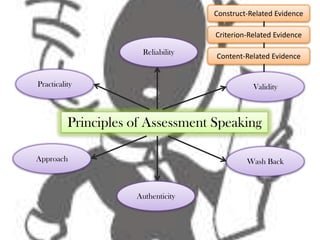
Construct-Related Evidence

                                    Criterion-Related Evidence

                      Reliability
                                    Content-Related Evidence


Practicality                                   Validity


          Principles of Assessment Speaking

Approach                                     Wash Back


                     Authenticity

Assessing speaking

  • 1.
    ASSESSIN G SPEAKING
  • 2.
    Methods of AssessingSpeaking Structured Approach Observational Approach -Perform one or more - Student’s behavior is specific oral observed and assessed communication tasks unobtrusively - Performance is evaluated -Communicate meaningful content to real audience - Tasks should focus on topics students can easily talk about
  • 3.
    Rating Systems forStructured and Observational Approaches Holistic Rating Analytic Rating - General impression of - Capture the student's the performance performance on various - Primary trait score aspects of assesses the student's communication ability to achieve a specific communication purpose
  • 4.
    Language Structures Linguistic Competence Usesgrammar accurately with variety? Adequate vocabulary? Clear pronunciation? Functional Competence Answers the question completely and logically? Strategic Competence Can use repair strategies when conversation breaks down? Sociolinguistic/ Cultural Competence Uses language appropriate to the situation?
  • 5.
    Testing Speaking Format Will an interactive or solo format be used? Will the topic material to be used old Content or new? What language functions, forms and structures will be assessed? Will the performance be rehearsed or Performance impromptu? Will it be live or taped?
  • 6.
    How many studentswill there be to a group? How many groups will there Partnering/ be? How will the pairs/groups be Grouping and formed? How will the sequence of Sequencing presentation be determined-drawing lots, volunteering or naming? Will the stimulus be oral, written or Stimulus non-verbal? Will the stimulus be presented in cue cards or on tape? Time and When and where will the test be held? Place How long will the testing be?
  • 7.
    What scoring procedurewill be used – Scoring impressionistic, holistic or analytical? Which instrument will be used? Language How much oral language is each testee sample expected to produce? How many size utterances or sentences is deemed a reasonable basis for rating?
  • 8.
    Valid Formats 1. SpokenEssay/ Verbal Essay 2. Free vs. Controlled Interview 3. Information Transfer Techniques 3. 1. Description of a Picture Sequence 3. 2. Questions on a Single Picture 4. Interaction Tasks 4.1. Information Gap (Student-to-Student) 4. 2. Information Gap (Student-to-Examiner) 5. Role Play
  • 9.
    Sample Assessment forSpeaking Activities Extensive Speaking Responsive Speaking Giving Instructions and Directions -Picture-cued story telling - Question and answer - Question and answer - Retelling a story or news event Test of Spoken English Interactive Speaking Interview • Categories -Interpersonal tasks -Oral proficiency interview -Give a opinion - Interview - Describe something - Role play • Specific Tasks - Discussions -Give an opinion about - Conversations (specific topic) - Games - Giving a personal direction - Defining a technical term
  • 10.
    Construct-Related Evidence Criterion-Related Evidence Reliability Content-Related Evidence Practicality Validity Principles of Assessment Speaking Approach Wash Back Authenticity