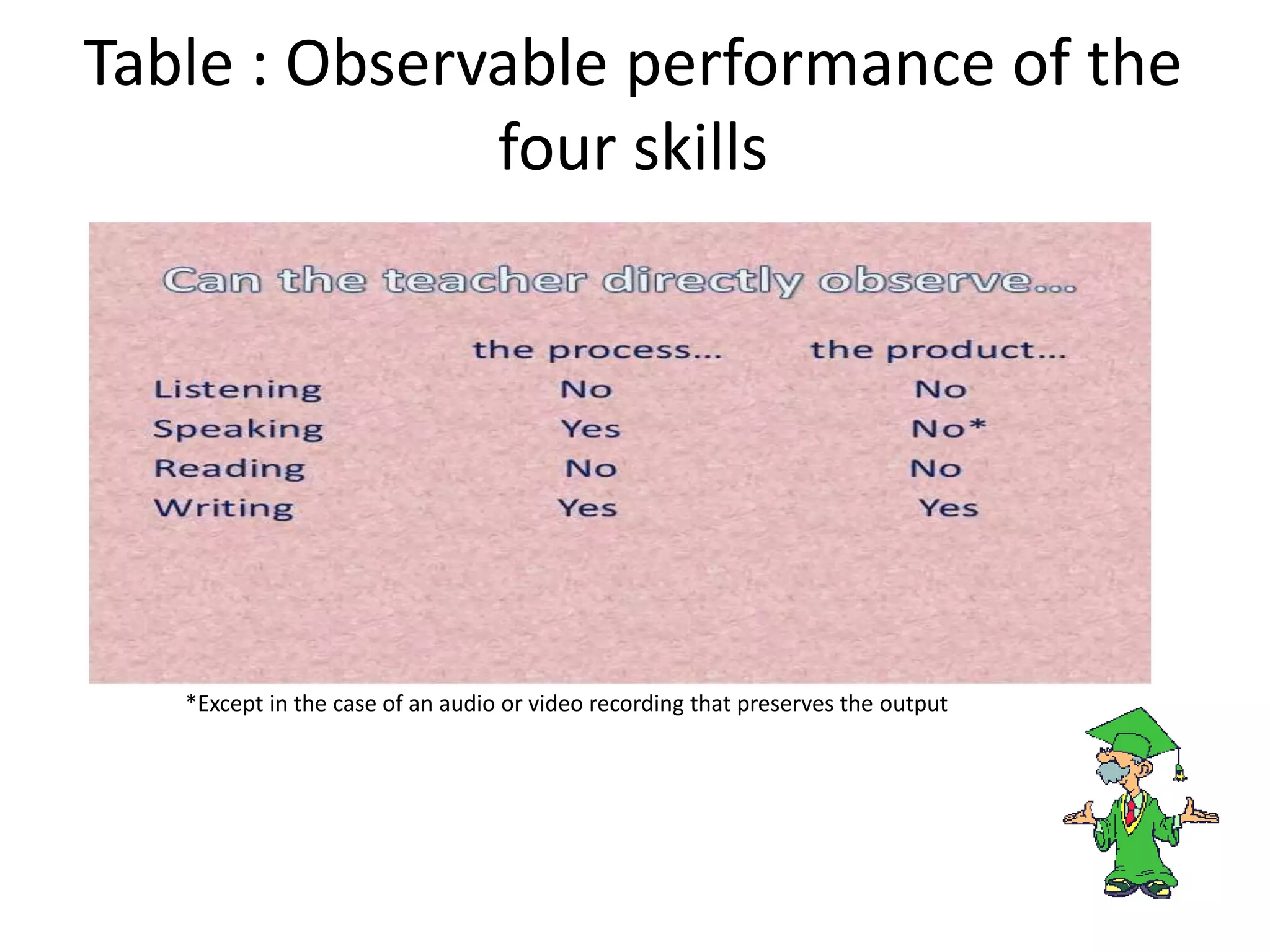
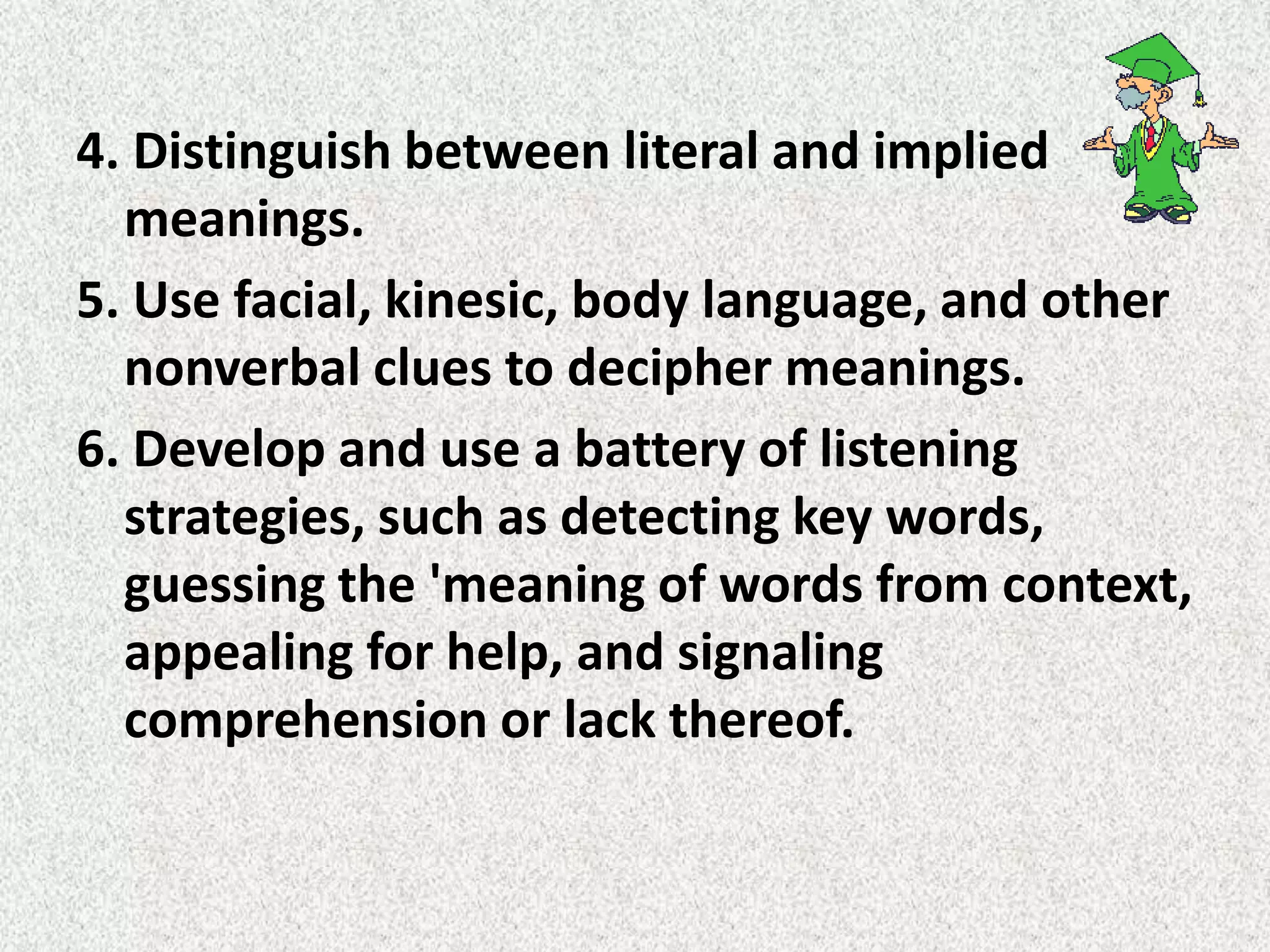
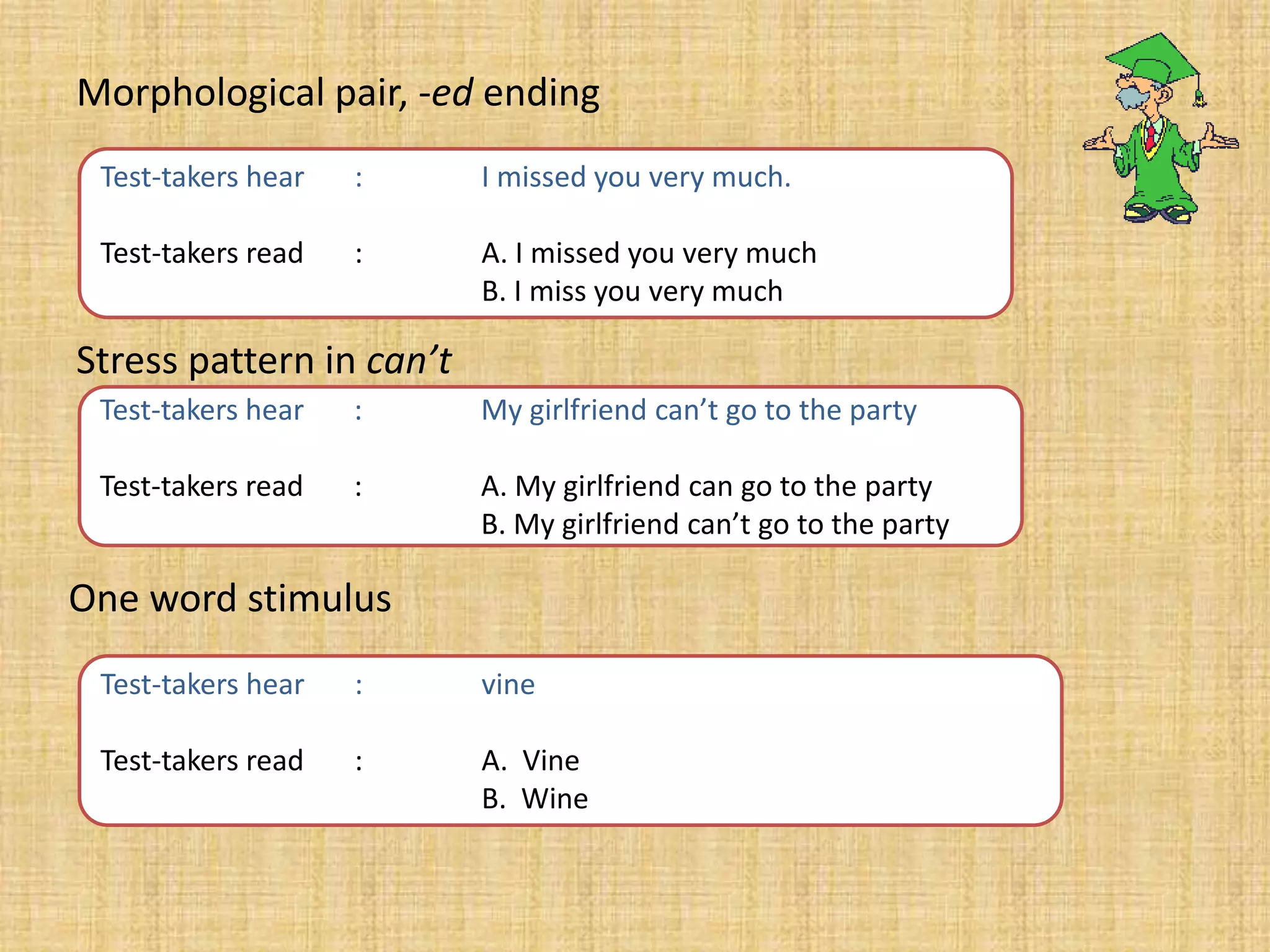
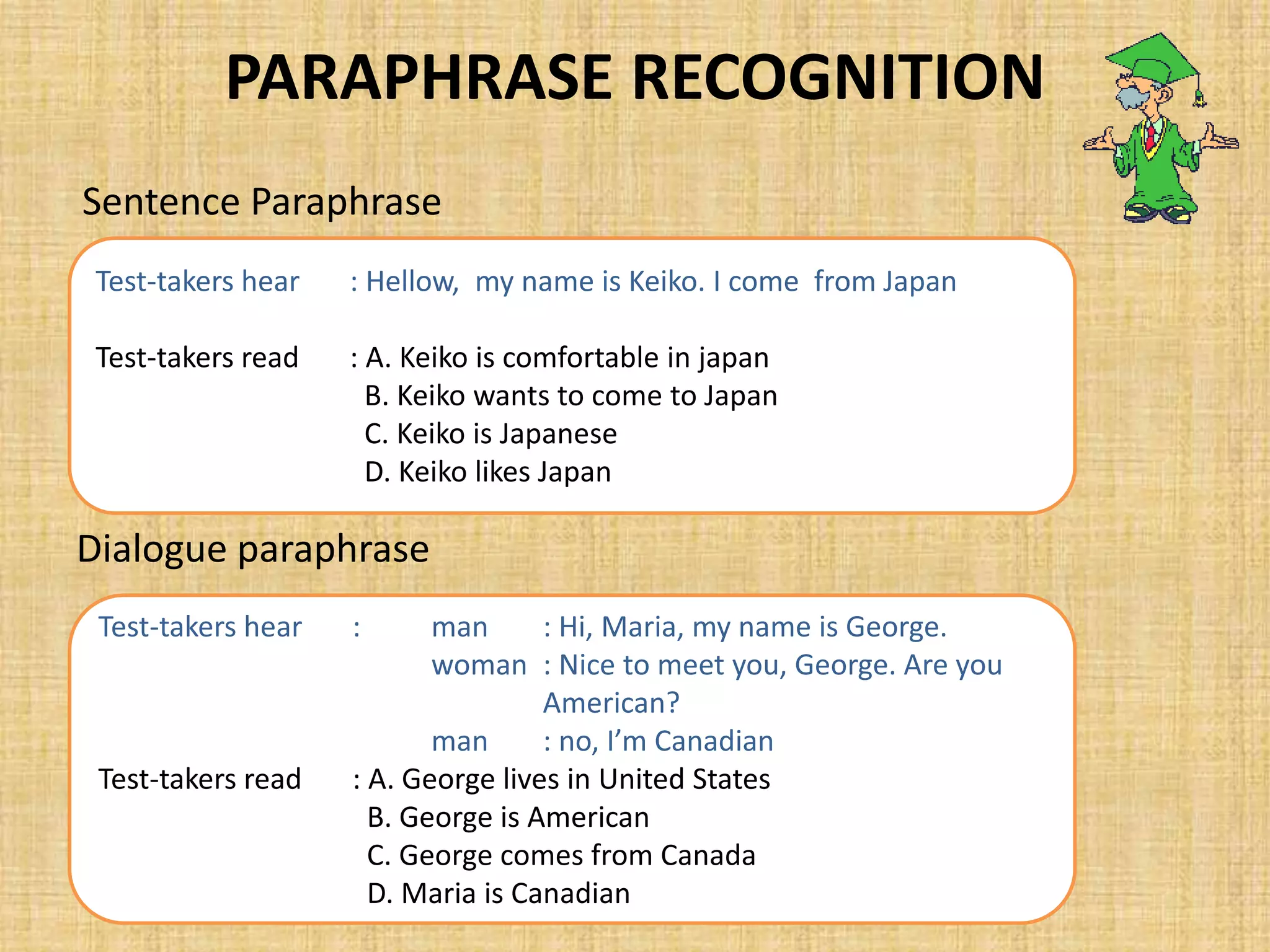
This document provides an overview of assessing listening skills. It discusses the nature of listening as an active process using linguistic and non-linguistic cues. Key concepts in language assessment like practicality, reliability, validity and authenticity are also covered. The document outlines observing performance through multiple tests, tasks and forms of assessment. It describes the importance of listening and basic types of listening like intensive, responsive, selective and extensive. Microskills and macroskills of listening are defined. The document provides examples of designing assessment tasks for intensive listening focusing on recognizing phonological/morphological elements and paraphrase recognition.