Using Drama Activities and
Techniques for Teaching English

SUBMITTED BY
MISS. UNYARUT RORNSUK
TESOL/7 NO.17
What is Drama ?
 Drama is a unique tool to explore and express human

feeling.
 Drama is an essential form of behavior in all cultures, it is

a fundamental human activity.
 Drama is a discrete skill in itself (acting,theatre, refined

skill).
There are many points of using drama
activities and techniques
 Entertaining and fun.
 It can provide motivation to learn.
 It can provide varied opportunities for

different uses of language.
 It can provide rich experience of language

for the participants.
Drama is a highly valued teaching method
 In dramatic activities, students use and examine

their present knowledge in order to induce new
knowledge. Bolton (1985)
 James Hoetker (1969) contends that drama

increases creativity, originality, sensitivity, fluency,
flexibility, emotional stability, cooperation, and
examination of moral attitudes, while developing
communication skills and appreciation of
literature.
Drama assists in the development of :
 The use of imagination
 Powers of creative self expression
 Decision making and problem solving skills
 Understanding of self and the world
 Self confidence, a sense of worth and respect and

consideration for others.
Why using drama in EFL classroom?
 To make language learning an active, motivating

Experience.
 To help learners gain the confidence and self

esteem needed to use the language spontaneously.
 To bring the real world into the classroom (problem

solving, research, consulting dictionaries, real time
and space, cross-curricular content).
 Helps learners acquire language by focusing on the

message they are conveying, not the form of their utterance.
 To stimulate learners' intellect and imagination.

 To develop students' ability to empathize with

thus become better communicators.

others and
How can drama or dramatic activities be used
in ELT ?

There are several type of Drama. Here is a list with a simple
explanation are as follows :
1.

Improvisation / Let's Pretend

A scene is set, either by the teacher or the
students, and then with little or no time to prepare a
script the students perform before the class.
It helps actors learn :
 to listen to the other characters.

 to think on their feet.
 to use props and move on stage.
 to use an “outside voice” with enough

volume to be heard.
 to stay in character, to concentrate on the
scene.
 to discover the meaning of the scene they
are doing.
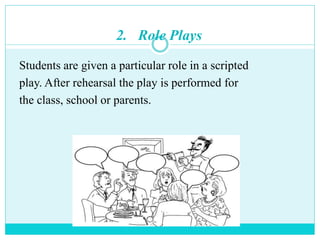
2. Role Plays
Students are given a particular role in a scripted
play. After rehearsal the play is performed for
the class, school or parents.
3. Mime
Students use only facial expressions and body language
to pass on a message script to the rest of the class.
4. Masked Drama
The main props are masks. Students then feel less
inhibited to perform and overact while participating in
this form of drama.

Students are given specific parts to play with a formal
script. Using only their voices they must create the full
picture for the rest of the class.
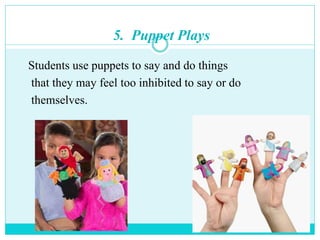
5. Puppet Plays
Students use puppets to say and do things
that they may feel too inhibited to say or do
themselves.
6. Performance Poetry
While reciting a poem the students are encourage to act
out the story from the poem.
7. Radio Drama

Similar to script reading with the addition of other
sound affects, The painting of the mental picture is
important.
8. Simulation
A simulation as case study where students become
participants in an event and shape the course of the event.
The students have roles, functions, duties , and
responsibilities within a structured situation involving
problem solving.
Conclusions
 Drama is an appealing teaching strategy which promotes

cooperation, collaboration, as well as emotional
intelligence skills.
 Drama connect the gap between course-book dialogues

and natural usage.
 Drama can also help to connect a similar gap between

the classroom and real life.
Drama activities

Drama activities

  • 1.
    Using Drama Activitiesand Techniques for Teaching English SUBMITTED BY MISS. UNYARUT RORNSUK TESOL/7 NO.17
  • 2.
    What is Drama?  Drama is a unique tool to explore and express human feeling.  Drama is an essential form of behavior in all cultures, it is a fundamental human activity.  Drama is a discrete skill in itself (acting,theatre, refined skill).
  • 3.
    There are manypoints of using drama activities and techniques  Entertaining and fun.  It can provide motivation to learn.  It can provide varied opportunities for different uses of language.  It can provide rich experience of language for the participants.
  • 4.
    Drama is ahighly valued teaching method  In dramatic activities, students use and examine their present knowledge in order to induce new knowledge. Bolton (1985)  James Hoetker (1969) contends that drama increases creativity, originality, sensitivity, fluency, flexibility, emotional stability, cooperation, and examination of moral attitudes, while developing communication skills and appreciation of literature.
  • 5.
    Drama assists inthe development of :  The use of imagination  Powers of creative self expression  Decision making and problem solving skills  Understanding of self and the world  Self confidence, a sense of worth and respect and consideration for others.
  • 6.
    Why using dramain EFL classroom?  To make language learning an active, motivating Experience.  To help learners gain the confidence and self esteem needed to use the language spontaneously.  To bring the real world into the classroom (problem solving, research, consulting dictionaries, real time and space, cross-curricular content).
  • 7.
     Helps learnersacquire language by focusing on the message they are conveying, not the form of their utterance.  To stimulate learners' intellect and imagination.  To develop students' ability to empathize with thus become better communicators. others and
  • 8.
    How can dramaor dramatic activities be used in ELT ? There are several type of Drama. Here is a list with a simple explanation are as follows :
  • 9.
    1. Improvisation / Let'sPretend A scene is set, either by the teacher or the students, and then with little or no time to prepare a script the students perform before the class.
  • 10.
    It helps actorslearn :  to listen to the other characters.  to think on their feet.  to use props and move on stage.  to use an “outside voice” with enough volume to be heard.  to stay in character, to concentrate on the scene.  to discover the meaning of the scene they are doing.
  • 11.
    2. Role Plays Studentsare given a particular role in a scripted play. After rehearsal the play is performed for the class, school or parents.
  • 12.
    3. Mime Students useonly facial expressions and body language to pass on a message script to the rest of the class.
  • 13.
    4. Masked Drama Themain props are masks. Students then feel less inhibited to perform and overact while participating in this form of drama. Students are given specific parts to play with a formal script. Using only their voices they must create the full picture for the rest of the class.
  • 14.
    5. Puppet Plays Studentsuse puppets to say and do things that they may feel too inhibited to say or do themselves.
  • 15.
    6. Performance Poetry Whilereciting a poem the students are encourage to act out the story from the poem.
  • 16.
    7. Radio Drama Similarto script reading with the addition of other sound affects, The painting of the mental picture is important.
  • 17.
    8. Simulation A simulationas case study where students become participants in an event and shape the course of the event. The students have roles, functions, duties , and responsibilities within a structured situation involving problem solving.
  • 18.
    Conclusions  Drama isan appealing teaching strategy which promotes cooperation, collaboration, as well as emotional intelligence skills.  Drama connect the gap between course-book dialogues and natural usage.  Drama can also help to connect a similar gap between the classroom and real life.