Assessing Speaking


“Assessing Speaking”


   Ingrid Bello Acuña

 Paulina Escobar Aguayo


                           June 04th, 2012
Introduction


       Speaking is a productive skill which is really difficult to assess because of its
subjectivity. According to the book Language Testing, 1961, p. 239 “The ability to speak a
foreign language is without doubt the most prized language skill,”

       In the following assessment we are going to measure an oral performance which
will be taken to a group of 35 students of a 1st Medio from the “Liceo Comercial de Tomé”.
The level of these students is lower. For this reason the following “oral evaluation” has
three different parts whose purpose is to measure vocabulary learnt in class, grammar
(basic grammar structures) and pronunciation, the last item is focus on the pronunciation of
the vocabulary.

       In order to test the three previous levels of proficiency (vocabulary, grammar and
pronunciation) we created an analytic rubric which contains four indicators (from 1 to 4).

       Finally, the idea of this assessment was prepared the most reliable, valid and
authentic oral performance considering the level of English of the students.
Unit 3: How to assess “speaking”


School: Liceo Comercial de Tomé (Public highschool)

Grade: 1st Medio

Level of English: Lower


                                  Test specifications:


    The test’s purpose: To assess speaking, especially vocabulary learnt in class.

    Description of the examinees: Students of 1st Medio from a public highschool
      called “Liceo Comercial de Tomé”.

    Test level: 1st Medio.

    Number of section: 1

    Time for each section: 2 or 2 ½ minutes.

    Weighting for each section: 3 different items.

    Target language situation: Level of English “Lower”

    Text- types: Pictures.

    Text-Length: Two pictures for each student.

    Language skills to be tasted: Speaking

    Language element to be tested:

          •   Vocabulary

          •   Grammar

          •   Pronunciation

    Test methods: The procedure to measure “speaking” in this case is firstly through
      an interview and then using pictures with which students have to guess what the
      correct picture is and also ask for the specific location of different objects and
      people.
Tasks


Task 1

        The examiner introduces him/her and then asks you and your partner to say your
names and spell them. This examiner then asks you questions about yourself, your daily
life, interests, etc.

                                 You must to answer the examiner
                         (the teacher) 3 questions about yourself.


        Possible questions:

    •   What’s your name?

    •   How do you spell your name?

    •   What do you think about the weather today?

    •   What’s your favourite subject at school? Why?


    -   Task Orientation: Guided. Students have to speak according to some specific
        information. (Name, likes, etc.). The answers are predictable and these have not
        many variations.


    -   Interactional Relationship: One way interaction. The student is asked to
        communicate some opinions and maybe the teacher is going to ask him/her for
        clarification.
-   Goal Orientation: There is goal orientation in this case, because students have to
    speak someone else, in this opportunity to the teacher.


-   Interlocutor status: Balanced. Because the three participant here (both students and
    the teacher) know each other.


-   Familiarity: In this case the familiarity is high between both students because they
    selected their partner and probably they choose a friend. Unlike the familiarity
    between students and the teacher which is balanced.


-   Topics: Personal information likes and dislikes.
Task 2
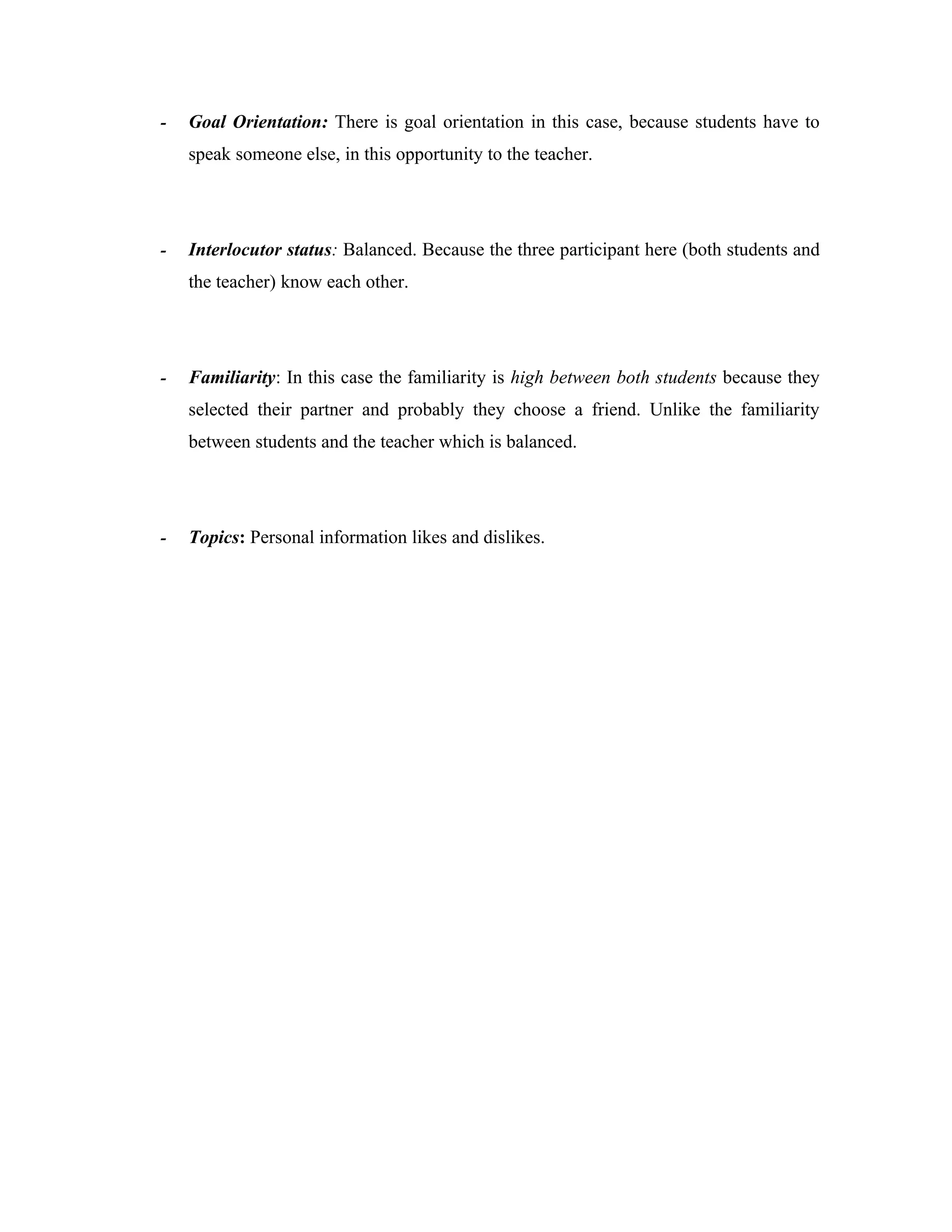
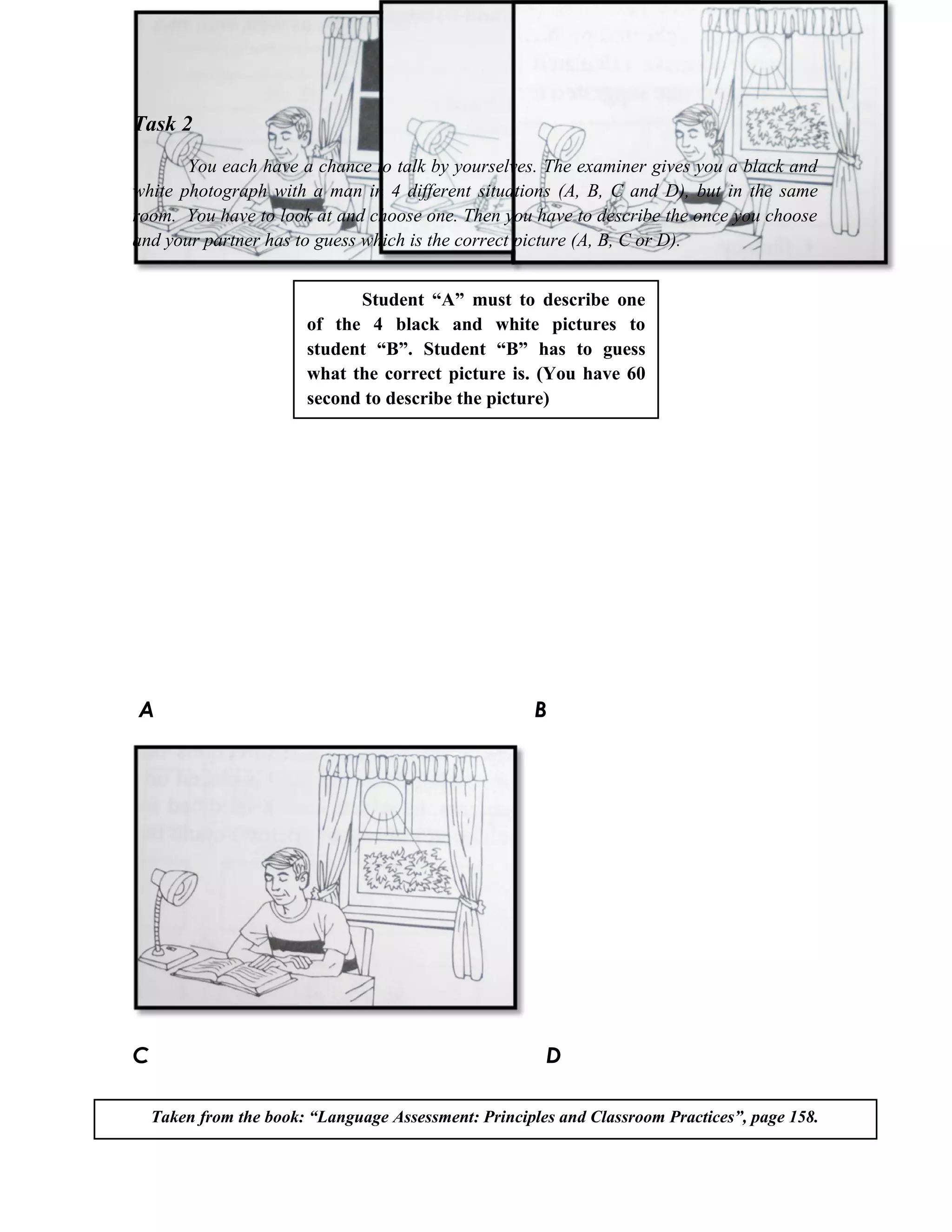
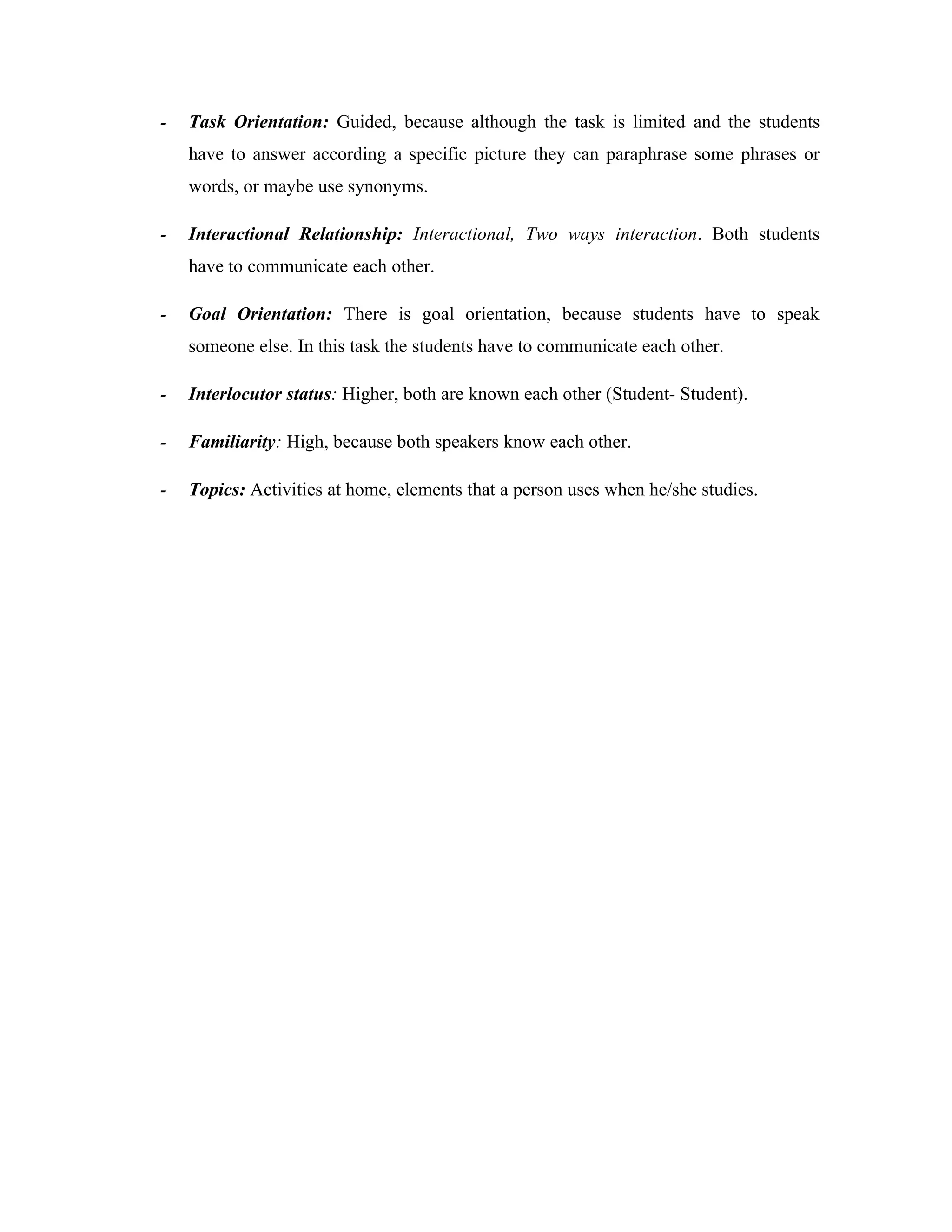
       You each have a chance to talk by yourselves. The examiner gives you a black and
white photograph with a man in 4 different situations (A, B, C and D), but in the same
room. You have to look at and choose one. Then you have to describe the once you choose
and your partner has to guess which is the correct picture (A, B, C or D).


                              Student “A” must to describe one
                        of the 4 black and white pictures to
                        student “B”. Student “B” has to guess
                        what the correct picture is. (You have 60
                        second to describe the picture)


A                                                      B


C                                                       D

    Taken from the book: “Language Assessment: Principles and Classroom Practices”, page 158.
-   Task Orientation: Guided, because although the task is limited and the students
    have to answer according a specific picture they can paraphrase some phrases or
    words, or maybe use synonyms.

-   Interactional Relationship: Interactional, Two ways interaction. Both students
    have to communicate each other.

-   Goal Orientation: There is goal orientation, because students have to speak
    someone else. In this task the students have to communicate each other.

-   Interlocutor status: Higher, both are known each other (Student- Student).

-   Familiarity: High, because both speakers know each other.

-   Topics: Activities at home, elements that a person uses when he/she studies.
Task 3
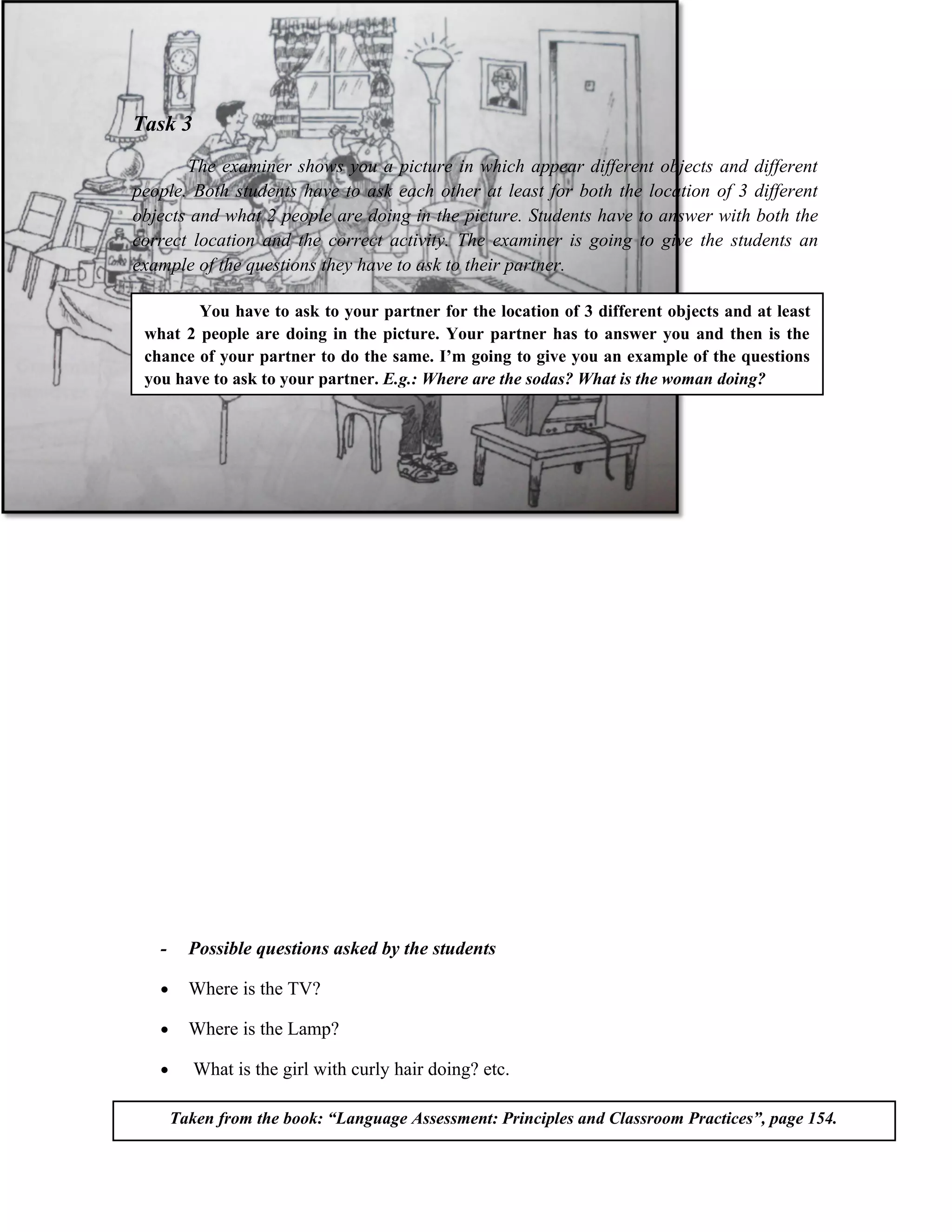
       The examiner shows you a picture in which appear different objects and different
people. Both students have to ask each other at least for both the location of 3 different
objects and what 2 people are doing in the picture. Students have to answer with both the
correct location and the correct activity. The examiner is going to give the students an
example of the questions they have to ask to their partner.

        You have to ask to your partner for the location of 3 different objects and at least
 what 2 people are doing in the picture. Your partner has to answer you and then is the
 chance of your partner to do the same. I’m going to give you an example of the questions
 you have to ask to your partner. E.g.: Where are the sodas? What is the woman doing?


   -     Possible questions asked by the students

   •     Where is the TV?

   •     Where is the Lamp?

   •      What is the girl with curly hair doing? etc.

       Taken from the book: “Language Assessment: Principles and Classroom Practices”, page 154.
•   Task Orientation: Closed, because they have to speak according to a specific
    information, tenses and words. In this task they have to ask for location and
    activities that people are doing. They cannot ask for something else. In addition,
    they are given some specific structure they have to follow.

•   Interactional Relationship: Interactional, Two ways interaction. Both students
    have to communicate each other.

•   Goal Orientation: There is goal orientation in this case, because students have to
    speak someone else.

•   Interlocutor status: High, both are known each other (Teacher- Student).

•   Familiarity: High, because both students know each other.

•   Topics: Giving specific location and activities.
References


 H. Douglas Brown. (2004). Language assessment “Principles and Classroom
   Practices”, pages 140-183.

 University of Cambridge. (2003) “Cambridge Preliminary English test”, page 25

 Luoma (2004), “Test specifications”, page 114.

Assessment 3

  • 1.
    Assessing Speaking “Assessing Speaking” Ingrid Bello Acuña Paulina Escobar Aguayo June 04th, 2012
  • 2.
    Introduction Speaking is a productive skill which is really difficult to assess because of its subjectivity. According to the book Language Testing, 1961, p. 239 “The ability to speak a foreign language is without doubt the most prized language skill,” In the following assessment we are going to measure an oral performance which will be taken to a group of 35 students of a 1st Medio from the “Liceo Comercial de Tomé”. The level of these students is lower. For this reason the following “oral evaluation” has three different parts whose purpose is to measure vocabulary learnt in class, grammar (basic grammar structures) and pronunciation, the last item is focus on the pronunciation of the vocabulary. In order to test the three previous levels of proficiency (vocabulary, grammar and pronunciation) we created an analytic rubric which contains four indicators (from 1 to 4). Finally, the idea of this assessment was prepared the most reliable, valid and authentic oral performance considering the level of English of the students.
  • 3.
    Unit 3: Howto assess “speaking” School: Liceo Comercial de Tomé (Public highschool) Grade: 1st Medio Level of English: Lower Test specifications:  The test’s purpose: To assess speaking, especially vocabulary learnt in class.  Description of the examinees: Students of 1st Medio from a public highschool called “Liceo Comercial de Tomé”.  Test level: 1st Medio.  Number of section: 1  Time for each section: 2 or 2 ½ minutes.  Weighting for each section: 3 different items.  Target language situation: Level of English “Lower”  Text- types: Pictures.  Text-Length: Two pictures for each student.  Language skills to be tasted: Speaking  Language element to be tested: • Vocabulary • Grammar • Pronunciation  Test methods: The procedure to measure “speaking” in this case is firstly through an interview and then using pictures with which students have to guess what the correct picture is and also ask for the specific location of different objects and people.
  • 4.
    Tasks Task 1 The examiner introduces him/her and then asks you and your partner to say your names and spell them. This examiner then asks you questions about yourself, your daily life, interests, etc. You must to answer the examiner (the teacher) 3 questions about yourself. Possible questions: • What’s your name? • How do you spell your name? • What do you think about the weather today? • What’s your favourite subject at school? Why? - Task Orientation: Guided. Students have to speak according to some specific information. (Name, likes, etc.). The answers are predictable and these have not many variations. - Interactional Relationship: One way interaction. The student is asked to communicate some opinions and maybe the teacher is going to ask him/her for clarification.
  • 5.
    - Goal Orientation: There is goal orientation in this case, because students have to speak someone else, in this opportunity to the teacher. - Interlocutor status: Balanced. Because the three participant here (both students and the teacher) know each other. - Familiarity: In this case the familiarity is high between both students because they selected their partner and probably they choose a friend. Unlike the familiarity between students and the teacher which is balanced. - Topics: Personal information likes and dislikes.
  • 6.
    Task 2 You each have a chance to talk by yourselves. The examiner gives you a black and white photograph with a man in 4 different situations (A, B, C and D), but in the same room. You have to look at and choose one. Then you have to describe the once you choose and your partner has to guess which is the correct picture (A, B, C or D). Student “A” must to describe one of the 4 black and white pictures to student “B”. Student “B” has to guess what the correct picture is. (You have 60 second to describe the picture) A B C D Taken from the book: “Language Assessment: Principles and Classroom Practices”, page 158.
  • 7.
    - Task Orientation: Guided, because although the task is limited and the students have to answer according a specific picture they can paraphrase some phrases or words, or maybe use synonyms. - Interactional Relationship: Interactional, Two ways interaction. Both students have to communicate each other. - Goal Orientation: There is goal orientation, because students have to speak someone else. In this task the students have to communicate each other. - Interlocutor status: Higher, both are known each other (Student- Student). - Familiarity: High, because both speakers know each other. - Topics: Activities at home, elements that a person uses when he/she studies.
  • 8.
    Task 3 The examiner shows you a picture in which appear different objects and different people. Both students have to ask each other at least for both the location of 3 different objects and what 2 people are doing in the picture. Students have to answer with both the correct location and the correct activity. The examiner is going to give the students an example of the questions they have to ask to their partner. You have to ask to your partner for the location of 3 different objects and at least what 2 people are doing in the picture. Your partner has to answer you and then is the chance of your partner to do the same. I’m going to give you an example of the questions you have to ask to your partner. E.g.: Where are the sodas? What is the woman doing? - Possible questions asked by the students • Where is the TV? • Where is the Lamp? • What is the girl with curly hair doing? etc. Taken from the book: “Language Assessment: Principles and Classroom Practices”, page 154.
  • 9.
    Task Orientation: Closed, because they have to speak according to a specific information, tenses and words. In this task they have to ask for location and activities that people are doing. They cannot ask for something else. In addition, they are given some specific structure they have to follow. • Interactional Relationship: Interactional, Two ways interaction. Both students have to communicate each other. • Goal Orientation: There is goal orientation in this case, because students have to speak someone else. • Interlocutor status: High, both are known each other (Teacher- Student). • Familiarity: High, because both students know each other. • Topics: Giving specific location and activities.
  • 10.
    References  H. DouglasBrown. (2004). Language assessment “Principles and Classroom Practices”, pages 140-183.  University of Cambridge. (2003) “Cambridge Preliminary English test”, page 25  Luoma (2004), “Test specifications”, page 114.