Testing For Language
Teachers
Nursanti Setiorini
201012500913

Universitas Indraprasta PGRI
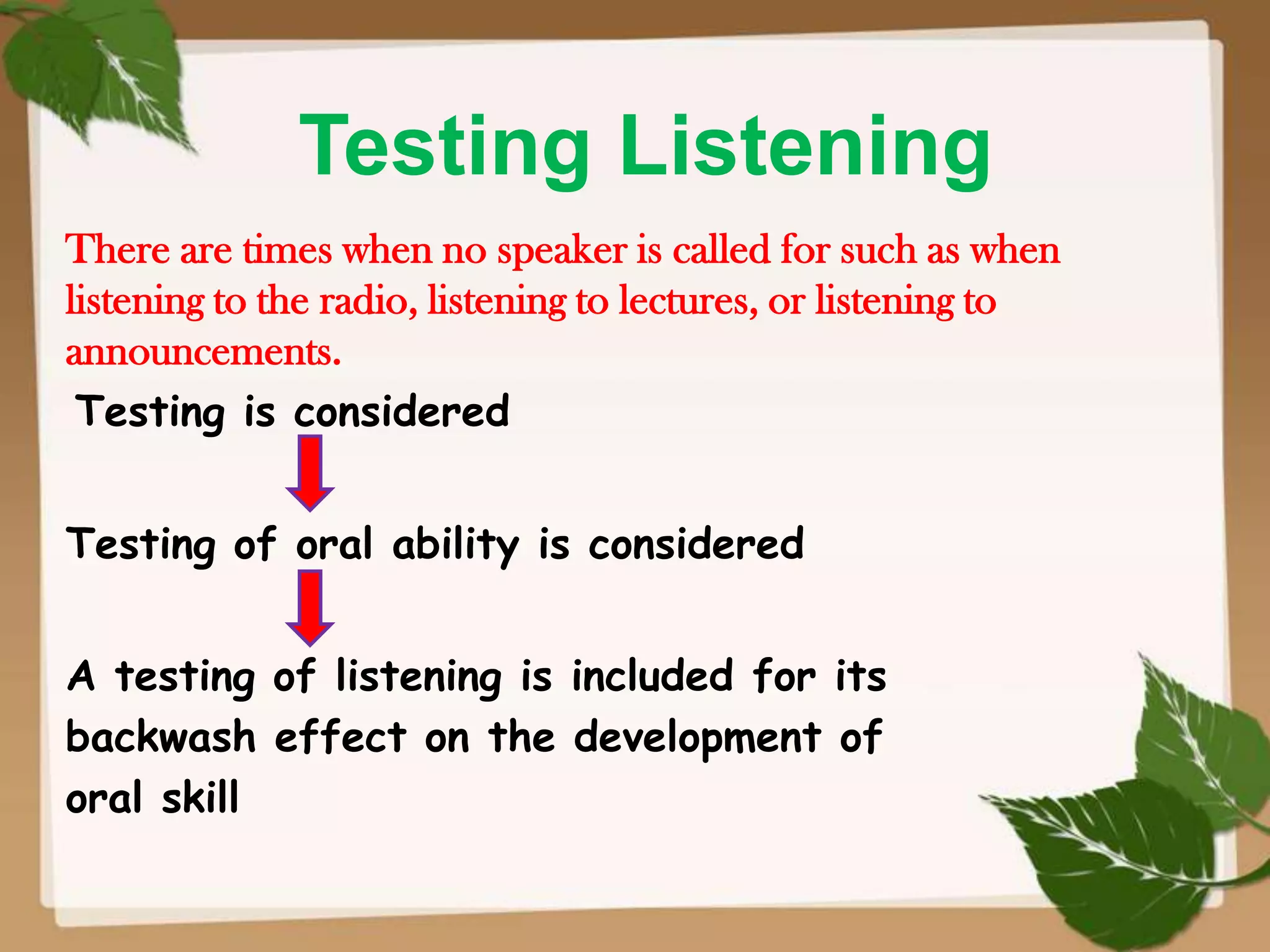
Testing Listening
There are times when no speaker is called for such as when
listening to the radio, listening to lectures, or listening to
announcements.
Testing is considered

Testing of oral ability is considered
A testing of listening is included for its
backwash effect on the development of
oral skill
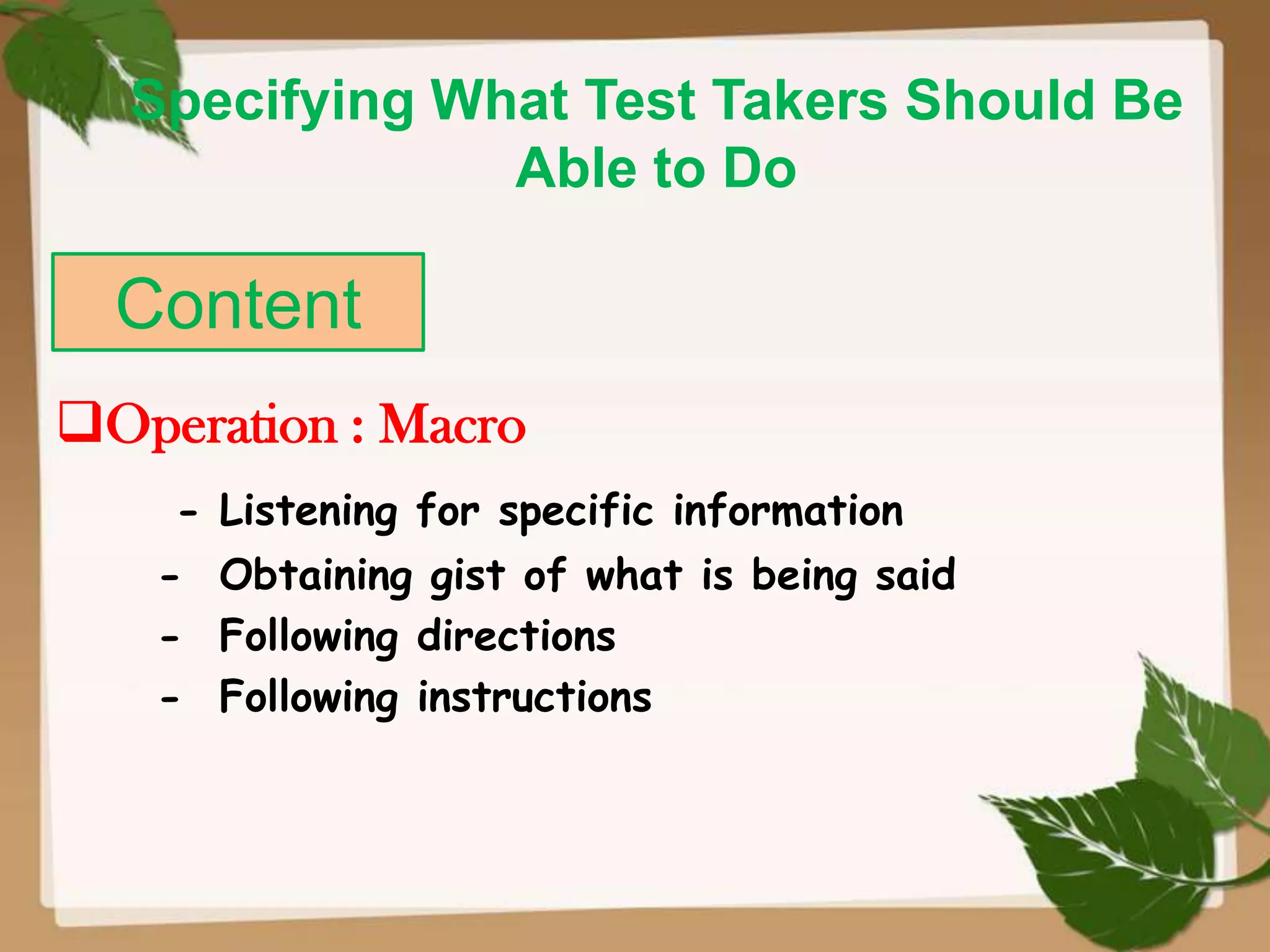
Specifying What Test Takers Should Be
Able to Do

Content
Operation : Macro
- Listening for specific information
- Obtaining gist of what is being said
- Following directions
- Following instructions
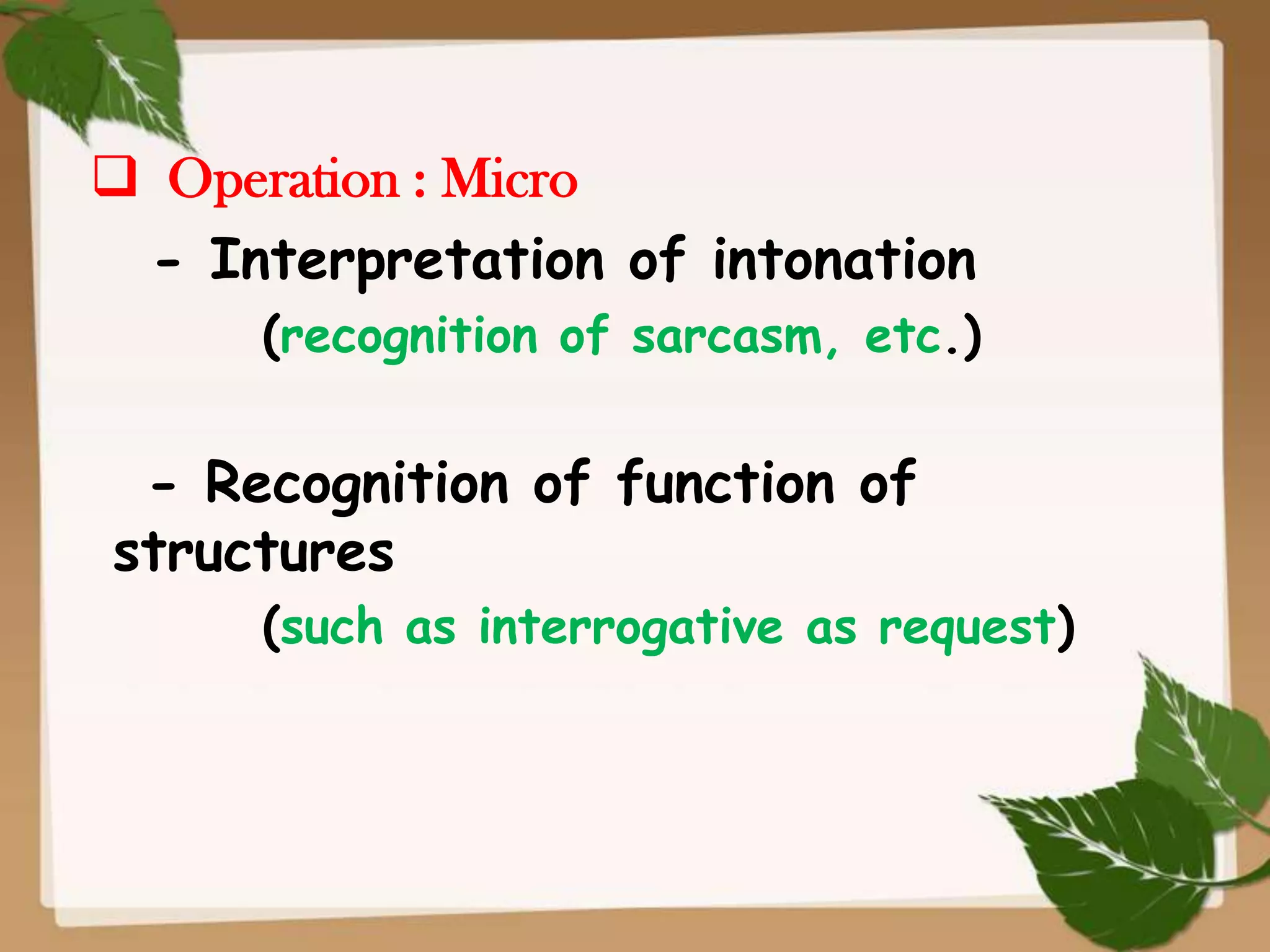
 Operation : Micro
- Interpretation of intonation
(recognition of sarcasm, etc.)

- Recognition of function of
structures
(such as interrogative as request)
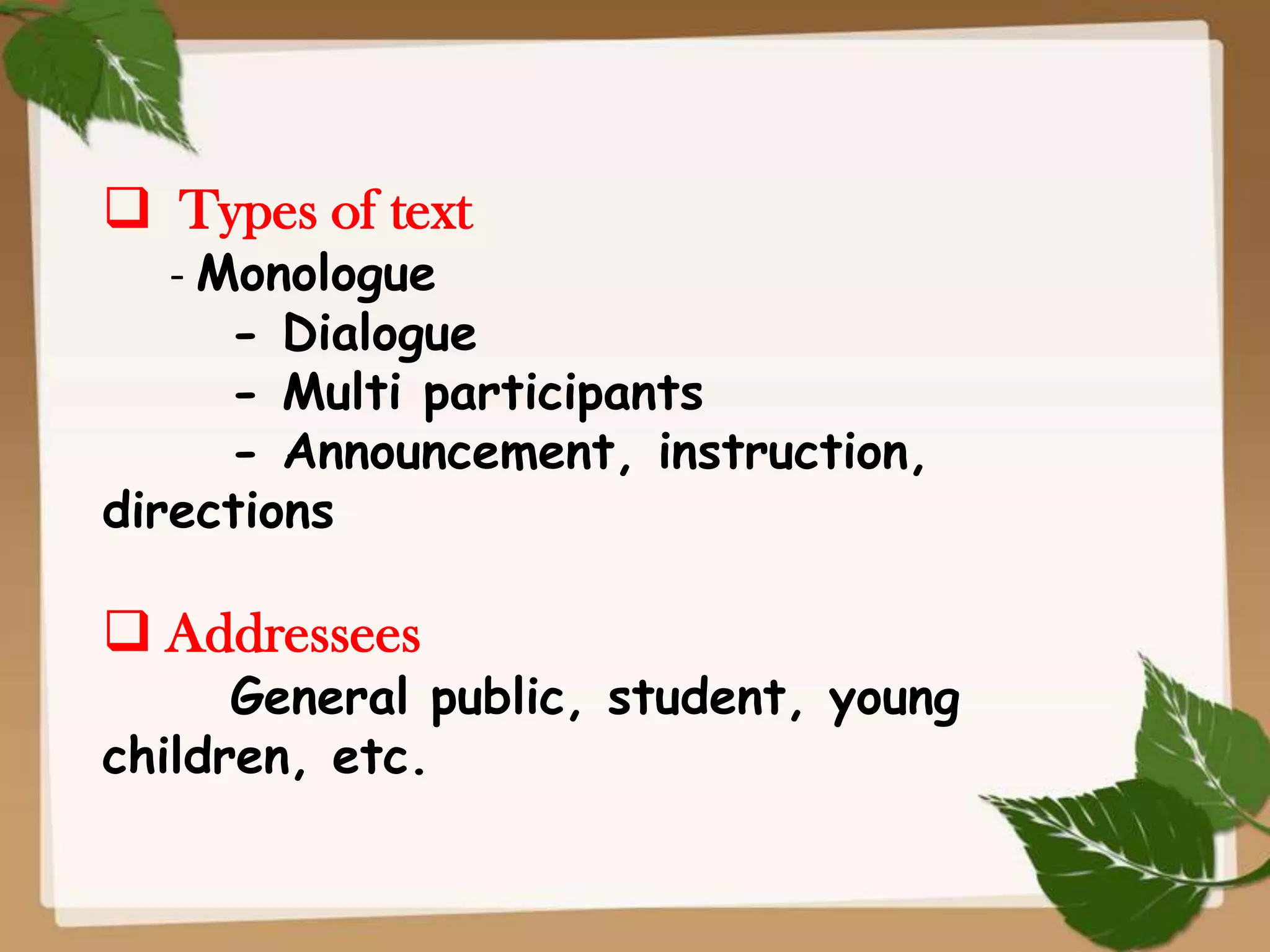
 Types of text

- Monologue
- Dialogue
- Multi participants
- Announcement, instruction,
directions

 Addressees

General public, student, young
children, etc.
 Topics
These will often be indicated in quite
general terms.
Setting Criterial levels of performance
set at an appropriate level  as with reading
 a near perfect set of response  may be required for a
‘pass’
Setting The Task
Selecting Samples of Speech
Native or Non- Native Speaker

Writing Items
For extended listening, such as a lecturer :
- Listen to the passage and take the note
- Putting down what it is that candidates should
be able to get
- We can then attempt to write items that check
whether or not they have got what they should be
able to get
 Possible Techniques
1. Multiple Choice
the alternatives must be kept short and
simple.

2. Short Answer
short-answer items can work well in
listening test.
3. Information Transfer
of

Involve such activities as the labelling
diagrams or picture, completing forms or
showing routes on map.

4. Note Taking
Where the ability to take notes while
listening to, say, a lecture is in question.
5. Partial Dictation
It may be possible to administer a partial
dictation when no other test of listening is
practical.
Recording : or
6. Recordingto beLive Presentation :
Live Presentation

good acoustic
qualities and
with suitable
equipment

Speakers should have a
good command of
language of test and be
generally highly
reliable, responsible, and
trustworthy individuals
Scoring The Listening Test
In scoring a test of a receptive skill
there is no reason to deduct points for
errors of grammar or spelling, provided
that it is clear that the correct
response was intended

Testing listening slide

  • 1.
    Testing For Language Teachers NursantiSetiorini 201012500913 Universitas Indraprasta PGRI
  • 2.
    Testing Listening There aretimes when no speaker is called for such as when listening to the radio, listening to lectures, or listening to announcements. Testing is considered Testing of oral ability is considered A testing of listening is included for its backwash effect on the development of oral skill
  • 3.
    Specifying What TestTakers Should Be Able to Do Content Operation : Macro - Listening for specific information - Obtaining gist of what is being said - Following directions - Following instructions
  • 4.
     Operation :Micro - Interpretation of intonation (recognition of sarcasm, etc.) - Recognition of function of structures (such as interrogative as request)
  • 5.
     Types oftext - Monologue - Dialogue - Multi participants - Announcement, instruction, directions  Addressees General public, student, young children, etc.
  • 6.
     Topics These willoften be indicated in quite general terms. Setting Criterial levels of performance set at an appropriate level  as with reading  a near perfect set of response  may be required for a ‘pass’
  • 7.
    Setting The Task SelectingSamples of Speech Native or Non- Native Speaker Writing Items For extended listening, such as a lecturer : - Listen to the passage and take the note - Putting down what it is that candidates should be able to get - We can then attempt to write items that check whether or not they have got what they should be able to get
  • 8.
     Possible Techniques 1.Multiple Choice the alternatives must be kept short and simple. 2. Short Answer short-answer items can work well in listening test.
  • 9.
    3. Information Transfer of Involvesuch activities as the labelling diagrams or picture, completing forms or showing routes on map. 4. Note Taking Where the ability to take notes while listening to, say, a lecture is in question.
  • 10.
    5. Partial Dictation Itmay be possible to administer a partial dictation when no other test of listening is practical. Recording : or 6. Recordingto beLive Presentation : Live Presentation good acoustic qualities and with suitable equipment Speakers should have a good command of language of test and be generally highly reliable, responsible, and trustworthy individuals
  • 11.
    Scoring The ListeningTest In scoring a test of a receptive skill there is no reason to deduct points for errors of grammar or spelling, provided that it is clear that the correct response was intended